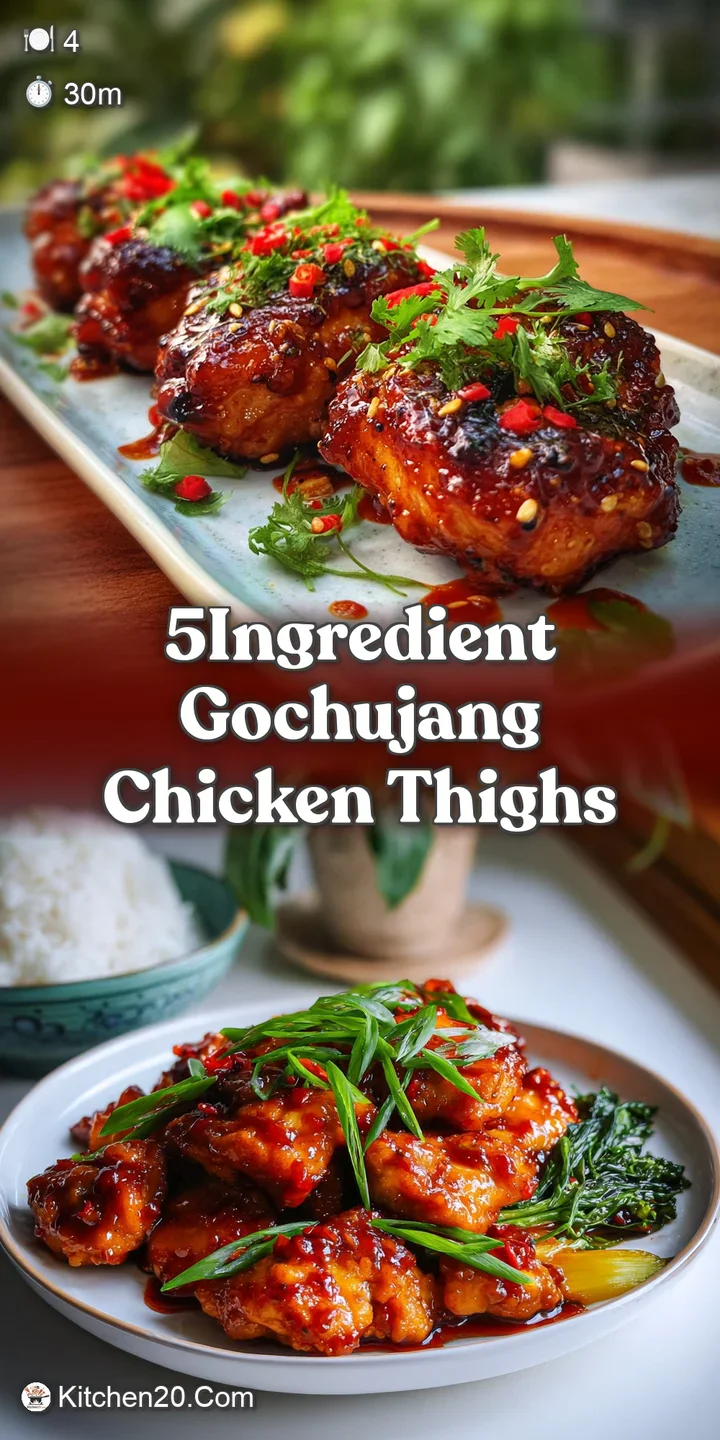
5Ingredient Gochujang Chicken Thighs: Quick Lacquered Glaze
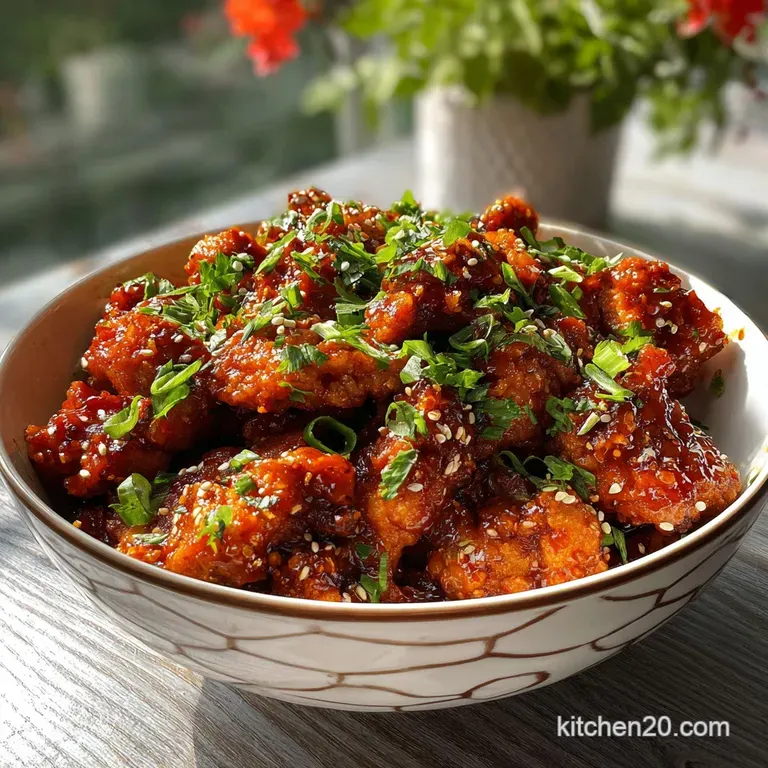
- Time: Active 5 mins, Passive 25 mins, Total 30 mins
- Flavor/Texture Hook: Shatter crisp skin with a velvety, spicy sweet glaze
- Perfect for: Busy weeknights where you crave bold, punchy flavors
- Perfect 5Ingredient Gochujang Chicken Thighs For Weeknights
- Essential Cooking Stats and Precision Timing
- Five Key Elements for Maximum Flavor
- Minimal Tools for Maximum Kitchen Efficiency
- Detailed Steps for The Perfect Sizzle
- Solving Common Glaze and Texture Problems
- Creative Variations for Every Busy Cook
- Smart Storage and Zero Waste Strategies
- Flavorful Sides to Complete Your Meal
- High in Sodium
- Recipe FAQs
- 📝 Recipe Card
Perfect 5Ingredient Gochujang Chicken Thighs For Weeknights
The first time I tried making these, the aroma of toasted sesame and fermenting chilies hit me so hard I almost forgot to set the timer. I’d just come home from a coding sprint, starving and totally drained, and I needed something that didn’t involve a sink full of dishes or a complicated grocery list.
I grabbed the gochujang from the back of the fridge, whisked it with honey and oil, and threw it all together.
That first bite was a revelation. The skin didn’t just crunch; it had this specific "shatter" quality, followed immediately by the juicy, dark meat richness. The glaze had bubbled into a sticky, glossy lacquer that looked like it took hours, but honestly, I spent more time checking my emails than actually cooking.
This has become my absolute go to because it works every single time without fail.
You don't need fancy equipment or a culinary degree for this one. We’re leaning on the power of fermentation and over high heat roasting to do the heavy lifting. If you’ve ever struggled with soggy chicken skin or bland poultry, stick with me.
We're going to use a few simple tricks to ensure that glaze stays on the chicken and off the bottom of your pan.
Essential Cooking Stats and Precision Timing
Understanding the science behind the sear is what separates a good meal from a legendary one. When we talk about the Maillard reaction, we’re looking for that specific chemical dance between amino acids and reducing sugars.
In this dish, the honey and gochujang act as fuel for that reaction, creating a complex flavor profile that tastes much more sophisticated than its five parts.
The Physics of the Glaze: The high sugar content in gochujang and honey creates a protective, insulating layer that traps steam inside the meat while the outside undergoes rapid dehydration and browning.
This ensures the 1.5 lbs of chicken remains succulent even at the high temperatures required to crisp the skin.
| Thickness | Internal Temp | Rest Time | Visual Cue |
|---|---|---|---|
| 1 inch | 165°F | 5 mins | Juices run clear |
| 1.5 inches | 165°F | 7 mins | Skin is mahogany |
| 2 inches | 165°F | 10 mins | Meat pulls from bone |
Resting is the most overlooked step in the process. When the meat is in the oven, the muscle fibers contract and push moisture toward the center. If you cut into it immediately, that liquid will rush out onto your plate, leaving you with dry protein.
Giving it just five minutes allows those fibers to relax and reabsorb the juices, ensuring every bite is velvety and rich.
Five Key Elements for Maximum Flavor
| Ingredient | Science Role | Pro Secret |
|---|---|---|
| Gochujang | Proteolysis | Use it to tenderize the meat fibers through fermentation. |
| Sesame Oil | Emulsification | Whisk vigorously to bind the water based soy with the thick paste. |
| Honey | Hygroscopy | It attracts moisture to the surface, aiding in rapid caramelization. |
The foundation of this dish is the 1.5 lbs bone in, skin on chicken thighs. I always tell my friends that skin on is non negotiable here; the fat rendering out of the skin is what actually fries the glaze into that addictive crust. If you love this technique, my Slam Dunk Chicken recipe uses a similar over high heat approach to get that perfect texture.
For the sauce, we’re using 3 tbsp gochujang, which provides the heat and the body. We balance that with 2 tbsp honey for sweetness and 2 tbsp soy sauce for that deep, salty umami.
To round it out, 2 tbsp toasted sesame oil adds a nutty depth, and 1 tbsp rice vinegar provides the necessary acidity to cut through the fat. It’s a tight, efficient list where every player has a major role.
The Science of Fermented Heat
Gochujang isn't just a chili paste; it’s a living product made from fermented soybeans, glutinous rice, and chili powder. The enzymes produced during the months long fermentation process help break down the tough proteins in the chicken thighs.
This means that even with a short 5 minute prep, the meat starts to tenderize before it ever hits the heat.
High Heat Maillard Reaction
Because we are roasting at a high temperature, we are maximizing the Maillard reaction. This is why we use honey the glucose and fructose in honey brown at lower temperatures than table sugar, giving us that beautiful dark color without needing to overcook the chicken.
It’s a delicate balance between a perfect char and a burnt mess, which is why we watch the clock closely.
Minimal Tools for Maximum Kitchen Efficiency
One mistake I once made was trying to do this on a flat baking sheet without parchment. Trust me, the honey will turn into literal glue and you'll be scrubbing that pan until next Tuesday. Use a cast iron skillet or a rimmed baking sheet lined with foil or parchment.
A cast iron skillet like one from Lodge is brilliant because it holds heat so well, helping the bottom of the thighs cook as efficiently as the top.
You’ll also need a solid whisk and a medium bowl. Don't just stir the marinade with a spoon; you want to emulsify the sesame oil into the gochujang. If the oil is floating on top, it won't coat the chicken evenly, and you'll end up with greasy spots and dry spots.
A quick 30 second aggressive whisking session makes all the difference in how the glaze clings to the skin.
Detailed Steps for The Perfect Sizzle
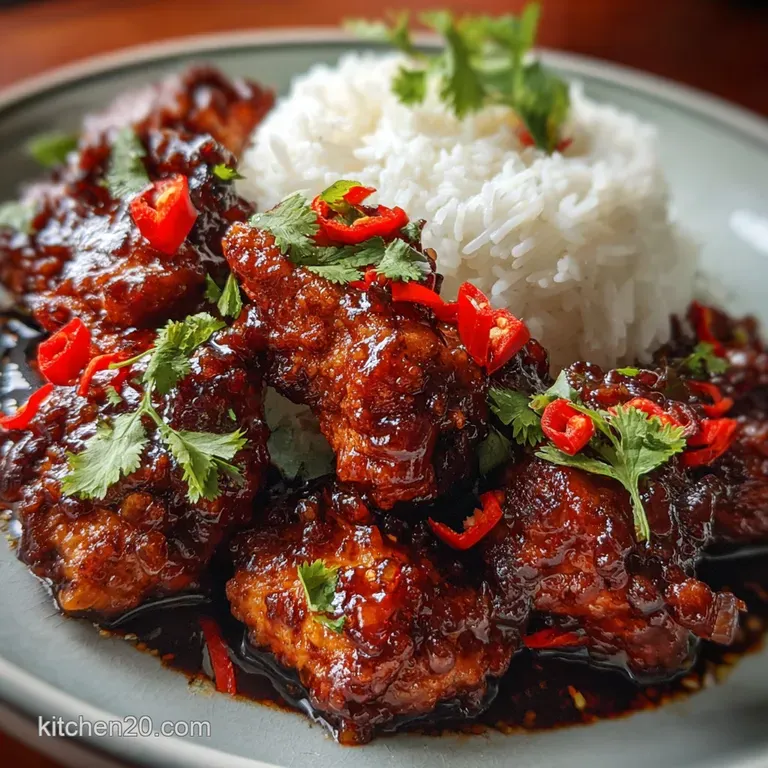
- Dry the chicken. Use paper towels to pat the 1.5 lbs bone in, skin on chicken thighs until they are bone dry. Note: Any surface moisture will create steam, preventing the skin from becoming shatter crisp.
- Whisk the base. Combine 3 tbsp gochujang, 2 tbsp toasted sesame oil, 2 tbsp soy sauce, 2 tbsp honey, and 1 tbsp rice vinegar in a bowl.
- Emulsify the sauce. Whisk until the mixture is glossy and thick with no oil streaks.
- Coat the protein. Toss the chicken in the glaze, ensuring every crevice is covered.
- Arrange for airflow. Place chicken on a lined baking sheet or in a cast iron skillet, skin side up.
- Preheat the oven. Set your oven to 425°F. Note: High heat is essential for rendering the fat quickly.
- Roast the chicken. Bake for 25 minutes until the skin is bubbling and dark mahogany.
- Baste halfway through. Use a spoon to pour the rendered juices and glaze back over the top after 15 minutes.
- Check the temp. Ensure the internal temperature has reached 165°F.
- Rest the meat. Transfer to a board and wait 5 minutes until the juices settle and the glaze sets.
For those days when you have more time and want a different flavor profile, check out my How to Bake recipe which takes a slower, more traditional route to juiciness. But for tonight, the high speed roast is your best friend.
Solving Common Glaze and Texture Problems
Why Your Chicken Skin is Soggy
If the skin comes out rubbery instead of crisp, it’s usually a moisture issue. Either the chicken wasn't dried properly before coating, or the oven wasn't hot enough. When the temperature is too low, the fat doesn't render fast enough to "fry" the skin, and it ends up boiling in the glaze instead.
| Problem | Root Cause | Solution |
|---|---|---|
| Burnt Glaze | Rack too high | Move to center rack and tent with foil if darkening too fast. |
| Dry Meat | Overcooking | Use a meat thermometer to pull at exactly 165°F. |
| Dull Color | Weak Emulsion | Whisk the marinade until fully combined before coating. |
Another common culprit is overcrowding the pan. If the thighs are touching, the steam trapped between them will soften the skin. Give them at least an inch of space so the hot air can circulate around the entire piece of meat.
Common Mistakes Checklist: ✓ Pat chicken completely dry with paper towels (don't skip this!). ✓ Ensure the oven is fully preheated before the chicken goes in. ✓ Use bone in thighs; boneless will dry out before the skin is ready.
✓ Don't skip the rice vinegar; the acid is vital for flavor balance. ✓ Let the meat rest for 5 full minutes before serving.
Creative Variations for Every Busy Cook
If you’re looking to shave even more time off, you can absolutely use an air fryer. This method is incredibly efficient because the concentrated air movement mimics a professional convection oven. Set your air fryer to 380°F and cook for about 18-20 minutes.
Just make sure to check the internal temperature, as air fryers vary wildly in power.
| Original Ingredient | Substitute | Why It Works |
|---|---|---|
| Rice Vinegar (1 tbsp) | Apple Cider Vinegar | Similar acidity. Note: Slightly fruitier profile. |
| Honey (2 tbsp) | Maple Syrup | Same sugar content. Note: Adds a woody, smoky depth. |
| Soy Sauce (2 tbsp) | Tamari | Keeps the dish gluten-free without losing umami. |
For a low carb version, you can swap the honey for a keto friendly liquid sweetener like allulose. Just be aware that allulose browns much faster than honey, so you’ll want to drop the oven temperature by 25 degrees and cook it for a few minutes longer to prevent scorching.
If you are cooking for a larger crowd, scaling this recipe is straightforward. When doubling the recipe to 3 lbs of chicken, don't just double the salt or spices blindly. Keep the spices at 1.5x and only increase the liquid components (soy, vinegar, oil) fully.
This prevents the sauce from becoming overwhelmingly salty or spicy.
Smart Storage and Zero Waste Strategies
These 5Ingredient Gochujang Chicken Thighs keep remarkably well in the fridge for up to 4 days. The glaze actually thickens and permeates the meat even more as it sits. To reheat, avoid the microwave if you can; it will turn that beautiful skin into a soggy mess.
Instead, pop them back in a toaster oven or air fryer at 350°F for 5-8 minutes until the skin starts to sizzle again.
Don't you dare throw away the rendered fat and leftover glaze from the bottom of the pan! That "liquid gold" is packed with flavor. I love to toss roasted broccoli or leftover rice into the pan while it's still warm to soak up all that spicy, chicken infused goodness.
If you have bones left over, save them in a bag in the freezer. Once you have a few pounds, they make a incredible base for a spicy Korean style chicken stock.
Flavorful Sides to Complete Your Meal
To balance the intensity of the gochujang, I usually serve this with something clean and bright. A simple bowl of steamed jasmine rice is the classic choice, acting as a sponge for the extra glaze.
If you want something a bit more involved, a smashed cucumber salad with plenty of garlic and sesame oil provides a cooling contrast to the heat of the chicken.
If you’re in the mood for a more traditional spread, this pairs beautifully with my Classic French Chicken Fricassee recipe if you're doing a fusion style dinner party. The creamy, mild flavors of the fricassee act as a wonderful foil to the aggressive, spicy profile of the gochujang.
The Myth of Sealing Juices
One of the biggest misconceptions in home cooking is that searing meat "seals in the juices." Science tells us this is simply not true. Searing is entirely about the Maillard reaction creating flavor and texture on the surface.
Moisture loss actually increases at higher temperatures, which is why we rely on the bone in structure and the fat content of the thighs to keep the meat succulent, not a "seal."
Room Temperature Meat
You’ll often hear that you must let meat come to room temperature before cooking. For a 25 minute roast at 425°F, it actually doesn't make a significant difference.
In fact, keeping the chicken cold until it hits the oven can sometimes help the skin crisp up before the internal meat overcooks. So, don't worry if you’re pulling these straight from the fridge to the pan it won't ruin your dinner.
High in Sodium
885 mg mg of sodium per serving (38% of daily value)
The American Heart Association recommends limiting sodium intake to about 2,300mg per day for optimal health.
Sodium Reduction Tips for this Recipe
-
Low-Sodium Soy Sauce-20%
Replace regular soy sauce with a low-sodium or reduced sodium version. This can significantly cut down the sodium content without drastically altering the flavor.
-
Less Gochujang-15%
Gochujang is a significant source of sodium in this recipe. Try using half the amount called for, and adjusting the flavor with other spices.
-
DIY Marinade-10%
Create your own marinade! Use the honey, sesame oil, rice vinegar but use freshly minced garlic, ginger and black pepper. You're able to have better control over ingredients this way.
-
Enhance with Herbs
Use fresh or dried herbs and spices like garlic powder, ginger, or black pepper to boost the flavor without adding sodium.
Recipe FAQs
Can I use boneless, skinless chicken thighs instead?
No, it is strongly discouraged. Boneless thighs cook too quickly and will dry out before the glaze caramelizes properly. You need the fat rendering from the skin to create that characteristic crisp texture.
How to achieve a deep mahogany glaze without burning the honey?
Roast at 425°F, basting once halfway through cooking. The high heat initiates the Maillard reaction quickly, and the honey's natural sugars brown rapidly; basting helps distribute the sugars evenly without over browning one spot.
Is it true that I must bring the chicken to room temperature before coating?
No, this is a common misconception for this recipe. Pulling the chicken directly from the refrigerator ensures the internal meat stays cooler longer, allowing the skin to crisp before the interior overcooks.
How to make the marinade thick enough to actually stick to the chicken?
Whisk aggressively for at least 30 seconds until fully emulsified. The key is incorporating the sesame oil fully into the gochujang paste and liquids, creating a glossy binder that adheres well to the meat surface.
What is the ideal internal temperature for juicy dark meat?
Remove the thighs from the oven at 165°F internal temperature. While white meat must hit 165°F, dark meat actually benefits from reaching 175°F to fully break down connective tissue, so don't panic if it climbs slightly during the rest.
How can I ensure the chicken is tender given the quick cooking time?
Rely on the enzymatic action of the gochujang to tenderize the muscle fibers. If you enjoyed how fermentation started breaking down proteins here, you will love seeing the same principle applied to different ingredients in our How to Make recipe for soup bases.
What's the best way to reheat leftovers without losing the crispiness?
Reheat in an air fryer or toaster oven, not the microwave. Set the device to 350°F and cook for 5 to 8 minutes; this low, dry heat reactivates the glaze and revives the shattered skin texture.
5ingredient Gochujang Chicken Thighs
Ingredients:
Instructions:
Nutrition Facts:
| Calories | 468 kcal |
|---|---|
| Protein | 27.2 g |
| Fat | 31.8 g |
| Carbs | 17.4 g |
| Fiber | 0.6 g |
| Sugar | 13.8 g |
| Sodium | 885 mg |
