Bearnaise Sauce Recipe: Steakhouse Quality
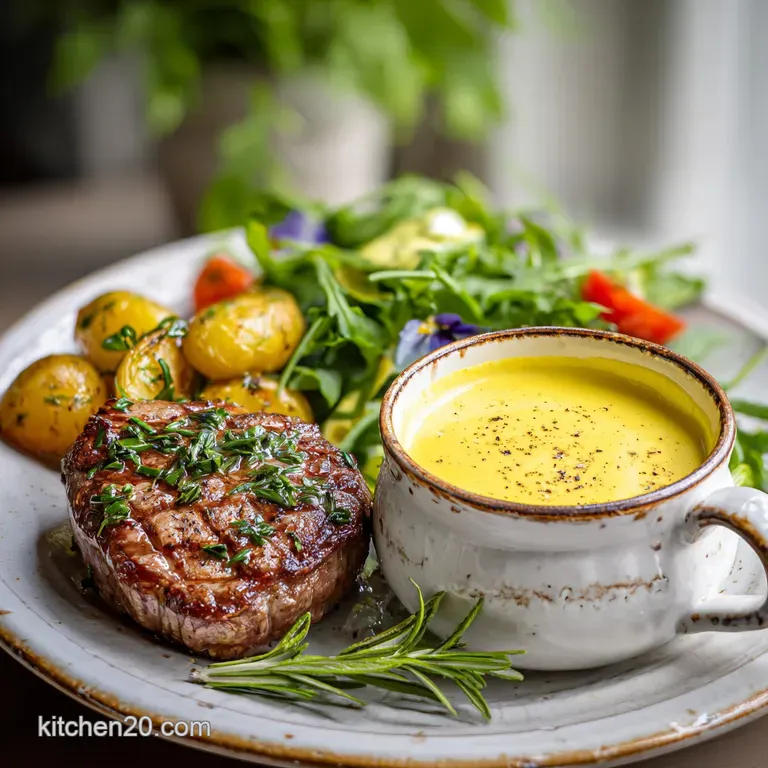
- Time: Active 10 minutes, Passive 0 minutes, Total 10 minutes
- Flavor/Texture Hook: Velvety, herb flecked, and buttery
- Perfect for: Date night steak or Sunday brunch
- The Best Silky Bearnaise Sauce Recipe
- Architecture of a Stable Emulsion
- Precision Metrics for Sauce Success
- Essential Elements for Flavor Balance
- Necessary Tools for Fluid Workflow
- Step-by-Step Execution for Perfect Texture
- Solving Common Emulsion Stability Problems
- Smart Substitutions and Creative Variations
- Storage Guidelines and Waste Reduction
- Color Balance and Garnish Design
- Myths Regarding Emulsion Stability
- Recipe FAQs
- 📝 Recipe Card
The Best Silky Bearnaise Sauce Recipe
I still remember the first time I tried to whisk this together by hand over a double boiler. It was a humid Saturday evening, and I was trying to impress my partner with a fancy steak dinner.
Within five minutes, my arm was burning, the eggs scrambled, and I was left with a yellow, chunky mess that looked nothing like the glossy "mother sauce" I’d seen on TV. It was a humbling moment, but it sparked my obsession with understanding how to bridge the gap between French technique and modern kitchen efficiency.
What I realized is that we don't need to suffer for a great bearnaise sauce recipe. By revolutionizing the way we think about heat and speed, we can achieve that iconic, velvety texture every single time.
It's about connectivity between the ingredients the sharp tang of the white wine vinegar reduction meeting the golden, molten butter in a high speed platform like your blender. This method isn't just a shortcut; it's a better way to ensure the emulsion never breaks.
Architecture of a Stable Emulsion
High Shear Emulsification: The blender blades create a high velocity platform that breaks fat into microscopic droplets, allowing egg yolks to surround them more effectively. This creates a much tighter, more stable bond than hand whisking ever could.
Aromatic Concentration: Simmering shallots with tarragon and vinegar reduces volume while intensifying flavor, ensuring the acidity isn't lost when it hits the heavy butter.
| Method | Prep Time | Effort Level | Resulting Texture |
|---|---|---|---|
| Traditional Hand Whisk | 20 minutes | High (Arm Workout) | Airy but prone to breaking |
| Modern Blender | 5 minutes | Low (One Button) | Denser, velvety, and stable |
| Immersion Wand | 7 minutes | Medium | Smooth but requires specific beaker |
Choosing the right method depends on your kitchen setup, but for the most consistent bearnaise sauce recipe for steak, the blender is my go to revolutionizing tool. It handles the thermodynamics of the butter perfectly without the risk of overcooking the yolks.
Precision Metrics for Sauce Success
When we talk about precision in the kitchen, we're looking for those specific checkpoints that guarantee success. Think of these as the "system requirements" for your sauce.
- Reduction Volume: 2 tablespoons. If you have too much liquid, your sauce will be watery; too little, and it will be unpleasantly thick.
- Butter Temperature:175°F to 185°F. The butter must be hot enough to cook the egg yolks as it incorporates, but not so hot that it fries them.
- Blending Interval: 10 second bursts. Long blending generates too much friction heat, which can cause the sauce to separate into a greasy mess.
Essential Elements for Flavor Balance
| Component | Science Role | Pro Secret |
|---|---|---|
| Egg Yolks | Natural Emulsifier | Use room temperature yolks to prevent the hot butter from shocking the proteins into clumps. |
| Unsalted Butter | Fat & Structure | Using unsalted lets you control the salinity platform of the final dish precisely. |
| Fresh Tarragon | Aromatic Profile | The anise like oils are most potent when the leaves are bruised slightly before chopping. |
The reduction is where the heart of this bearnaise sauce recipe lives. By simmering the 1/4 cup white wine vinegar and 1/4 cup dry white wine with the 1 small minced shallot, you are creating a flavor base that cuts through the 1 cup of unsalted butter. It's a game of contrasts the sharp acidity vs.
the heavy creaminess.
Necessary Tools for Fluid Workflow
To make this quick bearnaise sauce recipe, you’ll need a few basics. A small stainless steel saucepan is vital for the reduction because reactive pans (like aluminum) can give the vinegar a metallic tang. You'll also need a high speed blender or a food processor with a small bowl attachment.
I also recommend a fine mesh strainer. While some people like the texture of the shallots in their sauce, I prefer to strain them out for a truly professional, velvety finish. A digital thermometer is also a great connectivity tool for your kitchen; it removes the guesswork from the butter temperature, which is usually where things go wrong for beginners.
step-by-step Execution for Perfect Texture
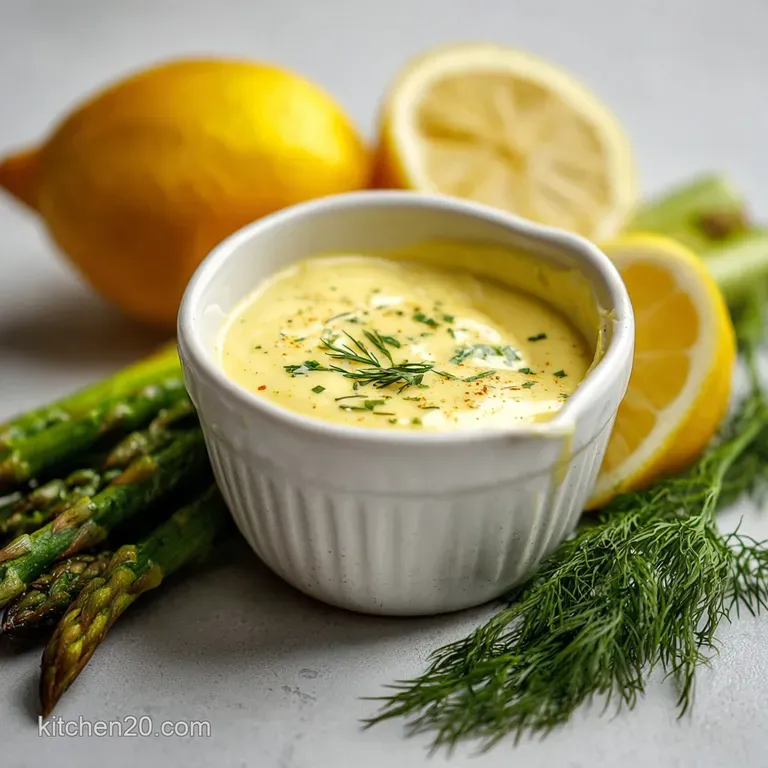
- Combine vinegar, wine, shallots, 1 tablespoon tarragon, and peppercorns in a saucepan.
- Simmer over medium heat until the liquid reduces to about 2 tablespoons. Note: This concentrates the acid and aromatics.
- Strain the reduction through a fine mesh sieve into a small bowl, pressing on the solids.
- Melt the 1 cup unsalted butter in a small pot until it is bubbling and reaches 180°F.
- Place the 3 large egg yolks and the warm reduction into your blender.
- Pulse for 5 seconds until the mixture is pale yellow and slightly frothy.
- Turn the blender to its lowest setting and slowly drizzle in the hot butter in a thin, steady stream.
- Blend until the sauce thickens into a glossy, velvety consistency. Note: This usually takes about 30 to 45 seconds of continuous pouring.
- Stir in the remaining 1 tablespoon of fresh tarragon, the 1/2 teaspoon kosher salt, and the 1/4 teaspoon cayenne pepper.
- Taste and adjust seasoning, adding an extra drop of lemon or vinegar if it needs more "zing."
If you find yourself needing a complementary side dish, this sauce pairs beautifully with the tangy notes of a Tartar Sauce recipe if you're serving seafood, though it is most famous for steak.
Solving Common Emulsion Stability Problems
Why is my sauce too thin?
If the sauce looks more like a soup than a thick cream, your butter likely wasn't hot enough, or you added it too quickly. The yolks didn't have enough time to "cook" and thicken the mixture. You can sometimes fix this by blending in an extra teaspoon of very hot water, which can help re stabilize the proteins.
What if my sauce curdles or breaks?
A "broken" sauce looks like oily yellow liquid with scrambled egg bits. This happens when the butter is added too fast or is too hot. Don't throw it out! Start with a fresh egg yolk in a clean bowl and slowly whisk the broken sauce into the new yolk. It’s a classic recovery move that saves the day.
| Problem | Root Cause | Solution |
|---|---|---|
| Thin/Runny | Butter too cool or added too fast | Add a teaspoon of boiling water while blending |
| Broken/Oily | Added butter too quickly | Start a new yolk and whisk broken sauce into it |
| Scrambled/Chunky | Butter was too hot (>190°F) | Strain the sauce; if too lumpy, restart |
Common Mistakes Checklist ✓ Ensure the blender jar is dry before starting to avoid unwanted dilution. ✓ Never use the "high" setting on the blender initially; it introduces too much air. ✓ Don't skip the straining step if you want that high end restaurant look.
✓ Stop the blender immediately once the sauce is thick to avoid over friction. ✓ Always use fresh tarragon; the dried version tastes like dust and ruins the color.
Smart Substitutions and Creative Variations
For those looking for a homemade bearnaise sauce recipe that fits a specific pantry, there are ways to adapt without losing the soul of the dish. If you need a bearnaise sauce recipe without wine, you can increase the white wine vinegar by a tablespoon and add a splash of apple juice for that hint of sweetness the wine usually provides.
If you are out of fresh tarragon, you can experiment with chervil or even a tiny pinch of anise seed to mimic that licorice note, but be careful it's powerful. For another bold topping, you might also enjoy my Horseradish Sauce for recipe, which offers a completely different kind of heat for beef dishes.
| Original Ingredient | Substitute | Why It Works |
|---|---|---|
| White Wine Vinegar | Lemon Juice | Provides necessary acidity. Note: Lacks the fermented depth of vinegar. |
| Shallots | Yellow Onion (minced) | Provides the same aromatic base but with a sharper bite. |
| Fresh Tarragon | Chervil + Anise | Mimics the traditional French flavor profile accurately. |
If you want a thicker sauce, use 4 yolks instead of 3.If you want more heat, double the cayenne pepper.If you want a lighter feel, whisk in a tablespoon of warm water at the end.
Storage Guidelines and Waste Reduction
Bearnaise is notoriously temperamental when it comes to storage because of the high butter content. It will solidify in the fridge into something the consistency of cold fudge. It lasts about 3 days in an airtight container. To reuse it, don't microwave it!
Instead, place the container in a bowl of warm water and stir gently until it returns to its velvety state.
For zero waste, save your shallot skins and the stems from your tarragon. Toss them into a bag in your freezer for your next batch of vegetable or beef stock. The egg whites you have left over shouldn't go to waste either they are perfect for a healthy morning omelet or can be frozen for up to two months to make meringues later.
Color Balance and Garnish Design
Presentation is where the "innovative and connective" side of cooking really shines. A dull yellow sauce can look unappealing, but by using color balance, you make it a centerpiece.
- Deep Green: The final tablespoon of tarragon should be stirred in at the very last second. This ensures the leaves stay bright and don't turn brown from the residual heat.
- Electric Yellow: The quality of your butter matters here. High fat European style butters often have a deeper yellow hue which makes the sauce look richer.
- Crimson Dusting: A tiny pinch of cayenne or even smoked paprika right before serving provides a visual "pop" against the yellow and green.
If you're serving this over a dark, seared steak, the contrast is stunning. For a sweeter, smokier profile that also looks great on a plate, you might even consider trying a Jack Daniels Sauce Recipe alongside it for a true "surf and turf" or steakhouse sampler vibe.
Myths Regarding Emulsion Stability
One of the biggest misconceptions is that you need a double boiler to make a successful sauce. While that's the traditional way, it's actually much harder for a beginner because you can't see the temperature changes happening as easily.
The blender method is much more reliable because it uses mechanical energy to stabilize the fat.
Another myth is that you can't reheat bearnaise. You can, you just can't use high heat. Direct heat will cause the proteins in the eggs to shrink and squeeze out the fat, causing the sauce to "break." Low and slow is the only way to preserve that velvety texture you worked so hard to create.
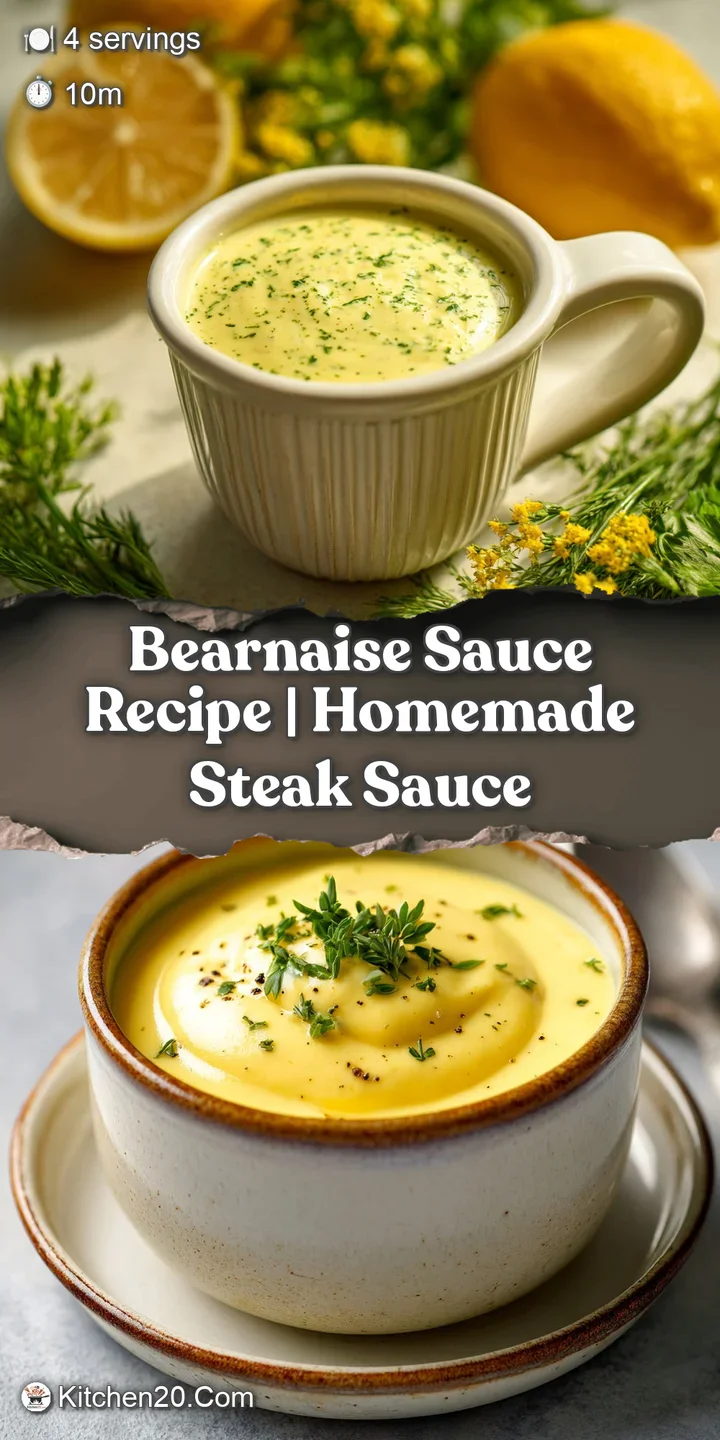
Recipe FAQs
What are the Ingredients of Béarnaise sauce?
Egg yolks, unsalted butter, white wine vinegar, fresh tarragon, shallots, salt, and cayenne pepper are the core ingredients. These components create the rich, herbaceous, and slightly tangy flavor profile that Béarnaise is known for.
The egg yolks act as the emulsifier, butter provides richness, and the vinegar and tarragon give it its signature bite and aroma.
What's the difference between béarnaise and Hollandaise sauce?
Béarnaise is a derivative of Hollandaise, with added fresh tarragon and shallots. While both are emulsified sauces made with egg yolks and butter, Béarnaise includes an aromatic reduction (typically white wine vinegar, shallots, and tarragon) that gives it a distinct herbaceous flavor,
whereas Hollandaise is simpler and often finished with lemon juice.
How to make traditional Béarnaise sauce?
Simmer white wine vinegar, white wine, shallots, tarragon, and peppercorns until reduced to 2 tablespoons. Strain this reduction into a blender with egg yolks, then slowly drizzle in hot, melted butter while blending until thick and emulsified. Stir in fresh tarragon, salt, and cayenne.
What are common Béarnaise sauce mistakes?
Adding butter too quickly or using butter that is too hot are the most common mistakes. These errors can cause the sauce to break, appearing oily and curdled. Overheating can also scramble the egg yolks, resulting in a chunky texture. If you enjoyed mastering the emulsification in this recipe, you might find similar principles at play in our Keto Hollandaise Sauce: Silky Smooth Foolproof Recipe.
Can I make Béarnaise sauce ahead of time?
Yes, but with caution and careful reheating. Béarnaise is best served immediately, but it can be stored in an airtight container in the refrigerator for up to 3 days. To reheat, gently warm it in a double boiler or a bowl set over warm water, whisking constantly to re-emulsify.
Avoid direct high heat, which will break the sauce.
Why is my Béarnaise sauce broken?
A broken Béarnaise sauce typically means the emulsion has failed. This usually happens if the butter was added too quickly, was too hot, or if the sauce was overheated.
You can often salvage it by starting with a fresh egg yolk in a clean bowl and slowly whisking the broken sauce into it, as if you were making the sauce from scratch again.
What's the best way to serve Béarnaise sauce?
Béarnaise is classically served with grilled or pan-seared steaks, but it’s incredibly versatile. It’s also fantastic with fish, chicken, vegetables like asparagus, and even scrambled eggs. If you're looking for other rich sauces to complement main dishes, you might enjoy our Homemade Spaghetti Sauce: Slow Simmered Perfection for a different flavor profile.
Bearnaise Sauce Recipe
Ingredients:
Instructions:
Nutrition Facts:
| Calories | 448 kcal |
|---|---|
| Protein | 2.4 g |
| Fat | 49.1 g |
| Carbs | 1.1 g |
| Fiber | 0.1 g |
| Sugar | 0.3 g |
| Sodium | 296 mg |
