How to Make the Best Homemade Soft Buttery Rolls

- Effort/Time: 2 hours 10 mins (mostly hands-off proofing)
- Flavor Hook: Rich, buttery interior with a salty-sweet glaze
- Perfect for: Holiday-feasts, Sunday-roasts, or make-ahead-sliders
- How to Make the Best Homemade Dinner Rolls: Soft, Buttery Perfection
- The Science of Why it Works
- Ingredients and Substitutions for the Best Homemade Rolls
- How to Make the Best Homemade Dinner Rolls: Step-by-Step
- Troubleshooting Your Homemade Dinner Rolls
- Common Myths about Homemade Rolls
- Storage and Reheating
- Variations and Pairings
- Recipe FAQs
- 📝 Recipe Card
How to Make the Best Homemade Dinner Rolls: Soft, Buttery Perfection
Why You Need This Masterclass
Tired of dense, hockey puck rolls that could double as doorstops? We’ve all been there staring at a tray of bread that looks golden but feels like lead or tastes purely of yeast.
I once spent a whole afternoon on a batch that didn't rise because my milk was too hot, effectively killing the yeast before the first mix. It is a frustrating waste of high-quality ingredients, but it’s a mistake you won’t make today.
Understanding how to make the best homemade rolls requires a balance of temperature control and patience. This recipe focuses on a high fat enrichment strategy that guarantees a soft, velvety texture.
We’re going to use scientific principles to ensure your dough rises perfectly and your crust stays tender rather than tough.
The secret to how to make the best homemade rolls lies in the sizzle of the butter and the precise bloom of the yeast. By the end of this guide, the aroma in your kitchen will be better than any professional bakery. Let's crack on with the science and the steps to make the best homemade rolls!
The Science of Why it Works
- Fat Emulsification: Melted butter coats flour proteins, limiting gluten bond length to create a "short" tender crumb rather than a chewy bread.
- Enzymatic Activation: Granulated sugar provides immediate fuel for yeast, accelerating CO2 production for a faster, more robust rise.
- Osmotic Balance: Precise salt ratios regulate yeast fermentation speed while strengthening the gluten network for better gas retention.
The Science Behind King Arthur All-Purpose Flour
- What It Does
- Provides the structural foundation of the roll.
- The Chemistry
- Gliadin and glutenin proteins hydrate to form a viscoelastic gluten network.
- Why This Matters
- This network traps carbon dioxide bubbles, allowing the dough to expand without collapsing during the bake.
The Science Behind Active Dry Yeast
- What It Does
- Acts as the biological leavening agent.
- The Chemistry
- Fermentation converts sugars into ethanol and carbon dioxide through anaerobic respiration.
- Why This Matters
- The trapped gas creates the airy, honeycomb structure essential for fluffy dinner rolls.
The Science Behind Whole Milk
- What It Does
- Provides liquid hydration, fat, and lactose.
- The Chemistry
- Lactose does not ferment, remaining in the dough to undergo the Maillard reaction.
- Why This Matters
- This ensures a deep golden brown crust and a softer, more velvety interior than water based doughs.
Ingredients and Substitutions for the Best Homemade Rolls
How to make the best homemade rolls depends on quality ingredients. Use a KitchenAid Stand Mixer for the most consistent kneading results and a USA Pan Baking Sheet for even heat distribution.
| Original Ingredient | Substitute | Why It Works |
|---|---|---|
| 1 cup Warm Whole Milk | Unsweetened Soy Milk | Similar protein/fat ratio; maintains soft crumb without dairy. |
| 0.5 cup Unsalted Butter | Refined Coconut Oil | 1:1 fat replacement; provides moisture but adds a faint tropical note. |
| 1 Large Egg | 1/4 cup Unsweetened Applesauce | Adds moisture and binding pectin, though the final rise will be slightly denser. |
| 3.75 cups AP Flour | Bread Flour | Higher protein content creates a chewier, more structural roll. |
How to Make the Best Homemade Dinner Rolls: step-by-step
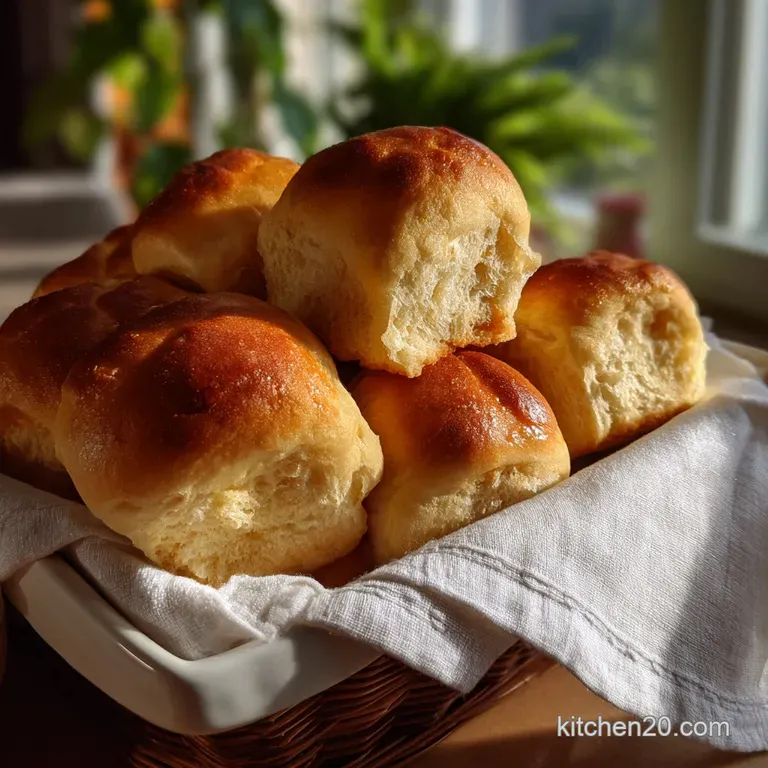
Learning how to make the best homemade bread starts with monitoring your temperatures.
- Bloom the yeast. Combine 1 cup warm whole milk (105°F–115°F) with 2.25 tsp active dry yeast and 0.25 cup granulated sugar in your KitchenAid bowl. Note: Warmth triggers enzymatic activity, while sugar provides the fuel for rapid CO2 production.
- Incorporate fats and binders. Whisk in 0.5 cup melted, cooled unsalted butter and 1 large egg until smooth. Note: Fat molecules coat proteins to prevent excessive gluten formation, ensuring a velvety texture.
- Form the dough. Add 1 tsp fine sea salt and 3.75 cups all-purpose flour. Note: Mechanical kneading aligns gluten strands into a strong, flexible matrix.
- Knead until tacky. Use the dough hook on medium low for 5 to 7 minutes until the dough clears the sides. Note: The dough should be smooth and elastic, indicating the gluten network is fully developed.
- First Proof. Place in a greased bowl, cover, and let rise in a warm spot for 1 hour or until doubled. Note: This fermentation period allows the yeast to create the internal honeycomb structure.
- Shape the rolls. Punch down and divide into 15 equal portions, rolling into tight spheres. Note: Surface tension created during shaping ensures the rolls rise upward rather than spreading outward.
- Second Proof. Place in a 9x13 pan, cover, and let rise for 45 minutes. Note: This final expansion ensures the rolls are light and airy before entering the oven.
- Bake to golden. Bake at 375°F for 20 minutes until the tops are golden brown. Note: The Maillard reaction occurs at high heat, creating the characteristic toasted flavor and color.
- Glaze and finish. Brush with 2 tbsp melted unsalted butter and sprinkle with a pinch of flaky sea salt. Note: The butter glaze softens the crust while the salt provides a sharp sensory contrast.
Chef's Tip: To check if the dough is ready, use the "Windowpane Test." Stretch a small piece of dough; if it becomes translucent without tearing, your gluten is perfectly developed.
Troubleshooting Your Homemade Dinner Rolls
If you are learning how to make the best homemade rolls, you might encounter these common hurdles.
| Problem | Why It Happens | The Fix | Pro Protocol |
|---|---|---|---|
| Dense Rolls | Under proofing or dead yeast | Check milk temp; allow dough to double in size | Use a Thermopro Digital Thermometer for 110°F milk |
| Tough Crust | Over kneading | Stop once dough is smooth and tacky | Use the "Windowpane Test" to check gluten development |
| Yeast didn't foam | Liquid too hot (>120°F) | Use lukewarm milk only | Wait 10 mins; if no foam, start over with fresh yeast |
Common Myths about Homemade Rolls
Myth: You must knead dough for 20 minutes by hand to get it right. Truth: Over kneading destroys the air pockets; 5 8 minutes in a mixer is sufficient for 1 hour light and buttery dinner rolls.
Myth: Sugar is only added for flavor. Truth: Sugar is hygroscopic; it holds moisture in the roll, preventing it from drying out during the 20 minutes of baking. Knowing this is key to how to make the best homemade bread that stays fresh.
Storage and Reheating
Learning how to make the best homemade rolls also means knowing how to keep them fresh.
- Fridge: Store in an airtight container for up to 5 days.
- Freezing: These perfectly soft buttery rolls freeze for up to 2 months. Wrap them individually in plastic wrap then place in a heavy duty freezer bag.
- Reheating: To restore that fresh baked sizzle, wrap rolls in foil and heat in a 350°F oven for 10 minutes. This prevents the rolls from becoming "shatter" dry in the microwave.
Variations and Pairings
If you want to vary this recipe, try brushing the tops with Garlic Butter: Homemade Spread Ready in 5 Minutes immediately after baking. These rolls also pair beautifully with a fresh salad featuring Our Favorite Homemade Caesar Salad: Velvety Dressing.
For a cozy dinner, use these homemade rolls to soak up the extra sauce from my Homemade Spaghetti Sauce: Slow Simmered Perfection. The soft crumb is the perfect vessel for rich, tomato based gravies.
Mastering how to make the best homemade rolls is a skill that will serve you for every holiday and family gathering. Once you see that first batch emerge golden and fragrant from the oven, you'll never go back to store-bought.
Trust me, the extra effort of a two-hour rise is worth the velvety, melt-in-your mouth result. Now that you know how to make the best homemade rolls, it's time to get your KitchenAid ready and start baking!

Recipe FAQs
What is the ideal water temperature for activating instant yeast?
95°F to 105°F (35°C to 40°C). Water hotter than 120°F denatures the yeast enzymes, killing the required microbial activity. Cooler water slows the fermentation rate significantly, extending proof time.
Should I use bread flour or all-purpose flour for softer rolls?
Bread flour yields better results due to higher protein. Higher protein content (12-14%) allows for greater gluten network formation, trapping gases effectively for a higher rise and chewier texture.
Is it mandatory to include an egg wash for a golden crust?
No, milk or cream provides superior browning. Egg washes brown faster due to higher sugar/protein content, sometimes resulting in a tough shell. Cream provides higher fat content for a softer, richer mahogany finish.
Why do my rolls deflate after coming out of the oven?
Underbaking causes structure collapse due to steam evaporation. The cell walls rely on fully set starch and coagulated protein structures, which require a minimum internal temperature of 205°F to stabilize.
If they are removed too soon, the internal steam escapes rapidly, collapsing the soft matrix.
- Ensure internal temp reaches 205°F
- Cool rolls on a wire rack
- Avoid crowding the baking pan
Do I need to fully melt the butter before mixing it in?
Room temperature, softened butter works best for emulsification. Fully melted butter, especially if hot, can scorch the yeast and disrupt the dough structure by adding too much localized liquid. If you are making a side condiment, consider the glaze technique used in our Homemade Ketchup: The Best Rich, Spiced Classic Recipe for flavor blending.
Myth: Adding sugar slows down yeast activity substantially.
Myth: Adding sugar slows down yeast activity substantially. Reality: Small amounts of sugar act as initial food for the yeast, promoting robust bloom; excessive amounts (over 20% flour weight) can draw water out via osmosis, inhibiting growth.
Myth: Proofing dough in the refrigerator creates a superior flavor profile.
Myth: Proofing dough in the refrigerator creates a superior flavor profile. Reality: Cold fermentation develops complex organic acids and alcohols over time, mimicking bakery style depth. A quick room temperature proof prioritizes tenderness, similar to the quick set methods found in recipes like the Simple Granola: The Perfectly Clustered Homemade Recipe.
Best Homemade Soft Butter Rolls
Ingredients:
Instructions:
Nutrition Facts:
| Calories | 213 kcal |
|---|---|
| Protein | 4.4 g |
| Fat | 9.1 g |
| Carbs | 28.5 g |
| Fiber | 0.9 g |
| Sugar | 3.5 g |
| Sodium | 178 mg |
