Broccoli Rabe Recipe: Silky Stalks
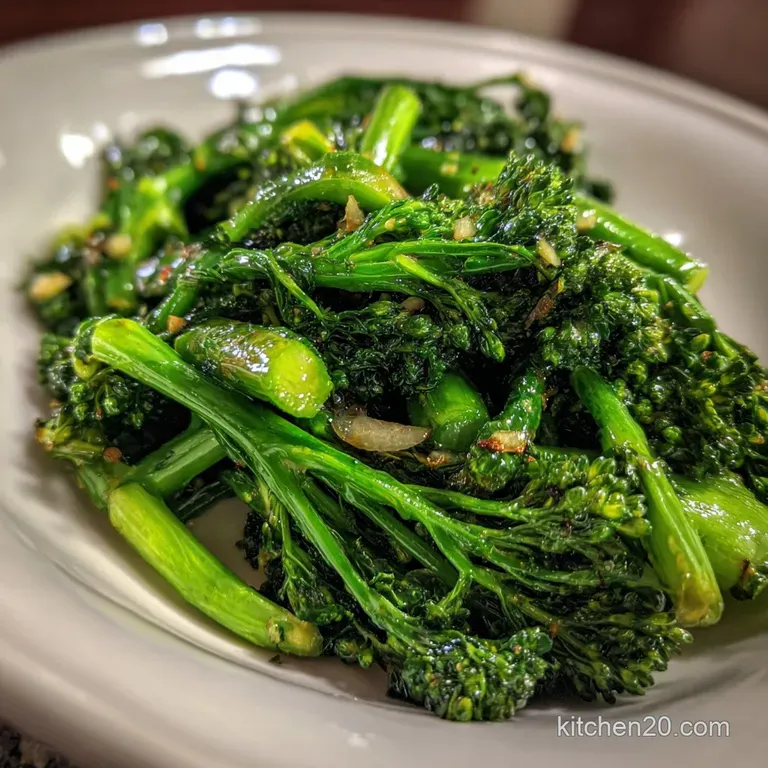
- Time: Active 10 mins, Passive 5 mins, Total 15 mins
- Flavor/Texture Hook: Silky stalks with a sharp, garlicky shatter
- Perfect for: Bold side dishes or a spicy pasta base
- Mastering a Bold and Zesty Broccoli Rabe Recipe
- Why This Method Truly Works
- Strategic Component Analysis for Flavor
- Essential Ingredients for a Better Result
- Modern Tools for Professional Cooking
- Steps for a Silky Broccoli Finish
- Resolving Common Issues and Cooking Blunders
- Ways to Transform Your Basic Dish
- Keeping Your Greens Fresh and Tasty
- Finding the Perfect Meal Sidekick
- Recipe FAQs
- 📝 Recipe Card
Mastering a Bold and Zesty Broccoli Rabe Recipe
The first time I tried to cook rapini, I basically made a pile of bitter, soggy lawn clippings. I didn't understand why people loved it until I stood in a tiny kitchen in South Philly, watching a chef drop a massive bunch of greens into a pot of roaring salt water.
The sound of the sizzle when those blanched greens hit a lake of hot garlic oil was a total turning point for me. It wasn't just cooking; it was a platform for understanding how to balance aggressive flavors.
Now, I look at this broccoli rabe recipe as a way of revolutionizing how we handle tough greens. It’s about connecting the sharp bite of the vegetable with the mellow richness of extra virgin olive oil.
We’ve all been there, staring at a bunch of rapini wondering if it's going to be too "green" or too tough, but trust me on this: the blanch and sear method is the only way to go. It’s a connected way of cooking that respects the ingredient while making it actually enjoyable to eat.
Why This Method Truly Works
- Chlorophyll Locking: The brief plunge in salted boiling water stops enzymatic activity, keeping the greens from turning a dull, muddy brown.
- Alkaline Buffering: Salted water helps break down the tough hemicellulose in the stalks without turning the florets into mush.
- Cold Shocking: Stopping the cook immediately in cold water preserves a snappy, silky texture that survives the final pan sear.
- Infusion Dynamics: Slicing the 5 large garlic cloves thinly allows them to crisp up like chips rather than burning into bitter nubs.
The Science of the Blanch
The secret to this broccoli rabe recipe lies in over high heat osmosis. When you boil the greens in heavily salted water, the salt penetrates the cell walls, seasoning the vegetable from the inside out while drawing out the bitter glycosides that often overwhelm the palate.
| Prep Stage | Water Temp | Visual Cue | Result |
|---|---|---|---|
| Blanching | 212°F (Boiling) | Deep forest green | Bitterness removed |
| Ice Bath | 32-40°F (Chilled) | Color stabilizes | Cooking stops instantly |
| Sautéing | 350°F (Med High) | Garlic turns golden | Smoky, nutty finish |
This quick decision table helps you navigate the transition from raw to ready. It ensures you never overcook the delicate florets while waiting for the thicker stalks to soften.
Strategic Component Analysis for Flavor
Getting the right balance in a broccoli rabe recipe requires understanding your fats and aromatics. Using 3 tbsp extra virgin olive oil isn't just for lubrication; it’s the primary flavor carrier for the 1 tsp red pepper flakes. If you want to explore more flavored fats, you might enjoy the garlic heavy profile of The Bayou Bomb recipe for future vegetable roasts.
| Ingredient | Science Role | Pro Secret |
|---|---|---|
| Broccoli Rabe | Structural base | Trim the bottom inch to remove the woodiest fibers. |
| Garlic Cloves | Aromatic sulfur | Slice thin to maximize surface area for even browning. |
| Red Pepper Flakes | Heat catalyst | Add to cold oil to infuse the fat without scorching. |
Choosing the right fat is crucial for the final mouthfeel. I always reach for a high-quality oil because it coats the tongue and mitigates the sharpness of the greens.
Essential Ingredients for a Better Result
- 1 lb broccoli rabe (rapini): Look for tight buds and leaves that aren't wilted.
- Substitute: Broccolini (similar look, much sweeter and less bitter). Why this? Maintains the aesthetic but changes the flavor profile.
- 5 large garlic cloves: Use fresh, firm cloves for the best aromatic output.
- Substitute: 1 tsp garlic powder (in a pinch). Why this? Adds flavor but lacks the texture of fried garlic slices.
- 3 tbsp extra virgin olive oil: This is your flavor foundation.
- Substitute: Avocado oil. Why this? Higher smoke point but loses the fruity olive notes.
- 1 tsp red pepper flakes: Controls the background heat.
- Substitute: Fresh chopped Thai bird chili. Why this? Offers a brighter, more immediate heat signature.
- 1 tbsp fresh lemon juice: Provides the necessary acid.
- Substitute: Apple cider vinegar. Why this? Tangy, though slightly more fermented in flavor.
- 1/2 tsp coarse sea salt: For final seasoning and crunch.
- Substitute: Kosher salt. Why this? Dissolves quickly and is easy to pinch for even coverage.
Modern Tools for Professional Cooking
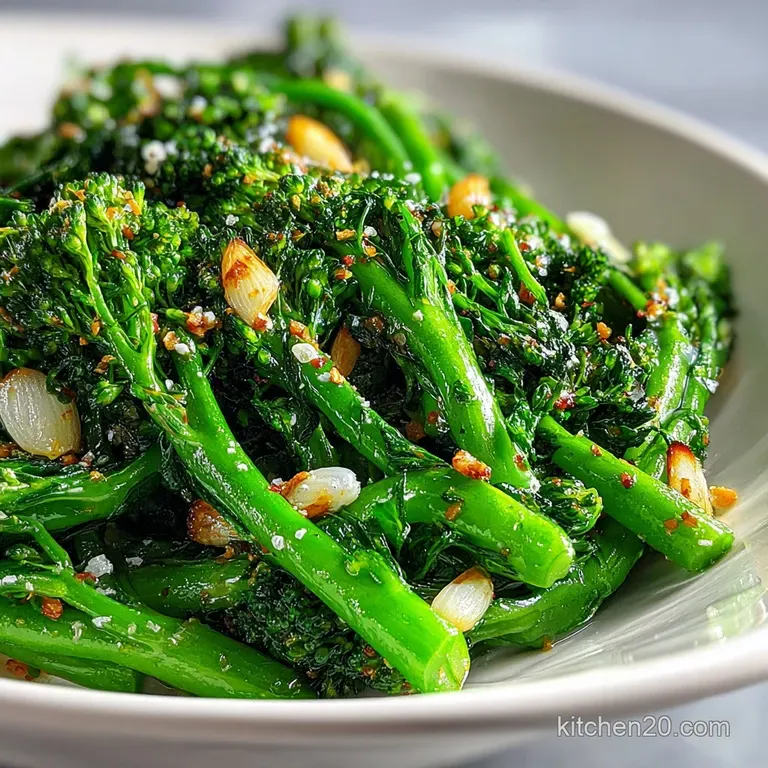
You don't need a lab, but a few specific tools make this broccoli rabe recipe much easier to manage. A large 12 inch stainless steel or cast iron skillet is best for the final sauté. The wide surface area allows moisture to evaporate quickly so the greens sear instead of steam.
Chef's Tip: Freeze your garlic cloves for 10 minutes before slicing. It firms up the cloves, allowing you to get paper thin "Goodfellas" style slices that shatter beautifully in the mouth.
You’ll also want a set of sturdy tongs. This isn't just about flipping; it’s about tossing the greens constantly in the garlic oil to ensure every leaf is coated in that liquid gold.
Steps for a Silky Broccoli Finish
- Trim the stems. Cut the bottom inch off the 1 lb broccoli rabe. Note: This removes the toughest, most fibrous part of the plant.
- Boil the water. Bring a large pot of salted water to a rolling boil.
- Blanch the greens. Drop the rapini into the water for 2 minutes until the stalks are slightly tender but still firm.
- Shock in ice. Immediately move the greens to a bowl of ice water. Note: This locks in the color and stops the softening process.
- Dry thoroughly. Pat the greens dry with a clean towel. You want zero surface moisture before they hit the oil.
- Infuse the oil. Add 3 tbsp extra virgin olive oil, 5 sliced garlic cloves, and 1 tsp red pepper flakes to a cold skillet.
- Toast the garlic. Turn heat to medium and cook until garlic is golden and fragrant.
- Sear the greens. Increase heat to medium high and add the dried broccoli rabe.
- Toss and glaze. Sauté for 3 minutes until the leaves are slightly charred and the stalks are velvety.
- Finish with acid. Remove from heat and stir in 1 tbsp fresh lemon juice and 1/2 tsp coarse sea salt.
Plating for the Platform
- Level 1: Simple: Serve in a warm bowl, letting the garlic slices sit naturally on top.
- Level 2: Polished: Arrange on a long platter, topped with a micro plane grating of fresh lemon zest and an extra drizzle of oil.
- Level 3: Restaurant: Create a tight nest of greens, topped with a parmesan tuile and a sprinkle of toasted pine nuts for texture.
| Plating Level | Key Addition | Visual Impact |
|---|---|---|
| Simple | Garlic chips | Rustic and homey |
| Polished | Lemon zest | Bright and intentional |
| Restaurant | Pine nuts | High end and textural |
Resolving Common Issues and Cooking Blunders
Why Your Broccoli Rabe is Soggy
If your greens are swimming in liquid, they weren't dried enough after the blanching step. Residual water creates steam in the pan, which prevents the Maillard reaction from occurring. Always use a kitchen towel or a salad spinner to get them bone dry.
Dealing with Intense Bitterness
Sometimes a batch of rapini is just naturally more aggressive. If the lemon juice doesn't cut through it, a tiny pinch of sugar can help. It doesn't make the dish sweet; it simply confuses the bitter receptors on your tongue.
| Problem | Root Cause | Solution |
|---|---|---|
| Burnt Garlic | Heat was too high too fast | Start garlic in cold oil to render flavor slowly. |
| Tough Stalks | Under blanched | Boil for an extra 60 seconds before the ice bath. |
| Grey Color | Overcooked or no ice bath | Ensure the water is boiling before adding greens. |
Common Mistakes Checklist
- ✓ Skipping the blanching step (leads to excessive bitterness)
- ✓ Slicing garlic too thick (prevents it from becoming crispy)
- ✓ Adding lemon juice too early (can dull the green color)
- ✓ Overcrowding the pan (causes the greens to steam rather than sear)
- ✓ Using low quality oil (the oil is a major flavor component here)
Ways to Transform Your Basic Dish
Scaling this broccoli rabe recipe is simple. If you are cooking for a crowd (UP 2x), don't double the red pepper flakes immediately; go to 1.5x and taste. You’ll want to work in batches during the sauté phase to keep the pan temperature high.
For a smaller portion (DOWN 1/2), you can use a smaller skillet, but keep the garlic amount the same you can never have too much garlic.
If you enjoy the charred flavor profile of this dish, you might also like my How to Roast recipe for frozen broccoli, which uses similar over high heat principles.
Crafting a Sausage and Broccoli Rabe Pasta
Turn this side into a full meal by browning some crumbled Italian sausage in the pan before adding the garlic. Once the greens are seared, toss in some cooked orecchiette and a splash of pasta water. It’s a classic for a reason the fat from the sausage beautifully rounds out the rapini.
Keeping Your Greens Fresh and Tasty
- Fridge
- Keep leftovers in an airtight container for up to 3 days. The garlic will mellow, but the greens will still taste great.
- Freezer
- I don't recommend freezing the cooked dish as the texture becomes quite mushy upon thawing.
- Reheating
- Use a hot skillet with a tiny bit of oil to bring back the crispness. Microwave reheating tends to make the greens rubbery.
Zero Waste Tips Don't throw away those trimmed stem ends! If you peel the tough outer skin with a vegetable peeler, the inside is tender and sweet. You can dice them small and toss them into a soup or a vegetable stock.
Even the lemon rinds can be used throw them into your garbage disposal to freshen it up after you've squeezed the juice.
Finding the Perfect Meal Sidekick
This broccoli rabe recipe is the ultimate partner for heavy, fatty meats. It cuts through the richness of a ribeye steak or a roasted pork shoulder like nothing else. If you're looking for a more "connected" meal prep strategy, serve these greens alongside a simple grilled chicken breast.
I also love pairing this with a creamy polenta. The contrast between the soft, buttery cornmeal and the sharp, garlicky greens is absolute perfection. If you want a more complex Italian inspired spread, consider making a batch of Greek Cucumber Sauce recipe — while traditionally for gyros, the cooling yogurt and dill can be a surprisingly refreshing dip for the spicy stalks of rabe.
At the end of the day, this recipe is about the platform of flavor you build. Don't be afraid of the heat or the garlic; that's where the soul of the dish lives. Enjoy the sizzle!
Recipe FAQs
What takes the bitterness out of broccoli rabe?
Blanching in salted boiling water. A quick dip stops enzymatic activity and draws out bitter compounds. Shocking it immediately in an ice bath halts the cooking and preserves its bright flavor and texture.
What is the best way to eat broccoli rabe?
Sautéed with garlic and olive oil. Blanching followed by a quick sear in hot oil with thinly sliced garlic and red pepper flakes tames bitterness and creates a delicious, slightly charred flavor. This method pairs wonderfully with rich meats or as a vibrant pasta component.
How do restaurants make broccoli taste so good?
Proper technique and flavor layering. Restaurants often blanch their greens to remove bitterness, then quickly sear them in hot oil with ample garlic and chili for a punchy flavor. High heat and quality ingredients are key to achieving that desirable texture and taste, much like the flavor infusion in The Bayou Bomb recipe.
Why do Italians love broccoli rabe?
It's a cornerstone of robust, earthy Italian cuisine. Its slightly bitter, peppery profile balances rich, fatty dishes like sausage or pork. The traditional preparation, often with garlic, chili, and olive oil, highlights its unique character.
Can I substitute broccolini for broccoli rabe?
Yes, with a caveat. Broccolini offers a similar appearance and is much less bitter, making it a sweeter, milder alternative. While it won't have the characteristic rapini bite, it's a great option if you're sensitive to bitterness.
How do I prevent broccoli rabe from being too bitter?
Start with a good blanching. Salting the boiling water helps draw out bitter compounds. Don't overcook it; a quick blanch followed by a high heat sauté ensures it's tender but not mushy. Adding a squeeze of lemon juice at the end also helps cut through any lingering bitterness.
What do you serve with broccoli rabe?
Hearty meats and starchy sides. Broccoli rabe's assertive flavor pairs wonderfully with rich dishes like Italian sausage, pork roasts, or grilled steak. It also complements creamy polenta or pasta dishes. For a refreshing contrast, try it with something like Kidney Bean Salad: The Quintessential Tangy Picnic Hit.
Broccoli Rabe Recipe
Ingredients:
Instructions:
Nutrition Facts:
| Calories | 123 kcal |
|---|---|
| Protein | 3.9 g |
| Fat | 10.7 g |
| Carbs | 4.7 g |
| Fiber | 3.1 g |
| Sugar | 0.5 g |
| Sodium | 375 mg |
