The Chefs Classic Creamy Roasted Tomato Soup a Proper Cracker
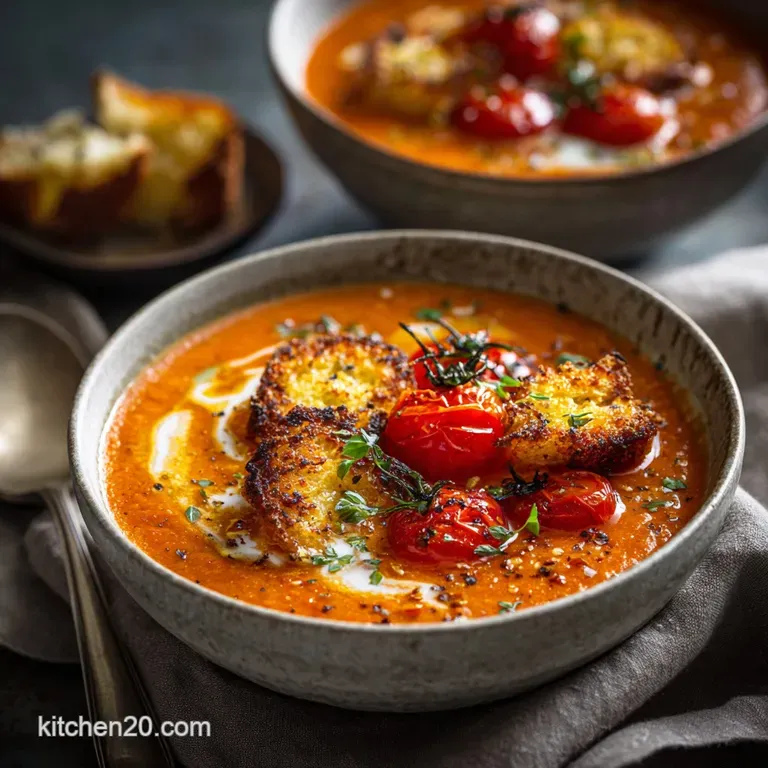
- The Secret to Unlocking Next-Level Umami in Tomato Soup
- Why Roasting Changes Everything: A Deep Dive into Flavor Chemistry
- Essential Components for the Perfect Creamy Roasted Tomato Soup
- Tools of the Trade: Equipment for Chef-Level Preparation
- The Four Phases of Flavor Building: Step-by-Step Cooking Guide
- From Raw Vegetable to Velvety Comfort: Detailed Execution
- Making the Most of Your Homemade Tomato Soup: Serving and Storage
- Troubleshooting and Customization: Adapting the Recipe
- Recipe FAQs
- 📝 Recipe Card
The Secret to Unlocking Next Level Umami in Tomato Soup
Many home cooks settle for serviceable Tomato Soup Recipes , often relying solely on tinned ingredients for expediency. While quick soups have their place, achieving a depth of flavor that borders on transcendent requires a deliberate technique: roasting.
This process is the secret weapon of professional chefs, transforming the simple, sharp acidity of a fresh tomato into a concentrated, rich sweetness. When we speak of true comfort food that soul satisfying bowl that perfectly complements a classic tomato soup and grilled cheese sandwich we are talking about a soup built on foundation of deep, smoky umami, not just boiled vegetables.
This method elevates standard Tomato Soup beyond recognition, making it worthy of the extra effort and time required for achieving proper, homemade bliss.
Why Roasting Changes Everything: A Deep Dive into Flavor Chemistry
Roasting is fundamentally a chemical shortcut to maturity. When vine tomatoes are exposed to high heat (specifically 400° F or 200° C for this recipe), two transformative reactions occur.
First, the high water content of the fruit rapidly evaporates, significantly concentrating the natural sugars and flavor compounds. Second, the Maillard reaction kicks in, causing the tomatoes to caramelize around the edges.
This browning contributes a slight smokiness and a savory complexity that cannot be replicated by simple simmering. The result is a profile perfectly primed for the ultimate Roasted Tomato Soup .
Selecting the Best Tomato Varieties for Roasting
To maximize the benefits of caramelization, you need tomatoes that are ripe but not overly juicy. For crafting the perfect batch of tomato soup with fresh tomatoes , select sturdy varieties like ripe vine tomatoes or Roma tomatoes (about 1.5 lbs, or 680g).
These have a meatier texture and lower liquid content than standard beefsteaks, ensuring that they collapse beautifully and concentrate their flavor rather than dissolving into a watery mess during their 40-minute oven time.
They should be halved or quartered and tossed generously with olive oil, oregano, salt, and pepper before hitting the baking sheet, along with a whole head of garlic to mellow its bite.
Acidity vs. Sweetness: Achieving the Perfect Culinary Balance
The signature challenge of any great tomato preparation is balance. Raw tomatoes carry inherent acidity, which can translate into a sharp, sometimes thin flavor in a finished soup. Roasting naturally mitigates some of this, but it’s crucial to manage the final taste profile.
Our recipe utilizes a small teaspoon of granulated sugar added during the simmering phase to subtly counteract residual sharpness. Even more critical for achieving true harmony is the optional addition of one teaspoon of balsamic vinegar right at the end; this brightens the soup’s flavor, offering a necessary contrast that prevents the rich, caramelized base from tasting flat.
The Difference Between Tinned and Truly Homemade Soup
While the cornerstone of this recipe is the use of roasted fresh tomatoes, a truly robust, full bodied soup requires volume and consistent color, which is where high-quality tinned ingredients shine.
For a deeply satisfying tomato soup from scratch , we utilize two large cans of San Marzano style whole tomatoes alongside the fresh roasted batch. This duality freshly roasted complexity married with the robust body and low acidity of premium tinned products is what separates a merely good soup from a truly exceptional one.
Essential Components for the Perfect Creamy Roasted Tomato Soup
The transition from a rustic roasted vegetable to a smooth, elegant finish relies heavily on the quality of the secondary components. This isn't just about cooking; it’s about assembling a synergy of texture and taste that defines the classic comfort food experience.
Achieving that hallmark velvety texture for a true Creamy Tomato Soup requires careful selection of fats and liquids, ensuring every spoonful is rich and luxurious. This method ensures that even among the best Vegetarian Soup Recipes , this one stands out for its depth.
Tools of the Trade: Equipment for Chef Level Preparation
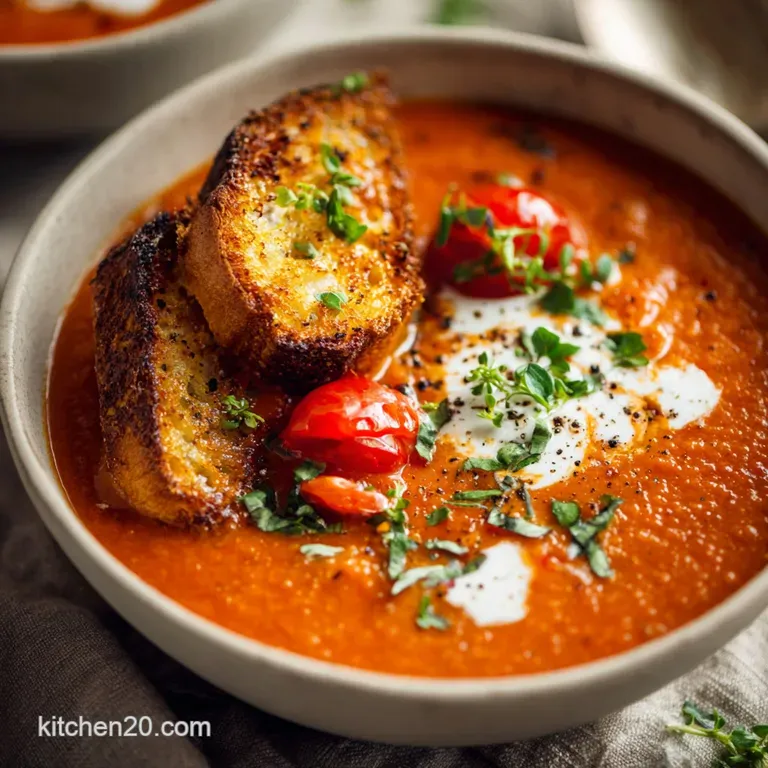
This is a remarkably straightforward recipe, yet having the correct equipment makes the difference between an arduous preparation and a seamless culinary experience. Essential tools include a large baking sheet for efficient roasting, a robust stock pot (a minimum of 4 quarts/4 liters) to accommodate the almost 2 liters of liquid this recipe yields, and, most importantly, a reliable blending apparatus for achieving the requisite velvety finish.
Aromatics That Elevate: The Role of Garlic, Shallots, and Herbs
The aromatic base provides the necessary foundation beneath the powerful tomato flavor. We begin by roasting a whole head of garlic, the resulting paste being far sweeter and nuttier than raw garlic.
This paste is incorporated with a finely diced yellow onion and two medium carrots, sautéed gently in butter until the vegetables are profoundly soft a process that takes about 8– 10 minutes.
This delicate sautéing, avoiding any browning, builds a sweet, savory foundation. The herbaceous note comes purely from fresh basil, which is stirred in right at the end of the simmering process, contributing its distinct, slightly peppery lift.
Cream or Milk? Mastering the Velvety Finish
For the signature, luxurious texture of this Creamy Tomato Soup , double cream (heavy cream) is non-negotiable. While lighter milks can be used, only heavy cream provides the necessary fat content (1/2 cup or 120 ml) to fully emulsify into the blended soup base, resulting in that velvety mouthfeel.
It is crucial to remember that once the cream is added, the soup should only be heated gently until warmed through; bringing it to a boil risks splitting the cream and ruining the smooth texture.
The Non-Negotiable Ingredients: high-quality Stock and Proper Seasoning
The liquid volume required (4 cups or 950 ml) demands a low-sodium chicken or vegetable stock. Using low-sodium liquid allows you, the cook, to maintain total control over the seasoning, which is paramount in a simple recipe where every ingredient needs to shine.
Seasoning should occur in multiple stages: generously before roasting, after the simmer, and finally, right before serving. A touch of balsamic vinegar at the very end acts as a flavor brightener that truly makes the final taste pop.
Kitchen Gadgets for Seamless Soup Blending
The final velvety texture is dependent upon the quality of the blend. While an immersion stick blender offers convenience, a high powered countertop blender is superior for achieving a truly smooth, professional texture.
Safety is key when blending hot liquids: only fill the blender jar halfway, always secure the lid, and crucially, remove the small stopper (the filler cap) and cover the resulting hole with a folded kitchen towel to allow steam to escape while preventing explosive hot splatters.
For the ultimate silky finish, the soup can be strained through a fine mesh sieve after blending, eliminating any remaining tiny seeds or vegetable fibers.
Related Recipes Worth Trying
- The Best Classic Fresh Tomato Bruschetta Recipe Easy NoSoggy Base — My foolproof Homemade Tomato Bruschetta with Basil is pure summer joy Learn the pro secret how to drain the tomatoes for that perfect crisp crostini base...
- The Vibrant Ginger Turmeric Healthy Detox Soup Silky Smooth — Ditch the blandness This silky luxurious Healthy Detox Soup is packed with vibrant greens and warming turmeric Its a truly satisfying Clean Eating Soup...
- The Golden Healer Ginger Turmeric Chicken Detox Soup Recipe — This Chicken Detox Soup recipe skips the blandness for deep flavour using ginger and turmeric for a truly restorative Keto Soup Perfect for a clean eating reset
The Four Phases of Flavor Building: step-by-step Cooking Guide
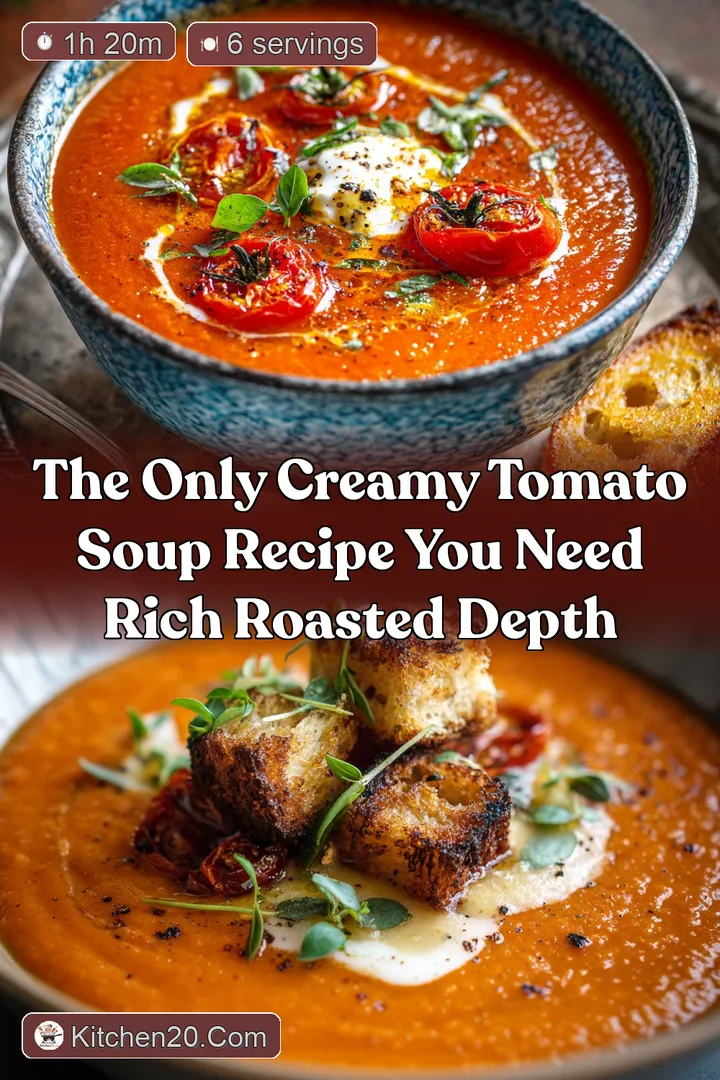
The preparation of this excellent soup, yielding six generous servings, can be broken down into four distinct, logical stages, requiring a total of about 1 hour and 20 minutes of effort.
The first phase is the foundational roasting of the fresh ingredients to build concentrated flavor; the second involves sautéing the aromatics to create a savory base; the third is the crucial simmering and reduction period where the liquids concentrate; and the final phase is the careful blending and finishing with cream and balsamic vinegar.
From Raw Vegetable to Velvety Comfort: Detailed Execution
The overall process is a testament to the power of layering flavors, making this one of the most rewarding Easy Soups you can master.
Roasting for Depth: Preparation and Pan Layout
The initial step requires preheating the oven to 400° F ( 200° C). The 1.5 lbs of fresh vine tomatoes and the whole head of garlic (top sliced off) are spread across a large baking sheet.
They are tossed together with 3 tablespoons of extra virgin olive oil, 1 teaspoon of dried oregano, and generous salt and pepper. The sheet is then placed in the hot oven for 35 to 40 minutes, achieving significant caramelization.
Once the tomatoes are shrivelled and browned at the edges, the pan is removed, and the roasted garlic is squeezed out of its papery skin into a bowl, forming a sweet paste for the next step.
Sautéing the Foundation: Building the Base Flavors
Next, move to the stove. In the stock pot, 2 tablespoons of unsalted butter are melted over medium heat. The diced large yellow onion and diced carrots are added and cooked slowly for 8 to 10 minutes until they are translucent and very soft the goal here is sweetness, not color.
The reserved roasted garlic purée is then stirred in for one fragrant minute, ensuring the concentrated flavor is properly married with the sautéed base.
Simmering and Reduction: Concentrating the Liquid Gold
The wet ingredients are introduced next. Add the contents of the two 28 oz cans of whole tinned tomatoes (breaking them up with your hands or a spoon) and 4 cups of hot stock. The teaspoon of sugar is added along with seasoning.
The mixture is brought to a gentle boil, then reduced to a simmer, uncovered, for 15 minutes. This simmering stage is vital as it allows the liquid to reduce slightly, intensifying the tomato flavor.
Finally, the entire contents of the roasting pan, including any delicious accumulated juices, and the half cup of fresh basil leaves are stirred in, cooking for just two more minutes.
Blending Techniques for the Ultimate Smooth Texture
Once the simmering is complete, it's time to transform the soup into its final, velvety form. Working in batches, the soup must be transferred carefully to a high powered blender and processed until perfectly smooth. If using an immersion blender directly in the pot, ensure the base is thoroughly blitzed.
For truly professional results, the finished blended liquid should be passed through that fine mesh sieve back into a clean pot. The soup is then returned to low heat, and the half cup of heavy cream and 1 teaspoon of balsamic vinegar are stirred in until warmed through, completing the creation of this stunning Creamy Tomato Soup .
Making the Most of Your Homemade Tomato Soup: Serving and Storage
This robust, homemade soup is perfect for meal prep or for those impromptu weekend lunches. It holds up beautifully and, arguably, tastes even better the day after it’s made.
Troubleshooting and Customization: Adapting the Recipe
Part of the joy of high-quality Tomato Soup Recipes is the ease with which they can be customized to suit taste or dietary needs.
The Perfect Pairing: Executing the Ideal 'Cracker' (Cheese Toastie)
No discussion of proper homemade tomato soup is complete without mentioning its perfect culinary partner: the grilled cheese sandwich, or "cheese toastie." This combination is so classic it has its own devoted fan base.
To achieve the ideal accompaniment for your tomato soup and grilled cheese moment, use a sourdough loaf, buttered generously on the outside, and a sharp, mature cheddar.
Cooked slowly in a pan until the bread is crisp and the cheese is molten, the resulting crunch and savory sharpness provides the necessary textural and flavor contrast to the smooth, rich soup.
Meal Prep Mastery: Safe Storage and Reheating Tips
This recipe yields a generous amount, making it excellent for batch cooking. The soup stores safely in an airtight container in the refrigerator for up to four days. It also freezes well for up to three months. If you plan to freeze the soup, it is highly recommended that you omit the heavy cream initially.
Dairy products can sometimes separate or become grainy when frozen and thawed. Simply thaw the soup base, reheat gently, and stir in the heavy cream and balsamic vinegar once it’s hot, right before serving.
Dietary Tweaks: Making This Recipe Vegan or dairy-free
This preparation adapts readily for specific diets. To make this one of the best Vegetarian Soup Recipes , simply ensure you utilize a low-sodium vegetable stock rather than chicken stock.
For a completely dairy-free or vegan option, replace the unsalted butter with olive oil when sautéing the aromatics. The heavy cream can be swapped out for a full fat coconut milk (using the thick, solidified cream from the can) or a high-quality oat cream alternative.
The rich texture will be maintained without compromising the depth of flavor imparted by the roasting process.
Nutritional Breakdown: Understanding the Health Benefits of Tomatoes
Beyond its incomparable taste, this homemade creation offers genuine nutritional benefits. Tomatoes are a powerhouse of Vitamin C and a concentrated source of Lycopene, a potent antioxidant particularly known for heart health benefits.
The process of roasting and simmering actually increases the bioavailability of Lycopene, making this hearty meal not only one of the simplest Easy Soups to prepare but also a healthy addition to your rotation.
Recipe FAQs
How do I stop my homemade Tomato Soup tasting too sour or acidic?
If your brilliant homemade Tomato Soup is tasting a bit too sharp or acidic, fear not this is common, especially with winter tomatoes! The key is balancing the flavour profile.
Ensure you include the teaspoon of sugar and the small dash of balsamic vinegar mentioned in the recipe; these are crucial for lifting and softening the acidity.
For an extra safety net, a tiny pinch (about 1/8 teaspoon) of baking soda stirred in right at the end can chemically neutralise extreme acidity without altering the overall flavour dramatically. Just ensure it fully dissolves!
Can I make a big batch of this and freeze it for a rainy day?
Absolutely, batch cooking is a genius move for this recipe! You can certainly make and freeze large portions, but hold your horses on the cream.
For best results, stop the recipe right before Step 11 (adding the double cream and balsamic). Freeze the finished, blended tomato base, and when you reheat a portion, stir in the fresh cream then. Dairy tends to separate and become gritty when frozen and thawed, making for a less than velvety texture.
My soup is grainy, not creamy and velvety. What went wrong?
For a proper silky finish, blending is paramount. Graininess usually stems from either seeds/skin remnants or failing to process the soup long enough.
If you have the time, pushing the blended soup through a fine mesh sieve back into the pot is the ultimate trade secret for restaurant quality texture. If the graininess appeared after adding cream, your soup might have been too hot and split the dairy remember to only heat gently once the cream is stirred in.
I’m making this vegan; what’s the best substitute for the cream and butter?
You have brilliant options for a dairy-free rendition! Swap the butter for good quality olive oil when sautéing the base vegetables (onion and carrot).
For the creamy finish, full fat coconut milk works wonders use the thick, solidified cream layer from the top of the can for maximum richness. Alternatively, a high-quality, unsweetened oat cream will provide a very neutral, creamy texture that won’t introduce any coconut flavour to the classic tomato profile.
Do I really have to roast the fresh tomatoes? Can't I just use tinned ones?
The roasting step is what elevates this recipe from 'standard' to 'a proper cracker!' It caramelises the natural sugars and creates a deep, smoky umami flavour that simply can't be achieved with tinned tomatoes alone.
If, however, fresh tomatoes are poor quality or completely out of season, you can skip the roasting step and substitute the fresh quantity with an additional can of high-quality San Marzano tomatoes, as noted in the variations section. This keeps the depth high, even if you miss out on the roasted complexity.
Classic Creamy Roasted Tomato Soup
Ingredients:
Instructions:
Nutrition Facts:
| Calories | 685 kcal |
|---|---|
| Protein | 8.8 g |
| Fat | 15.9 g |
| Carbs | 63.0 g |
| Fiber | 16.1 g |
| Sodium | 142 mg |
