Apple Pie: the Ultimate Guide to a Flaky All-Butter Double Crust
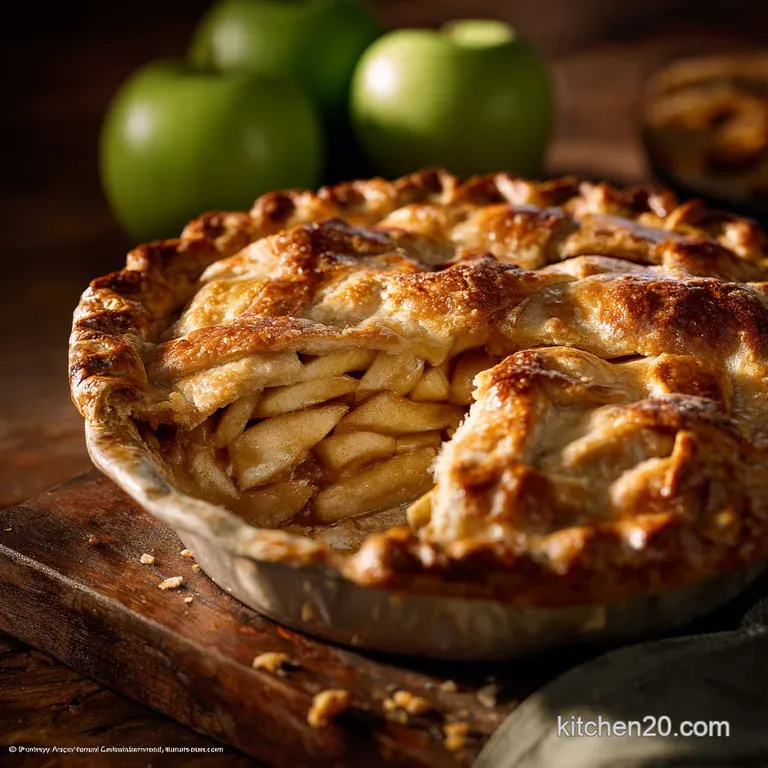
- Mastering the Essential Classic: Why This Apple Pie Recipe Works
- Solving the Soggy Bottom Syndrome: Our Crust Promise
- Sourcing the Right Stuff: Apples and Pastry Essentials
- Crafting the Legendary Flaky Double and Crust
- Expert Baker Tips for Troubleshooting Your Apple Pie
- Storage, Serving, and Customizing Your Apple Pie
- Recipe FAQs
- 📝 Recipe Card
Mastering the Essential Classic: Why This Apple Pie Recipe Works
Oh, goodness. Is there any smell in the world more instantly comforting than cinnamon and melting butter coming out of the oven? I swear, a good homemade apple pie is practically a spiritual experience.
It’s the king of desserts, the ultimate showstopper, and the recipe everyone expects you to nail. But let's be real, a lot of people struggle with it. Why? Because most recipes focus only on the filling, ignoring the treacherous journey of the crust.
This isn't just another easy apple pie recipe . This is a blueprint for pie success, built on years of trial and error (and more than one soggy disaster, trust me).
The magic here lies in two non and negotiables: achieving a shatteringly flaky crust and ensuring the apple pie filling sets up perfectly. We're using a specific two and stage baking temperature and a heavy hand with the cornflour, and when you finally cut into this beauty, you'll see a slice that holds its structure.
That is our promise.
Solving the Soggy Bottom Syndrome: Our Crust Promise
The soggy bottom. The phrase alone is enough to send shivers down any home baker’s spine. It happens because steam releases from the apples during the bake apple pie process, condenses on the cold surface of the bottom crust, and turns that beautiful butter and laden pastry into gummy sadness.
We hate gummy sadness.
We fight back with three major defenses. First, we use a chilling period for the bottom crust, which prevents the butter from melting too early. Second, we use cornflour to aggressively absorb excess moisture from the fruit before it hits the pastry.
Third, we start the baking at a super and hot temperature (425°F or 220°C). Why the shock treatment? That initial blast cooks and seals the bottom crust instantly, creating a waterproof barrier before the apples even think about weeping. Right then, let’s get technical.
The Anatomy of a Perfect Pastry Structure
Flakiness isn't some mystical occurrence; it’s just physics, driven by cold fat. A truly perfect pastry has defined layers. When you cut the butter into the flour, you want flat, irregular shards of fat still visible. These aren't fully mixed.
As the pie bakes, the water in those butter shards evaporates into steam, pushing the flour layers apart. That pushing action is what creates that wonderful lift and separation. You get that delicate, melt and in-your and mouth texture that everyone raves about.
Why Technique Trumps Fancy Ingredients
I once thought the secret was imported French flour. It wasn't. The secret is temperature and speed. You can buy the most expensive butter in the world (and please, use good quality, high and fat butter), but if your hands are warm or you dither around for 10 minutes mixing the dough, you've ruined it.
You must work quickly. The moment the butter touches the flour, the clock is ticking. You are aiming for rough incorporation, not smoothness. If the dough looks shaggy and uneven before the chilling phase, you’ve won.
A Right Proper Dessert: The History of the Double and Crust
Why do we bother with the top crust anyway? It’s tradition, of course! This classic double and crust design is what defines a traditional American or British pie. It acts like a little insulated oven for the apples inside, making sure they cook evenly and retain that beautiful steam (which we carefully vent, naturally).
Plus, frankly, the golden, sugared surface of a Sweet Apple Pie Recipe with its crimped edges just looks incredibly satisfying.
Sourcing the Right Stuff: Apples and Pastry Essentials
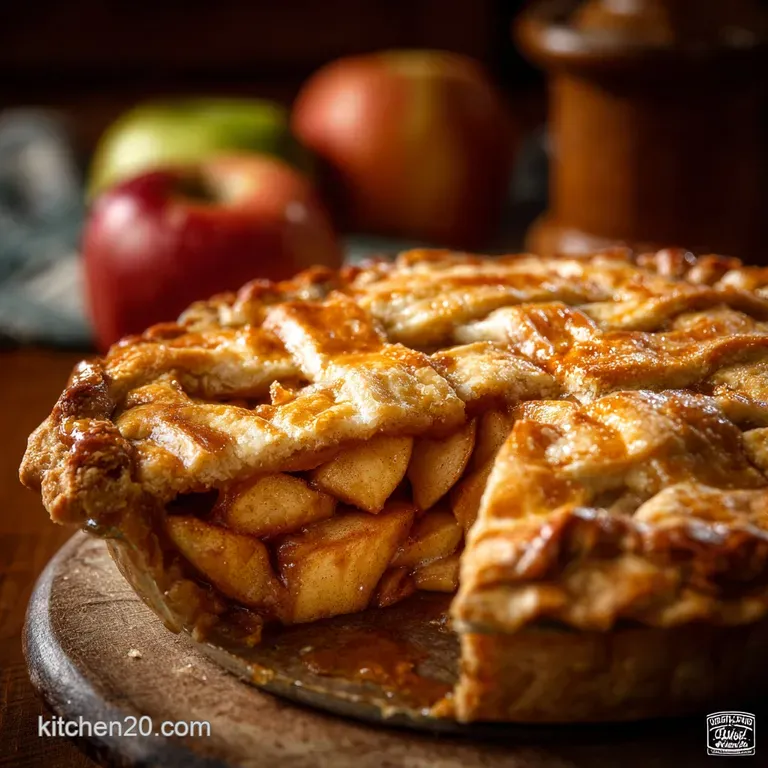
Choosing the Best Apple Varietals for Structure and Flavor
This is non and negotiable if you want your filling to hold up and not turn into baby food. You need apples that are firm and tart. Tartness cuts through the richness of the butter crust and the sweetness of the sugar.
Firmness ensures they don't dissolve entirely during the 70 minutes in the oven.
- The Tart Anchor: Look for Bramley (if you’re in the UK/Europe), Granny Smith, or Northern Spy. These hold their shape beautifully and provide necessary acidity.
- The Sweetener/Aromatics: Balance that out with something softer and sweeter, like Gala, Honeycrisp, or Fuji. A 70/30 ratio (70% firm/tart, 30% softer/sweet) is usually spot on.
- Preparation Tip: Slice them evenly, about 5mm thick. Uniformity is key for even cooking.
Calculating the Perfect Spice Blend Ratios
We want warmth, not burn. Cinnamon is the star of any good apple pie spice mix, but nutmeg (freshly grated, please!) adds a beautiful depth that transforms the flavor. I am sparing with clove and allspice, as they can quickly overwhelm the delicate apple flavor.
I recommend using just a tiny pinch of allspice or ginger to keep it layered. The proportion in the recipe (1 tbsp cinnamon to 1/2 tsp nutmeg) is the ratio I swear by.
The Secret Weapon: How to Thicken the Pie Filling
Forget using flour to thicken. It makes the filling cloudy and sticky. We use cornflour (cornstarch), which results in a glossy, clear filling that sets beautifully. It binds the released apple juices quickly.
CRUCIAL NOTE: Do not reduce the amount of cornflour in the recipe, even if you think it looks like too much. Apples are mostly water. The cornflour ensures that when you slice the pie after cooling, the filling stays put, clinging gently to the apples instead of rushing out onto the plate.
Pre and Baking Prep Checklist
Before you even turn on the oven, make sure this list is checked off:
| Item | Status Check |
|---|---|
| Dough | Chilled a minimum of 90 minutes |
| Baking Sheet | Lined with parchment and ready for pie |
| Egg Wash | Mixed and ready to brush |
| Vents | Cut into the top crust (at least 5) |
| Oven | Preheated to 425°F (220°C) |
Related Recipes Worth Trying
- Apple Pie: The Perfect Deep Dish Recipe with Flaky All-Butter Crust — This is the definitive Apple Pie recipe featuring a towering deep dish filling and an impossibly flaky all-butter crust. Master this classic Apple Pie with...
- Mini Pumpkin Pies: The Handheld Spiced Fall Dessert Recipe — Make amazing Mini Pumpkin Pies with this easy, high performance recipe. Perfect for Thanksgiving, these individual desserts are baked in a muffin tin for a...
- Apple Crisp Mini Cheesecakes Easy Fall Cheesecake Bites — Forget the springform! These individual Apple Crisp Mini Cheesecakes combine creamy filling with warm, spiced apples and a crunchy streusel topping. They...
- Apple Crisp with Oats Guaranteed Thick Crunchy Oat Topping — This classic Apple Crisp with Oats recipe delivers a crunchy thick oat topping and perfectly spiced tender apples Skip the sloppy dessert and try this easy...
- Stuffed Baked Apples HoneyGlazed Spiced Walnut Crumble Recipe — Stuffed Baked Apples are the definitive cozy dessert This healthy apple dessert recipe features a warm walnutoat filling and a glistening lemonhoney glaze...
- Dutch Baby Pancake with Apples The Easiest Most Spectacular Breakfast Puff — This Dutch Baby Pancake with Apples recipe delivers kitchen theatre Achieve a massive golden puff using a cast iron skillet and caramelized cinnamon apples...
Crafting the Legendary Flaky Double and Crust
This is the hardest part, right? Making the apple pie crust recipe . The biggest mistake people make is using a food processor for too long. I love the speed of the processor, but you have to pulse it like you’re defusing a bomb quick bursts only.
The Crucial Cold Butter Technique
Your butter needs to be arctic cold. If you handle it too much, it melts and smears, turning the dough greasy and heavy. I actually cut my butter cubes, toss them in flour, and put them back in the freezer for 10 minutes before blending.
When you mix, you want pieces ranging from the size of small peas to flat, thin flakes the size of your thumbnail. Those flakes are what guarantee those gorgeous layers.
Resting the Dough: Why Patience Makes Perfect Pastry
After mixing, your flour has started to hydrate and the gluten chains have tightened up. If you try to roll it out immediately, it will fight you. It will tear, or it will spring back every time you push the rolling pin forward.
When you rest the dough (a minimum of 90 minutes in the fridge), the gluten relaxes. It rolls out smoothly and holds its shape. Seriously, patience is your best baking friend.
Achieving a Uniform Roll and Out Without Tearing
I use two pieces of parchment paper when rolling the discs. It stops the dough from sticking to the counter, meaning you don't have to use nearly as much flour dusting. Roll from the center outward, turning the disc frequently. If you get a crack at the edge, don't worry.
Just moisten your finger with water and gently press the dough back together.
Sealing the Edges for Maximum Filling Retention
Once the bottom crust is draped and trimmed, you fill it up, then place the top crust on. To seal, tuck the excess top crust under the bottom crust’s overhang. This creates a strong, thick rim. Then, use your thumb and forefinger to firmly press the edges together and crimp.
This strong seal is essential to keep the filling from bubbling out the sides and burning on your oven floor.
Egg Wash and Venting: The Key to a Golden Brown Finish
A quick egg wash (one beaten egg mixed with a splash of milk or water) is purely for aesthetics. It gives that gorgeous, deep golden shine. Sprinkle coarse sugar (Turbinado or Demerara) on top of the wash. It adds a lovely crunch and glisten. The vents are functional: they are chimney stacks for the steam.
If you don't vent, the steam will find the path of least resistance usually the seam you just so carefully crimped and burst out.
Recommended Temperatures and Time for a Deep Dish Bake
We tackle the soggy bottom with that over high heat start.
- 15- 20 minutes at 425°F (220° C): This sets the bottom crust instantly and creates a beautiful color development on the top.
- 50- 55 minutes at 350°F (180° C): Reduce the temperature immediately after the initial brown. This slower, moderate cook allows the apples to fully soften without burning the crust. The pie is done when you see thick, syrupy bubbles coming through the vents, not watery liquid.
Expert Baker Tips for Troubleshooting Your Apple Pie
If your sweet apple pie recipe didn't turn out quite right, don't panic. We can fix almost anything next time.
- Problem: The filling is watery even after cooling. Tip: You probably needed more cornflour, or you didn't allow enough cooling time. You must wait 2 hours minimum before slicing.
- Problem: The apples shrunk dramatically, creating a huge dome of empty space under the crust. Tip: Apples shrink a lot! Make sure you stack the apples high and dense before the bake. You want a mountain of apples.
- Problem: The crust is tough, not flaky. Tip: You overmixed the dough, activating too much gluten. Next time, work faster, use colder ingredients, and rely on the resting phase.
Storage, Serving, and Customizing Your Apple Pie
Preventing Overflow and Runaway Filling
Always, always bake apple pie on a large baking tray lined with parchment paper. This is just insurance. If your filling bubbles over and sometimes it will, especially if you have an uneven oven temperature it will land on the parchment and not create a smoky, burned mess on the oven floor.
If the Crust Browns Too Quickly (The Foil Solution)
This is common, especially around the rim. If the edges are getting dark at the 30 minute mark, simply tear off strips of aluminum foil and crimp them around the rim of the pie plate, creating a protective barrier, often called a pie shield.
This prevents the delicate edges from burning while the centre finishes cooking.
Best Ways to Store and Reheat Leftover Pie
An apple pie is usually fine to store at cool room temperature, lightly covered, for 1 2 days. If you still have leftovers after that (how?!), wrap it tightly and refrigerate for up to 4 days.
To reheat, warm individual slices in a toaster oven for 5– 10 minutes until the crust crisps up again. Nothing beats that fresh and baked crunch!
Calculating Nutritional Data Per Slice
As I’ve noted in the blueprint, those figures are just estimates. The actual nutritional content really depends on how much butter you use (don’t skimp!) and whether your apples were particularly tart, demanding more sugar. It’s a treat. Enjoy it.
Quick Variation: Adding Cheddar or Caramel Swirl
Want to level up your game? Try these tweaks:
| Variation | How to Implement |
|---|---|
| Cheddar Crust | Add 50g of grated, sharp Cheddar (frozen first!) to the pastry dough with the butter. |
| Caramel Swirl | Drizzle 1/4 cup of pre and made salted caramel sauce over the filling just before adding the top crust. |
| Spiced Crumble | Swap the top crust for a classic streusel topping (oats, butter, flour, sugar). |
Recipe FAQs
Crikey, how do I stop the bottom crust being a soggy mess?
Ensure your oven is hot initially and use cornflour generously to thicken the filling. For insurance, try a quick blind bake of the base before adding the filling.
Which apples are best for the Ultimate Flaky Crust Apple Pie?
A mix is champion: use firm, tart cooking apples like Bramley for structure, and sweeter dessert varieties like Gala or Cox for balance of flavour.
That two-hour cooling time seems a bit much; is it really necessary?
Absolutely essential! The cornflour needs time to set properly; cutting the pie early means the filling will be runny and weep all over the plate.
How long can I keep leftover pie, and what’s the best way to reheat it?
Store covered at room temperature for up to two days, or chill for four. Reheat slices gently in a 150°C oven for 10 minutes to revive the crisp crust.
Are there any cheeky ways to reduce the sugar or calories in this recipe?
You can substitute some granulated sugar with a baking sweetener like erythritol. For the pastry, swapping half the butter for shortening reduces saturated fat.
Classic Flaky Crust Apple Pie

Ingredients:
Instructions:
Nutrition Facts:
| Calories | 420 kcal |
|---|---|
| Protein | 4.0 g |
| Fat | 18.0 g |
| Carbs | 63.0 g |
