Classic Italian Lasagna with Bolognese & Béchamel
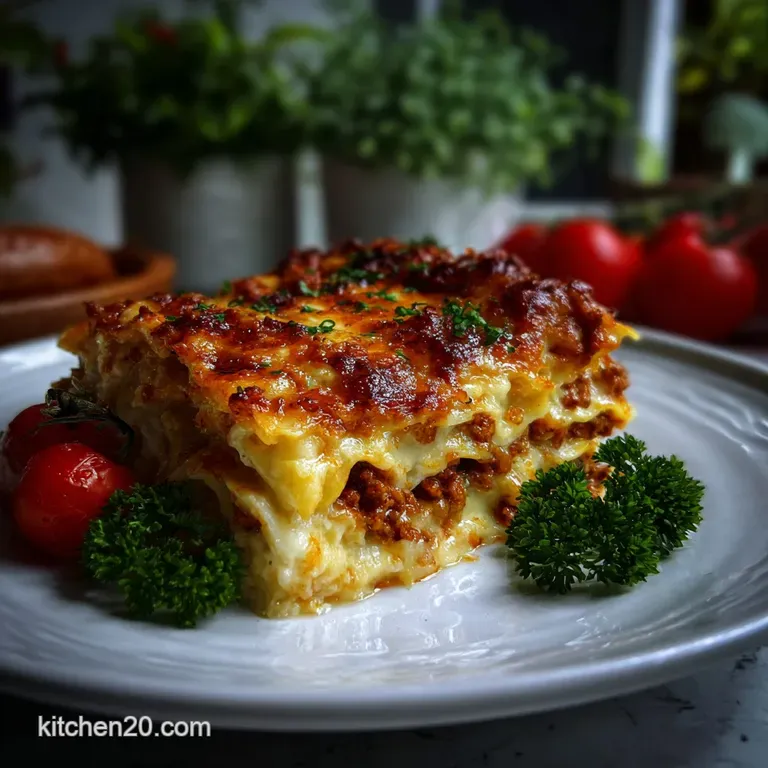
- Effort/Time: High effort/reward; requires 45 minutes of prep and 1 hour 30 mins of cooking.
- Key Flavor Hook: Slow-simmered "soffritto" base and white wine reduction for unparalleled depth.
- Perfect for: A signature Sunday family dinner or an impressive make-ahead holiday centerpiece.
- The Ultimate Classic Italian Lasagna: A Masterclass in Authentic Bolognese Style
- What Makes This Classic Italian Lasagna Authentic?
- The Science of Why it Works
- Ingredient Science: A Deep Dive into the Essentials
- Essential Ingredients and Smart Substitutions
- Step-by-Step Guide to Crafting a Classic Italian Lasagna
- Chef's Expert Tips (The Secret Sauce)
- Expert Tips to Avoid Common Cooking Mistakes
- Common Myths
- Storage, Freezing, and Reheating Instructions
- The Best Serving Suggestions and Side Dishes
- Classic Italian Lasagna FAQs
- 📝 Recipe Card
The Ultimate Classic Italian Lasagna: A Masterclass in Authentic Bolognese Style
Listen, if you’re looking for a quick weeknight "dump and bake" pasta, this isn't it. But if you want the kind of Classic Italian Lasagna that makes people stop talking the moment they take a bite, you’re in the right place.
I remember the first time I tried to make "authentic" lasagna; I used way too much mozzarella and a jar of watery marinara. It was fine, I guess, but it wasn't that lasagna.
You know the one the kind you find in a tiny trattoria in Bologna where the layers are delicate, the sauce is rich but not heavy, and the top has those crispy, shattered edges of Parmigiano Reggiano.
The secret to a true Classic Italian Lasagna (Lasagne alla Bolognese) lies in the marriage of two specific sauces: a meat ragù that has simmered until the cows come home and a silky, buttery béchamel. This isn't just food; it's architecture.
We are building structural integrity with pasta sheets and fat. Every time I pull this out of my Lodge 9x13-inch Ceramic Baking Dish, the kitchen smells like a dream toasted butter, sweet carrots, and caramelized beef.
It’s the ultimate comfort, and I’ve made all the mistakes so you don’t have to. Let’s get into why this works and how you can nail it on your first try.
What Makes This Classic Italian Lasagna Authentic?
What defines an authentic Classic Italian Lasagna is the use of béchamel sauce (besciamella) rather than ricotta cheese, which is more common in Southern Italian and Italian American versions.
This Northern style, originating from the Emilia Romagna region, focuses on a slow cooked meat sauce and thin layers of pasta that meld together into a singular, melt-in-your mouth texture.
The History of Lasagna alla Bolognese
The history of this dish is as layered as the pasta itself. While flat dough has been eaten in Italy for centuries, the specific combination we call Classic Italian Lasagna took shape in the Renaissance. By the time it reached the kitchens of Bologna, it became a symbol of culinary luxury.
Using egg-based pasta and a laborious meat sauce meant this was a dish for celebrations. Today, we maintain that tradition by respecting the "holy trinity" of Italian cooking: the soffritto (onion, celery, and carrots).
Why the Slow Simmered Flavor Works
You cannot rush a Classic Italian Lasagna. The ragù requires a slow simmer to allow the collagen in the 1 lb of lean ground beef and 0.5 lb of ground pork to break down into gelatin. This transformation creates a "saucy" mouthfeel without needing an excessive amount of liquid.
When the meat is browned properly achieving that glorious Maillard reaction it creates hundreds of new flavor compounds that a quick cook sauce simply lacks.
Emilia Romagna Tradition vs. Modern Shortcut Recipes
Modern recipes often swap out the homemade béchamel for ricotta because it’s faster. While there is a place for ricotta lasagna, it lacks the structural elegance of the Classic Italian Lasagna.
Ricotta is grainy and can become watery; béchamel is a stable emulsion that acts as a glue, binding the pasta and meat into a cohesive slice that doesn't collapse the moment your fork hits it. If you want the "World's Best Lasagna Recipe," you have to stick to the béchamel.
The Science of Why it Works
The success of this Classic Italian Lasagna isn't magic; it's chemistry. Understanding how these ingredients interact will help you master the "why" behind the "how."
- Maillard Reaction & Flavor Development: When you sear the 1 lb ground beef and 0.5 lb pork in the 2 tbsp of extra virgin olive oil, you aren't just cooking them; you're triggering the Maillard reaction. This is a chemical reaction between amino acids and reducing sugars that gives browned food its distinctive flavor. Without this step, your ragù will taste "boiled" rather than "braised."
- The Power of the Soffritto: Mincing 1 large yellow onion, 2 carrots, and 2 celery stalks finely is crucial. These vegetables contain natural sugars that caramelize during the long cook time, providing a sweet counterpoint to the acidity of the 28 oz of crushed San Marzano tomatoes.
- Alcohol as a Flavor Solvent: We use 0.5 cup of dry white wine not just for taste, but because alcohol is a solvent. It dissolves flavor compounds that are not water soluble, effectively "unlocking" deeper aromatics from the meat and tomato paste that you otherwise wouldn't be able to taste.
- Milk in the Ragù: Adding 1 cup of whole milk to the meat sauce sounds weird to some, but it's a traditional Bolognese secret. The lactic acid in the milk helps tenderize the meat fibers, ensuring the beef and pork are incredibly soft rather than chewy.
Ingredient Science: A Deep Dive into the Essentials
To achieve the Best Classic Lasagna Recipe, we need to look at our building blocks through a scientific lens.
The Science of San Marzano Tomatoes
- What They Do
- Provide the acidic and liquid base for the ragù.
- The Chemistry
- San Marzano tomatoes are grown in volcanic soil near Mount Vesuvius, which gives them a lower acid profile and thicker flesh than standard canned tomatoes. They are high in pectin, which helps the sauce thicken naturally as it simmers.
- Why This Matters
- Using these ensures your Classic Italian Lasagna isn't overly acidic or metallic. The natural sweetness balances the savory meats perfectly.
The Chemistry of the Béchamel (Besciamella)
- What It Does
- Acts as the creamy, structural binder between pasta layers.
- The Chemistry
- This is a classic "Mother Sauce" created through starch gelatinization. When you whisk 0.5 cup of all-purpose flour into 4 tbsp of melted unsalted butter, you create a roux. Adding 4 cups of whole milk causes the starch granules in the flour to swell and burst, trapping the liquid in a stable, velvety web.
- Why This Matters
- It creates a rich, "fatty" mouthfeel that offsets the acidity of the tomato sauce without the graininess of cheese curds.
Parmigiano Reggiano: The Umami Bomb
- What It Does
- Adds salt, fat, and "umami" (savory) depth.
- The Chemistry
- Authentic Parmigiano Reggiano is aged for at least 12 months. During this time, proteins break down into free amino acids, specifically glutamic acid. This creates those little crunchy crystals (tyrosine) and a massive hit of umami.
- Why This Matters
- It provides a complex saltiness that 1 tsp of table salt can't match. It also helps create that "shatter crisp" golden crust on the top layer.
Essential Ingredients and Smart Substitutions
For this Classic Italian Lasagna, quality is everything. I always reach for my KitchenAid Stand Mixer if I'm making fresh pasta, but for this recipe, high-quality dried sheets work beautifully as long as they are treated right.
| Original Ingredient | Best Substitute | Why It Works |
|---|---|---|
| Whole Milk (in Ragù) | Heavy Cream | Provides the same lactic acid for tenderizing, though it makes the sauce significantly richer. |
| Dry White Wine | Dry Red Wine | Red wine adds more tannins and a deeper "berry" profile. Note: It will darken the sauce significantly. |
| Ground Pork | Ground Veal | Veal has a higher collagen content, leading to an even silkier sauce. May be milder in flavor. |
| Parmigiano Reggiano | Grana Padano | Similar hard cheese texture and salty profile. Slightly less nutty/intense than Parmigiano. |
| San Marzano Tomatoes | high-quality Plum Tomatoes + 1 tsp Sugar | Mimics the low acidity of San Marzanos. The sugar offsets the higher acidity of standard tomatoes. |
step-by-step Guide to Crafting a Classic Italian Lasagna
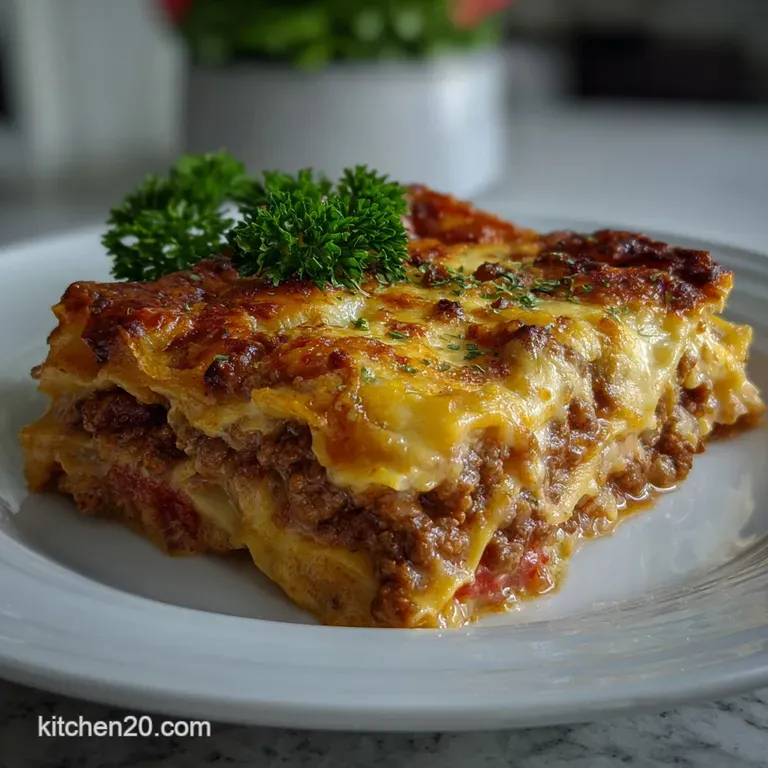
1. Simmering the Traditional Bolognese Meat Sauce
To start your Classic Italian Lasagna Bolognese, heat 2 tbsp extra virgin olive oil in a heavy bottomed Dutch oven (like a Le Creuset) over medium high heat. Add the 1 lb lean ground beef and 0.5 lb ground pork. Don't crowd the pan!
Break it up with a wooden spoon and let it sizzle until it's deeply browned. This is where you get your flavor.
Once browned, stir in your finely minced 1 large yellow onion, 2 carrots, and 2 celery stalks. Sauté for about 8 10 minutes until the veggies are soft and translucent. Stir in 2 tbsp tomato paste and cook for 2 minutes until it turns a dark rust color.
This "toasting" of the paste removes the raw tinny taste. Deglaze the pan with 0.5 cup dry white wine, scraping up all those brown bits (the fond).
Reduce the heat to low. Stir in 1 cup whole milk and let it simmer until mostly evaporated. Finally, add the 28 oz crushed San Marzano tomatoes, 1 tsp salt, and 0.5 tsp black pepper. Cover partially and let it whisper simmer for at least 90 minutes.
It should be thick, rich, and smell like an Italian grandmother's kitchen.
2. Mastering the Authentic White Sauce
While the ragù is doing its thing, let's make the béchamel. In a medium saucepan, melt 4 tbsp unsalted butter over medium heat. Whisk in 0.5 cup all-purpose flour and cook for 2 minutes you want it to smell nutty, not like raw dough.
Slowly, and I mean slowly, whisk in 4 cups whole milk. Start with a splash, whisk until smooth, then add more. This prevents lumps. Bring to a gentle simmer, whisking constantly, until it thickens enough to coat the back of a spoon. Remove from heat and stir in 0.25 tsp ground nutmeg.
This is the secret ingredient that makes Italian Lasagna Dinner Recipes taste "professional."
3. Expert Layering Techniques for Structural Integrity
Grease your 9x13-inch baking dish. Spread a thin layer of ragù on the bottom to prevent sticking. Lay down your first layer of 1 lb dried lasagna sheets (don't overlap them too much).
The Order of Operations: 1. Pasta 2. Thin layer of Ragù 3. Drizzle of Béchamel 4. Generous sprinkle of the 2 cups freshly grated Parmigiano Reggiano 5. Repeat!
Aim for at least 5 6 layers. For the final top layer, cover the pasta entirely with the remaining béchamel and a heavy blanket of Parmigiano. This protects the pasta from drying out and creates that iconic crust.
4. Baking Times for a Golden Brown Crust
Preheat your oven to 375°F (190°C). Cover the dish with foil (make sure it doesn't touch the cheese!) and bake for 25 minutes. Then, remove the foil and bake for another 20 minutes.
You are looking for the edges to be bubbling vigorously and the top to be a deep, mottled golden brown.
Chef's Note: If the top isn't browning enough, pop it under the broiler for 60 90 seconds at the very end. Stand right there and watch it it goes from "golden" to "charcoal" in the blink of an eye!
Chef's Expert Tips (The Secret Sauce)
- The "Espresso" Trick: Add 1 tsp of instant espresso powder or very finely ground coffee to your meat sauce. You won't taste coffee, but the bitterness intensifies the "beefiness" of the ragù, making it taste like it’s been simmering for 12 hours instead of two.
- No-Boil Pasta Hack: Even if you use "regular" dried sheets (not the no-boil kind), you don't actually have to boil them if your sauce is wet enough. Just soak the dried sheets in a bowl of hot tap water for 10 minutes while you prep. They’ll soften just enough to be pliable but will finish cooking in the oven, absorbing the flavors of the sauce.
- The Butter Grate: For a truly "shatter crisp" top, grate 1 tbsp of frozen butter over the final layer of cheese before it goes into the oven. The moisture in the butter creates steam that puffs up the cheese, while the fat fries the surface.
Expert Tips to Avoid Common Cooking Mistakes
| Common Mistake | Root Cause | The Fix | Pro Protocol |
|---|---|---|---|
| Soupy/Watery Lasagna | Too much liquid in the ragù or using fresh mozzarella. | Simmer the ragù until very thick and use béchamel instead of wet cheeses. | Use an Instant read Digital Thermometer to ensure the center reaches 165°F; this sets the proteins. |
| Hard/Crunchy Edges | Pasta wasn't covered in sauce or the oven was too hot. | Ensure the top layer of pasta is completely "painted" with béchamel. | Tent the dish with foil for the first 25 minutes to trap steam and hydrate the starch. |
| Slumping Layers | Cutting the lasagna too soon after baking. | Let the lasagna rest for at least 15 20 minutes before slicing. | Use a sharp serrated knife to "saw" through the layers without compressing them. |
Common Myths
Myth: You must boil the pasta sheets until al dente before layering. Truth: This often leads to mushy lasagna. Dried sheets or soaked sheets actually absorb the excess moisture from the sauces, leading to a tighter, better structured slice.
Myth: Traditional lasagna always uses ricotta cheese. Truth: Only in the South! The Classic Italian Lasagna Bolognese has used béchamel for centuries, providing a much more elegant and creamy texture than ricotta ever could.
Storage, Freezing, and Reheating Instructions
Can you freeze Classic Italian Lasagna? Absolutely. In fact, many people argue it's better the next day because the flavors have time to fully meld and the structure sets completely.
- Fridge: Store leftovers in an airtight container for up to 4 days.
- Freezer: You can freeze the entire lasagna (unbaked or baked). Wrap tightly in plastic wrap and then aluminum foil. It will stay fresh for up to 3 months.
- Reheating: If reheating a slice, do it in the oven at 350°F covered with foil to prevent the pasta from drying out. A splash of water in the dish creates a "steam oven" effect that revives the béchamel.
The Best Serving Suggestions and Side Dishes
The Crucial Importance of Resting Time
Do not skip the rest! If you cut into this Saucy Lasagna Recipe the second it comes out of the oven, the layers will slide apart like a tectonic plate shift. Resting for 20 minutes allows the béchamel to firm up and the pasta to reabsorb the juices from the meat.
It’s the difference between a mess and a masterpiece.
Wine Pairings for an Italian Lasagna Dinner
Because this dish is rich and fatty, you need a wine with high acidity to cut through the béchamel. A Chianti Classico or a Barolo is perfect. The tannins in a red wine interact beautifully with the proteins in the beef. If you prefer white, a crisp Vermentino can offer a refreshing contrast. For a pre-dinner treat, I often serve a Bees Knees Cocktail: The Perfect Gin and Honey Classic — the honey and lemon notes cleanse the palate perfectly before the rich meal.
Side Salads and Breads to Balance the Richness
Keep the sides simple. A bright arugula salad with a lemon vinaigrette provides the necessary acid to balance the heavy lasagna. If you’re hosting a full Italian feast, follow up with Italian Christmas Cookies: Classic Lemon Anise Glazed Recipe for a sweet, light finish.
Making a Classic Italian Lasagna is a journey, not a destination. It takes time, a bit of science, and a lot of love, but once you pull that bubbling tray out of the oven, you'll know why it's the world's most beloved pasta dish. Happy cooking!
Classic Italian Lasagna FAQs
How do I make authentic Italian lasagna?
Authentic Italian lasagna relies on slow simmered Bolognese ragù and a creamy béchamel sauce, not ricotta. This construction ensures a delicate, rich flavor profile typical of Emilia Romagna.
- Prepare the traditional meat ragù (soffritto base, slow simmered).
- Make the velvety béchamel sauce, seasoning it with nutmeg.
- Layer thin pasta sheets with ragù, béchamel, and grated Parmigiano Reggiano.
- Bake until golden and bubbling.
What is the key difference between Italian and American lasagna?
The primary difference is the inclusion of béchamel sauce and the meat preparation. American styles often substitute ricotta cheese for béchamel, resulting in a denser texture.
The béchamel provides richness through fat and milk emulsification, unlike the curded texture provided by ricotta. For another classic Italian dish featuring slow cooked meat, see our Italian Wedding Soup: Hearty Classic with Tiny Meatballs Escarole.
Why do I need a soffritto base for the ragù?
Soffritto (finely diced onion, carrot, and celery sautéed in fat) is essential for building the foundational aromatic depth of the ragù. This gentle cooking process releases lipid soluble flavor compounds, slowly caramelizing the vegetables.
This slow infusion process is critical for achieving the complex savory notes that define authentic Italian sauces.
Fresh vs. Dried Herbs: Which is better for the meat sauce?
Use a mix, favoring fresh herbs for finishing and dried herbs for long simmering. Dried oregano and bay leaves are better suited for the long cook time of the ragù, as their flavors infuse deeply.
However, fresh basil or parsley added just before serving brightens the finished dish. If you are exploring slow cooking meats in general, you might also enjoy our Crockpot Honey Garlic Meatballs: Effortless Weeknight Sticky Classic.
Can I assemble the lasagna a day ahead of time?
Yes, assembling lasagna a day ahead is highly recommended for better flavor melding and structural integrity. Allowing it to chill solidifies the fats and moisture, preventing the layers from becoming overly sloppy during the final bake.
To prevent the top layer from drying out in the refrigerator, cover tightly with plastic wrap and foil, removing the plastic just before baking.
Why is my béchamel sauce lumpy?
Lumps occur when the cold milk is whisked into the hot roux too quickly, causing uneven starch hydration. A proper roux (equal parts cooked flour and butter) must be cooked first to eliminate the raw flour taste.
- Ensure the milk is warm (or room temperature), never straight from the fridge.
- Whisk the roux vigorously before adding milk in a slow, steady stream.
- If lumps persist, strain the sauce through a fine mesh sieve (chinois) before adding nutmeg.
Do I have to use fresh lasagna noodles?
No, you do not have to use fresh noodles, but dried noodles usually require par-boiling unless the package specifically states "no-boil." Fresh pasta absorbs less liquid during baking, resulting in a more tender final product.
If using no-boil dried sheets, ensure your ragù and béchamel sauces are slightly thinner than usual to provide enough moisture for the pasta to hydrate fully during the 90-minute cooking time.
Classic Italian Lasagna Recipe
Ingredients:
Instructions:
Nutrition Facts:
| Calories | 642 kcal |
|---|---|
| Protein | 35.8 g |
| Fat | 34.2 g |
| Carbs | 47.1 g |
| Fiber | 3.8 g |
| Sugar | 9.5 g |
| Sodium | 1115 mg |
