Margherita Pizza: Neapolitan Perfection at Home
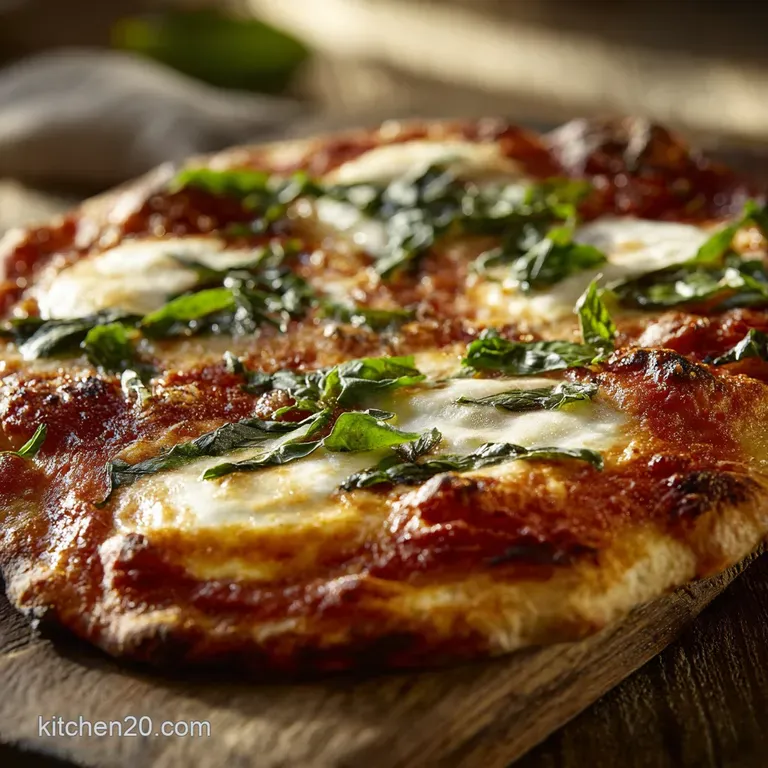
- The Classic Margherita Pizza: Achieving Neapolitan Perfection in a Home Oven
- The History and Anatomy of the Perfect Margherita: Defining Neapolitan Excellence
- Essential Ingredients for Authentic Flavor: The Red, White, and Green
- Step-by-Step Guide to Making Your Margherita Masterpiece
- Troubleshooting the Home Oven Bake: Expert Tips and Common Mistakes
- Preparation, Storage, and Reheating Best Practices for Margherita Pizza
- Ideal Pairings and Enhancements for Your Homemade Pie
- Recipe FAQs
- 📝 Recipe Card
The Classic Margherita Pizza: Achieving Neapolitan Perfection in a Home Oven
That smell. Seriously, is there anything better than the deep, yeasty, caramelized aroma that fills your kitchen when a truly great pizza is baking? The crisp, audible crackle of the crust the cornicione —right as it leaves the oven is pure auditory bliss.
This Margherita Pizza is more than a simple dish; it’s an edible history lesson, requiring just a few perfect ingredients to deliver maximum flavor punch.
We've all been burned (literally and figuratively) by trying to recreate restaurant pizza at home. The crust ends up limp, the cheese is watery, and you realize you just wasted three hours. Trust me, I’ve been there.
This specific method for crafting a homemade Margherita Pizza uses high heat and strict ingredient control, turning a basic dinner into a weeknight triumph. It’s significantly cheaper than ordering takeout, and once you master the dough, you’ll never look back.
So, ditch the delivery menu and let’s talk technique. We are focusing on achieving that sublime Neapolitan texture: a puffy, airy, slightly charred rim and a thin, tender center.
Getting the crust right is the biggest challenge, but I’ve broken down the exact steps you need to make the absolute best Margherita Pizza imaginable. Let’s crack on.
The History and Anatomy of the Perfect Margherita: Defining Neapolitan Excellence
The story of the Margherita Pizza is legendary, dating back to 1889 in Naples when a local pizzaiolo, Raffaele Esposito, created it for Queen Margherita of Savoy.
He chose the ingredients red tomato, white mozzarella, and green basil specifically to represent the newly unified Italian flag. It is the epitome of culinary elegance achieved through stark simplicity.
The beauty of a true Neapolitan pie lies in its anatomy, specifically the crust. We aren't aiming for a cracker thin New York style or a deep dish pan slice. We are striving for the cornicione , that thick, airy rim that defines the pizza.
Why Simplicity is the Ultimate Sophistication
This dish only has four or five main components, total, which means every single ingredient has to pull its weight. When you strip away all the toppings and distractions, the quality of the flour and the sweetness of the tomatoes become critical.
You can’t hide bad technique or cheap ingredients here; the integrity of the Margherita Pizza demands respect.
The Triumvirate of Ingredients: The Italian Flag on a Plate
It’s about balance, always. The slightly acidic brightness of the no-cook tomato sauce cuts through the fatty richness of the fresh mozzarella. Then, the basil added at the end, not burned provides that fragrant, herbaceous lift.
This simple formula is the reason the Margherita Pizza has remained the gold standard for over a century.
What Defines a True Neapolitan Cornicione (Chewy Crust)?
The cornicione is puffy, elastic, and ideally spotted with dark, caramelized blisters called "leoparding." This texture is achieved only when the dough is highly hydrated and baked very quickly at an extremely high temperature.
If your crust is hard and dense, it usually means your oven wasn't hot enough, or your dough needed more water.
The Science Behind the Rapid Crust Rise
A high hydration dough (meaning more water relative to flour) combined with a high heat source causes the water in the dough to flash steam. This rapid steam expansion is what inflates the cornicione in mere minutes, creating those fantastic, airy pockets.
This fast action is necessary to achieve that characteristic chewy texture while preventing the center from becoming cardboard dry.
Optimizing Heat Transfer with a Pizza Steel or Stone
If you are baking your Homemade Margherita Pizza Recipe in a standard home oven, you absolutely must use a pizza stone or, even better, a pizza steel. These tools hold and transfer intense, steady heat into the base of the pizza.
If you skip this step, the bottom of your pizza will invariably be pale and flabby, no matter how high your oven temperature is set.
Why Hydration Level Matters for Chewy Texture
I recommend a hydration level of around 65 70% for this recipe. A wetter dough is stickier and harder to handle, yes, but it’s crucial for that tender, light-as-air crust.
Working with high hydration dough is a skill, but once you figure it out, the results for your Classic Margherita Pizza Recipe are transformational.
Essential Ingredients for Authentic Flavor: The Red, White, and Green
Remember, we are aiming for the best version of this dish possible, so quality over quantity is paramount. Skimping on the cheese or tomatoes will immediately downgrade your Margherita Pizza experience.
| Ingredient | Why It’s Essential | Viable Substitution |
|---|---|---|
| 00 Flour | Fine grind creates delicate crumb structure. | High protein bread flour (increase hydration slightly). |
| San Marzano Tomatoes | Naturally sweeter, lower acidity, fewer seeds. | Muir Glen Organic Whole Peeled or other high-quality whole peeled tomatoes. |
| Fresh Mozzarella | Creamy texture, traditional white colour. | Low-moisture skim milk mozzarella (shredded, not cubed) if you can’t find fresh. |
| Fresh Basil | Provides necessary perfume and color contrast. | Dried oregano, used sparingly in the sauce (but it truly won’t be the same). |
Crafting the Base: Flour, Water, and Yeast Deep Dive
The ratio of these three ingredients is fundamental to any great pizza, but especially for a classic like this. Your water must be lukewarm not hot, not cold. If the water is too hot, you kill the yeast, and your dough will be a dense brick. If it's too cold, the yeast never wakes up.
Choosing the Right Tomatoes: San Marzano vs. Alternatives
The gold standard for the sauce for any Italian Pizza With Fresh Mozzarella is the San Marzano tomato. They grow in the volcanic soil near Mount Vesuvius and have a distinct, balanced flavor. Don't cook the sauce! For a true Neapolitan pie, you simply crush them by hand, season with salt and EVOO, and that's it.
I once made the mistake of boiling the sauce down and the resulting flavor was way too intense and acidic for my Margherita Pizza .
Selecting the Best Mozzarella: Fresh vs. Low-Moisture Options
You MUST use fresh mozzarella, but here is the critical caveat: fresh mozzarella is inherently wet. If you toss it straight onto the dough, you are asking for a soggy center. Always tear the cheese into small pieces and let it drain on paper towels for at least 30 minutes before using it.
If you absolutely cannot find fresh, use high-quality, low-moisture skim mozzarella, but try to find it in a block and tear it, avoiding the pre-shredded stuff with anti caking agents.
The Role of Extra Virgin Olive Oil and Sea Salt
EVOO is used twice: a small amount in the dough for elasticity and flavor, and a generous drizzle over the finished, hot pizza. That final drizzle of good olive oil is non-negotiable; it adds richness and perfume. Fine sea salt is used for the dough and the sauce.
We skip sugar in the dough because we rely on the long fermentation time to develop complex flavor.
Recommended Flour Types for High Hydration Dough
While "00" flour (often labelled "Tipo 00") is traditional, a strong bread flour with a high protein content (12 14%) works well if 00 is hard to source. If you’re looking for a low-carb alternative for something completely different, check out my recipe for [Best Keto Pizza My Crispy Cauliflower Crust Recipe] but for this traditional Margherita Pizza , stick to wheat flour!
How Temperature Affects Yeast Activation and Flavor
Yeast is a living organism, and its activity is governed by temperature. We use lukewarm water to kickstart the process, but then we slow it way down. A slow rise (cold fermentation) in the fridge is the secret to deep, yeasty, complex flavor that you simply can't achieve with a fast, warm rise.
Preparing the Dough 24 Hours in Advance (Cold Fermentation)
Seriously, plan ahead. Mixing the dough today and letting it sit in the fridge for 24 to 48 hours dramatically improves the crust texture and flavor profile of your Easy Margherita Pizza .
This long, slow fermentation breaks down the starches into complex sugars, resulting in that slightly sour, wonderful Neapolitan taste.
Chef's Note: If you want a quick fix, you can use store-bought pizza dough, but ensure it's a high-quality, high hydration version. It will never taste as good as the cold fermented dough, though!
step-by-step Guide to Making Your Margherita Masterpiece
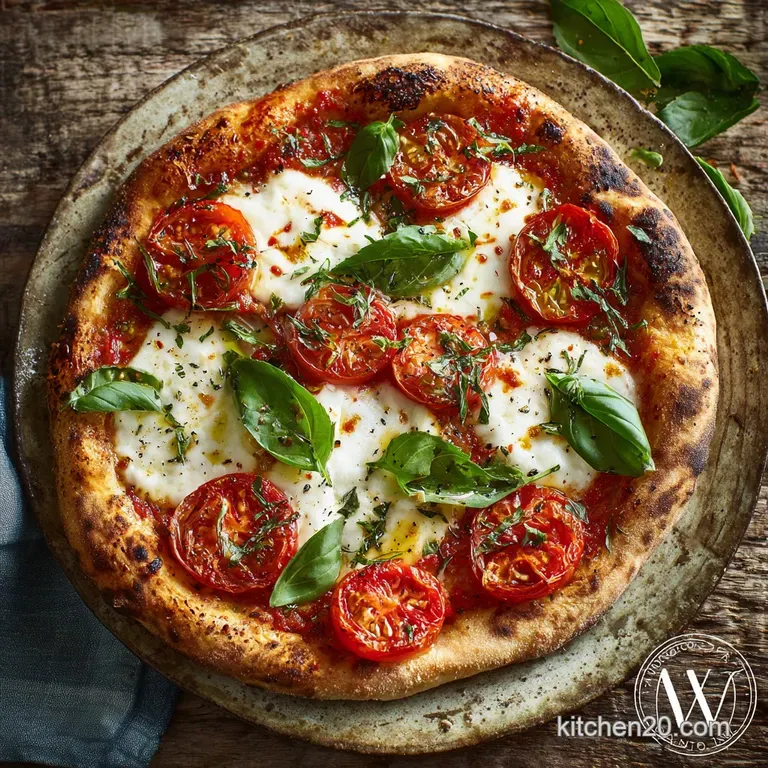
Making How To Make Margherita Pizza requires patience, especially during the dough stages, but the topping process is incredibly fast.
Mixing and Kneading the Perfect High Hydration Dough
Combine your activated yeast mixture, salt, and EVOO with the flour. Mix it until shaggy. Turn it out and knead! This is crucial for gluten development. Knead for 10– 12 minutes until the dough looks smooth and passes the "windowpane test" (stretches thin enough to see light through it without tearing).
This gluten structure is essential for trapping those air bubbles we want in the cornicione.
Proofing Techniques for Maximum Air Pockets
After the initial rise (or the 24 hour cold proof), gently divide the dough into two balls. Tightly form the balls by pulling the top edges down and tucking them under the bottom. This creates tension. Let these smaller dough balls rest at room temperature for at least 30 minutes before shaping.
This secondary proofing (or "bench rest") relaxes the gluten and ensures your crust will puff beautifully.
Shaping the Dough Without Popping the Bubbles
CRITICAL STEP: Never, ever use a rolling pin on this delicate dough. A rolling pin crushes the precious air pockets created during proofing. Instead, place the dough on a lightly floured or semolina dusted surface.
Start pressing from the center outwards with your fingertips, leaving the outer inch (the cornicione) untouched. Then, gently lift and stretch the dough, letting gravity do the work.
Assembling the Pizza: Sauce Application and Topping Placement
Once your dough is shaped and resting on the peel (dusted heavily with semolina to prevent sticking!), work quickly. Semolina prevents that disastrous moment where your fully topped pizza is glued to the peel, refusing to slide onto the stone. Spread a thin, even layer of the no-cook tomato sauce.
Next, distribute the dried pieces of fresh mozzarella evenly. A very light sprinkle of grated Parmesan adds a welcome umami depth to your Margherita Pizza Recipe .
Troubleshooting the Home Oven Bake: Expert Tips and Common Mistakes
Making great pizza in a home oven (which rarely exceeds 550°F) is tricky, but achievable. The goal is to maximize the heat transfer immediately.
Preventing a Soggy Center (The Wet Mozzarella Problem)
This is the number one mistake people make when crafting a Margherita Pizza . As mentioned, fresh mozzarella has a lot of moisture. If you don't drain it, that water releases instantly in the hot oven, steaming the base and turning your crust into glue.
Tear the cheese, press it dry, and use less than you think you need.
Achieving the Ideal Leopard Spotting (Charring)
Leoparding those fantastic dark spots on the crust comes from high, intense, radiant heat. You achieve this by preheating your oven and stone/steel for a minimum of 45 minutes, often an hour.
If your oven has a broiler (grill function), consider using it for the last 30 60 seconds of the bake. Place the pizza just under the broiler, watching it obsessively, until those spots appear.
The Correct Method for Stretching Sticky Dough
Because this dough is highly hydrated, it will feel sticky. Don't panic and add cups of flour! Keep your hands lightly floured, and use semolina on your work surface and peel. If the dough snaps back when stretching, it means the gluten is still too tight.
Cover it, let it rest for another 10 minutes (this is called the rest and stretch method), and try again.
Can You Freeze Unbaked Pizza Dough?
Yes, absolutely! Freezing unbaked dough is a massive time saver for your next Margherita Pizza . After the first bulk rise, portion and tightly wrap the dough balls individually in plastic wrap, then place them in a freezer bag. They keep well for up to three months.
Thaw them overnight in the fridge, then bring them to room temperature for 1– 2 hours before shaping and baking.
Best Ways to Reheat Leftover Margherita Slices
Please don't use the microwave. It ruins the beautiful crispness of the cornicione. The best way to reheat leftover Tomato Basil Mozzarella Pizza slices is in a dry skillet (cast iron works best) over medium high heat for 2– 3 minutes until the base is crisp.
Then, pop the skillet into a 350°F oven for 3 minutes until the cheese is melted and bubbling again.
Short Term Storage of Pre-Sauced Dough
You can prepare the dough and sauce it up to 2 hours before baking, but I wouldn't recommend longer than that. Once the sauce touches the dough, the moisture starts to seep in, and you risk a wet, gluey pizza base.
If you must pre-prep, keep the sauced dough in a cool place, maybe on the counter, but definitely not in the fridge.
Preparation, Storage, and Reheating Best Practices for Margherita Pizza
Planning ahead is what separates the casual cook from the pizza master. Because the dough needs time, thinking 24 hours in advance is key.
Preventing a Soggy Center (The Wet Mozzarella Problem)
This tip bears repeating: drain the mozzarella! If you have very watery fresh mozzarella, wrap it tightly in a clean kitchen towel and place it in the fridge for a couple of hours. This wicks away the moisture without compromising the cheese’s flavor.
Achieving the Ideal Leopard Spotting (Charring)
Preheat that stone! And if you are using a pizza steel, preheat it for a full hour. The rapid, direct heat from the steel is what encourages the crust sugars to quickly caramelize and char, giving your Margherita Pizza that classic look and slightly smoky taste.
The Correct Method for Stretching Sticky Dough
If you’re having trouble handling the sticky, high hydration dough, you might benefit from using the 'slap and fold' technique during kneading, but most importantly, remember that semolina is your best friend on the peel.
Can You Freeze Unbaked Pizza Dough?
Definitely. If you’ve made a big batch of dough, freezing the extras means you are only 4 hours away from fresh pizza anytime you want it. This is particularly handy if you’re trying to cater to specific diets on the fly; you can always pull out a dough ball for a classic Margherita Pizza while preparing something different, like a [Keto Low Carb Pizza Casserole: Ultimate Deep Dish Bake], for others.
Best Ways to Reheat Leftover Margherita Slices
The oven/skillet method is superior, giving you crispy edges and a melted top. Alternatively, air-fryer users can set the machine to 350°F (175°C) and reheat for 4 minutes for near perfect results.
You cannot beat a reheated slice of this incredible Margherita Pizza .
Short Term Storage of Pre-Sauced Dough
Again, keep the saucing minimal and close to bake time. If you leave the sauce sitting on the dough for too long, you’ll end up with a saturated base that will never fully crisp up in the oven.
Ideal Pairings and Enhancements for Your Homemade Pie
While the pure Margherita Pizza is perfect in its simplicity, a few strategic additions or pairings can make the meal unforgettable.
Simple Salad Pairing
I always recommend serving this with a simple, sharply dressed arugula salad. The peppery arugula and bright lemon vinaigrette cut through the richness of the cheese and the sweetness of the tomato, providing a lovely palate cleanser between bites of the delicious Classic Margherita Pizza Recipe .
Adding A Little Heat
If you like a kick, sprinkle a few pinches of high-quality red pepper flakes (Calabrian preferred) over the tomato sauce before you bake the pizza. This gives the whole pie a subtle, warm heat that really wakes up the flavor profile of the simple sauce.
A Note on Variations
While we focused purely on the classic Margherita Pizza ingredients, if you want a fun, sweet twist later, try out my [Giant Easter Egg Fruit Pizza Recipe with Strawberry Frosting] it’s nothing like the savory classic, but it uses similar dough handling techniques for the base!
Making the perfect Margherita Pizza at home is entirely possible. It just requires quality ingredients, high heat, and patience with the dough. Master these steps, and you’ll have a pizza that rivals any pizzeria. Enjoy every beautifully charred, basil infused bite!

Recipe FAQs
Why is my Margherita pizza turning out soggy or wet in the middle?
Soggy pizza usually results from excessive moisture coming from the fresh mozzarella, or simply over saucing the dough. Always ensure you drain the fresh mozzarella completely and pat it dry with paper towels before placing it on the pizza.
My homemade pizza crust is dense and tough; how can I fix this?
A tough crust is often due to over mixing the dough, which develops too much gluten, or not allowing sufficient proofing time. Make sure your dough rests long enough both initially and during the ball forming stage to relax the gluten strands.
What is the ideal temperature for baking this pizza in a standard home oven?
Traditional Neapolitan pizza requires maximum heat; aim for the highest temperature your oven allows, usually 500°F (260°C) or 550°F (290°C). Crucially, you must preheat your pizza stone or steel for a minimum of 45 minutes to ensure intense bottom heat and a properly puffed crust.
Should I use pre-shredded, low-moisture mozzarella instead of fresh mozzarella?
While convenient, pre-shredded cheese will yield a drastically different result; fresh mozzarella provides the classic creamy white milky pools essential to the Margherita. If you must substitute, use high-quality, whole milk, low-moisture mozzarella that you shred yourself, as pre-shredded varieties often contain anti caking agents.
When is the best time to add the fresh basil to the pizza?
For maximum flavor and to preserve the vibrant green color, fresh basil should always be added immediately after the pizza comes out of the oven. Baking the basil causes it to wilt, blacken, and lose its essential aromatic oils, resulting in a dull taste.
Can I adapt this Margherita recipe to be completely vegan?
Yes, the dough, sauce, and fresh basil are already naturally vegan. Simply replace the fresh mozzarella with high-quality vegan mozzarella rounds designed specifically for melting, or a dollop of cashew or almond based ricotta to mimic the required creaminess.
How should I store leftover cooked pizza and how long will it last?
Store leftover slices wrapped tightly in foil or placed in an airtight container in the refrigerator for up to three days. For the best reheating texture, warm the slices briefly in a dry skillet over medium heat to crisp the bottom crust before finishing quickly under the broiler.
Classic Margherita Pizza Recipe
Ingredients:
Instructions:
Nutrition Facts:
| Calories | 500 kcal |
|---|---|
| Fat | 17.5 g |
| Fiber | 4 g |
