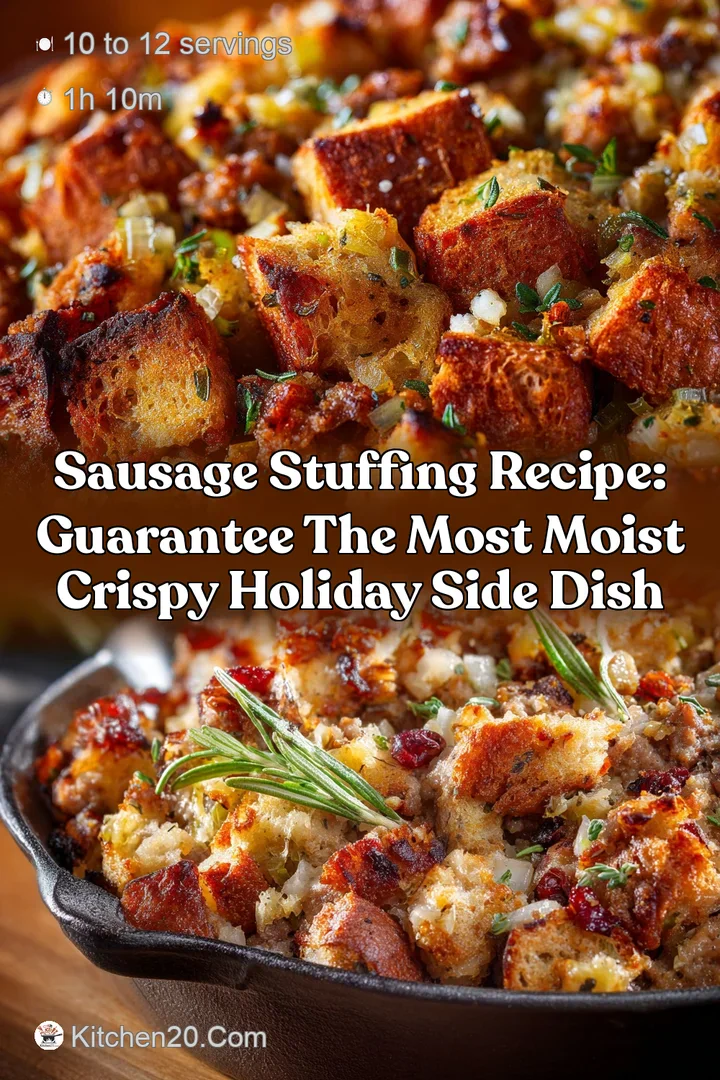
Sausage Stuffing: the Spot on Classic Herb Apple Dressing Recipe
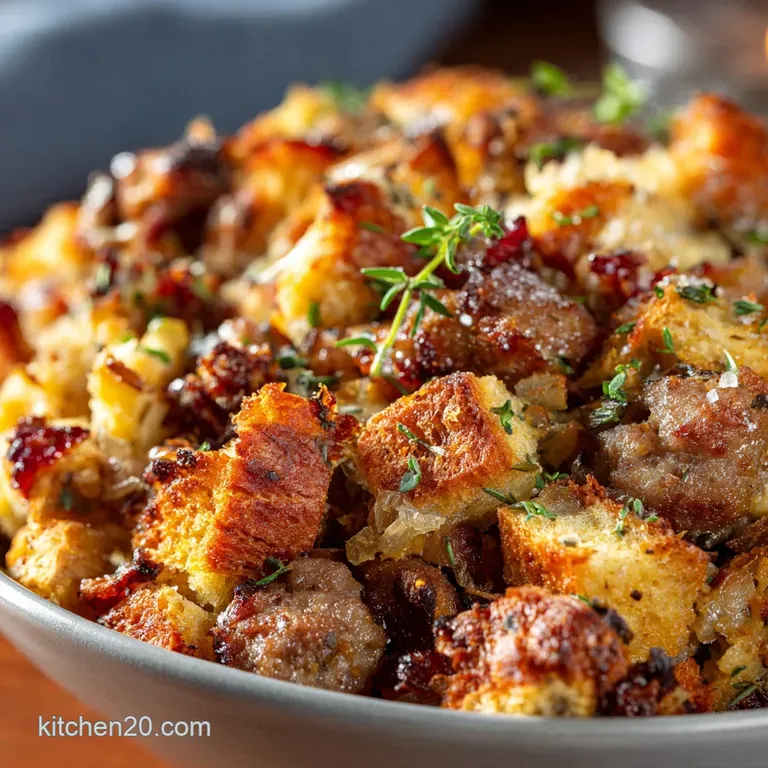
- The Essential Sausage Stuffing: Why Texture Matters
- Essential Components for Our Classic Sausage Stuffing
- Achieving the Perfect Stuffing Balance: Flavor and Crunch Science
- Step-by-Step: Crafting the Ultimate Festive Sausage Stuffing
- Stuffing Mastery: Troubleshooting and Expert Preparation Tips
- make-ahead and Storage Guide for Sausage Stuffing
- Perfect Pairings: What to Serve Alongside Your Stuffing
- The 'Spot On' Classic Sausage & Herb Stuffing (The Ultimate Festive Side)
- Recipe FAQs: Sausage Stuffing
- 📝 Recipe Card
The Essential Sausage Stuffing: Why Texture Matters
When the sage hits the hot butter and mixes with the scent of browned sausage, I swear you can smell the holidays instantly. This classic Sausage Stuffing is the heart of any proper feast, delivering that perfect balance of savoury, fatty richness and bright, herbaceous depth.
You need that contrast: a crisp, golden top layer giving way to a tender, deeply moist interior.
Honestly, people complicate stuffing way too much. This recipe is your secret weapon because it’s fast, forgiving, and you can build the entire thing 48 hours in advance, which is a total lifesaver when you’re wrestling with a turkey and mashed potatoes.
It truly is one of the cheapest ways to pack maximum flavour onto a holiday plate.
I’m going to walk you through exactly how we dodge the common pitfalls of dry edges and soggy bottoms. We’re aiming for maximum flavour payoff with minimal stress. Let’s crack on and make the absolute best Traditional Sausage Stuffing you’ve ever tasted.
Moving Beyond Dry Stuffing: A Focus on Moisture
The biggest culinary crime is dry stuffing. We’ve all been served it crumbly, chalky, and demanding half a pint of gravy just to swallow. The secret to avoiding this dense misery isn't just adding stock; it’s about starting with aggressively dry bread cubes, which act like tiny flavour sponges.
They fully absorb the rich melted butter and the warm stock, hydrating evenly without turning into mushy paste. This is crucial.
The Role of Sausage Fat in Delivering Flavour and Richness
Sausage is not just a texture component here; it’s the primary flavour delivery system. By browning the sausage first and then using that gorgeous, rendered fat to sauté the onions and celery, you infuse the entire aromatic base with deep, savoury goodness. Do not drain all the fat.
That flavour packed oil coats the bread cubes, making the final stuffing incredibly rich and preventing it from tasting flat. Trust me, it makes all the difference.
A Quick Guide to Baking (Dressing) vs. Stuffing (Inside the Bird)
Quick distinction, mate: when cooked inside the bird, it’s technically "stuffing." When cooked in a separate dish, it's called "dressing" or a Sausage Stuffing Casserole , especially in the US South.
This recipe is for baking in a dish (dressing), which is much safer and easier because it cooks evenly and guarantees a killer crispy crust. Never pack cold, uncooked stuffing into a warm turkey it’s a food safety nightmare and leads to uneven cooking.
Essential Components for Our Classic Sausage Stuffing
To make a truly great stuffing, we need quality ingredients that work hard. We’re using bold herbs, good rich butter, and that essential hit of subtle sweetness from the apple to balance the saltiness of the sausage.
Achieving the Perfect Stuffing Balance: Flavor and Crunch Science
Getting that perfect texture requires paying attention to ratios and prep. This isn't a dump and stir operation if you want professional results.
Selecting the Right Sausage Meat (Spice Level Notes)
I recommend a good quality bulk mild breakfast sausage, especially one already seasoned with sage. If you can only find Italian sausage, that works brilliantly too! Just make sure it’s removed from the casing, and be mindful that hot Italian will increase the heat dramatically, so maybe pull back on any extra black pepper.
The richness of the pork is what we are after here for a proper Sage Sausage Stuffing .
The Best Bread for Stuffing: Staling vs. Drying Techniques
Hands down, a slightly hearty, crusty white loaf or sourdough works best. You need that sturdy structure to hold up to the liquid. If your bread isn't genuinely stale (like, 2 days old), you must dry it in the oven. Cut the cubes, spread them out, and bake them low and slow (150°C / 300°F) for 15 minutes. This creates surface area ready to suck up moisture without collapsing. If you're looking for an alternative crisp top, check out my recipe for Thanksgiving Stuffing: Brown Butter Sourdough for a Crisp Top .
Fresh Herbs: Optimal Ratios of Sage, Thyme, and Rosemary
Please, for the love of all that is holy, use fresh herbs. The dried stuff simply doesn’t have the same fragrant oil content. Sage is the star, so we use a generous amount (3 tablespoons). Thyme adds earthiness, and a tiny bit of rosemary can punch through the richness.
Remember, we add the dried herbs in while sautéing the aromatics to "wake them up," but the parsley goes in last, completely fresh, for brightness.
Why Stock Volume is Key to Achieving Tenderness
The volume of stock is the make-or-break moment. Too little, and it's dry and chalky; too much, and it’s a sloppy, heavy mess. My recipe calls for three cups, but you might need slightly less or slightly more depending on how dry your bread cubes actually are.
The trick is to add the liquid slowly and stop once the bread is visibly moist but not swimming in liquid. We are moistening the bread, not drowning it.
Necessary Ingredient Swaps and Alternatives
| Ingredient | Viable Substitution | Why it works |
|---|---|---|
| Sage Sausage | Ground pork shoulder + 1 tsp fennel seed + 1 tsp dried sage | Adds the essential aromatics needed for traditional flavour. |
| Sourdough Bread | Cubed Challah or plain French baguette | Both offer a sturdy crumb structure that holds shape when moistened. |
| Chicken Stock | Vegetable stock or Turkey drippings + water | Keeps the liquid component rich and savoury, maintaining moisture. |
| Unsalted Butter | Ghee or high-quality olive oil | Provides necessary fat for richness and sautéing, though butter is preferred. |
step-by-step: Crafting the Ultimate Festive Sausage Stuffing
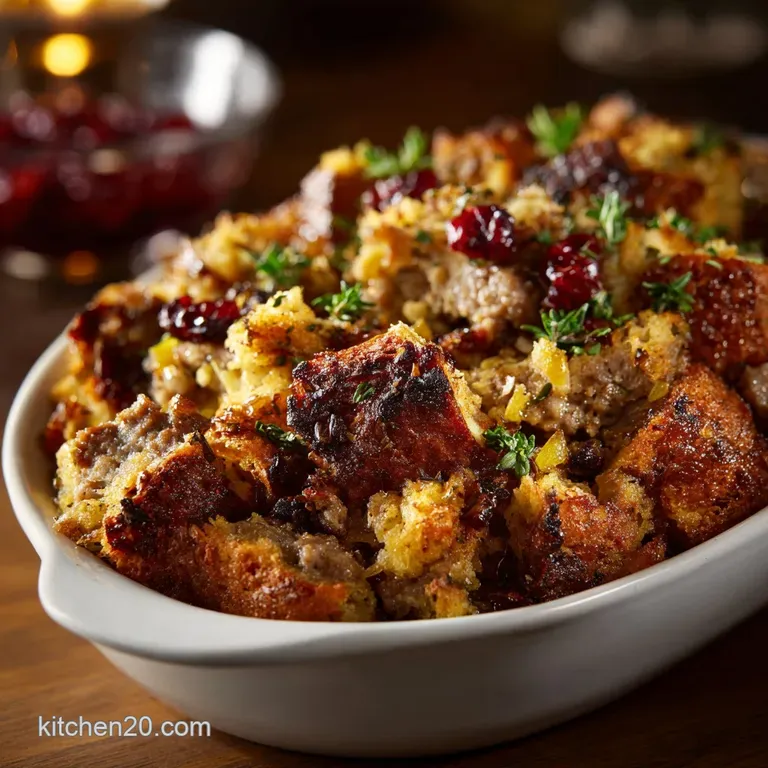
You’ve done the prep, now let’s bring it all together. This stage moves quickly once the sausage is cooked.
Preparing the Aromatic Base and Sausage Crumble
First, brown your sausage until it’s nice and crispy, breaking it up into small bits as you go. Once done, scoop it out and save that precious rendered fat! Now, melt the rest of the butter in the same pan.
That hot, buttery sausage fat mixture is where you cook the celery, onions, and that little bit of apple until they are soft and translucent about eight minutes. Then, stir in the garlic, sage, and thyme for just 60 seconds until they smell intensely nutty.
Combining the Bread, Stock, and Herb Mixture
In your giant mixing bowl, combine the dried bread, the sausage crumble, and the beautiful sautéed vegetable/herb mixture. Toss gently so everything is evenly distributed. Next, pour about two-thirds of the warmed, egg-laced stock over the bread. Gently fold it until the bread starts swelling.
Add the remaining stock in small splashes until you reach the sweet spot. When you squeeze a handful lightly, it should hold its shape, not drip.
Chef's Note: Warming the stock beforehand is a secret weapon. Warm liquid absorbs into dried starches faster and more evenly than cold liquid, preventing the outside of the cube from getting saturated while the inside remains hard.
Optimal Pan Preparation and Oven Temperature
Grease your 9x13 inch casserole dish lightly. Now, here is where my biggest early mistake always happened: Do not press the stuffing down. Simply spoon the mixture lightly into the dish. If you compress it, steam can't escape, and you end up with a heavy brick. We want it lofty and loose!
Set your oven to 190°C (375°F).
Baking Times for Tender Interior and Crispy Edges
We use the foil trick for perfect moisture control. Cover the dish tightly with foil and bake for 30 minutes. The steam trapped under the foil ensures the center of your Homemade Stuffing Recipe With Sausage is fully cooked, warm, and super tender.
Then, yank that foil off and bake uncovered for another 15 to 20 minutes until the top is deeply golden brown and crunchy.
Stuffing Mastery: Troubleshooting and Expert Preparation Tips
Stuffing often throws people off, but these tips solve the most common frustrations. If you need more inspiration for stuffing recipes, you might enjoy my take on Grandmas Thanksgiving Stuffing: The Best Crispy Oven Baked Recipe .
How to Prevent a Soggy Bottom
A soggy bottom happens for two reasons: 1) Too much liquid initially, or 2) The dish was covered for too long. Ensure your bread is aggressively dry before starting. If your stuffing seems too wet after the resting period, spread it out on a baking sheet and pop it in a warm oven for five minutes to slightly evaporate excess moisture before baking in the casserole dish.
The Crucial Importance of Tasting and Seasoning
You must taste the mixture before baking, especially since sausage salt levels vary wildly. Take a tiny spoonful of the raw mixture (avoid the raw egg part, naturally) and stick it in the microwave for 30 seconds. Taste it. Does it need more salt? More pepper?
If it tastes a little bland now, it will taste even blander after baking. Adjust seasoning accordingly.
Scaling the Recipe Up or Down Successfully
This recipe scales up beautifully, but you absolutely need to use a wider pan if doubling or tripling. Depth is the enemy of texture. If you use a pan deeper than 2 inches, the centre will steam for too long and turn gummy. Use two pans instead of one giant deep one.
make-ahead and Storage Guide for Sausage Stuffing
This is the beauty of a Sausage Stuffing Casserole —it’s designed for make-ahead convenience.
Preparing Stuffing Up to 48 Hours in Advance
You can assemble the entire stuffing mixture (Steps 1 3) up to two days before you plan to bake it. Just prepare it, spoon it lightly into the baking dish, cover it tightly with plastic wrap, and store it in the fridge.
Crucial Safety Note: If baking straight from the fridge, you must add 10 to 15 minutes to the covered baking time to ensure it heats through completely before uncovering.
Best Practices for Freezing Cooked Stuffing
But does it freeze well? You bet. Stuffing freezes wonderfully, making leftovers a joy. Cool the completely baked stuffing entirely, then slice it into individual portions or freeze the whole pan, tightly wrapped in both plastic wrap and foil. It will last safely for up to three months.
Reheating Instructions to Retain Moisture
Thaw frozen stuffing overnight in the fridge. To reheat a full batch, place it back into a 175°C (350°F) oven, covered loosely with foil, for about 20 minutes, or until piping hot (internal temperature of 74°C / 165°F).
Remove the foil for the last five minutes to refresh the crust. If reheating a single portion, a toaster oven or air fryer works wonders to bring back that crunch.
Perfect Pairings: What to Serve Alongside Your Stuffing
This rich, fragrant stuffing is the perfect anchor for a holiday plate. Serve it alongside your main roast, but ensure you have something acidic to cut through the richness of the Stuffing With Sausage . A bright cranberry sauce is mandatory!
The 'Spot On' Classic Sausage & Herb Stuffing (The Ultimate Festive Side)
| Stage | Time Estimate | Notes |
|---|---|---|
| Prep Time | 25 minutes | |
| Drying Time | 2 hours (or 15 min bake) | |
| Cook Time | 45 minutes | |
| Servings | 10 12 generous servings |
Ingredients
| Component | Amount | Notes |
|---|---|---|
| Bread/Dry Goods | 1.4 kg (3 lbs) | Day-old crusty white bread or sourdough, 1 inch cubes |
| Fats & Sausage | 115g (8 tbsp) | Unsalted butter, divided |
| 450g (1 lb) | Bulk mild or sage breakfast sausage | |
| Aromatics | 2 medium | Yellow onions, finely diced |
| 4 stalks | Celery, finely diced | |
| 1 medium | Granny Smith/Gala apple, peeled and diced | |
| 4 cloves | Garlic, minced | |
| Liquid & Seasoning | 720 ml (3 cups) | Low-sodium chicken or turkey stock, warmed |
| 2 large | Eggs, lightly beaten | |
| 3 tbsp | Fresh sage, chopped | |
| 1 tbsp | Fresh thyme leaves | |
| 1/4 cup | Fresh parsley, chopped | |
| 1 tsp | Kosher salt (adjust to taste) | |
| 1/2 tsp | Black pepper |
Instructions
Stage 1: Prep & Sauté
- Dry the Bread (Crucial Step): Cube the bread and spread it on baking sheets. Air-dry for 2 hours, or toast in a 150°C (300°F) oven for 10- 15 minutes until dried out. Place all dried bread into your largest mixing bowl.
- Cook Sausage: Melt 1 tbsp of butter in a large skillet over medium high heat. Add the sausage and cook, breaking it up, until fully browned. Drain off all but 2 tbsp of the fat and set the sausage aside.
- Sauté Aromatics: Add the remaining 7 tbsp of butter to the skillet. Reduce heat to medium. Add onions and celery and sauté for 8– 10 minutes until softened. Stir in the diced apple and minced garlic and cook for 2 more minutes.
- Add Herbs: Stir in the fresh sage and thyme. Cook for 1 minute until highly fragrant. Season this mixture with salt and pepper.
Stage 2: Combine and Bake
- Mix Solids: Add the cooked sausage and the aromatic vegetable mixture to the bread cubes. Toss gently to combine. Add the fresh parsley.
- Moisten: Whisk the beaten eggs into the warmed stock. Pour about two-thirds (2 cups) of the stock over the stuffing. Gently fold the mixture, then gradually add more stock until the bread is moist but there is no standing liquid. Let rest for 10 minutes.
- Bake (Covered): Preheat the oven to 190°C (375°F). Lightly grease a 9x13 inch dish. Spoon the stuffing lightly into the pan (do not pack). Cover tightly with foil and bake for 30 minutes.
- Bake (Uncovered): Remove the foil and bake for a final 15– 20 minutes, or until the top is golden brown and crispy. Let the stuffing rest for 10 minutes before serving.
Recipe FAQs: Sausage Stuffing
Why did my stuffing turn out dry and crumbly?
Dryness typically occurs if there wasn't enough stock or butter relative to the volume of bread, or if the stuffing was significantly overbaked. To troubleshoot, gently toss the baked stuffing with a few tablespoons of warm chicken stock or melted butter before serving, covering it for five minutes to rehydrate.
Ensure your bread cubes are thoroughly dried out before mixing, as soft bread will absorb moisture too quickly and lead to a heavy, dry result.
Can I prepare this sausage stuffing ahead of time?
Yes, advance preparation is highly recommended for holiday meals. You can fully assemble the stuffing mixture, transfer it to the baking dish, cover it tightly, and refrigerate it for up to 24 hours before baking.
If preparing two days in advance, keep the cooked sausage and vegetable mixture separate from the dried bread cubes, combining them just before baking to prevent the bread from becoming overly soggy.
What is the required safe internal temperature for sausage stuffing?
Because this recipe contains raw pork sausage and often uses egg as a binder, it must reach a minimum internal temperature of 165°F (74°C). Always use a reliable meat thermometer inserted into the center of the dish to confirm it is safe and properly cooked through.
This temperature is crucial whether the stuffing is baked separately or cooked inside a poultry cavity.
How do I prevent the bottom of the stuffing from becoming soggy or dense?
The key to avoiding a soggy bottom is to ensure your bread cubes are sufficiently dry before mixing, preventing them from dissolving into the liquid. Additionally, use a shallow baking dish rather than a deep one, which promotes better heat circulation around the base.
If the stuffing looks very wet before baking, scoop out a quarter cup of the liquid binder to achieve the perfect moisture level.
Can I use different types of sausage or ground meat for this recipe?
Absolutely; the flexibility of the sausage type allows for great variation in flavor. Sweet Italian sausage adds fennel notes, while hot Italian sausage provides a spicy kick. If substituting with plain ground pork or turkey, increase the amount of fresh herbs, salt, and spices like paprika or sage to compensate for the missing seasoning.
How can I make this stuffing gluten-free?
This recipe converts easily to gluten-free by simply substituting an equal quantity of high-quality gluten-free bread. Ensure the gluten-free bread is cut into small cubes and thoroughly toasted in the oven until dry and firm before mixing with the wet ingredients.
The texture and flavor profile of the final dish will remain excellent.
Can I freeze leftover cooked sausage stuffing?
Yes, cooked stuffing freezes exceptionally well. Allow the stuffing to cool completely after baking, then transfer it to an airtight, freezer safe container or wrap individual portions tightly in foil and plastic wrap.
It maintains excellent quality for up to three months; reheat covered in a 325°F (160°C) oven until fully heated through.
Classic Sausage Stuffing Recipe
Ingredients:
Instructions:
Nutrition Facts:
| Calories | 385 calories |
|---|---|
| Fat | 20 g |
| Fiber | 3 g |
