Crock Pot Creamy Chicken Stew: Silky & Tender
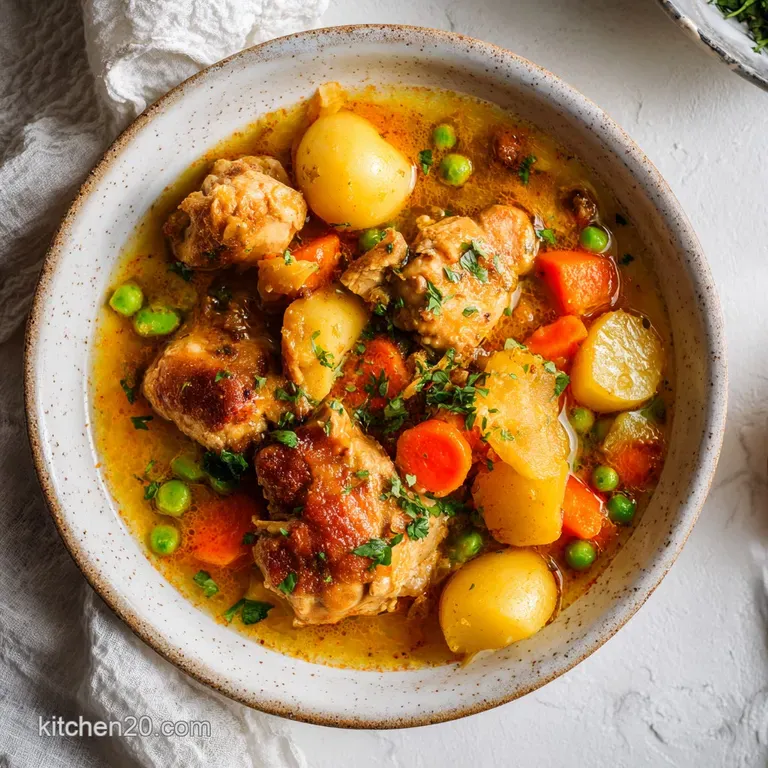
- Time: Active 20 mins, Passive 8 hours, Total 8 hours 20 mins
- Flavor/Texture Hook: Silky, herb infused broth with melt in-your mouth poultry
- Perfect for: Cold Tuesday nights, meal prep, and feeding a crowd
- Mastering the Crock Pot Creamy Chicken Stew for Busy Evenings
- The Mechanics of Collagen and Comfort
- Vital Statistics for the Perfect Stew
- The Molecular Profile of Our Ingredients
- Vital Components for Your Stew
- Tools for Your Culinary Kitchen Platform
- Step-by-Step Evolution of the Dish
- Resolving Common Texture and Flavor Issues
- Modifications for Every Dietary Connection
- Plating the Stew: Three Levels
- Maximizing Shelf Life and Future Meals
- Myths Regarding the Slow Cooker
- Building a Connected Meal Experience
- Recipe FAQs
- 📝 Recipe Card
Mastering the Crock Pot Creamy Chicken Stew for Busy Evenings
I remember standing in my kitchen last Tuesday, staring at a rainy window and feeling completely drained after a long day of Zoom calls. The thought of standing over a hot stove for an hour felt impossible, but the family was hungry and the takeout apps were quoting forty five minutes.
That is when I remembered the chicken thighs I'd prepped that morning.
The moment I lifted the lid of the slow cooker, a cloud of thyme and rosemary steam hit my face, immediately shifting the energy in the room. It was not just a meal, it was a total mood reset.
This crock pot creamy chicken stew has become my go to for revolutionizing how we handle mid week chaos, turning a standard evening into something that feels deeply connected and intentional.
We've all had those slow cooker meals that turn into a mushy, beige mess, right? I've certainly made my share of mistakes, like adding the dairy way too early or cutting the potatoes too small.
But through those kitchen fails, I've figured out the exact sequence to keep the vegetables intact and the sauce perfectly emulsified. You'll get that rich, heavy cream feel without the heaviness, thanks to a few clever starch tricks we've integrated into the platform.
The Mechanics of Collagen and Comfort
Collagen Transformation: The eight hour simmer converts tough connective tissue in chicken thighs into gelatin, creating a silky mouthfeel. This process requires sustained, low temperatures to prevent the protein fibers from tightening and becoming rubbery.
Starch Gelatinization: Amylopectin molecules in the Yukon Gold potatoes swell and burst during the long cook, naturally thickening the liquid base. This creates a structural foundation that supports the added milk and cornstarch, preventing the sauce from separating.
Quick Decision Table
| Thickness of Chicken | Internal Temp | Rest Time | Visual Cue |
|---|---|---|---|
| 2.5 cm (1 inch) cubes | 74°C (165°F) | 5 mins | Opaque and shreds easily |
| Whole Thighs | 74°C (165°F) | 10 mins | Meat pulls away from bone |
| Thins strips | 74°C (165°F) | 3 mins | Edges are soft, not curled |
Building a meal like this is about more than just tossing things in a pot; it's about connecting the right ingredients at the right time. For example, if you find yourself wanting a different flavor profile, this method works beautifully with the base used in our Slow Cooker Chicken recipe.
Vital Statistics for the Perfect Stew
To ensure your results are consistent every single time, we need to focus on a few precision checkpoints. Using a digital scale to measure your 907g (2 lbs) of chicken ensures the liquid to meat ratio stays balanced. If you have too much meat, the stew becomes dry; too little, and it's basically a soup.
| Cook Method | Time | Texture | Best For |
|---|---|---|---|
| Slow Cooker (Low) | 8 hours | Ultra tender, integrated | Deep flavor development |
| Slow Cooker (High) | 4 hours | Firm vegetables, bright | Quicker turnaround |
| Stovetop (Classic) | 1 hour | Chunky, distinct layers | Immediate serving |
The difference between a fast cook and a slow one is all about the integration of the aromatics. When we use the low setting on the crock pot, the onion and garlic have time to melt into the bone broth, creating a background hum of flavor that you just can't replicate in sixty minutes.
The Molecular Profile of Our Ingredients
Ingredient Deep Dive
| Ingredient | Science Role | Pro Secret |
|---|---|---|
| Yukon Gold Potatoes | Texture stabilizer | Keeps skin on for extra starch retention |
| Chicken Bone Broth | Protein rich base | Use chilled broth to see the gelatin content |
| Dijon Mustard | Emulsifier | Sharpness cuts through the fat of the milk |
Vital Components for Your Stew
- 907g (2 lbs) boneless skinless chicken thighs: These are non negotiable for me. Thighs stay juicy over 8 hours, whereas breasts tend to turn into sawdust. Why this? High fat/collagen content prevents drying.
- 1 large yellow onion, diced: The foundation of our aromatic profile. Why this? Breaks down into natural sugar.
- 4 cloves garlic, minced: Essential for depth. Why this? Adds pungent base notes.
- 3 stalks celery, sliced: Provides a subtle salty, earthy undertone. Why this? Classic mirepoix component.
- 454g (1 lb) Yukon Gold potatoes, cubed: These hold their shape better than Russets. Why this? Waxy texture prevents mushiness.
- 3 large carrots, peeled and sliced: Adds natural sweetness and color. Why this? Traditional stew texture.
- 946ml (4 cups) low sodium chicken bone broth: This is our primary liquid. Why this? More protein/body than standard stock.
- 1 tsp dried thyme & 1 tsp dried rosemary: The "stew" smell we all love. Why this? Dried herbs withstand long heat.
- 1 bay leaf: Don't skip this; it adds a layer of complexity you'll miss if it's gone.
- 5ml (1 tsp) sea salt & 2.5ml (0.5 tsp) cracked black pepper: Essential seasoning.
- 237ml (1 cup) whole milk: For that creamy finish. Why this? Fat carries the herb flavors.
- 45ml (3 tbsp) cornstarch: Our final thickening agent. Why this? Creates a glossy sheen.
- 1 cup frozen peas: Added at the end for a pop of green and sweetness.
- 15ml (1 tbsp) Dijon mustard: The "secret" ingredient. Why this? Acid balances the richness.
Chef's Tip: Freeze your butter for 10 minutes and grate it into the stew at the very end for an extra velvety "monter au beurre" finish that revolutionizing the sauce's texture.
Tools for Your Culinary Kitchen Platform
You don't need a high tech lab to make this, but a few specific tools make the connection between raw ingredients and a finished masterpiece much smoother. A 6 quart slow cooker (such as a Crock Pot brand) is the ideal size for this volume.
If the pot is too large, the liquid evaporates too quickly; too small, and it won't cook evenly.
A sharp chef's knife is also vital. When cutting your potatoes into 2.5 cm (1 inch) cubes, precision matters. If some are small and some are huge, the small ones will dissolve into the broth while the large ones stay crunchy. We want uniformity for a polished result.
step-by-step Evolution of the Dish
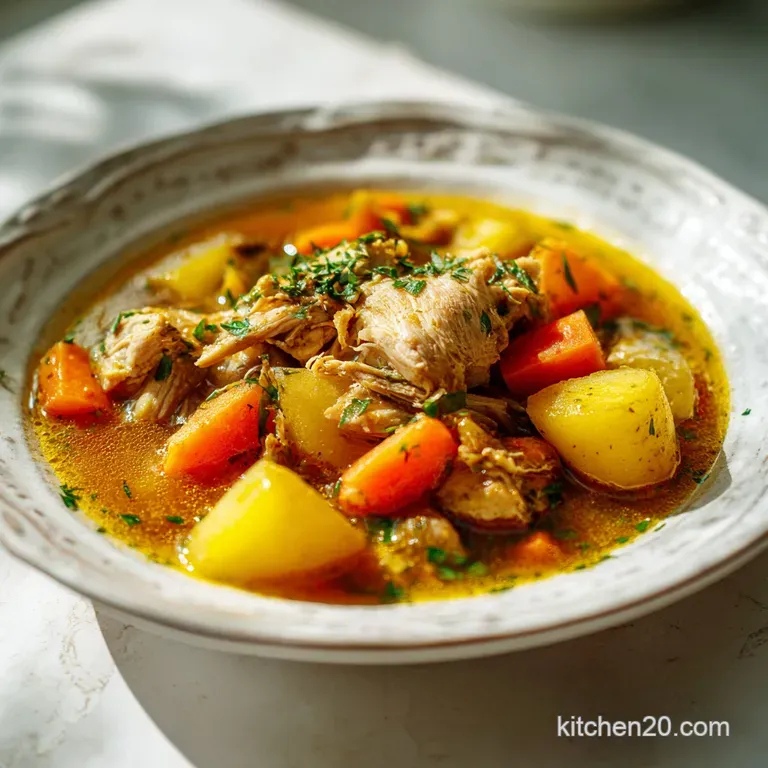
- Prep the poultry. Trim the 907g of chicken thighs of any excess large fat pads and cut into bite sized pieces.
- Layer the aromatics. Place the diced onion, minced garlic, and sliced celery in the bottom of the slow cooker.
- Add the bulk. Layer the cubed Yukon Gold potatoes and sliced carrots over the aromatics.
- Season the base. Sprinkle the thyme, rosemary, sea salt, and black pepper over the vegetables.
- Infuse the liquid. Pour in the 946ml of bone broth and tuck the bay leaf into the center. Note: Ensure the chicken is mostly submerged to prevent drying.
- Execute the long cook. Set the slow cooker to LOW and cook for 8 hours until the chicken is tender and falling apart.
- Create the slurry. In a small jar, whisk together the 237ml of milk and 45ml of cornstarch until no lumps remain.
- Thicken the stew. Stir the milk mixture and the 15ml of Dijon mustard into the pot.
- Add the finish. Toss in the frozen peas and cook on HIGH for another 15 minutes until the sauce is thickened and bubbling.
- Final check. Remove the bay leaf and adjust salt to your preference before serving.
If you find yourself loving this process but want something with a bit more of a traditional "soup" feel, you might want to try the Classic Hearty Beef Stew recipe for your next weekend project.
Resolving Common Texture and Flavor Issues
Rescuing a Thin Broth
Sometimes the vegetables release more water than expected, leaving your stew looking more like a watery soup. If this happens, don't panic. You can take a cup of the liquid, whisk in an extra tablespoon of cornstarch, and add it back in.
Or, my favorite trick: mash a few of the cooked potato cubes directly into the broth to act as a natural thickener.
Preventing Mushy Vegetables
If you find your carrots are disappearing into the abyss, it’s usually because they were cut too thin. Keep your carrot rounds at least 1 cm thick. Also, make sure you are using Yukon Gold or Red potatoes; Russets have too much starch and will disintegrate during an 8 hour cycle.
| Problem | Root Cause | Solution |
|---|---|---|
| Curdled Sauce | Added milk too early | Only add dairy in the final 20 mins |
| Bland Flavor | Not enough salt/acid | Add an extra splash of Dijon or lemon |
| Tough Chicken | Used breasts instead of thighs | Always stick to thighs for 8 hour cooks |
Common Mistakes Checklist
- ✓ Pat the chicken dry before cutting to ensure clean slices.
- ✓ Don't peek! Opening the lid adds 15-20 minutes to the cook time by releasing heat.
- ✓ Cubing potatoes uniformly (2.5 cm) ensures they all finish at the same time.
- ✓ Always use low sodium broth to maintain control over the final seasoning.
- ✓ Add the frozen peas at the very end to keep them from turning grey.
Modifications for Every Dietary Connection
Making it dairy-free
You can easily swap the whole milk for a full fat coconut milk or a creamy oat milk. Just be aware that coconut milk will add a very slight tropical note, which actually pairs surprisingly well with the thyme and rosemary.
Boosting the Protein
If you're looking to maximize the protein platform, you can stir in a cup of cooked white beans (like Cannellini) during the last 30 minutes. They blend right into the creamy texture and add about 15 grams of protein to the overall pot.
| Original Ingredient | Substitute | Why It Works |
|---|---|---|
| Whole Milk | Heavy Cream | Creates a much richer, more decadent mouthfeel |
| Cornstarch | Arrowroot Powder | Better for paleo/grain free diets. Note: Slurry may thin if reheated. |
| Chicken Thighs | Turkey Thighs | Similar fat content, slightly more gamey flavor |
Plating the Stew: Three Levels
Level 1: The Simple Bowl
Serve in a wide, deep ceramic bowl with a heavy duty spoon. No frills, just pure comfort. This is the "Tuesday Night" version where the focus is entirely on the warmth.
Level 2: The Polished Presentation
Ladle the stew into a shallow bowl. Top with a generous pinch of fresh parsley and a crack of fresh black pepper. Serve with a side of toasted sourdough bread rubbed with a raw garlic clove.
Level 3: The Restaurant Experience
Place a small, roasted garlic bulb in the center of the bowl. Drizzle a tiny bit of high-quality truffle oil or herb oil around the edges. Top with micro thyme and a few flakes of Maldon sea salt for a crunch that shatters against the silky broth.
| Plating Level | Key Addition | Visual Impact |
|---|---|---|
| Simple | Rustic Spoon | Casual, homey |
| Polished | Fresh Herbs | Bright, contrasting colors |
| Restaurant | Truffle Oil | Glossy, high end sheen |
Maximizing Shelf Life and Future Meals
Storage: This stew lives happily in the fridge for up to 4 days. In fact, the flavor often improves on day two as the herbs continue to infuse the liquid. Keep it in an airtight glass container to prevent it from picking up other fridge scents.
Freezing: You can freeze this for up to 3 months, but be warned potatoes can sometimes change texture (becoming slightly grainy) after freezing. To minimize this, ensure the stew is completely cold before freezing.
Zero Waste: Don't toss those onion skins or celery ends! Throw them into a freezer bag. Once the bag is full, simmer them with water to make your own "scrap broth" for the next time you make this recipe. Also, if you have leftover sauce but no chicken, it makes a killer base for a quick pot pie.
Just add some leftover turkey and pop a puff pastry lid on top!
Myths Regarding the Slow Cooker
Myth: You must sear the meat first to "lock in" juices. Truth: Searing does not lock in juices; it creates flavor via the Maillard reaction. While you can sear the chicken for extra depth, the 8 hour cook in this specific stew provides plenty of flavor development without the extra pan to wash.
Myth: High heat is just "faster" than low heat. Truth: High heat can actually boil the chicken, making the fibers tough and stringy. For a truly velvety crock pot creamy chicken stew, the low setting is essential for that gentle collagen breakdown.
Myth: Fresh herbs are always better than dried in a crock pot. Truth: In long cook scenarios, fresh herbs like cilantro or parsley will turn bitter and brown. Dried rosemary and thyme are much more resilient and thrive in the sustained heat of a slow cooker.
Building a Connected Meal Experience
This stew isn't just a standalone dish; it's part of a broader culinary ecosystem. To round out the meal, I usually serve it with something acidic or crunchy. A simple green salad with a sharp lemon vinaigrette provides a beautiful contrast to the richness of the cream and chicken.
If you’re hosting a larger gathering, this recipe scales beautifully. Just remember that if you double the ingredients, you don't necessarily need to double the liquid. Keep the broth to about 1.5 times the original amount to prevent the stew from becoming too thin.
It's all about keeping that connection between the solids and the silky sauce. Right then, let's get that crock pot started you won't regret it when 6:00 PM rolls around!

Recipe FAQs
How do you cook chicken stew in a slow cooker with chicken breast?
Use the LOW setting for 6-7 hours max. Chicken breast cooks faster than thighs and can become dry and stringy on HIGH or for a full 8 hours.
Is it okay to put heavy cream in the crockpot?
No, add heavy cream near the end of cooking. Dairy proteins can curdle or separate when exposed to long, slow cooking temperatures.
Can I add cream to chicken stew?
Yes, adding cream creates the desired silkiness. Mix the cream with a cold slurry (like cornstarch) and stir it in during the last 15 minutes of cooking on HIGH heat.
Is it better to cook chicken in the crock pot on high or low?
Low is almost always better for stewed meats. The slow, gentle heat breaks down connective tissue into gelatin, yielding tender results, unlike HIGH heat which can tighten fibers.
Should I sear the chicken before putting it in the slow cooker?
No, searing is optional but not mandatory for safety or texture. Searing primarily develops flavor through the Maillard reaction; for a hands off meal, you can skip this step entirely.
Can I use frozen vegetables in this stew?
Yes, but add them during the last 30 minutes. Frozen items release excess water and can become mushy if added at the beginning of the 8-hour cycle.
How do I thicken the stew if it comes out too thin?
Create a cold cornstarch slurry and simmer for 15 minutes. Whisk 1 tablespoon of cornstarch with 2 tablespoons of cold water until smooth, then stir into the hot stew and let it bubble gently until thickened.
Creamy Chicken Stew Slow Cooker
Ingredients:
Instructions:
Nutrition Facts:
| Calories | 358 kcal |
|---|---|
| Protein | 40.1 g |
| Fat | 8.2 g |
| Carbs | 31.4 g |
| Fiber | 4.8 g |
| Sugar | 6.2 g |
| Sodium | 685 mg |
