Creamy Herb Chicken with Mashed Potatoes and Carrots
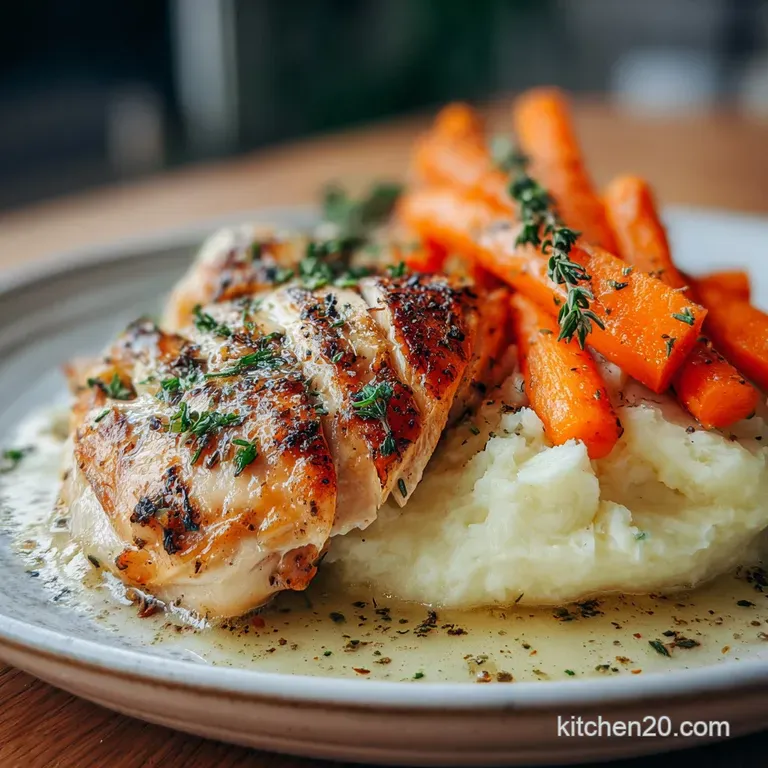
- Time: Active 20 minutes, Passive 40 minutes, Total 1 hour
- Flavor/Texture Hook: Silky herb infused cream meeting shatter crisp chicken skin
- Perfect for: Sunday family gatherings or a high end date night at home
- Best Creamy Herb Chicken with Mashed Potatoes and Glazed Carrots
- Logic Behind This Plate's Success
- Key Metrics for Cooking Success
- Decoding Our Core Flavor Components
- Tools for a Flawless Execution
- The Step-by-Step Cooking Protocol
- Solving Potential Culinary Roadblocks
- Customizing Volume and Portion Sizes
- Myths Regarding Creamy Chicken
- Guidelines for Freshness and Storage
- Artful Presentation and Garnish Strategy
- High in Sodium
- Recipe FAQs
- 📝 Recipe Card
Best Creamy Herb Chicken with Mashed Potatoes and Glazed Carrots
The kitchen air shifts the moment those bone in thighs hit the hot oil. You hear that aggressive sizzle—the sound of skin transforming into a golden, crackling crust.
Then comes the scent: the woody, earthy aroma of fresh rosemary and thyme hitting the rendered fat, swirling through the house like a warm hug. It’s the kind of smell that brings people into the kitchen asking, "How much longer?" before you’ve even peeled a single potato.
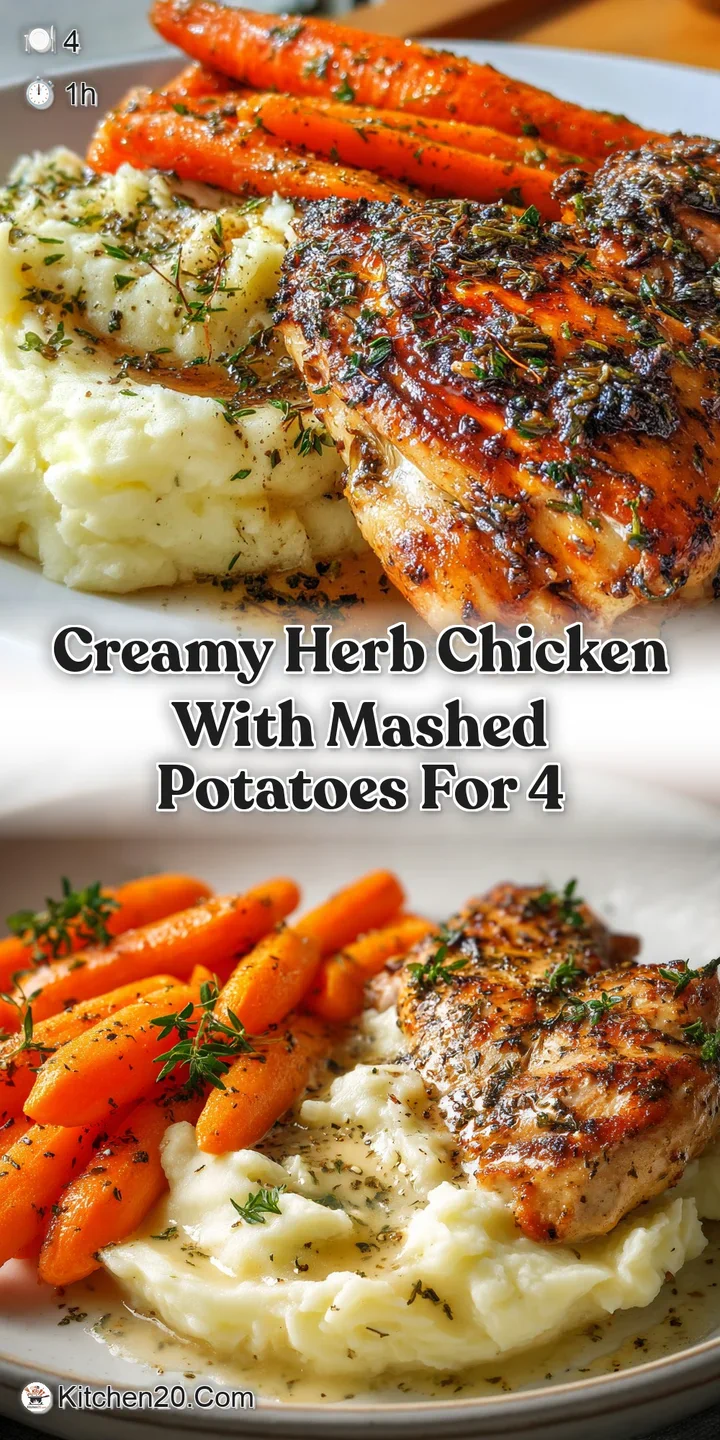
This recipe features creamy herb chicken paired perfectly with fluffy mashed potatoes and sweet glazed carrots for a comforting, complete meal. I used to think a "fancy" chicken dinner required hours of French techniques, but I was wrong.
The secret isn't in the complexity; it's in how we manage the connection between the protein and the pan. We are moving away from the "dry breast" myth that plagues so many home kitchens.
Instead, we’re utilizing bone in thighs as a platform for flavor, ensuring every bite is succulent and dripping with a sauce that feels like liquid velvet.
Logic Behind This Plate's Success
Building a dish like this requires understanding how different components interact under heat. We aren't just tossing things in a pan; we are revolutionizing the texture through controlled science.
- Maillard Mastery: Searing the skin at a high initial temperature creates a complex flavor profile that "connects" the meat to the sauce.
- Starch Gelatinization: Boiling Yukon Golds until the cell walls weaken allows the warmed milk and butter to integrate into a silky, non gummy mash.
- Emulsion Stability: The heavy cream and bone broth are bound by the gelatin released from the chicken bones, preventing the sauce from breaking.
- Osmotic Glazing: Cooking carrots in a honey water solution draws out natural sugars while the reduction creates a reflective, sweet coating.
The Architecture of the Emulsified Sauce
The fat from the heavy cream and the collagen rich bone broth are connected by a slow reduction process. This creates a velvety coat that clings to the chicken without feeling heavy or oily.
| Thickness | Internal Temp | Rest Time | Visual Cue |
|---|---|---|---|
| 1.5 inch Thigh | 175°F | 8 minutes | Juices run completely clear |
| 1 inch Thigh | 170°F | 5 minutes | Skin is rigid and golden |
| 2 inch Thigh | 180°F | 10 minutes | Meat pulls easily from bone |
When you cook chicken thighs, aiming for a slightly higher internal temperature than breasts (175°F vs 165°F) is the secret. This extra heat allows the connective tissue to melt, which is why your chicken will feel much more tender than a standard roast.
Key Metrics for Cooking Success
To ensure your execution is flawless, we need to treat the kitchen as a platform for precision. Small variables like the temperature of your milk or the size of your carrot slices can change the entire outcome. If you are looking for a different approach to your starch, you might find my Garlic Herb Mashed recipe helpful for those busy weeknights when you need speed.
Precision Checkpoints
- The Sear: Chicken skin must sizzle for 6 minutes undisturbed to achieve a shatter-crisp texture.
- The Mash: Potato cubes must be 1 inch uniform squares to ensure they cook at the exact same rate.
- The Glaze: The carrot liquid must reduce until it looks like a thick amber syrup, which usually takes about 12 minutes.
| Component | Science Role | Pro Secret |
|---|---|---|
| Yukon Gold Potatoes | High starch, low moisture | Mash them while they are steaming hot to prevent gumminess. |
| Bone in Thighs | Thermal insulation | The bone acts as a heat conductor, cooking the meat from the inside out. |
| Heavy Cream | Fat based flavor carrier | Always add at room temp to prevent the sauce from "shocking" and curdling. |
By focusing on these specific metrics, you bridge the gap between a "good" meal and a restaurant quality experience. The connectivity of these elements creates a symphony of textures on the plate.
Decoding Our Core Flavor Components
Everything on this list serves a purpose. We don't use "filler" ingredients here. Each herb and every gram of butter is a building block for the final flavor profile.
- 4 bone in, skin on chicken thighs (approx. 800g): The skin provides the fat and texture.
- 1 tbsp extra virgin olive oil: For that initial over high heat sear.
- 3 cloves garlic, minced: The aromatic base of the cream sauce.
- 1 cup heavy cream: Why this? Provides the necessary fat for a velvety, stable emulsion that coats the spoon.
- 1/2 cup low sodium chicken bone broth: Adds depth and natural gelatin.
- 1 tsp fresh thyme, minced: A floral note that cuts through the cream.
- 1 tsp fresh rosemary, finely chopped: The "forest" aroma that defines the dish.
- 2 lbs Yukon Gold potatoes, peeled and cubed: Why this? Naturally buttery flavor and a texture that stays smooth, not grainy.
- 5 tbsp unsalted butter, divided: 4 for the mash, 1 for the carrots.
- 1/2 cup whole milk, warmed: Essential for a light, airy mash.
- 1 tbsp fresh chives, finely snipped: Adds a mild onion finish.
- 1/2 tsp garlic powder: Deepens the potato flavor without adding moisture.
- 1 lb carrots, peeled and sliced on a bias: Why this? Bias slicing increases surface area for the honey glaze to cling to.
- 1 tbsp honey: The sugar source for the carrot reduction.
- 1/4 cup water: The medium for simmering the carrots.
- 0.5 tsp salt & 0.5 tsp cracked black pepper: Essential for balancing the sweetness.
| Original Ingredient | Substitute | Why It Works |
|---|---|---|
| Heavy Cream | Full fat Coconut Milk | Similar fat content. Note: Adds a subtle tropical flavor profile. |
| Yukon Gold Potatoes | Russet Potatoes | Higher starch. Note: Result will be fluffier but less buttery. |
| Honey | Maple Syrup | Liquid sugar. Note: Adds a woodier, more autumnal sweetness. |
| Bone in Thighs | Chicken Drumsticks | Similar fat/connective tissue. Note: Cooking time remains the same. |
Tools for a Flawless Execution
- Large Cast Iron Skillet
- Necessary for that heavy duty sear on the chicken.
- Potato Ricer or Food Mill
- If you want a truly velvety mash, this is non negotiable.
- Heavy bottomed Saucepan
- Prevents the honey glaze on the carrots from burning.
- Digital Meat Thermometer
- The only way to guarantee the 175°F sweet spot.
- Whisk
- For connecting the broth and cream into a smooth sauce.
The step-by-step Cooking Protocol
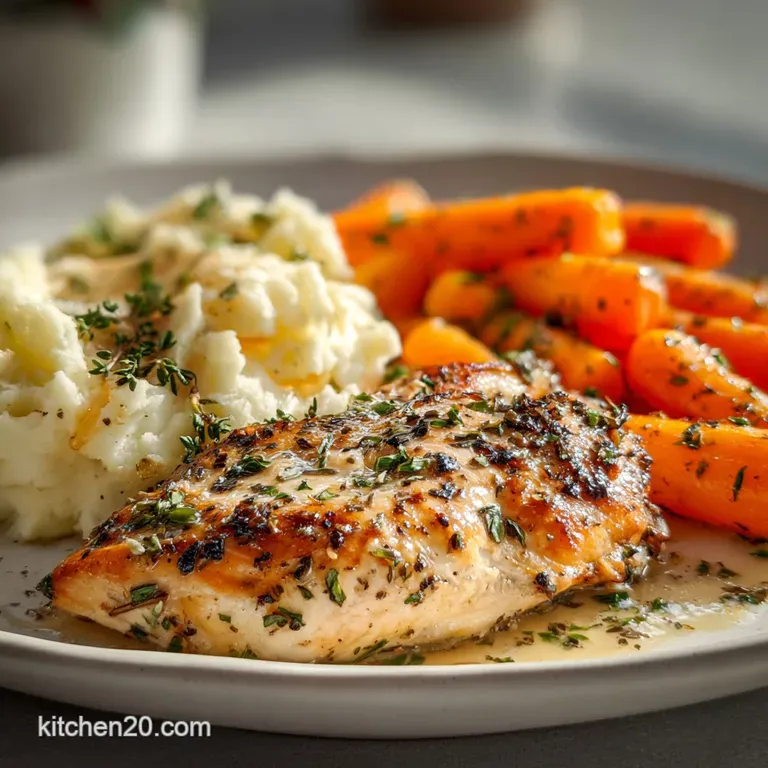
- Prep the chicken. Pat the skin of the 4 bone in thighs completely dry with paper towels. Note: Moisture is the enemy of a crisp sear.
- Start the potatoes. Place the 2 lbs of cubed Yukon Golds in cold salted water. Bring to a boil and cook for 15 minutes until a knife slides in with zero resistance.
- Sear the protein. Heat olive oil in the skillet. Place chicken skin side down for 6 minutes until the skin is dark gold and releases easily from the pan.
- Flip and finish. Turn the chicken over and cook for another 8-10 minutes. Remove chicken and let it rest on a plate.
- Build the base. In the same skillet, sauté the minced garlic for 1 minute until fragrant but not brown.
- Create the sauce. Whisk in 1/2 cup bone broth, scraping the bottom of the pan. Add 1 cup heavy cream, thyme, and rosemary. Simmer for 5 minutes until the liquid coats the back of a spoon.
- Glaze the carrots. In a separate pan, combine sliced carrots, 1/4 cup water, 1 tbsp honey, and 1 tbsp butter. Cover and simmer for 8 minutes.
- Reduce the glaze. Remove the carrot lid and increase heat for 4 minutes until the liquid becomes a bubbling, sticky syrup.
- Mash the potatoes. Drain potatoes and let them steam for 2 minutes. Rice them into a bowl, then stir in 4 tbsp butter, warmed milk, and chives until a silky cloud forms.
- Re connect components. Nestled the chicken back into the herb cream for 2 minutes to warm through.
Chef's Tip: Freeze your 4 tbsp of butter for 10 minutes before adding it to the mashed potatoes. As the frozen fat hits the hot potatoes, it creates tiny pockets of steam that result in a lighter, more aerated texture.
Solving Potential Culinary Roadblocks
Even with a great platform, things can go sideways. The key is knowing how to pivot when the science doesn't align.
Why Your Sauce Separated
This usually happens if the heat is too high when adding the cream. If the fat and liquid disconnect, the sauce looks oily rather than creamy.
| Problem | Root Cause | Solution |
|---|---|---|
| Oily Sauce | Heat too high/Boiling cream | Whisk in a teaspoon of cold water very rapidly to re emulsify. |
| Gummy Potatoes | Over mashing/Cold butter | Use a ricer and never use a food processor; the blades tear the starch. |
| Dull Carrots | Excess water | Remove the lid sooner and boil the liquid down until it's thick. |
Common Mistakes Checklist
- ✓ Never crowd the skillet; if the thighs touch, they will steam instead of sear.
- ✓ Always start potatoes in cold water to ensure the center cooks as fast as the outside.
- ✓ Don't skip the rest period for the chicken; it allows the fibers to relax and hold juice.
- ✓ Warm your milk before adding it to the mash; cold liquid shocks the starch and causes lumps.
- ✓ Use fresh herbs; dried herbs lack the volatile oils needed for that "sizzle" aroma.
Customizing Volume and Portion Sizes
Scaling a dish that involves three separate components requires a bit of logistical planning. If you find this stovetop method too hands on, you can always check out my Slow Cooker Chicken recipe for a "set it and forget it" version of comfort food.
- To Scale Down (Serves 2): Use a smaller 8 inch skillet. Reduce the potato boiling time by 3 minutes since the volume is lower. Keep the spice levels the same, as you want that flavor concentration.
- To Scale Up (Serves 8): Work in two batches for the chicken sear. Do not try to fit 8 thighs in one pan, or the skin will never crisp. For the potatoes, use a large stockpot and increase the milk by only 10% to avoid a soup like consistency.
- Cooking Method Comparison:
| Method | Time | Texture | Best For |
|---|---|---|---|
| Skillet (This Recipe) | 40 mins | Shatter crisp skin | Ultimate texture junkies |
| Oven Roast | 55 mins | Evenly browned | Hands off hosting |
| Instant Pot | 25 mins | Fall off-bone | Busy weeknights |
Decision Shortcut
- If you want extra crispy skin, pat the chicken with cornstarch before searing.
- If you want richer mash, swap half the milk for sour cream or crème fraîche.
- If you want spicier carrots, add a pinch of cayenne to the honey glaze.
Myths Regarding Creamy Chicken
One major misconception is that you must "seal in the juices" by searing. Searing doesn't actually seal anything; moisture loss happens regardless of the crust. The sear is strictly for the Maillard reaction creating those hundreds of flavor compounds that connect the meat to our senses.
Another myth is that heavy cream will always curdle if boiled. While high heat is risky, the fat content in heavy cream actually makes it quite stable compared to milk or half and half. As long as you have a "bridge" like bone broth or a bit of starch, you can simmer it gently without fear of separation.
Guidelines for Freshness and Storage
Storage: Keep leftovers in an airtight container for up to 3 days in the fridge. The sauce will thicken significantly as it cools, so you'll need a splash of broth when reheating.
Freezing: I don't recommend freezing the mashed potatoes, as the texture becomes grainy upon thawing. However, the chicken and the herb sauce freeze beautifully for up to 2 months.
Zero Waste: Don't throw away those carrot peels or the chicken bones! Toss them into a freezer bag. Once you have a full bag, boil them with water and an onion to create your own "connected" bone broth for the next time you make this dish.
Artful Presentation and Garnish Strategy
A dish this beige and orange needs a thoughtful garnish strategy to balance the colors. We are looking for high contrast accents that signal freshness.
- The Emerald Accent: Use the finely snipped chives. Scatter them over the potatoes just before serving. The sharp green "connects" the earthy herbs in the chicken to the creamy mash.
- The Amber Accent: The honey glaze on the carrots should be glossy enough to reflect the light. Ensure you spoon a little extra glaze over the carrots once they are plated.
- The Obsidian Accent: A final, aggressive crack of obsidian black pepper over the cream sauce. This isn't just for flavor; the visual "dots" break up the solid white of the cream.
Always plate the mashed potatoes first, creating a "well" for the sauce. Place the chicken on the side so the skin stays out of the liquid, preserving that shatter-crisp texture. Finally, nestle the carrots alongside, ensuring the honey glaze doesn't run into the herb cream too much.
This creates a plate that is as visually balanced as it is flavor connected.
High in Sodium
845 mg 845 mg of sodium per serving
(37% 37% of daily value)
The American Heart Association recommends limiting sodium intake to about 2,300mg per day for overall cardiovascular health.
Tips to Reduce Sodium in Your Chicken and Potatoes Recipe:
-
Broth Swap-30%
Use unsalted chicken broth instead of low sodium broth. This will significantly reduce the sodium content without sacrificing flavor.
-
Reduce Added Salt-25%
Reduce the amount of added salt by at least half, or eliminate it entirely. Taste as you go and add salt only if absolutely necessary.
-
No-Salt Potatoes-10%
Omit salt when boiling potatoes and rely on herbs and spices for flavor.
-
Unsalted Butter-10%
Ensure you are using unsalted butter throughout the recipe. This helps control the sodium content more effectively.
-
Fresh Garlic Power-5%
Increase the amount of fresh garlic. Garlic can replace need for salt.
-
Spice It Up
Experiment with a wider variety of fresh and dried herbs (e.g., paprika, oregano, onion powder). These add flavor without any sodium.
Estimated Reduction: Up to 60% less sodium
(approximately 338 mg per serving)
Recipe FAQs
Can I use chicken breasts instead of thighs for this recipe?
No, the results will be significantly different. Breasts are leaner and require a much lower final internal temperature (165°F) which won't render the connective tissue like thighs do. If you must substitute, try the technique in our How to Sear recipe to keep them moist.
How can I ensure the mashed potatoes don't become gummy?
Rice or mill the potatoes immediately after draining. Do not use a food processor or electric mixer, as these overwork the starch molecules, leading to a gluey texture. Add cold liquids slowly to the hot potatoes.
Is it true that I must only use bone-in, skin-on chicken for the best sauce?
No, this is a common misconception. While bone-in thighs add natural gelatin for sauce stability, boneless skinless thighs will work if you whisk in 1 teaspoon of cornstarch with the cream. This provides the necessary thickener that collagen would naturally provide.
How long should I realistically simmer the herb cream sauce before adding the chicken back?
Simmer gently for five minutes until the sauce coats the back of a spoon. This reduction time allows the liquid volume to decrease enough so the sauce clings beautifully to the chicken without being watery. This controlled simmering is key to achieving a stable emulsion.
What is the best way to keep the seared chicken skin crispy while it finishes cooking?
Remove the chicken from the pan entirely after searing. Place it on a wire rack set over a plate while you make the sauce, then nestle it back into the barely simmering sauce only for the last two minutes. The high heat of the residual pan is what ruins the crispness.
How do I prevent the honey glaze on the carrots from burning on the bottom of the pan?
Start the glaze over medium heat, never high, and stir frequently during reduction. If you notice the bottom darkening too fast, add a splash of water or reserved chicken broth to cool the sugar momentarily. If you are unsure about pan temperature control, look at techniques for balancing high heat caramelization, similar to what we use in the Coq au Vin recipe.
Can I prepare the carrots and potatoes entirely ahead of time?
Yes, you can prep both components a day ahead. Boil the potatoes and immediately drain and whip them with butter, only adding the warm milk right before serving to refresh the texture.
For carrots, cook them until just tender, store them in their cooking liquid, and then proceed with the honey glaze step right before serving.
Creamy Herb Chicken Meal
Ingredients:
Instructions:
Nutrition Facts:
| Calories | 869 kcal |
|---|---|
| Protein | 37g |
| Fat | 58g |
| Carbs | 52g |
| Fiber | 6.2g |
| Sugar | 11.8g |
| Sodium | 845mg |
