Chinese Chicken Salad Recipe
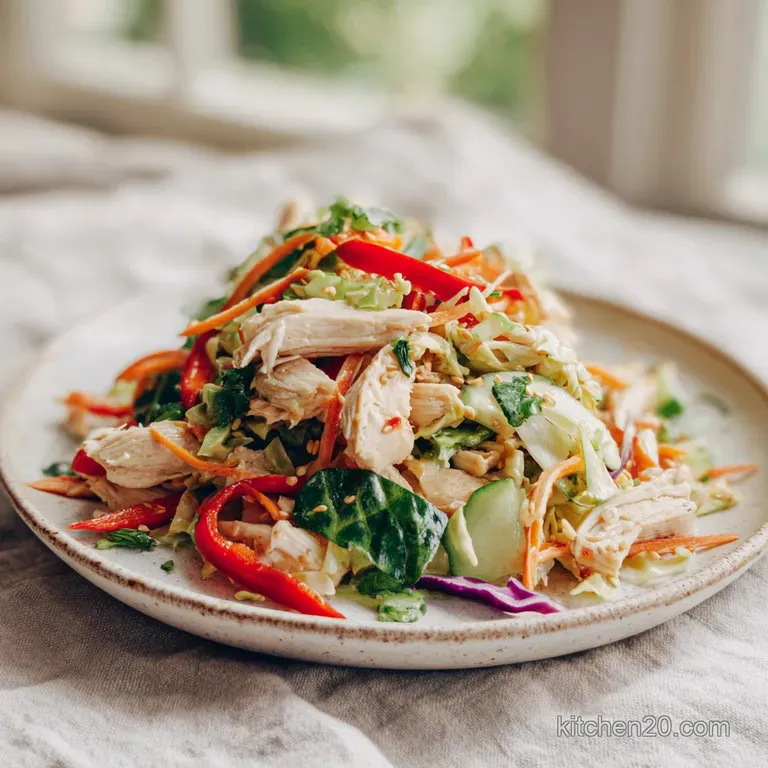
- Time: Active 20 minutes, Passive 10 minutes, Total 30 minutes
- Flavor/Texture Hook: A satisfying, high decibel shatter from crushed ramen paired with silky sesame dressing.
- Perfect for: A fast weeknight dinner or a bright, impressive lunch that won't wilt.
- Mastering the Best Ever Chinese Chicken Salad
- Technical Specifications for Kitchen Success
- Selecting Components for Peak Flavor
- Minimal Tools for Maximum Efficiency
- Mastering Assembly for Optimal Texture
- Ensuring Your Salad Stays Crisp
- Adapting Flavors to Your Pantry
- Handling Leftovers and Prepping Ahead
- Final Touches for Restaurant Quality
- Recipe FAQs
- 📝 Recipe Card
Mastering the Best Ever Chinese Chicken Salad
You know that sound when you crush a packet of dry ramen noodles in your hands? That satisfying, sharp crackle is the literal heartbeat of this dish. I remember the first time I tried to make a Chinese Chicken Salad at home, and honestly, it was a disaster.
I used iceberg lettuce that turned into a soggy, translucent mess within five minutes of touching the dressing, and the chicken was as dry as a desert. It was a sad bowl of limp greens that didn't deserve the name.
But then I learned the secret of the cabbage. Not just any cabbage, but a mix of Napa and Red cabbage that provides a structural "snap" that stands up to a heavy, velvety dressing. It changed everything.
Now, whenever I hear that sizzle of chicken hitting a hot pan, I know I'm minutes away from a meal that actually tastes like it came from a high end bistro, but without the twenty dollar price tag.
We're going to focus on getting that chicken perfectly browned and keeping the crunch alive until the very last bite. If you've been searching for a meal that feels light but actually fills you up, you've found it.
This isn't just a side dish; it's a full throttle flavor experience that we've refined through plenty of kitchen "oops" moments so you don't have to.
Technical Specifications for Kitchen Success
Osmotic Regulation: Salt draws moisture out of vegetables, so we add the dressing only seconds before serving to prevent the cabbage from releasing water and diluting the flavors. This keeps the crunch high and the sauce thick.
| Thickness | Internal Temp | Rest Time | Visual Cue |
|---|---|---|---|
| 0.5 inch (pounded) | 165°F | 5 mins | Juices run clear, no pink |
| 1.0 inch | 165°F | 8 mins | Firm to the touch, opaque center |
| Strips/Bites | 165°F | 2 mins | Golden brown exterior, matte white inside |
Getting the chicken right is about more than just heat; it's about timing. If you're interested in how different textures change a dish, you might notice similarities to how we prep the base for our Chicken Salad Recipe, where structural integrity is everything.
Selecting Components for Peak Flavor
Component Analysis
| Ingredient | Science Role | Pro Secret |
|---|---|---|
| Napa Cabbage | Structural Base | Slice it extremely thin across the grain to create "ribbons" that catch more dressing. |
| Peanut Butter | Emulsifier | Use creamy, room temperature butter to ensure it bonds the oil and vinegar into a silky sauce. |
| Rice Vinegar | Acid Balance | It has a lower pH than white vinegar, providing tang without a harsh chemical "burn." |
For the Vibrant Salad Base, we use 4 cups Napa cabbage, finely shredded and 2 cups Red cabbage, thinly sliced. This mix isn't just for color; the red cabbage adds a peppery note. You'll also need 1 large carrot, julienned, 3 scallions, bias cut, and 0.5 cup fresh cilantro, roughly chopped.
Don't forget those 1 cup mandarin orange segments for a burst of sweetness.
For the Lean Protein, grab 1 lb boneless, skinless chicken breasts and 1 tbsp olive oil. To make the Signature Dressing, you'll need 3 tbsp unseasoned rice vinegar, 2 tbsp low sodium soy sauce, 1 tbsp toasted sesame oil, 1 tbsp creamy peanut butter, 1 tbsp honey, 1 tsp fresh ginger, grated, and 1 clove garlic, minced.
For the "Crunch" Factor, keep 0.5 cup dry ramen noodles, crushed, and 1 tbsp toasted sesame seeds ready, plus salt and white pepper to taste.
Chef's Tip: Freeze your ginger for 10 minutes before grating. It prevents the root from becoming a stringy mess and gives you a fine, snow like zest.
Minimal Tools for Maximum Efficiency
You don't need a pantry full of gadgets for this. A solid chef’s knife is your best friend here. Since we're doing a lot of shredding, make sure it’s sharp. A large stainless steel or glass mixing bowl is essential because plastic can sometimes hold onto old oil smells, which ruins the delicate sesame aroma.
For the dressing, a simple glass jar with a tight lid works better than a whisk. You can shake it like a cocktail, which forces the peanut butter and oils to emulsify much faster. If you're using a pan for the chicken, a heavy bottomed skillet is best to get that golden sear without burning the honey later on.
Mastering Assembly for Optimal Texture
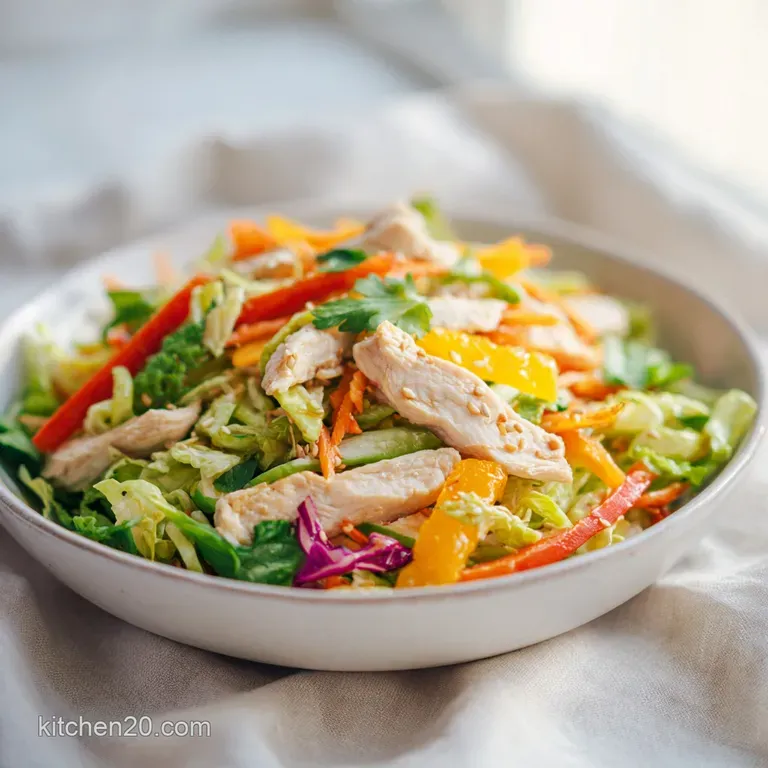
- Prep chicken. Pat the 1 lb chicken breasts dry with paper towels. Note: Moisture on the surface creates steam instead of a sear.
- Season meat. Rub the chicken with salt and white pepper.
- Cook protein. Heat 1 tbsp olive oil in a skillet over medium high heat. Add chicken and cook 5-6 minutes per side until golden and firm.
- Rest chicken. Move the chicken to a board and let it sit for 5 minutes. Note: This prevents the juices from leaking out immediately.
- Shred greens. While the chicken rests, toss 4 cups Napa cabbage, 2 cups red cabbage, and 1 large carrot in your large bowl.
- Mix dressing. In a small jar, combine 3 tbsp rice vinegar, 2 tbsp soy sauce, 1 tbsp sesame oil, 1 tbsp peanut butter, 1 tbsp honey, 1 tsp ginger, and 1 minced garlic clove.
- Emulsify sauce. Shake the jar vigorously until the dressing looks velvety and uniform.
- Slice chicken. Cut the rested chicken into thin strips or bite sized cubes.
- Combine ingredients. Add the chicken, 3 scallions, 0.5 cup cilantro, and 1 cup mandarin oranges to the cabbage.
- Final toss. Pour the dressing over, add 0.5 cup crushed ramen and 1 tbsp sesame seeds, and toss until every ribbon of cabbage is glistening.
Ensuring Your Salad Stays Crisp
Fixing Watery Salad Issues
If your salad looks like a soup at the bottom of the bowl, it’s usually because the vegetables were still wet from washing. Cabbage has lots of nooks and crannies that hold water. Use a salad spinner or pat the shredded leaves dry with a clean kitchen towel.
Another culprit is adding salt too early, which draws out cellular water.
Balancing High Acidity
Sometimes a batch of rice vinegar is punchier than expected. If the dressing makes you pucker uncomfortably, don't throw it out. Add a tiny bit more peanut butter or a teaspoon of extra honey. The fats and sugars will coat the tongue and dampen the perception of the acid without dulling the flavor.
| Problem | Root Cause | Solution |
|---|---|---|
| Soggy Noodles | Added too early | Toss in ramen crunches only at the very last second before eating. |
| Bland Chicken | No seasoning before heat | Salt the chicken aggressively on both sides before it hits the pan. |
| Broken Dressing | Cold peanut butter | Microwave the peanut butter for 5 seconds so it blends smoothly with the oil. |
- ✓ Pat chicken completely dry before searing (prevents steaming)
- ✓ Whisk the dressing until no peanut butter clumps remain
- ✓ Toast the sesame seeds in a dry pan for 30 seconds for extra aroma
- ✓ Slice the cabbage into uniform, thin ribbons for better texture
- ✓ Wait until the chicken is cool or room temp before adding to the greens
Adapting Flavors to Your Pantry
If you're cooking for a smaller crowd, you can easily cut this recipe in half. Use a smaller skillet for the chicken so the oil doesn't spread too thin and burn. If you need half an egg for a different variation, beat it first and then measure out half.
For doubling the recipe, don't double the salt immediately; start with 1.5x and adjust to taste, as saltiness can compound quickly in large batches.
| Original Ingredient | Substitute | Why It Works |
|---|---|---|
| Napa Cabbage | Romaine Lettuce | Provides crunch. Note: Will wilt faster than cabbage; eat immediately. |
| Peanut Butter | Almond Butter | Similar fat content. Note: Slightly grainier texture and nuttier flavor. |
| Rice Vinegar | Apple Cider Vinegar | High acidity. Note: Adds a fruity note less "authentic" but still bright. |
When thinking about substitutions, keep the goal in mind: crunch and creaminess. If you like the way this salad handles protein, you might find my My Chicken Salad recipe interesting for its approach to tender, shredded chicken.
Handling Leftovers and Prepping Ahead
This salad is surprisingly hardy. You can store the shredded cabbage, carrots, and scallions together in an airtight container for up to 3 days in the fridge. Keep the dressing in its own jar and the crushed ramen in a dry pantry bag.
Once tossed, the salad stays decent for about 4 hours, but after that, the ramen loses its "shatter" and becomes chewy.
Don't let your scraps go to waste! The core of the Napa cabbage is incredibly sweet and crunchy finely dice it and throw it into a stir fry. If you have leftover cilantro stems, they pack more flavor than the leaves; mince them and add them to the dressing jar for an extra punch of herbiness.
Final Touches for Restaurant Quality
Plating is where this dish goes from "tossed salad" to "centerpiece." Instead of mixing everything in the bowl, try layering. Start with a massive mound of the dressed cabbage mix. Then, fan the sliced chicken across the top in a single direction. This shows off the golden sear you worked hard to get.
Scatter the mandarin oranges around the edges like little jewels. Finally, rain down the sesame seeds and ramen from high above the plate. This ensures an even distribution and makes the dish look intentional. If you have extra cilantro, use whole leaves as a garnish on top for a pop of bright green.
Cabbage Over Lettuce Benefits
Cabbage contains more cellulose and less water than lettuce. This means when you apply an acidic dressing, the cell walls don't collapse immediately. It stays "al dente," providing a much more satisfying chew that lasts throughout the entire meal.
Umami Without High Sodium
By using toasted sesame oil and fresh ginger, we create "perceived saltiness." These ingredients trigger savory sensors on your tongue, allowing you to use low sodium soy sauce without the dish feeling flat or under seasoned.
Maintaining Juiciness in Lean Chicken Breast
The secret is the rest time. When chicken cooks, the muscle fibers tighten and push juices to the center. If you slice it immediately, those juices spill onto the board. Waiting five minutes allows the fibers to relax and reabsorb that moisture, ensuring every bite is velvety.
Ramen Noodle Texture Myths
A common misconception is that dry ramen noodles are "raw" or "unhealthy" to eat. Most instant ramen noodles are actually flash fried during the manufacturing process to dehydrate them. This means they are effectively a pre cooked, crispy cracker that is perfectly safe and designed for that signature crunch.
Recipe FAQs
What dressing is used in Chinese chicken salad?
A rich, tangy peanut based vinaigrette. The standard dressing combines rice vinegar, soy sauce, sesame oil, honey, and creamy peanut butter to achieve a smooth, emulsified texture that clings well to the shredded cabbage.
What are the 4 core ingredients in a traditional Chinese chicken salad base?
Shredded cabbage, cooked chicken, mandarin oranges, and crushed ramen noodles. The use of sturdy cabbage (like Napa) over lettuce is key to maintaining crunch against the dressing. If you are interested in other chicken preparations, see how we manage texture in The Creamy Chicken recipe.
What goes with Chinese chicken salad?
It usually serves as a hearty main course on its own. If you need a side, consider light, starch based options like simple steamed white rice or light vegetable spring rolls. This salad is already rich in texture and flavor, so it doesn't need heavy accompaniments.
How do I prevent my shredded cabbage from becoming watery after adding the dressing?
Ensure the cabbage is completely dry before tossing. Use a salad spinner or pat the leaves thoroughly with paper towels, as excess surface moisture dilutes the dressing significantly. The fat and sugar in the dressing also act as a barrier if tossed immediately before serving.
How to make the crunchy ramen topping stay crisp until serving?
Toss the crushed ramen noodles in only seconds before serving. Store the noodles separately in an airtight container at room temperature. If you enjoyed mastering the controlled application of crunch here, you'll find similar attention to texture in our Wok This Way recipe, where ingredient timing is critical.
Can I substitute the peanut butter in the dressing?
Yes, almond butter or sunflower seed butter are good alternatives. These options maintain a similar creamy fat content necessary for emulsifying the dressing, though they will slightly alter the final nutty profile. Be sure to use room temperature versions to help them mix smoothly.
Is it true that I must use dark meat chicken for the best flavor?
No, while dark meat is moister, lean white breast meat works well. To keep the breast meat from drying out, pound it to an even thickness (about 1/2 inch) and ensure you let it rest for at least 5 minutes after cooking to redistribute the internal juices.
Crunchy Chinese Chicken Salad
Ingredients:
Instructions:
Nutrition Facts:
| Calories | 402 kcal |
|---|---|
| Protein | 29.3 g |
| Fat | 14.8 g |
| Carbs | 20.5 g |
| Fiber | 4.6 g |
| Sugar | 7.8 g |
| Sodium | 345 mg |
