Easy Homemade Brownies | Ultra Fudgy Texture
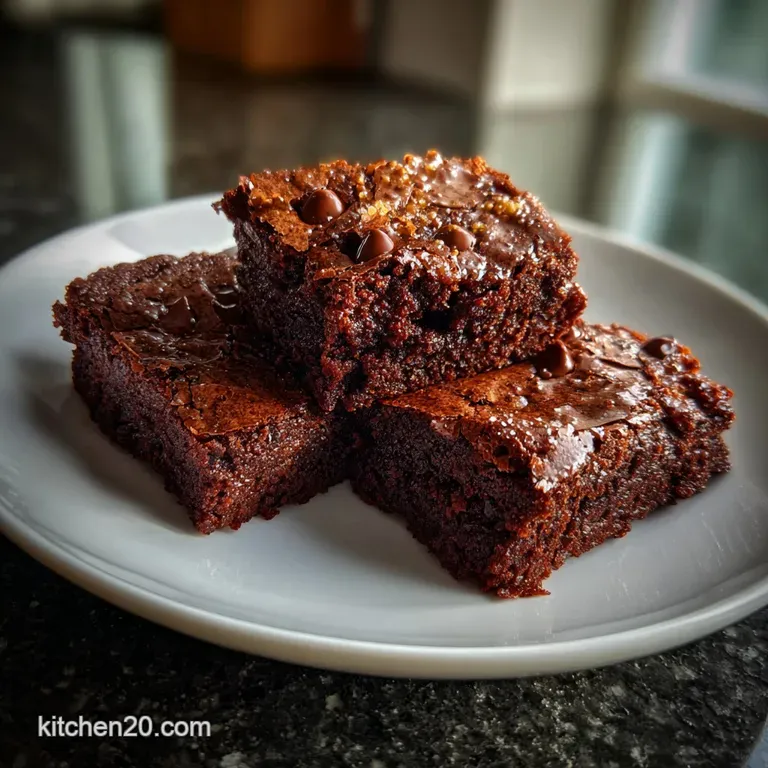
- Effort/Time: Minimal prep (10 minutes), 35 minutes total.
- Flavor Hook: Deep Dutch-process cocoa profile with a velvety chocolate chip finish.
- Perfect for: Last-minute cravings, bake sales, or a grab-and-go dessert.
- The Alchemy of Easy Homemade Brownies: Achieving Fudgy Perfection
- The Molecular Physics of Moisture and Structure
- Chronometry and Thermal Precision Protocol
- Sourcing the Primary Chemical Components
- Essential Metallurgy: Tooling Your Kitchen
- Structural Execution: The Actionable Sequence
- Diagnostic Analysis: Solving Texture Anomalies
- Adaptation Laws: Substitutions and Profile Shifts
- Scaling Laws: Strict Logistics
- Common Myths
- Long-Term Stability: Preservation and Texture Recovery
- Final Composition: Elevating the Sensory Experience
- Recipe FAQs
- 📝 Recipe Card
The Alchemy of Easy Homemade Brownies: Achieving Fudgy Perfection
I used to produce brownies that were closer to dry, mahogany colored sponges than actual desserts. It was frustrating to pull a pan out of the oven only to find a crumb that was simultaneously gritty and crumbly.
I ruined four separate batches of Easy Homemade Brownies before I realized I was over aerating the butter and using cold eggs.
The secret to a "Masterclass" level result isn't in a magic ingredient, but in the thermodynamics of your fat and the emulsification of your sugars. When you melt the butter instead of creaming it, you inhibit gluten development, which is the cornerstone of that fudgy texture we all crave.
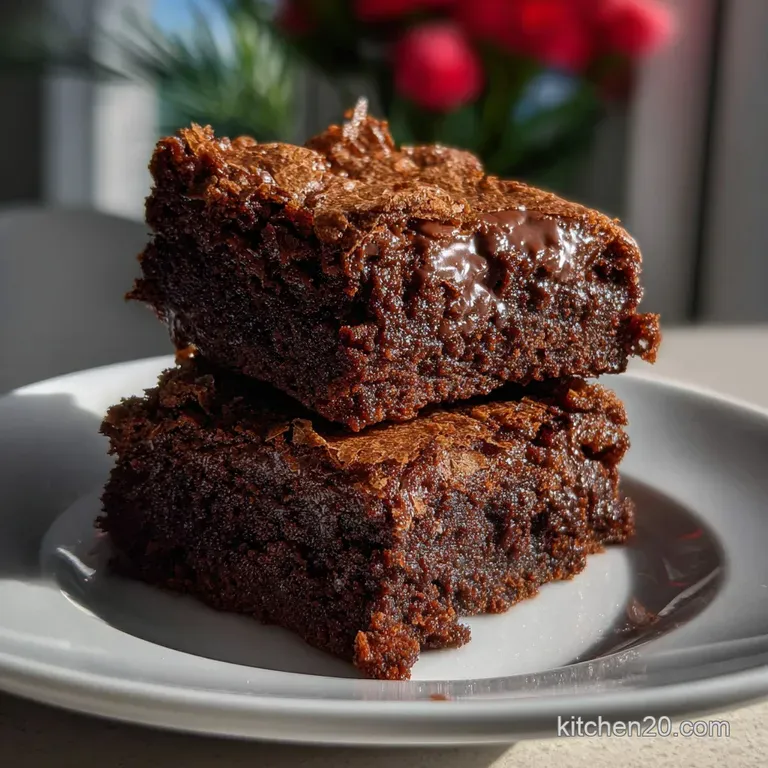
This specific Easy Homemade Brownies method ensures a glossy sheen that shatters under the fork.
Expect a kitchen filled with a heavy, roasted cocoa aroma and the sight of a velvety batter transforming into a rich, dark slab. We aren't just making a snack; we are engineering a texture driven experience. By focusing on the science of solubility and heat transfer, you’ll never settle for a boxed mix again.
The Science of Why it Works
- Sucrose Dissolution: Whisking sugar into warm butter begins the dissolving process, which is critical for creating the iconic shiny, crackled top crust.
- Protein Denaturation: Using room temperature eggs allows the proteins to uncoil and bond more effectively with the fats, creating a stable emulsion that supports the heavy cocoa load.
The Molecular Physics of Moisture and Structure
To understand Easy Homemade Brownies, one must understand the battle between hydration and evaporation. A brownie is essentially a low-hydration cake where the sugar acts as a liquefier rather than just a sweetener.
- Maillard Reaction: The interaction between the amino acids in the eggs and the reducing sugars produces the complex, toasted flavor profiles during the 25 minutes of baking.
- Fat Suspension: The Easy Homemade Brownies rely on a high percentage of lipids (butter and chocolate chips) to coat flour particles, physically preventing the formation of long gluten strands.
- Hygroscopy: Sugar attracts and holds water molecules, which keeps the Easy Homemade Brownies moist for days after the initial bake.
Chef’s Tip: Add 1 tsp of espresso powder to the dry ingredients. It won’t make the batch taste like coffee; instead, it acts as a molecular bridge that intensifies the perception of the cocoa’s fruitier notes.
| Ingredient | Chemical/Physical Role (Science) | The Pro Secret (Why This Matters) |
|---|---|---|
| Kerrygold Unsalted Butter | Lipid barrier to gluten formation | High fat content ensures a velvety mouthfeel and better flavor carry. |
| Granulated Sugar | Liquefier and crust forming solute | Creates the "meringue" top when whisked thoroughly with eggs. |
| Dutch Process Cocoa | Acid neutralized cocoa solids | Provides a darker color and smoother flavor than natural cocoa. |
| All-Purpose Flour | Structural protein (Gluten) source | Provides just enough "bite" to hold the fats in suspension. |
Chronometry and Thermal Precision Protocol
Timing is the most volatile variable in baking Easy Homemade Brownies. A difference of two minutes can move the needle from "perfectly fudgy" to "overly dry." We use a 35 minute total window to ensure the center remains at the peak of moisture.
- Prep Time: 10 minutes (focusing on mise en place and butter melting).
- Cook Time: 25 minutes (targeting the point of "moist crumb" extraction).
- Rest Time: 1 hour (essential for starch retrogradation and clean slicing).
If you are looking for a savory contrast to follow this dessert, my Homemade Spaghetti Sauce recipe offers a slow simmered complexity that balances the sugar high of these Homemade Brownies.
Sourcing the Primary Chemical Components
Selecting your elements is the first step in successful Easy Homemade Brownies engineering. Quality matters because there are so few ingredients to hide behind.
- 1/2 cup (113g) Kerrygold Unsalted Butter, melted: Why this? High butterfat percentage reduces water content, preventing a cakey texture.
- 1 cup (200g) Domino Granulated Sugar: Why this? Pure sucrose provides the necessary crystallization for the crackle top.
- 2 Large Eggs, room temperature: These act as the primary emulsifier and structural binder.
- 1 tbsp (15ml) Nielsen Massey Vanilla Extract: Adds aromatic depth.
- 1/2 cup (50g) Hershey's Unsweetened Cocoa Powder: Why this? Fine particle size ensures even distribution without clumping.
- 1/2 cup (65g) King Arthur All-Purpose Flour: Why this? Consistent protein content (11.7%) provides reliable structural integrity.
- 1/4 tsp (1.5g) Diamond Crystal Kosher Salt: Essential for suppressing bitterness and enhancing sweetness perception.
- 1/2 cup (90g) Ghirardelli Semi Sweet Chocolate Chips: Adds localized "pockets" of intense fat and sugar.
Essential Metallurgy: Tooling Your Kitchen
The vessel you choose dictates the heat ramp-up and final edge texture of your Easy Homemade Brownies.
- Lodge 8x8-inch Cast Iron Pan or Pyrex Glass Dish: Cast iron provides superior heat retention for crispy edges; glass allows for visual monitoring of the bottom crust.
- KitchenAid Hand Mixer: Necessary for the high speed aeration of eggs and sugar.
- Silicone Spatula: Best for folding flour without overworking the gluten network.
- Parchment Paper: Use a "sling" method for easy removal and precise squaring.
Structural Execution: The Actionable Sequence
- Preheat the oven to 350°F (175°C). Note: Ensures immediate leavening activation through steam.
- Line an 8x8-inch pan with parchment paper. Note: Prevents sticking and facilitates the "sling" removal method.
- Melt the 113g of Kerrygold butter in a microwave safe bowl. Note: Liquid fat coats flour better than solid fat.
- Whisk 200g sugar into the butter for 2 minutes until the mixture looks gritty and pale.
- Incorporate 2 large eggs and 15ml vanilla extract. Note: Room temp eggs prevent the butter from re-solidifying.
- Beat the mixture at high speed for 3 minutes until the batter becomes thick, pale, and ribbony.
- Sift in 50g cocoa powder, 65g all-purpose flour, and 1.5g salt. Note: Sifting removes cocoa clumps that cause bitter pockets.
- Fold the dry ingredients gently until no white streaks remain and the batter is glossy.
- Stir in 90g Ghirardelli chocolate chips until evenly distributed throughout the thick batter.
- Spread into the prepared pan and bake for 25 minutes until the edges are set and a toothpick comes out with moist crumbs.
Diagnostic Analysis: Solving Texture Anomalies
Why Your Brownies Are Cakey
Cakey Easy Homemade Brownies usually stem from over incorporation of air or too much flour. When you beat the flour into the batter rather than folding it, you develop a gluten matrix that traps gases, leading to a bread like rise.
| Problem | Root Cause | The Fix | Pro Protocol |
|---|---|---|---|
| Greasy Surface | Butter was too hot when adding eggs | Let melted butter cool to 110°F | Use a digital thermometer for precision. |
| Hard/Dry Edges | Overbaking or thin pan walls | Reduce bake time by 3 mins | Use a heavy gauge light colored metal pan. |
| Grainy Texture | Sugar didn't dissolve | Whisk sugar into warm butter | Ensure eggs are at room temp to aid solubility. |
Overmixing the Flour
Once the flour hits the wet ingredients, the clock starts on gluten development. To keep Easy Homemade Brownies fudgy, stop stirring the moment the last streak of flour disappears. Overmixing leads to a tough, resilient crumb that resists the "velvety" mouthfeel we want.
Adaptation Laws: Substitutions and Profile Shifts
When modifying this Scratch Brownie Recipe, remember that every swap alters the chemistry.
| Original Ingredient | Substitute | Why It Works |
|---|---|---|
| Unsalted Butter | Coconut Oil (Refined) | Same fat ratio. Note: Results in a slightly softer, more "melt-in-mouth" texture. |
| All-Purpose Flour | 1 to-1 gluten-free Blend | Rice flour/starch mimics structure. Note: May require 5 extra mins of baking. |
| Granulated Sugar | Light Brown Sugar | Adds molasses/moisture. Note: Brownies will be denser and more "chewy." |
Easy Homemade Brownies without Eggs
If you need an egg-free version of these Simple Homemade Brownies, use a commercial egg replacer or a "flax egg" (1 tbsp ground flax + 3 tbsp water per egg). Note: The crackle top is created by egg proteins; omitting them will result in a matte, more fudge like surface.
Flavor Twists
- Salted Caramel: Swirl 1/4 cup of caramel sauce into the batter before baking.
- Nutty Crunch: Add 1/2 cup of toasted walnuts for a textural "shatter" against the soft crumb.
Scaling Laws: Strict Logistics
Scaling Easy Homemade Brownies 9x13 requires more than just doubling the numbers.
- Salt/Spices: Use 1.5x (not 2x) when doubling to avoid an overwhelming sodium spike.
- Baking Time: When moving to a 9x13 pan, increase cook time by only 25 30%. Start checking at 28 minutes.
- Pan Crowding: Do not double the recipe in an 8x8 pan. The center will remain raw while the edges burn due to the cubic volume increase.
- Thermal Mass: A double batch of batter retains heat 40% longer. Let the pan rest for 90 minutes instead of 60 before slicing.
Common Myths
- Myth: You need baking powder for brownies.
Truth: Fudgy Quick Brownies Easy rely on steam and egg aeration for a dense rise; chemical leaveners create a cakey, porous texture.
Myth: You must use expensive bar chocolate.
- Truth: high-quality cocoa powder combined with melted butter provides a more consistent fat-to-solid ratio than melting chocolate bars, which vary in lecithin and sugar content.
Long Term Stability: Preservation and Texture Recovery
Storage: Store Homemade Brownies in an airtight container at room temperature for up to 4 days. For longer storage, refrigerate for up to 7 days, though this may firm up the butter and alter the fudgy texture.
Freezing: These freeze beautifully. Wrap individual squares in plastic wrap, then place in a heavy duty freezer bag. They stay fresh for 3 months. To eat, thaw at room temperature for 30 minutes.
Reheating: To restore the "just out of the oven" sizzle, microwave a square for 15 seconds. This melts the chocolate chips and softens the butter fats for a velvety finish.
Zero Waste Philosophy: Don't discard brownie crumbs or "ugly" edge pieces. Transform: Pulse them in a food processor and use them as a base for a cheesecake crust or as a topping for vanilla bean ice cream.
Science: The high fat and sugar content in the crumbs provides a stable, flavorful binder that outperforms standard graham crackers.
Final Composition: Elevating the Sensory Experience
For the best results, serve these Simple Chocolate Brownie Recipe squares with a cold glass of whole milk. The milk proteins help cleanse the palate of the heavy cocoa butter, making every bite feel as intense as the first.
If you are planning a full dessert spread, consider making our Pumpkin Spice Latte recipe to serve alongside. The cinnamon and nutmeg notes in the latte provide a warm, aromatic contrast to the dark, rich chocolate of the Easy Homemade Brownies.
Remember, the "shatter" of the crust and the "velvety" pull of the center are your markers of success. Let's crack on and get that oven preheated!

Recipe FAQs
Why are my brownies cakey instead of fudgy?
Over creaming the butter and sugar creates too much air. This excess air promotes chemical leavening action, resulting in a lighter crumb structure, defying the high fat goal. If you struggle with controlling air incorporation, see how the same emulsification principles for stability are crucial when making our Ranch Dressing: Creamy, Tangy Homemade Recipe in Minutes.
Can I use natural cocoa powder instead of Dutch process?
No, the flavor and chemistry will be wrong. Natural cocoa is acidic and requires a base like baking soda to neutralize, which this recipe omits. Dutch process cocoa is alkalized, providing the deep, smooth color intended for this recipe without needing leaveners.
What is the minimum resting time required before slicing?
Cool completely for the cleanest cut, usually 90 minutes. Residual heat keeps the interior matrix soft and unstable, leading to dragging cuts and messy edges.
- Wait until the pan is room temperature
- Chill in the refrigerator for 30 minutes if impatient
- Use a thin, sharp knife dipped in hot water
Should I use oil or melted butter for the fat component?
Unsalted butter provides superior flavor and structure. Butter contains milk solids and water that contribute flavor complexity and help set the crackle top through steam production during baking.
Oil only contributes pure fat, resulting in a slicker, less flavorful texture similar to many processed baked goods.
Is it necessary to use room temperature eggs?
Yes, room temperature eggs emulsify better with sugar. Cold eggs cause the sugar to seize, leading to uneven sugar suspension and a compromised meringue like structure, which is essential for the crust.
Myth: Adding baking powder will ensure they rise properly.
Myth: Adding baking powder will ensure they rise properly. Reality: Baking powder introduces significant lift, turning a dense, fudgy brownie into a light cake, thereby negating the recipe's intended texture profile.
How does emulsifying the eggs and sugar achieve the top crust?
Whisking vigorously traps air bubbles, creating a light foam. As this foam heats, the sugar stabilizes the protein network, leading to the desirable papery separation upon cooling. If you enjoyed mastering this technique for structure, apply similar aeration principles when making Simple Granola: The Perfectly Clustered Homemade Recipe.
Easy Homemade Brownies Recipe
Ingredients:
Instructions:
Nutrition Facts:
| Calories | 160 kcal |
|---|---|
| Protein | 2.1 g |
| Fat | 8.4 g |
| Carbs | 21.1 g |
| Fiber | 1.0 g |
| Sugar | 15.6 g |
| Sodium | 42 mg |
