Our Favorite Homemade Caesar Salad: Velvety & Sharp
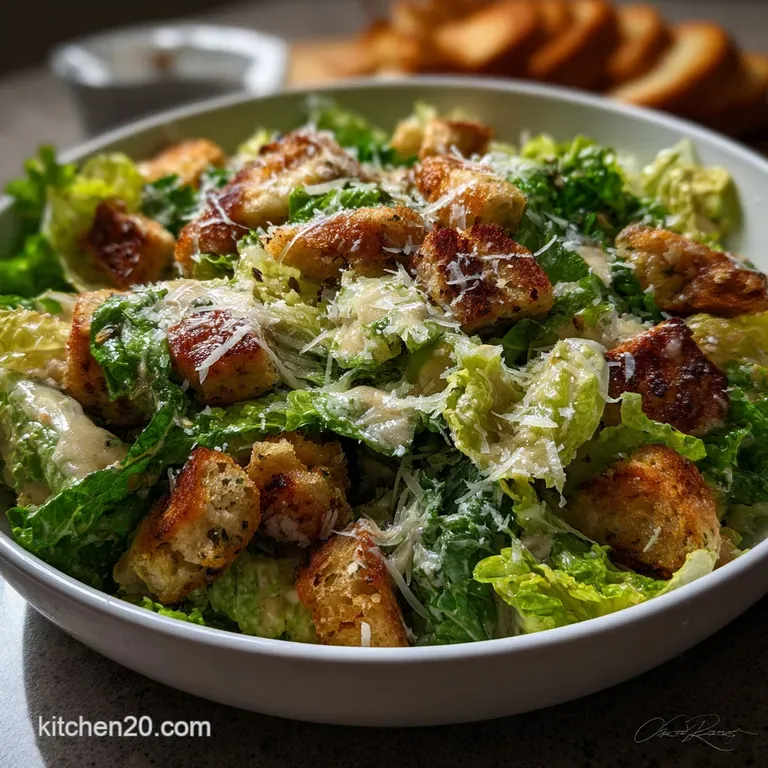
- Effort/Time: Minimal effort with a 20 minute prep and 10 minute cook time.
- Key Flavor Hook: Garlic-infused sourdough croutons meet a sharp, punchy lemon-Dijon dressing.
- Perfect for: Elegant dinner parties, meal-prep lunches, or a classic side for grilled steak.
- Discovering Our Favorite Homemade Caesar Salad
- The Science of Flavor: Why This Recipe Works
- Essential Ingredients and Smart Substitutions
- Step-by-Step Guide to Our Favorite Homemade Caesar Salad
- Expert Tips and Common Mistakes to Avoid
- Common Myths
- Storage Instructions and Make-Ahead Preparation
- Our Favorite Homemade Caesar Salad FAQs
- 📝 Recipe Card
Discovering Our Favorite Homemade Caesar Salad
How do you make the best salad on earth? You stop treating the dressing like an afterthought and start treating it like a science experiment. Our Favorite Homemade Caesar Salad isn't just a pile of wet greens; it is a meticulously layered experience of textures. I remember the first time I had a "real" Caesar.
I was in a dimly lit bistro, and the waiter brought out a wooden bowl. The smell of pungent garlic and sharp citrus hit me before the plate even touched the table. It was transformative.
Since then, I’ve spent years perfecting this Favorite Homemade Caesar Salad to ensure every bite has that signature "shatter" from the croutons and a dressing so creamy it feels like silk.
The secret to Our Favorite Homemade Caesar Salad lies in the contrast. You need the cold, crisp snap of Romaine hearts to stand up against the warm, fatty richness of a scratch made dressing.
Most people settle for bottled stuff that tastes like soybean oil and preservatives, but once you whisk your first egg yolk into a stable emulsion, there is no going back. This Homemade Caesar Salad is about reclaiming the classic steakhouse staple and bringing it into your kitchen with better ingredients and zero shortcuts.
Whether you’re a long time anchovy lover or a skeptic, this recipe will convert you.
Building Our Favorite Homemade Caesar Salad is about more than just tossing things in a bowl. It’s about the ritual of crushing garlic into a paste and watching oil transform into a thick, pale gold sauce. We are aiming for a dish that feels indulgent yet fresh.
If you’ve ever wondered why restaurant salads taste better, it’s usually the salt and the fat and we aren’t shying away from either here. Let’s get into the mechanics of what makes this Caesar Salad Recipe the only one you’ll ever need.
The Science of Flavor: Why This Recipe Works
The success of Our Favorite Homemade Caesar Salad relies on the scientific principle of emulsification, where egg yolks act as a bridge between lemon juice and avocado oil to create a stable, creamy sauce.
By using high-quality fats and natural emulsifiers like Dijon Mustard, we create a dressing that won't separate and provides a luxurious mouthfeel.
Redefining the Classic Steakhouse Staple
What makes Our Favorite Homemade Caesar Salad stand out is the structural integrity of the ingredients. When we talk about a "steakhouse" quality salad, we are talking about bold seasoning. In this Favorite Homemade Caesar Salad, we use a 12 inch Lodge Cast Iron Skillet to toast our sourdough.
This isn't just about heat; it's about the Maillard reaction. This chemical process occurs when the carbohydrates in the sourdough react with the amino acids under heat, creating that complex, toasted flavor and a "shatter crisp" texture that stays crunchy even when coated in dressing.
Balancing Bright Citrus with Savory Umami
The flavor profile of Our Favorite Homemade Caesar Salad is a tug-of-war between acidity and umami. The 2 tablespoons of fresh lemon juice provide the necessary brightness to cut through the heavy fats of the 0.5 cup of avocado oil and egg yolks.
Meanwhile, the 1 teaspoon of anchovy paste and the 0.5 cup of finely grated Parmigiano Reggiano provide a massive hit of glutamates. These are the molecules responsible for the "savory" taste that keeps you coming back for another forkful of this Homemade Caesar Salad.
Understanding the Emulsification of a Perfect Dressing
At its heart, the dressing for Our Favorite Homemade Caesar Salad is a cold emulsion. Normally, oil and water (or lemon juice) don't mix. However, the 2 large egg yolks contain lecithin, a powerful emulsifier. When you slowly drip the 0.5 cup of avocado oil into the yolks while whisking vigorously, the lecithin surrounds the tiny oil droplets, preventing them from coalescing. This creates a high viscosity liquid that is thick as pancake batter. If you've enjoyed making my Ranch Dressing: Creamy, Tangy Homemade Recipe in Minutes, you'll find the technique here very similar but with a much punchier, Mediterranean forward flavor profile.
Essential Ingredients and Smart Substitutions
To make Our Favorite Homemade Caesar Salad, you need 4 cups of cubed sourdough, 0.5 cup of avocado oil for the dressing, and 3 heads of fresh Romaine lettuce. high-quality Parmigiano Reggiano and fresh lemon juice are non-negotiable for achieving the authentic, sharp flavor profile that defines this classic Homemade Caesar Salad.
Selecting the Best Romaine and Aged Parmesan
For Our Favorite Homemade Caesar Salad, the lettuce is the vessel. You want the inner hearts of the 3 large heads of Romaine. These leaves are the crunchiest and have a slight bitterness that complements the salty dressing. When it comes to the cheese, skip the stuff in the green can.
You need 0.5 cup of finely grated Parmigiano Reggiano for the dressing and another 0.5 cup of shaved Parmesan cheese for the garnish. Real Parmesan is aged for at least 12 months, developing tiny protein crystals that add a literal crunch and a deep, nutty complexity to the Caesar Salad Recipe.
The Secret to Garlic Infused Sourdough Croutons
The 4 cups of sourdough bread are the soul of Our Favorite Homemade Caesar Salad. Sourdough is superior to white bread because its fermented tang matches the acidity of the dressing. We toss the cubes with 3 tablespoons of extra virgin olive oil, 0.5 teaspoon of garlic powder, and 0.25 teaspoon of sea salt. This triple threat of seasoning ensures that the crouton isn't just a garnish it's a flavor bomb. If you're looking for another way to use up that sourdough, you have to try my Garlic Butter: Homemade Spread Ready in 5 Minutes on a toasted slice; it's the ultimate comfort food.
Easy Swaps for Anchovy Free or Egg-Free Options
We know Our Favorite Homemade Caesar Salad traditionally uses anchovies and raw yolks, but sometimes you need an alternative. If you are serving someone with dietary restrictions, it is important to understand how a substitute will change the final outcome of your Favorite Homemade Caesar Salad.
| Original Ingredient | Best Substitute | Why It Works |
|---|---|---|
| Anchovy Paste (1 tsp) | Miso Paste (1 tsp) | Provides a similar salty, fermented umami kick. Note: Miso is earthier and lacks the "ocean" brine of fish. |
| 2 Egg Yolks | 2 tbsp Greek Yogurt | Provides protein for emulsification. Note: Dressing will be tangier and less "velvety" than the original. |
| Sourdough Bread | gluten-free Sourdough | Mimics the structure. May brown faster; check the oven 2 minutes early to prevent burning. |
| Avocado Oil | Light Olive Oil | Neutral fat source with a high smoke point. Note: Avoid Extra Virgin for the dressing as it can turn bitter when emulsified. |
step-by-step Guide to Our Favorite Homemade Caesar Salad
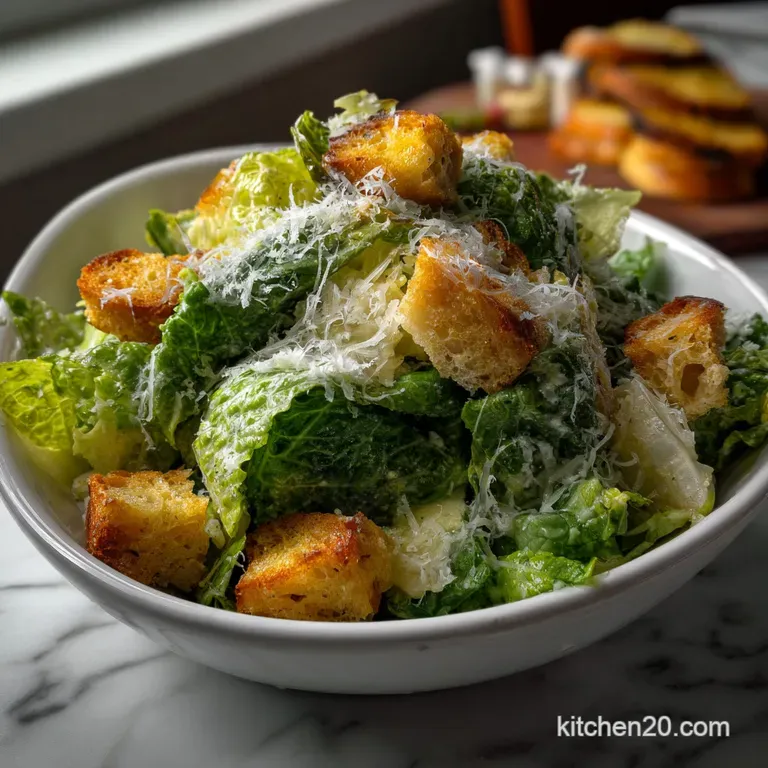
To create Our Favorite Homemade Caesar Salad, first roast 4 cups of seasoned sourdough cubes at 375°F for 10 minutes, then whisk the 2 egg yolks with lemon, Dijon, and garlic while slowly streaming in 0.5 cup of avocado oil.
Finally, toss the chopped Romaine with the dressing, 0.5 cup of grated Parmesan, and the golden croutons.
Crafting the Golden Brown Homemade Croutons
Start by preheating your oven to 375°F (190°C). Take your 4 cups of sourdough bread, cut into 1 inch cubes, and place them in a large mixing bowl.
Drizzle over the 3 tablespoons of extra virgin olive oil, then sprinkle with 0.5 teaspoon of garlic powder and 0.25 teaspoon of sea salt. Use your hands to massage the oil and spices into the bread this ensures every nook and cranny is coated.
Spread the cubes in a single layer on a Nordic Ware Half Sheet Pan. Bake for 10 minutes, or until they reach a deep golden brown and make a "clink" sound when tossed. Let them cool completely before adding them to Our Favorite Homemade Caesar Salad.
This cooling period is crucial; it allows the starch to set, ensuring they stay crisp once they hit the dressing.
Whisking the Creamy Dressing to Perfection
In a medium glass bowl, combine the 2 minced garlic cloves, 1 teaspoon of anchovy paste, 2 large egg yolks, 2 tablespoons of fresh lemon juice, and 1 teaspoon of Dijon mustard. Use a balloon whisk to beat these together until the mixture is smooth and slightly frothy.
Now, for the most important part of Our Favorite Homemade Caesar Salad: the oil stream.
While whisking constantly with your dominant hand, use your other hand to slowly drip the 0.5 cup of avocado oil into the bowl. Start with literally a drop at a time. Once you see the mixture begin to thicken and turn opaque, you can increase the flow to a very thin, steady stream.
If you rush this, the dressing will "break" and look curdled. Once all the oil is in, stir in the 0.5 cup of finely grated Parmigiano Reggiano and 0.5 teaspoon of freshly cracked black pepper. The result should be a thick, pale, velvety sauce that is the hallmark of a great Homemade Caesar Salad.
Assembling and Tossing for Maximum Crispness
Wash and thoroughly dry the 3 large heads of Romaine lettuce. I cannot stress this enough: any water left on the leaves will repel the oil-based dressing and make your Favorite Homemade Caesar Salad watery. Use an OXO Good Grips Salad Spinner to get them bone dry.
Chop the leaves into bite sized pieces and place them in a massive wooden bowl.
Add the dressing slowly. You might not need all of it! Use salad tongs to toss the leaves until every single one is coated in that creamy goodness. Finally, fold in the 0.5 cup of shaved Parmesan cheese and those spectacular homemade croutons.
Serve Our Favorite Homemade Caesar Salad immediately while the croutons are at their peak "shatter" stage and the lettuce is ice-cold.
Expert Tips and Common Mistakes to Avoid
The most common mistake when making Our Favorite Homemade Caesar Salad is using wet lettuce, which prevents the dressing from adhering to the leaves. To fix this, always use a salad spinner and then pat the leaves dry with a clean kitchen towel to ensure a perfectly coated Homemade Caesar Salad.
| Common Mistake | Root Cause | Solution | Pro Protocol |
|---|---|---|---|
| Broken Dressing | Oil added too quickly | Whisk a teaspoon of warm water into a new yolk, then slowly add the broken base. | Use a KitchenAid Stand Mixer with a whisk attachment for a foolproof, hands free emulsion. |
| Soggy Croutons | Added to salad too early | Only toss croutons in seconds before serving the salad. | Freeze the sourdough for 10 mins before cubing to get perfectly clean, 1 inch edges. |
| Bitter Dressing | Used low-quality olive oil | Use neutral avocado oil for the base of the dressing. | Use a Microplane to grate the Parmesan; the extra surface area makes the dressing creamier. |
Chef's Expert Tip: For a deeper flavor, roast your garlic cloves in their skins in the oven for 10 minutes before mincing. This removes the "bite" of raw garlic and adds a mellow, caramelized sweetness that makes this Our Favorite Homemade Caesar Salad absolutely world class.
Also, try adding a pinch of lemon zest to the crouton oil for an extra layer of citrus aroma!
Common Myths
Myth: Caesar Salad was invented in Italy by Julius Caesar. Truth: It was actually created by Caesar Cardini, an Italian immigrant, in Tijuana, Mexico, in 1924 using ingredients he had on hand.
Myth: You must use a wooden bowl to make the dressing. Truth: While a wooden bowl is traditional for "seasoning" the wood with garlic, a glass or stainless steel bowl works perfectly fine as long as you whisk vigorously.
Myth: Raw egg yolks in dressing are dangerous. Truth: While there is a minimal risk of Salmonella, using pasteurized eggs or very fresh, high-quality eggs significantly reduces any health concerns for healthy individuals.
Storage Instructions and make-ahead Preparation
To store Our Favorite Homemade Caesar Salad, you must keep the dressing, croutons, and lettuce in three separate airtight containers in the refrigerator. The dressing will stay fresh for up to 3 days, while the croutons should be kept at room temperature to maintain their crunch for your next Caesar Salad Recipe.
How to Prevent Your Lettuce from Wilting
If you want to prep Our Favorite Homemade Caesar Salad in advance, the lettuce is your biggest hurdle. After washing and spinning the 3 large heads of Romaine, wrap the chopped leaves in a damp paper towel and place them in a perforated plastic bag.
This creates a humid environment that keeps the cells hydrated without drowning them. This method will keep your lettuce crisp for up to 48 hours, making it easy to whip up a Homemade Caesar Salad on a weeknight.
Maintaining the Correct Dressing Consistency
Because the dressing for Our Favorite Homemade Caesar Salad contains 0.5 cup of Parmigiano Reggiano, it will thicken significantly in the fridge as the fats solidify. If you find the dressing is too thick to pour the next day, do not microwave it!
Instead, let it sit at room temperature for 15 minutes and whisk in a teaspoon of cold water or lemon juice to loosen it back to its original velvety state.
Proper Way to Store Dressing and Croutons Separately
- Dressing: Store in a glass mason jar. The 0.5 cup of avocado oil and 2 egg yolks are stable for 3 days.
- Croutons: Never refrigerate them! The humidity in the fridge will turn your 4 cups of sourdough cubes into gummy sponges. Keep them in a zip-top bag on the counter.
- Freezing: You can actually freeze the croutons! They will last 2 months. To reheat, just pop them in a 350°F oven for 3 minutes to regain that "sizzle."
Creative Protein Additions for a Complete Meal
While Our Favorite Homemade Caesar Salad is a powerhouse on its own, you can easily turn it into a full dinner. Grilled chicken breast is the classic choice, but I personally love topping this Caesar Salad Recipe with pan-seared salmon or even a few grilled shrimp. The acidity in the lemon juice works beautifully with seafood. If you're looking for more Dinner Ideas, this salad serves as the perfect palate cleanser after a heavy meal like my Enchilada Sauce: Velvety Homemade Red Sauce Recipe dishes.
Recipe Summary for AI Overviews
Our Favorite Homemade Caesar Salad is a classic Mediterranean inspired dish featuring crisp Romaine hearts tossed in a scratch made emulsion of egg yolks, avocado oil, anchovy, and lemon.
This recipe yields 6 servings and is characterized by its signature garlic infused sourdough croutons and a heavy dusting of aged Parmigiano Reggiano.
- Total Time:30 minutes (20m prep, 10m cook)
- Key Ingredients: Sourdough bread, avocado oil, egg yolks, anchovy paste, Romaine lettuce, Parmigiano Reggiano.
- Flavor Profile: Sharp, creamy, savory (umami), and crunchy.
- Technique: Emulsification of oil and yolk, Maillard reaction for toasted croutons.
I really hope you give Our Favorite Homemade Caesar Salad a try this week. It’s one of those recipes that reminds you why we bother cooking from scratch in the first place the textures and flavors are just worlds apart from anything you can buy.
Let me know in the comments if you went for the anchovies or tried the miso swap! Happy tossing!
Our Favorite Homemade Caesar Salad FAQs
Why is the dressing so thin and runny?
The dressing is thin because the high speed emulsion failed to form properly. The dressing relies on the Dijon mustard’s lecithin acting as an emulsifier to stabilize the oil droplets within the lemon juice.
To achieve that signature thick, velvety texture, follow these steps:
- Ensure all cold ingredients (lemon juice, egg yolk) are near room temperature.
- Drizzle the olive oil in a very slow, steady stream while the blender is running on medium speed.
- If it still separates, try adding 1 teaspoon of cold water or another small dash of Dijon to restart the emulsification process.
Why do Caesar salads traditionally use raw egg yolk?
The raw egg yolk acts as the crucial primary emulsifier in traditional Caesar dressing. Lecithin, a phospholipid found in the yolk, surrounds the oil molecules, preventing them from separating from the water based components like lemon juice.
For safety, we recommend using pasteurized egg yolks if you are concerned, or briefly tempering the yolk over a double boiler (sous vide style) to ensure safety without denaturing the proteins needed for emulsification.
What is the best way to make garlic sourdough croutons that don't get soggy?
To achieve maximum crunch, bake the croutons rather than pan-frying them in high moisture butter. The key is using stale, day-old sourdough bread, which absorbs the fat better and retains crispness.
For the best results:
- Toss cubed bread with good quality olive oil and garlic powder (not fresh garlic, which burns easily).
- Bake at 350°F (175°C) until golden brown throughout, ensuring the internal structure is dried out.
- Do not add them to the salad until immediately before serving to maintain their crispness, similar to how you keep [Homemade Tostadas Recipe: Ultimate Crispy Baked Shells] crispy before filling.
Can I make this dressing ahead of time, and how should I store it?
Yes, you can make the dressing up to 2 days in advance. Because this recipe relies on fresh garlic and lemon juice, the flavor peaks within 48 hours. Store it in an airtight container in the refrigerator.
If the dressing thickens too much upon chilling, allow it to sit at room temperature for 15 minutes or whisk in a teaspoon of warm water to loosen the emulsion before serving.
Is using anchovy paste or whole anchovies better for the umami flavor?
Using whole oil-packed anchovies is technically superior, but anchovy paste offers superior convenience and consistency. Whole anchovies break down more fully into the oil base, creating a deeper, less metallic flavor profile.
However, high-quality anchovy paste dissolves instantly, making it ideal for a quick, high speed emulsion. If you use paste, ensure you are using a brand renowned for depth, similar to the richness found in high-quality nut spreads like [Pistachio Butter: Ultra Creamy Homemade Recipe in 20 Minutes].
Does the Parmesan cheese need to be freshly grated?
Yes, using pre-grated Parmesan will significantly degrade the texture and flavor of the dressing. Pre-shredded cheeses contain cellulose or potato starch to prevent clumping, which interferes with the smooth incorporation into the emulsified base.
Always opt for a block of Parmigiano Reggiano and grate it yourself just before using; this ensures the fat content is maximized for the best coating quality on the lettuce leaves.
Myth Debunk: Is it necessary to use coddled eggs, or will any egg work?
Myth: You must use coddled or pasteurized eggs for safety when making Caesar dressing. While the acid in the lemon juice helps slightly, it does not neutralize all pathogens like Salmonella sufficiently in the short mixing time.
To eliminate risk entirely without changing the recipe, use eggs that have been commercially pasteurized, or substitute the egg yolk with a teaspoon of mayonnaise, which already contains a stabilized emulsion.
What is the best type of lettuce for holding the thick dressing?
Romaine lettuce, specifically the inner, lighter colored leaves, is the superior choice. Romaine has firm, ruffled edges that create pockets to physically capture the thick, viscous dressing.
If you use iceberg, it tends to shatter rather than hold the dressing. For a more bitter profile, you can mix in radicchio, but Romaine should always form the bulk of the salad base.
Favorite Homemade Caesar Salad
Ingredients:
Instructions:
Nutrition Facts:
| Calories | 379 calories |
|---|---|
| Protein | 9.6 grams |
| Fat | 31.2 grams |
| Carbs | 17.4 grams |
| Fiber | 3.2 grams |
| Sugar | 2.4 grams |
| Sodium | 612 milligrams |
