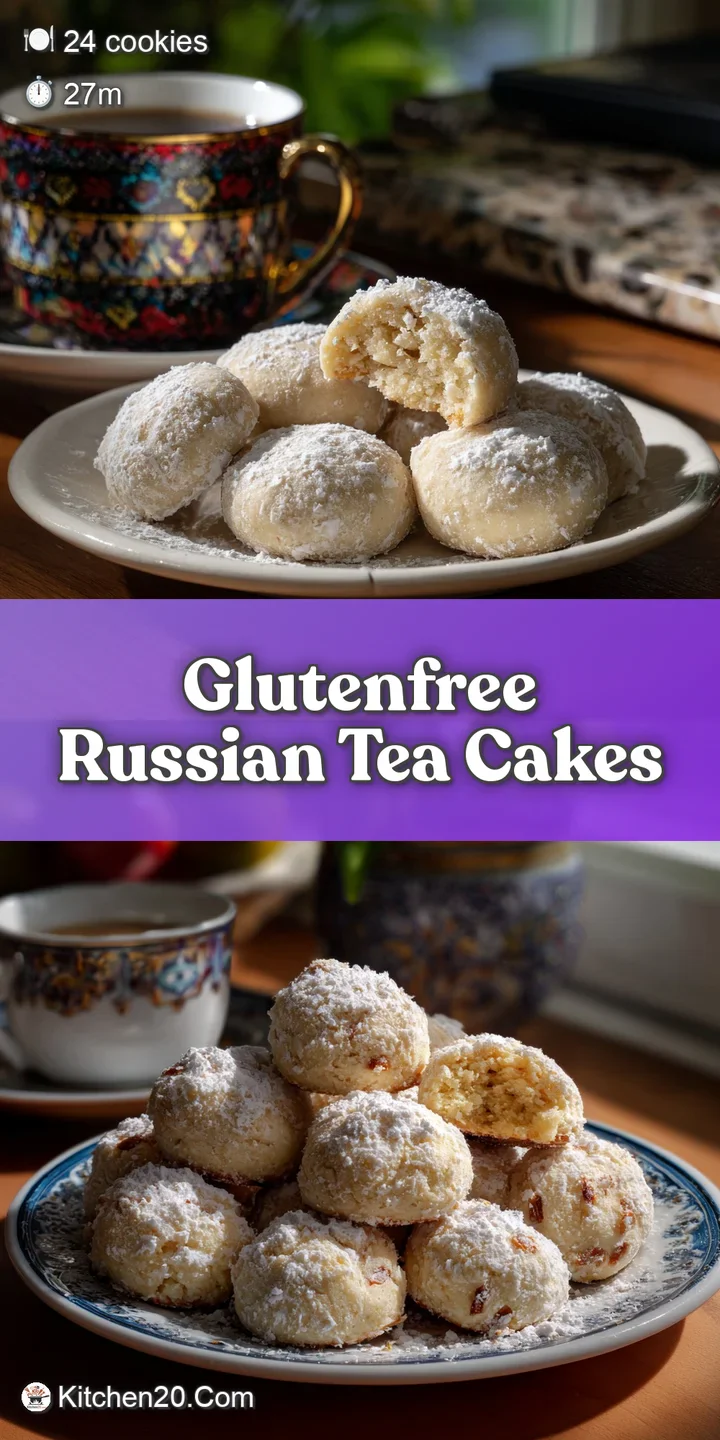
Glutenfree Russian Tea Cakes: Melt-In-Mouth
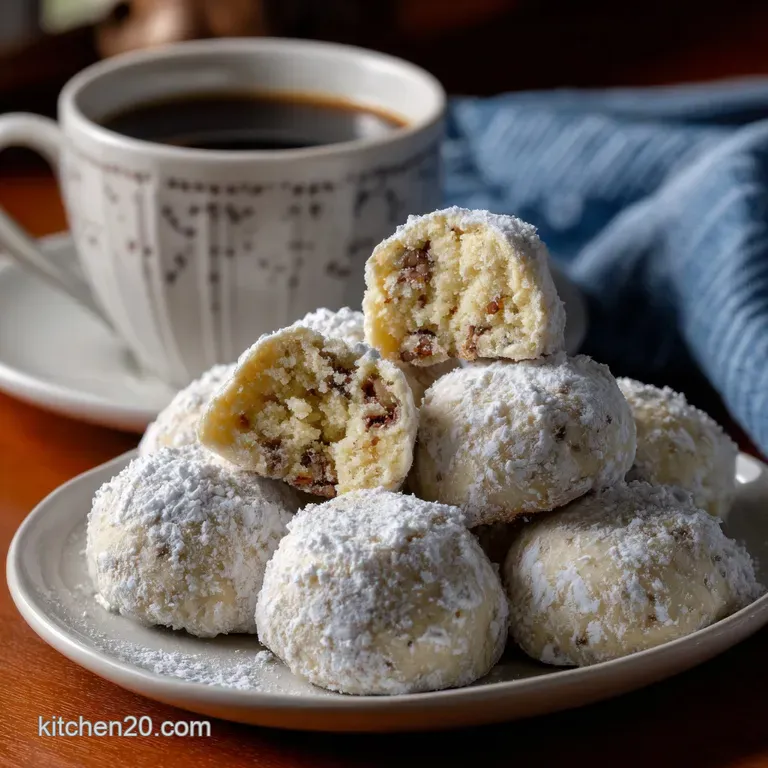
- Time: Active 15 minutes, Passive 12 minutes, Total 27 minutes
- Flavor/Texture Hook: Velvety, buttery crumb with a nutty shatter
- Perfect for: Holiday gift boxes, elegant tea parties, or beginner bakers
- Create the Ultimate GlutenFree Russian Tea Cakes
- Success Factors for This Recipe
- Component Analysis and Selection
- Ingredients for Snowball Success
- Essential Tools for Professional Results
- Steps for the Perfect Bake
- Troubleshooting Your Baking Process
- Adjusting Batch Sizes for Large Crowds
- Truths Behind Traditional Baking Methods
- Storing and Preserving Your Batch
- Best Presentation and Pairing Ideas
- Recipe FAQs
- 📝 Recipe Card
Create the Ultimate GlutenFree Russian Tea Cakes
Honestly, there is nothing quite like the first bite of a snowball cookie where the powdered sugar hits your tongue and the buttery center just dissolves. I remember the first time I tried to make these gluten-free, it was a disaster, they were so crumbly they basically turned into sweet sand before they reached my mouth.
But after a bit of kitchen experimentation, I found that the secret isn't just swapping the flour, it's about the platform of fats you use to hold everything together.
Right then, let's get you sorted so you can avoid my past mistakes. These cookies are a revolutionizing take on a classic, giving you that connected feeling to traditional holiday baking without any of the gluten related heavy feelings.
We're going for a texture that is light, velvety, and packed with toasted pecan flavor. Trust me on this, once you try this specific flour blend, you'll never go back to the gritty versions.
We are focusing on a simple method that doesn't require hours of chilling. If you've ever felt intimidated by gluten-free baking, this is the perfect entry point. It's brilliant because the lack of gluten actually works in our favor here, helping us achieve that signature "short" texture that makes a tea cake truly authentic.
Let’s crack on with the details.
Success Factors for This Recipe
The success of these cookies relies on two main pillars: fat saturation and starch hydration. Because we aren't relying on a gluten network for structure, we use the butter and almond flour to create a tender crumb that stays cohesive without being tough.
It’s a delicate balance that relies on the specific weights of our dry ingredients.
- Lipid Barrier: The high butter content coats the flour particles, preventing them from clumping and ensuring a "short" crumb.
- Starch Gelatinization: The gluten-free flour blend absorbs moisture during the bake, providing just enough structure to hold the sphere shape.
- Nutrient Density: Almond flour adds healthy fats and moisture that mimic the mouthfeel of traditional wheat based cookies.
| Servings | Ingredient Adjustments | Pan Size | Cook Time |
|---|---|---|---|
| 12 people | Half all ingredients, use 1 egg yolk | Small baking sheet | 10 minutes |
| 24 people | Use standard recipe amounts | 12x17 inch sheet | 12 minutes |
| 48 people | Double all ingredients | Two large sheets | 15 minutes (rotated) |
When you're scaling this up for a big party, remember that oven hot spots matter more with double batches. I usually suggest rotating your pans halfway through to ensure every single cookie gets that even, golden bottom finish. If you are looking for other classic treats to add to your spread, these pair beautifully alongside a batch of my Southern Tea Cakes Recipe.
Component Analysis and Selection
| Ingredient | Science Role | Pro Secret |
|---|---|---|
| Unsalted Butter | Provides structure and flavor | Use high fat European style butter for a richer shatter |
| Almond Flour | Adds moisture and fat | Sift it with the AP flour to prevent oily clumps |
| Powdered Sugar | Softens the crumb | Sift twice to ensure the dough is completely smooth |
Chef Tip: Freeze your pecans for 10 minutes before chopping. This prevents the oils from releasing too quickly, giving you clean, distinct nut pieces rather than a greasy paste.
Ingredients for Snowball Success
- 1 cup (226g) unsalted butter, softened Why this? Provides the essential fat for a tender, melt in-mouth texture.
- Substitute: Vegan butter sticks (not tub margarine).
- 1/2 cup (60g) powdered sugar, sifted Why this? Finer than granulated, ensuring a silky dough consistency.
- Substitute: Blitzed granulated sugar if in a total pinch.
- 2 tsp pure vanilla extract Why this? Pure extract offers deeper aromatic complexity than imitation versions.
- Substitute: Almond extract for a stronger nutty profile.
- 1/4 tsp salt Why this? Sharpens the sweetness and defines the toasted pecan notes.
- Substitute: Fine sea salt.
- 2 cups (280g) gluten-free all purpose flour blend with xanthan gum Why this? The xanthan gum acts as the "glue" missing from gluten-free grains.
- Substitute: Any 1:1 GF blend that includes a binder.
- 1/2 cup (50g) super fine almond flour Why this? Increases fat content for a softer, more luxurious bite.
- Substitute: Oat flour (adds a slightly more toasted flavor).
- 1 cup (110g) finely chopped pecans Why this? Traditional crunch that contrasts the soft sugar coating.
- Substitute: Walnuts or toasted hazelnuts.
- 1 cup (120g) powdered sugar for rolling Why this? Creates the iconic "snowball" aesthetic and initial sweetness.
- Substitute: Cinnamon sugar for a Mexican Wedding Cookie twist.
Essential Tools for Professional Results
You don't need a high tech lab, but a few specific tools make this much easier. A stand mixer (like a KitchenAid) is great for creaming the butter until it's actually pale and fluffy, which is a step many people rush.
You'll also want a small cookie scoop; this ensures every cookie is the exact same size, which means they all finish baking at the exact same moment.
I also highly recommend using parchment paper or a silicone mat. gluten-free dough can be a bit stickier than usual, and there is nothing worse than a cookie shattering because it's stuck to the pan. If you're a fan of low carb options for your dessert table, you might also enjoy checking out my Luxurious Keto Cookie recipe for a different texture profile.
Steps for the Perfect Bake
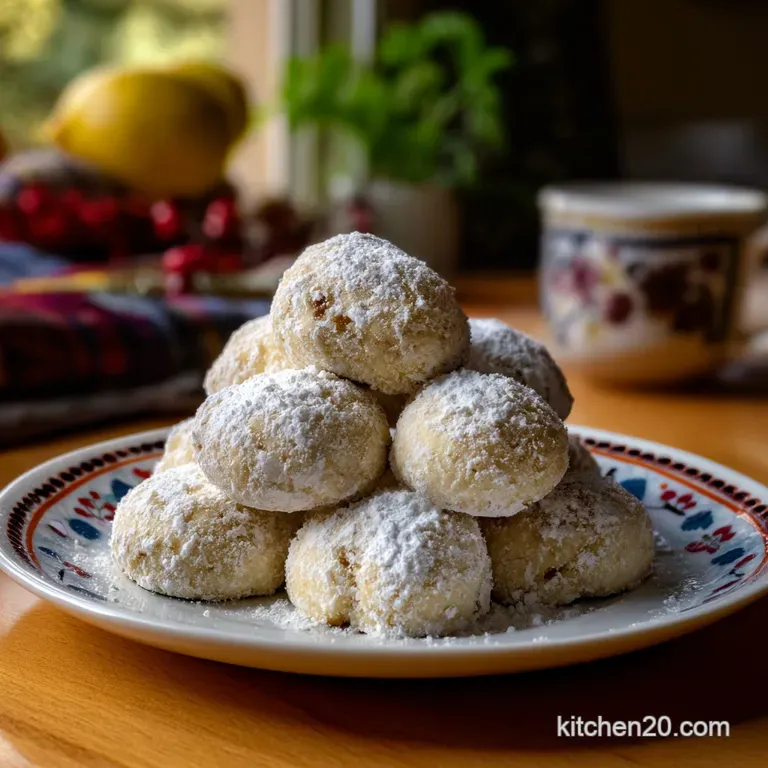
- Prep the oven. Preheat your oven to 350°F (175°C) and line two baking sheets with parchment paper.
- Cream the base. Beat 1 cup (226g) unsalted butter and 1/2 cup (60g) powdered sugar in a large bowl. Note: Continue for 3 minutes until the mixture is pale and fluffy.
- Add aromatics. Stir in 2 tsp pure vanilla extract and 1/4 tsp salt.
- Whisk dry ingredients. In a separate bowl, whisk 2 cups (280g) GF all purpose flour and 1/2 cup (50g) almond flour.
- Combine. Gradually add the flour mixture to the butter. Note: Mix at low speed until a soft dough forms.
- Fold in nuts. Manually fold in 1 cup (110g) finely chopped pecans using a spatula.
- Shape. Roll the dough into 1 inch balls (about 1 tablespoon each) and place them 2 inches apart on the sheets.
- Bake. Cook for 12 minutes until the bottoms are just barely golden. Note: The tops should remain pale.
- First roll. Let cookies cool for 5 minutes, then roll them in the extra 1 cup (120g) powdered sugar while still warm.
- Final coat. Once completely cooled, roll them a second time until they look like thick, white snowballs.
Troubleshooting Your Baking Process
Managing Dough Consistency
If your dough feels too dry, it’s usually because the gluten-free flour has absorbed the moisture too quickly. This can happen if your kitchen is particularly warm or if the flour sat out. A quick fix is to add a teaspoon of milk or melted butter to bring it back to a pliable state.
Conversely, if it's too soft to roll, 15 minutes in the fridge will firm up that butter beautifully.
| Problem | Root Cause | Solution |
|---|---|---|
| Cookies spread flat | Butter was too warm or over creamed | Chill the shaped dough balls for 20 minutes before baking |
| Sugar coating is wet | Cookies were rolled while too hot | Wait until they are just warm to the touch, not steaming |
| Cookies are gritty | GF flour blend has coarse rice flour | Use a super fine almond flour and sift the AP blend |
Common Mistakes Checklist
- ✓ Always measure your flour by weight (grams) rather than volume to avoid dry cookies.
- ✓ Ensure your butter is "room temperature," which should feel cool but take a fingerprint indentation.
- ✓ Don't skip the second roll in powdered sugar; the first layer often melts into the cookie.
- ✓ Avoid over chopping the pecans into a meal; you want small, distinct bits for texture.
- ✓ Use a cooling rack to prevent the bottoms from getting soggy after the first roll.
Adjusting Batch Sizes for Large Crowds
When you need to scale this recipe down, it’s quite simple. Since there are no eggs to worry about, you can easily halve the measurements. For a quarter batch, just use a digital scale to get the exact gram measurements.
If you are scaling up, try to avoid making more than a double batch in a standard home mixer, as the motor might struggle with the dense, nutty dough.
| Method | Time | Texture | Best For |
|---|---|---|---|
| Standard Oven | 12 minutes | Evenly crisp bottoms | Traditional snowball look |
| Convection | 10 minutes | Very dry and flaky | Humid climates |
| Air Fryer | 8 minutes | Toasted exterior | Small "emergency" batches |
If you decide to double the recipe, keep the salt and vanilla at 1.5x the original amount rather than doubling them completely. This prevents the flavors from becoming too sharp or overwhelming. For those who want to experiment with other flour types, you can see how different bases work in my GlutenFree Oatmeal Blueberry recipe.
Truths Behind Traditional Baking Methods
One common myth is that you must chill this dough for hours. In reality, with the right ratio of almond flour to GF all purpose flour, the dough is stable enough to bake immediately.
Long chilling can actually make the pecans soften as they absorb moisture from the butter, which ruins that lovely shatter we're looking for.
Another misconception is that you need an egg to bind gluten-free cookies. These GlutenFree Russian Tea Cakes rely on the high fat content and the xanthan gum in the flour blend for their structure. Adding an egg would turn these into more of a standard drop cookie, losing that iconic shortbread like melt.
Storing and Preserving Your Batch
Storage: These cookies are actually better the second day! Keep them in an airtight container at room temperature for up to 7 days. If you live in a very humid area, they might need a light re roll in powdered sugar before serving to freshen them up.
Freezing: You can freeze the baked cookies for up to 3 months. Let them thaw completely at room temperature before giving them a final "dusting" roll in fresh powdered sugar. You can also freeze the raw dough balls; just add 2 minutes to the baking time directly from the freezer.
Zero Waste: Don't throw away the leftover powdered sugar from the rolling bowl! It’s infused with tiny pecan bits and vanilla aroma. I love to sift it and use it in my morning coffee or sprinkle it over a bowl of oatmeal.
Best Presentation and Pairing Ideas
For a party, I love to pile these in a high pyramid on a dark ceramic platter the contrast with the white sugar is stunning. They are the perfect "platform" for a dessert spread because they aren't overly sweet despite the coating.
- If you want a festive twist, add 1/2 teaspoon of ground cardamom to the dough.
- If you want a citrus kick, zest a lemon into the sugar used for the final roll.
- If you want a chocolate version, replace 1/4 cup of the GF flour with high-quality cocoa powder.
These are naturally connected to tea time, so pair them with a strong Earl Grey or a spicy Chai. The fats in the cookie mellow out the tannins in the tea, making for a perfectly balanced snack. If you’re hosting a brunch, they also go surprisingly well with the zesty notes found in my Foolproof GlutenFree Keto recipe for crab cakes. Enjoy the bake!
Recipe FAQs
What is the difference between Mexican wedding cakes and Russian tea cakes?
They are essentially the same cookie. Both refer to a buttery, nut-filled cookie rolled in powdered sugar, often called "snowball cookies." The name variation often depends on regional preference or slight ingredient tweaks, like adding cinnamon for a Mexican Wedding Cake.
What is the secret to gluten-free baking?
Use a balanced blend of gluten-free flours and binders. Relying on a single GF flour often leads to poor texture; combining flours like rice, almond, and tapioca with a binder like xanthan gum creates structure and moisture that mimics gluten. If you enjoyed mastering the texture control here, see how the same principles apply to our Fig Date Nut Bread Elevated Date Fig Walnut Loaf for Tea Time.
Are syrniki gluten-free?
Not typically, but they can be made gluten-free. Traditional syrniki are made with farmer's cheese (tvorog) and wheat flour. To make them gluten-free, you would substitute wheat flour with a good gluten-free all-purpose flour blend, similar to how we adjusted the flour in these tea cakes.
What are Russian tea cakes also called?
They are widely known as snowball cookies. You'll also hear them referred to as Mexican wedding cookies or polvorones, all describing the same melt-in-your mouth, powdered sugar dusted confection.
Why do my gluten-free cookies spread too much?
Your fat might be too warm or your flour blend is off. If the butter is too soft when mixing, it will cause excessive spreading. Also, gluten-free flours can absorb moisture differently; ensure you're using a blend with a good binder like xanthan gum and that your flour is measured correctly, ideally by weight. If you're looking for cookies that hold their shape, consider our Cucumber Cream Cheese Sandwich A Teatime Classic which relies on a sturdy base.
Can I use a different nut in Russian tea cakes?
Yes, you can experiment with other nuts. While pecans are traditional, walnuts or even hazelnuts work well. Just ensure they are finely chopped to integrate properly into the dough. If you enjoy experimenting with nut-based recipes, you might like our Fig Date Nut Bread Elevated Date Fig Walnut Loaf for Tea Time.
How do I get a perfectly smooth powdered sugar coating?
Roll the cookies twice, once while warm and again when fully cooled. The first coating adheres to the warm cookie, and the second layer creates that thick, snowy appearance. Make sure the powdered sugar is fresh and sifted to avoid clumps.
gluten-free Russian Tea Cakes
Ingredients:
Instructions:
Nutrition Facts:
| Calories | 183 kcal |
|---|---|
| Protein | 1 g |
| Fat | 12 g |
| Carbs | 18 g |
| Fiber | 1 g |
| Sugar | 8 g |
| Sodium | 25 mg |
