Italian Pasta Fagioli: Rustic Bean and Pasta Stew

- The Ultimate Hearty Pasta Fagioli: Rustic Italian Bean and Pasta Stew
- The Soul of Italian Comfort Food: What is Pasta Fagioli?
- Essential Pantry Staples for Authentic Pasta Fagioli
- How to Cook the Ultimate Hearty Italian Pasta Fagioli (Step-by-Step)
- Expert Secrets and Troubleshooting Your Rustic Italian Stew
- Storing and Reheating Leftover Pasta e Fagioli
- Serving Suggestions: Complementing Your Comfort Food
- Recipe FAQs
- 📝 Recipe Card
The Ultimate Hearty Pasta Fagioli: Rustic Italian Bean and Pasta Stew
When the air gets crisp and you need a culinary hug, nothing delivers like a proper bowl of Italian Pasta Fagioli . Seriously, the aroma alone a deeply savory mix of simmering garlic, rosemary, and slow cooked tomato is enough to pull me off the couch.
This isn't just soup; it's a profound experience.
The best part? This rustic masterpiece comes straight from cucina povera , or peasant cooking. It’s built on cheap, shelf stable ingredients, making it an absolute lifesaver when the grocery budget is tight, or when you need dinner on the table in just over an hour.
It’s warming, ridiculously flavorful, and incredibly filling, thanks to that genius bean thickened broth.
I’ve made every mistake possible with this recipe from using the wrong pasta shape to undercooking the aromatics. But I finally cracked the code, focusing on building deep flavor before blending half the beans for that perfect, velvety texture.
Ready to ditch the watery version you had at that chain restaurant and embrace the authentic, glorious mess that is traditional Italian Pasta Fagioli ? Let’s crack on.
The Soul of Italian Comfort Food: What is Pasta Fagioli?
If you asked me to name the most comforting dish in my entire repertoire, this would be it. This hearty soup/stew is often called simply pasta e fagioli , meaning "pasta and beans." It’s a testament to how simple ingredients, when treated right, can become pure gold.
A History of Cucina Povera and Simple Ingredients
The historical roots of Italian Pasta Fagioli are deep, tracing back to the necessity of stretching small amounts of available food. The ingredients dried beans, cheap olive oil, leftover pasta scraps, and garden vegetables were accessible to everyone.
The dish varies dramatically from region to region; the Tuscan version might be thick and earthy, while a Neapolitan take might be brothier and include mussels! Our recipe leans into the hearty, thick version that uses meat only as a seasoning (pancetta), not a main protein.
Pronunciation Guide: Saying 'Fagioli' the Italian Way
I once spent an entire week calling it fah-gee-oh-lee . Don’t be like me. The correct Italian pronunciation is fah-JOH-lee . Think of the 'g' and 'i' together making a soft 'j' sound, followed by that lovely, rolled 'L' sound.
It’s an easy way to sound like you know what you’re doing when you order it, or when you tell your friends you just nailed this awesome Italian Pasta Fagioli recipe.
Is Pasta e Fagioli Truly a Soup or a Stew?
This is a fun debate! Traditional Italian cooking often blurs the line between soup ( zuppa ) and stew ( stufato ). True Italian Pasta Fagioli should land somewhere in the middle, leaning heavily toward stew. It should be thick, hearty, and satisfyingly dense.
When cooked correctly, the starches released from the pasta and the puréed beans create a texture that coats the back of a spoon. If yours is clear and watery, you've made a bean soup that happens to have pasta in it, and we need to fix that!
Essential Pantry Staples for Authentic Pasta Fagioli
Building flavor for this soup is all about the soffritto —the holy trinity of onion, celery, and carrot. Don’t skimp on the quality of your olive oil or your beans. Here are the crucial components and my best substitution tips.
Selecting the Right Beans (Cannellini, Borlotti, or Cranberry?)
Cannellini beans are my default. They are classic, creamy, and hold their shape beautifully while still softening enough to blend into the broth. Borlotti (or cranberry beans) are also fantastic and offer a slightly nuttier flavor if you can find them.
Chef’s Note: If using dried beans, remember to soak them overnight and cook them fully before starting Phase 2 of the recipe. Canned is much faster and yields fantastic results for weeknight cooking!
Choosing Your Small Pasta Shape (Ditali, Tubetti, or Elbows)
This is not the time for large pasta like rigatoni or farfalle. We need something small and robust that can mingle equally with the beans. Ditali (tiny tubes) or tubetti (small rings) are perfect. They are designed to nestle in the soup, ensuring you get a bite of pasta and bean in every spoonful.
If you're out, elbow macaroni is the universally accepted stand-in. Small pasta also ensures better texture control compared to shapes that take forever to cook.
Oil vs. Butter: The Fat Base Decision for Your Soffritto
Always, always, always start with olive oil. Since we often use pancetta or a salty smoked ham product, the fat from the pork renders out and mixes with the olive oil, creating an incredible flavor base that butter just can't replicate here.
Use a good quality extra virgin olive oil for both the sautéing and the final drizzle.
Making Smart Substitutions (Canned vs. Dried Beans)
Life happens, and sometimes you don’t have exactly what the recipe asks for. That’s totally fine!
| Ingredient to Substitute | Recommended Substitution |
|---|---|
| Pancetta | Diced prosciutto or smoked speck. For a fast vegetarian version, skip the meat and sauté the aromatics in 1/4 cup olive oil with a pinch of smoked paprika. |
| Cannellini Beans | Great Northern Beans (large white beans) or even Navy beans work well. |
| Ditali Pasta | Orzo or small shell pasta are great alternatives. Need another quick pasta dish? Check out my Orzo Pasta with Tomatoes Basil and Parmesan: Quick 30 Minute Summer Recipe . |
| Chicken Stock | Use high-quality vegetable stock instead. |
How to Cook the Ultimate Hearty Italian Pasta Fagioli (step-by-step)
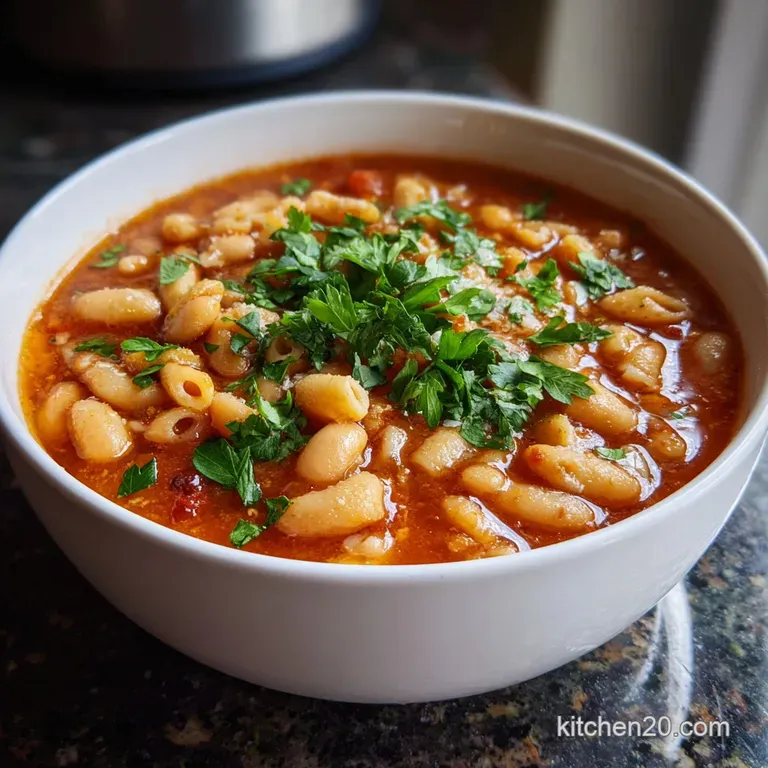
This method ensures you get maximum depth of flavor with minimal fuss.
Phase 1: Preparing the Aromatics and Base
- Render the Pancetta: Heat 2 Tbsp of olive oil in a heavy pot (a Dutch oven is ideal). Add 3 oz of diced pancetta and cook over medium heat until it’s crisp and golden, about 5– 7 minutes. Remove the crispy bits and set them aside. This will be your crispy, salty topping.
- Sauté the Soffritto: Reduce the heat to medium low. Add the diced onion, carrot, and celery to the residual fat. Cook gently for 8– 10 minutes, stirring occasionally, until the vegetables are incredibly soft and translucent almost melted. Don’t rush this step; it’s the non-negotiable flavor foundation for your Italian Pasta Fagioli .
- Build the Umami: Stir in 4 minced garlic cloves and cook for 1 minute until fragrant. Add 1 Tbsp of tomato paste and cook it for 2 minutes, scraping the bottom of the pot. Cooking the paste deepens its color and sweetness, adding fantastic complexity.
Phase 2: Simmering and Puréeing the Beans
- Add Beans and Liquid: Add 6 cups of stock, 1 cup of water, a sprig of fresh rosemary, 2 bay leaves, and a chunk of Parmesan rind. Now, here’s the trick: reserve about a quarter of one can of Cannellini beans whole, and add the rest (about 1 ¾ cans) to the pot.
- Simmer and Meld: Bring the mixture to a gentle boil, then immediately reduce to a steady simmer. Cook partially covered for 25– 30 minutes. Season lightly with salt and pepper now; you will adjust later once the broth reduces.
- Thicken Naturally: Remove the bay leaves, rosemary sprig, and Parmesan rind. Use an immersion blender to blend about one-third of the soup mixture until it is smooth and creamy. This is the key to creating a truly thick, rustic Italian soup without added cream. Stir in the reserved quarter of whole beans.
Phase 3: Adding the Pasta and Final Cooking Duration
- Cook the Pasta Al Dente : Bring the soup back up to a gentle simmer. Add 6 oz of your small dried pasta (like ditali) directly into the pot. Cook according to the package directions, but subtract 1 minute from the specified time. Stir frequently to prevent the pasta from sticking to the bottom.
- Rest and Serve: Once the pasta is al dente (firm to the bite), remove the pot from the heat. Let the Italian Pasta Fagioli rest for 5 minutes. The pasta will continue absorbing liquid and the stew will thicken perfectly. If it seems too thick, simply stir in a splash of hot water or stock to loosen it.
Expert Secrets and Troubleshooting Your Rustic Italian Stew
Preventing Mushy Pasta (The Al Dente Rule)
Mushy pasta is the death of this dish. You must undercook it slightly (by about a minute) while it's in the pot. The residual heat from the thick soup will continue cooking the starches for the next 5– 10 minutes, bringing it perfectly to al dente before you eat it. If you need a refresher on perfect pasta timing, I've got tips in my recipe for Pasta Salad: The Best Easy Pasta Salad Recipe (Mediterranean Style) .
If Your Stew is Too Thin or Too Thick (Simple Fixes)
If your finished Italian Pasta Fagioli is too thin, you didn't blend enough of the beans! To fix it, grab a cup of the whole beans from the pot, mash them vigorously with a fork, and stir the mash back into the soup. The starches will thicken it quickly.
If it's too thick (which often happens if the soup cools slightly), just ladle in a little more warm stock or water until it reaches your desired consistency.
The Importance of Quality Olive Oil Drizzle ( Mantecatura )
Never skip the finish. Before serving, a final, generous drizzle of high-quality extra virgin olive oil ( mantecatura ) adds a fresh, peppery note that elevates the whole bowl. It’s what separates a good rustic bean soup from a truly great one.
Storing and Reheating Leftover Pasta e Fagioli
Best Practices for Refrigerated Storage
Due to the starch in the pasta and the pureed beans, this Italian Pasta Fagioli thickens substantially as it cools. Store leftovers in an airtight container in the fridge for up to 3 days. When you go to reheat it, it will likely be a solid block don't panic!
Freezing Guidelines (A Note on Cooked Pasta)
Does it freeze well? Yes, but with one caveat: the cooked pasta texture suffers. It tends to get grainy and fall apart once thawed. The Pro Tip: If you plan on freezing half the batch, freeze the soup before adding the pasta.
When you thaw and reheat the base, bring it to a simmer, and then cook a small amount of fresh pasta directly in the pot. It’s a little more effort but results in a vastly superior texture.
The Essential Garnish Checklist (Parmesan, Rosemary, Pepper)
Don't forget the final flourish! A little grating of fresh Parmesan cheese (or the rind if you haven't tossed it), the crispy pancetta you set aside in Phase 1, and a good crack of black pepper are non-negotiable.
A sprinkle of fresh chopped parsley or rosemary adds a necessary bright, herbal note to cut through the richness of the Italian Pasta Fagioli.
Serving Suggestions: Complementing Your Comfort Food
Honestly, this hearty dish is a meal unto itself. But if you're serving this rustic fare to guests, here are a couple of perfect complements.
The absolute minimum requirement is a huge chunk of crusty sourdough or ciabatta. You need something sturdy to soak up that beautiful, thick broth that’s called fare la scarpetta (making the little shoe) in Italian, and it is mandatory.
If you need a green element, serve it with a very simple, sharp arugula salad dressed with just lemon juice and olive oil. That bitterness cuts the richness of the pancetta and beans beautifully. Enjoy your massive, beautiful bowl of traditional Italian Pasta Fagioli ! You’ve earned it.
Recipe FAQs
Why is my Pasta Fagioli soup too thin, even after simmering?
This usually means you didn't mash or puree enough of the beans, as the starches released from the beans are the primary traditional thickener. To fix it quickly, remove about 1/2 cup of broth and beans, puree them completely with an immersion blender or food processor, and stir the mixture back into the pot.
Simmer gently for five minutes, and the soup should thicken considerably.
How can I prevent the pasta from becoming mushy and absorbing all the broth?
To prevent mushiness, cook the pasta (ditalini, tubetti, etc.) separately in salted water until barely al dente, drain it, and only stir it into the stew right before serving. If you cook the pasta directly in the soup, it will continue to swell and soak up all the liquid as it sits, turning the dish into a dense casserole.
Always keep the cooked pasta and the bean soup separate if you plan on having leftovers.
Can I use canned beans instead of dried ones for this recipe?
Yes, canned beans work perfectly well and save significant preparation time, although dried beans often yield a slightly deeper, earthier flavor. Ensure you rinse the canned beans well to remove excess sodium and starchy packing liquid before adding them to the stew.
Use approximately three 15-ounce cans, making sure to reserve enough for mashing to achieve the proper thickness.
What ingredients can I add to boost the depth of flavor in the stew?
The flavor base (soffritto of onion, celery, and carrot) is critical, so ensure you sauté these aromatics deeply without burning them. For a rich, savory boost, consider adding a Parmesan cheese rind to the pot during simmering and removing it before serving, or render a small amount of pancetta or bacon at the start.
A tablespoon of tomato paste, cooked down until caramelized with the aromatics, also adds excellent complexity.
Is it possible to make this dish vegan or vegetarian?
Absolutely; the foundation of Pasta Fagioli is naturally vegetarian and easily made vegan by ensuring you use vegetable broth and high-quality olive oil. Skip the pancetta traditionally used in some versions, and rely on sautéing your aromatics in olive oil along with a pinch of red pepper flakes for heat.
Ensure you use ample herbs like rosemary and sage to make up for the lack of meat flavor.
What is the best type of small pasta to use for Pasta Fagioli?
Traditionally, the soup uses very small, short shapes that fit easily on a spoon, like ditalini (little thimbles), tubetti (small tubes), or elbow macaroni. Some cooks also use broken-up spaghetti or linguine for a longer texture.
The key is choosing a shape that is sturdy enough to hold up in the stew but small enough to be eaten comfortably alongside the beans.
Can I freeze leftover Pasta Fagioli?
You can freeze the stew base (the broth and beans) very successfully for up to three months in an airtight container. However, if the pasta is already mixed in, it will continue to absorb liquid and likely become disintegrated or mushy upon thawing and reheating.
For the best quality, freeze the bean stew separately and cook a fresh batch of pasta when you are ready to serve the leftovers.
Hearty Italian Pasta Fagioli Stew
Ingredients:
Instructions:
Nutrition Facts:
| Calories | 524 kcal |
|---|---|
| Protein | 23.0 g |
| Fat | 14.0 g |
| Carbs | 78.0 g |
