The Lockdown Larder Simple Stunning Homecanned Tomato Sauce Water Bath Method
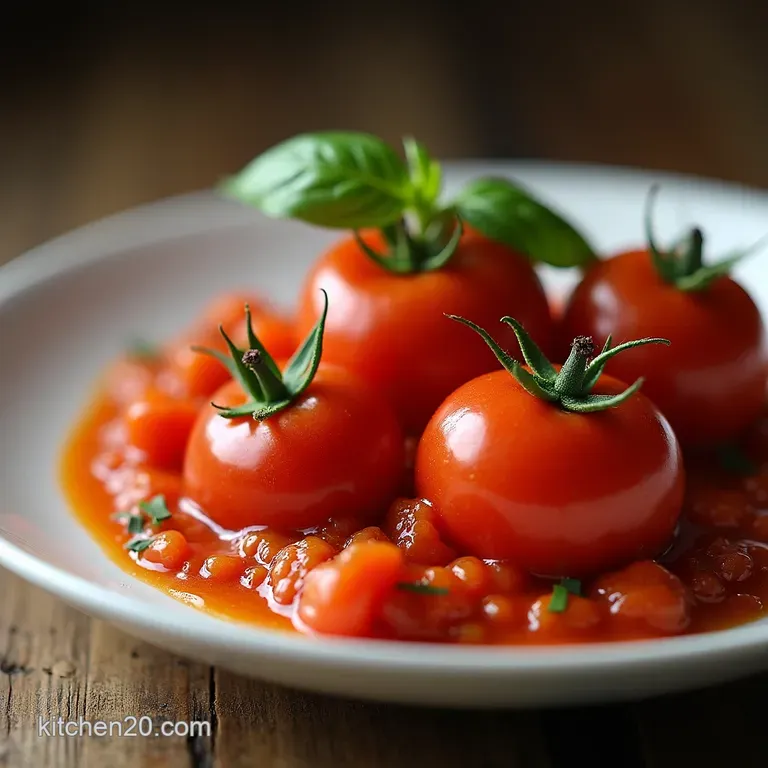
- Why Homemade Canned Tomato Sauce Outshines Store-Bought Options
- Unlocking Winter with Summer's Best Harvest: A Preservation Primer
- Sourcing Your Star Produce: What to Buy for Optimal Sauce Quality
- The Flavor Architects: Essential Herbs, Spices, and Acidity Boosters
- Preparing the Tomatoes: From Vine to Pulp Stage
- Simmering to Perfection: Developing Deep, Concentrated Sauce Flavor
- The Crucial Transfer: Filling Jars for Long-Term Canning Tomato Sauce Success
- Maximizing Jar Life: Storage Secrets for Peak Freshness
- Troubleshooting & Flavor Twists for Your Preserved Creation
- Beyond the Basics: Creative Uses for Your Home-Canned Masterpiece
- Recipe FAQs
- 📝 Recipe Card
Why Homemade Canned Tomato Sauce Outshines store-bought Options
There is a profound difference between opening a jar of mass produced tomato concentrate and dipping into a homemade batch you labored over during the height of summer. The flavour of Canning Tomato Sauce created at home possesses a vibrant freshness that industrial processes simply cannot replicate.
When you control the ingredients using only peak season produce, high-quality herbs, and zero unnecessary fillers the resulting product is richer, brighter, and often sweeter.
This isn't just about reducing sodium or avoiding preservatives; it's about capturing the authentic taste of your local harvest, transforming it into a culinary anchor for the colder months.
Mastering this preservation technique means locking in intense umami and sweetness, guaranteeing that your winter meals taste like sunshine captured in a jar.
Unlocking Winter with Summer's Best Harvest: A Preservation Primer
The goal of Canning Tomato Sauce for Beginners is simple: take the overwhelming abundance of a summer garden or farmer’s market haul and safely convert it into shelf stable goodness. This entire process hinges on proper acidity and heat processing to ensure longevity and safety.
We are aiming for a rich, Italian style base, perfect for everything from a quick weeknight spaghetti to elaborate lasagna. This article details how to achieve that perfect, deep flavour profile and the precise steps needed to ensure your Home Canned Tomato Sauce remains delicious and safe for months, if not years, to come.
The Flavor Difference: Why Fresh Tomatoes Matter for Canning Tomato Sauce
The quality of your final product is directly correlated to the quality of the fruit you begin with. For the best results in your Homemade Tomato Sauce Canning Recipe , you need tomatoes that are bursting with natural sugars and possess sufficient acidity.
When you are Canning Tomato Sauce From Fresh Tomatoes , you are able to manage the reduction process to concentrate those natural flavours without the bitterness sometimes associated with pre-cooked base products.
Using firm, flavourful varieties ensures that even after hours of simmering, the resulting liquid is intensely flavoured, not watery or pale.
Your Foolproof Blueprint for Jarring Perfect Italian Style Sauce
We are outlining a recipe designed for accessibility, relying on the straightforward water bath method. This method is ideal because it requires standard kitchen equipment rather than specialized pressure canners, making it perfect for initial ventures into preservation.
The yield for this blueprint is approximately six standard pint sized (16 oz) jars, requiring about 15 pounds of fresh tomatoes. The crucial prep time clocks in around 45 minutes, while the flavour development stage simmering the sauce down will take between 1.5 to 2.
5 hours, followed by a quick 10 minutes of processing time per batch.
Essential Safety Note: Understanding the Water Bath Canning Method
Safety in home preservation is paramount. Since tomatoes are naturally high in acid, they are excellent candidates for the water bath canning technique, which is sufficient to kill moulds, yeasts, and spoilage bacteria. However, this method is only suitable for high acid foods.
Should your tomatoes lean towards the lower acid heirlooms, or if you incorporate significant amounts of low-acid vegetables like peppers or mushrooms, you must either add an acidifier (like lemon juice or vinegar) or switch entirely to pressure canning.
For this specific, flavour focused Marinara Sauce For Canning , we rely on the natural acidity but stress the importance of verifying pH levels if you deviate from the outlined ingredients.
Canning Tomato Sauce Without Water Bath is reserved for very low-acid mixtures, which requires a pressure canner, a different procedure altogether.
Sourcing Your Star Produce: What to Buy for Optimal Sauce Quality
When selecting your 15 lbs of tomatoes, favour Roma or paste varieties. These types have lower water content and more flesh, which is exactly what you want when Canning Tomato Sauce From Tomatoes .
Their firm structure holds up well during the long simmer, minimizing the amount of time needed for reduction. Aim for tomatoes that are deeply coloured and fragrant, signaling peak ripeness. Avoid any that show signs of bruising or spoilage, as even a small compromised area can affect the safety of an entire jar.
The Flavor Architects: Essential Herbs, Spices, and Acidity Boosters
A beautiful sauce needs more than just tomato; it needs foundational aromatics. We start by gently softening two large yellow or sweet onions in a quarter cup of extra virgin olive oil until translucent a crucial step for developing sweetness.
Next come six cloves of finely minced garlic, which are sautéed briefly (about 60 seconds) with two teaspoons of dried oregano and a tablespoon of dried basil. Remember, these dried herbs will rehydrate and bloom during the final simmering stage.
A standard seasoning involves one tablespoon of kosher salt and one teaspoon of freshly ground black pepper, adjusted after the sauce has fully reduced. While optional, keeping a tablespoon of red wine vinegar on hand is a vital insurance policy should you need to boost the acidity level during your final taste test.
Tomato Triumvirate: Selecting the Right Varieties for Richness and Yield
While Romas are the workhorses of canning, feel free to blend them with a few larger, sweeter varieties like Brandywine or Beefsteak for added complexity. The key is balance: you want the low moisture and high flesh of the paste tomato, complemented by the superior sweetness of a slicing variety.
Equipment Checklist: Gear Needed to Successfully Make This Recipe
To ensure a smooth session of Canning Tomato Sauce , gather your tools before you begin heating anything. You will need a very large stockpot or Dutch oven for the long, slow simmer.
For the actual preservation, you need a water bath canner (or a deep pot with a rack), pint sized jars, new lids, and bands. Essential accessories include a jar lifter for moving hot jars safely, a canning funnel for clean pouring, and a bubble remover tool which doubles as a headspace measurer to ensure accuracy around the jar rim.
Measuring Mastery: Accurate Ingredient Ratios for Safe Preservation
Precision matters most when it comes to headspace. For this recipe, using pint jars, the precise measurement you must maintain between the surface of the sauce and the rim of the jar is exactly 1/2 inch (1.25 cm) . This specific measurement creates the necessary vacuum seal during cooling.
If you are working at a significantly high altitude, you must consult current USDA guidelines, as this required processing time will need to be extended.
Preparing the Tomatoes: From Vine to Pulp Stage
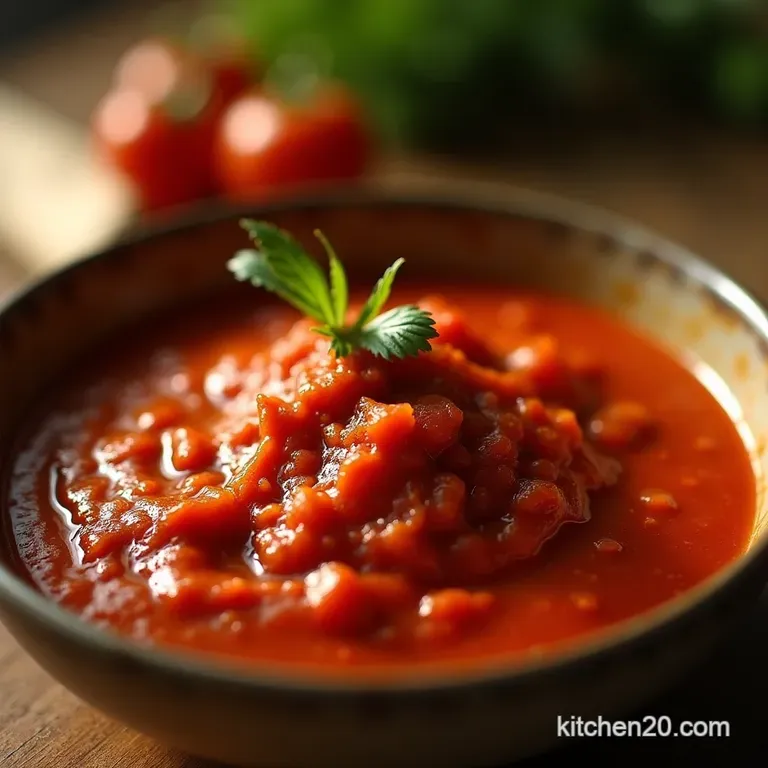
Start by thoroughly washing all your produce. For sauce preparation, peeling the tomatoes is entirely optional; the skins break down nicely during the long simmer. The critical preparatory step is coring use a small paring knife to remove the tough core and any seeds you find overly bitter.
Halve the tomatoes and set them aside.
Related Recipes Worth Trying
- The Silken Dream Foolproof Alfredo Sauce Made From Scratch — Stop worrying about clumpy sauce This easy Alfredo Sauce recipe guarantees a silky creamy result every time using just butter cream and Parmesan Make this...
- The Best Crockpot Swedish Meatballs with Creamy Sauce — Whip up the ultimate Crockpot Swedish Meatballs from scratch This easy recipe delivers rich tender meatballs swimming in a velvety sour cream gravy Perfect...
- Southern Tomato Pie Recipe Flaky Crust Savory Filling — This Southern Tomato Pie Recipe delivers peak summer flavour with a rich cheesy custard and a flaky crust Learn the secret to avoiding a soggy bottom
Simmering to Perfection: Developing Deep, Concentrated Sauce Flavor
This is where the magic happens. After sautéing your aromatics (onions and garlic), add all the prepared tomatoes to the large pot. Bring the mixture up to a gentle boil, then immediately reduce the heat to a steady, low simmer. Cover the pot loosely or leave it partially uncovered to allow moisture to escape.
You need to cook this mixture for 1.5 to 2. 5 hours. Stir regularly, especially toward the bottom, to prevent scorching. The goal is significant reduction the sauce should visibly thicken, deepen in colour, and taste intensely concentrated.
Once reduced to your liking, use an immersion blender or a potato masher to break down any remaining large chunks to achieve your preferred texture. Taste and adjust the salt and pepper now; this is the final chance to perfect the flavour profile before it goes into the jars.
The Crucial Transfer: Filling Jars for Long Term Canning Tomato Sauce Success
While the sauce simmers, prepare your preservation station. Fill your canner with water (enough to cover the jars by 1-2 inches) and bring it to a steady simmer (around 180° F / 82° C). Place your clean jars into this simmering water to keep them hot.
Keep your new lids warm in a separate small saucepan of water boiling the lids is unnecessary and can damage the sealing compound.
step-by-step: Blanching, Peeling, and Coring Your Summer Bounty
While peeling is optional for sauce, if you choose to remove the skins, score a shallow "X" on the bottom of each tomato, drop them into boiling water for 30-60 seconds until the skin splits, and then immediately plunge them into an ice bath. The skin will slide right off.
Always remember to core deeply to remove the hard stem attachment point.
Achieving Ideal Consistency: When to Stop Reducing Your Sauce
You know the sauce is ready for jarring when a ladleful holds its shape slightly on a spoon rather than running off immediately, and the volume has visibly decreased by at least one-third.
If it seems too thick before jarring, simply stir in a little reserved tomato juice or hot water to thin it back to a smooth, sauce like consistency.
Headspace Harmony: How to Properly Fill Jars Without Spillage
Working with one hot jar at a time, use the canning funnel and ladle to fill the jar with the hot sauce. The measurement must be exact: 1/2 inch of headspace . Once filled, use your non-metallic headspace tool to gently run around the inside edge of the jar to release any trapped air bubbles.
Wipe the jar rim meticulously clean with a damp cloth any grease or tomato residue will prevent a proper seal. Place the warm lid on top, followed by the screw band, tightening only to "fingertip tight."
The Water Bath Protocol: Processing Times That Guarantee Safety
Carefully lower the filled, sealed jars onto the rack in your simmering canner, ensuring the water level covers the jars by at least one inch. Bring the water to a full, rolling boil.
Once boiling, start the timer: for pint jars in this Canning Tomato Sauce Recipe , the required processing time is 40 minutes .
Once the time elapses, turn off the heat and let the jars rest in the hot water for five additional minutes before carefully lifting them out. Place them on a wire rack or thick towel, leaving at least an inch of space between jars to allow for even cooling.
Maximizing Jar Life: Storage Secrets for Peak Freshness
Allow the jars to cool undisturbed for 12 to 24 hours. During this period, you will hear the satisfying "pop" as the vacuum seals form. Once cooled, remove the screw bands this prevents rust and makes inspecting the seal easier.
Store your finished Canned Tomato Sauce in a cool, dark, dry pantry or cellar. Properly processed sauce will maintain peak quality for at least one year, though it often lasts much longer.
Troubleshooting & Flavor Twists for Your Preserved Creation
The 'Pop' Test: Verifying a Successful, Airtight Seal
The easiest way to verify safety is the visual and tactile check. The centre of the lid should be concave (pulled down) and should not flex or move when pressed. If you lightly tap the centre, it should sound solid, not hollow.
Altitude Adjustments: Modifying Processing Times for High Elevations
If you live above 1,000 feet elevation, the boiling point of water is lower, meaning the processing time needs to increase to reach the necessary temperature for safe preservation.
Always consult the current National Center for Home Food Preservation charts; for pint jars processed in a boiling water bath at 1,001 to 3,000 feet, you typically need to add 5 minutes to the processing time.
Spice Variations: Introducing Smoked Paprika or Calabrian Chilies
To dramatically change the profile of your Canned Tomato Sauce , consider these additions during the initial sauté stage: introduce smoked paprika for a smoky depth, or a pinch of finely minced Calabrian chilies for a pleasant background heat, transforming it into a quick, rustic arrabbiata
base.
What to Do If a Jar Doesn't Seal Properly
If, after 24 hours, a jar lid remains flat or pops when pressed, it has not sealed safely. Do not attempt to store this jar at room temperature. The sauce is still perfectly edible; simply refrigerate it immediately and plan to use it within the next week or two.
Beyond the Basics: Creative Uses for Your Home Canned Masterpiece
Once you have mastered the fundamentals of Canning Tomato Sauce , you’ll find dozens of ways to utilize your stock. Naturally, it’s the perfect base for homemade lasagna or a classic marinara over linguine.
But think bigger: use it to braise chicken thighs for an intensely flavourful cacciatore, spoon it over polenta, or thin it slightly with broth for a robust base for hearty minestrone soup.
The rich, concentrated flavour of your Canned Tomato Sauce truly elevates any dish calling for tomato depth.

Recipe FAQs
Do I really need to worry about acidity when Canning Tomato Sauce, or is it just scaremongering?
That's a smashing question! For home canning, acidity is non-negotiable for safety when using the water bath method, so it's definitely not scaremongering. Tomatoes are borderline low-acid, meaning if they aren't acidic enough, harmful bacteria like botulism can thrive in the sealed jar.
Always taste your tomatoes if they seem bland or you’re using heirloom varieties, it’s wise to test the pH or add that optional splash of vinegar to guarantee the required acidity level of 4.6 or below.
My sauce is too runny after simmering; can I just cook it down longer, or should I use a thickener?
Stick with the slow simmer! The best way to thicken your homemade tomato sauce is to continue simmering it uncovered until it reduces to your preferred consistency this concentrates the natural sugars and deepens the flavour beautifully.
Avoid adding starches like cornflour or flour before canning, as these can interfere with the heat penetration needed to create a proper vacuum seal. Keep the heat low and let evaporation do the hard work.
What exactly is "headspace" and why does that half inch measurement matter so much for Canning Tomato Sauce?
Headspace is the crucial gap between the top of the food inside the jar and the rim of the jar in this recipe, we strictly require half an inch.
This gap allows the air inside the jar to expand and escape as the jar heats up in the canner. When the jar cools, this space contracts, pulling the lid down tightly to form that vital vacuum seal. Too little space, and the sauce might bubble out; too much, and the seal might fail entirely.
I’ve sealed my jars, but after 24 hours, one jar hasn't popped. Is it still safe to eat next month?
If you can press down on the centre of the lid and it moves or 'springs' back, the seal hasn't set, and it's not shelf stable treat it like fresh sauce and keep it in the fridge to use within a week or so.
For any jar that hasn't sealed, you can try re-processing it immediately; just replace the lid with a brand new, hot one and process it for the full 40 minutes again. If it still refuses to seal, definitely don't store it long term!
Can I skip using a water bath canner and just invert the jars like my Nan used to do?
Oh dear, no! We must wave goodbye to the 'inversion' method; it's terribly outdated and frankly, quite risky as it doesn't guarantee the necessary temperature or time needed to kill off potential pathogens.
The modern, safe route is always using a proper water bath canner (or a large pot with a rack) where the jars are fully submerged and processed at a rolling boil for the specified time. Safety is always better than nostalgia when preserving food!
Home Canned Tomato Sauce
Instructions:
Nutrition Facts:
| Calories | 170 Cal |
|---|---|
| Fat | 7g |
| Fiber | 6g |
