The Best Homemade Loaded Potato Soup

- Time: Active 20 minutes, Passive 35 minutes, Total 55 minutes
- Flavor/Texture Hook: Silky creaminess contrasted with the shatter of thick cut bacon
- Perfect for: Cold Sunday afternoons or a high protein weeknight recovery meal
- Crafting the Best Homemade Loaded Potato Soup for Pure Comfort
- The Structural Mechanics Behind a Perfectly Velvety Potato Soup
- Component Analysis and Ingredient Roles
- Essential Building Blocks and Smart Substitutions
- Critical Equipment for Soup Success
- Bringing The Best Homemade Loaded Potato Soup Together
- Avoiding Common Kitchen Disasters
- Creative Twists and Ingredient Swaps
- Keeping Your Leftovers Fresh and Safe
- Serving Suggestions for Maximum Visual Impact
- Strategic Decisions for Designing the Ultimate Soup Experience
- Recipe FAQs
- 📝 Recipe Card
Crafting the Best Homemade Loaded Potato Soup for Pure Comfort
Listen, we've all been there. You order a potato soup at a cafe, and it’s either a watery mess or so thick you could hang wallpaper with it. I spent years chasing that restaurant style "platform" where the soup is rich enough to coat a spoon but still light enough that you want a second bowl.
This specific method is about connecting the earthy profile of the Russet with the salty, smoky intensity of center cut bacon. It’s not just a meal; it’s a full sensory experience that starts the moment that fat hits the pan.
I remember one specific Tuesday where I tried to shortcut the process by using red potatoes. Big mistake. They stayed too firm, the soup never thickened, and it felt like eating marbles in milk. We're going to avoid that.
We're looking for that specific moment when the potatoes begin to soften at the edges, shedding just enough starch to create a natural thickening effect before we even touch the flour.
Trust me on this: the secret isn't just in the ingredients, but in how we sequence them. We aren't just tossing things in a pot. We're revolutionizing the workflow to maximize flavor extraction at every single stage. You'll see the color transition from a pale broth to a deep, golden hue that screams comfort.
Let's get into the mechanics of why this actually works so you can nail it on the first try.
The Structural Mechanics Behind a Perfectly Velvety Potato Soup
To understand this dish, we have to look at the soup as a platform for flavor delivery. It’s not just about the spuds. It’s about how the fats and starches interact to create a stable emulsion that won't break when you reheat it the next day.
This recipe relies on a dual thickening approach: a light roux for stability and potato starch for body.
- Starch Gelatinization: As the Russet cubes simmer, their starch granules absorb the bone broth, swelling until they burst and release amylose into the liquid.
- Protein Denaturation: The slow rendering of the bacon fat changes the protein structure of the meat, leaving us with a crisp texture that provides a necessary "shatter" against the soft soup.
- Emulsification Stability: Using full fat sour cream at room temperature allows the fats to integrate with the broth without curdling, creating a connected, smooth finish.
- Aromatic Infusion: Sautéing the garlic and onions in the rendered bacon fat allows the fat soluble flavor compounds to distribute evenly throughout the entire batch.
Chef's Note: Temper your sour cream! Take a ladle of the hot soup liquid and whisk it into your sour cream in a separate bowl before adding the whole mess back into the pot. This "connects" the temperatures and prevents those annoying white clumps.
Component Analysis and Ingredient Roles
| Ingredient | Science Role | Pro Secret |
|---|---|---|
| Russet Potatoes | High starch content for natural thickening | Rinse once after dicing to remove excess surface starch for cleaner broth |
| Chicken Bone Broth | Provides gelatin and deep umami profile | Use low sodium to control the final seasoning platform exactly |
| All Purpose Flour | Acts as a stabilizer for the dairy emulsion | Cook the roux for 2 minutes to remove the raw "paper" taste |
| Heavy Cream | Increases viscosity and provides a luxurious mouthfeel | Add at the very end to prevent the fats from separating during a hard boil |
The chemistry here is simple but vital. We need the Russets because they are the "fluffy" variety. If you try this with Yukon Golds, it will still be good, but you’ll miss that signature "crumble" that makes a loaded soup feel authentic. The bone broth is another non negotiable for me.
It adds a level of protein and depth that regular stock just can't touch.
Essential Building Blocks and Smart Substitutions
When you’re gathering your gear, remember that quality here is about fat content. This isn't the place for skim milk or turkey bacon. We want the real deal. If you're looking for a different vibe, you might want to try my How to Make recipe for a lighter, plant based alternative.
- 8 slices thick cut bacon: Provides the fat base and the crunch.
- 1 large yellow onion: Diced small so it disappears into the texture.
- 2 cloves garlic: Minced fresh. Don't use the jarred stuff; it tastes like tin.
- 4 tbsp unsalted butter: To supplement the bacon fat for the roux.
- 1/4 cup all purpose flour: Our primary binding agent.
- 3 lbs Russet potatoes: Peeled and cubed. Why this? Russets have the highest starch to water ratio for maximum creaminess.
- 4 cups low sodium chicken bone broth: Our liquid foundation.
- 1 cup heavy cream: For that velvety finish.
- 1/2 cup full fat sour cream: Adds the necessary tang to cut through the fat.
- 1.5 cups sharp yellow cheddar: Grate it yourself. Pre shredded is coated in cellulose and won't melt smoothly.
- Seasonings: Kosher salt, cracked black pepper, dried thyme, and a pinch of cayenne.
- 1/4 cup fresh chives: The essential green pop.
| Original Ingredient | Substitute | Why It Works |
|---|---|---|
| Bacon (8 slices) | Smoked Paprika (1 tsp) + Butter | Mimics the smokiness but loses the physical crunch |
| Heavy Cream (1 cup) | Whole Milk (1 cup) | Lighter result. Note: Soup will be significantly thinner |
| Chicken Bone Broth | Vegetable Stock | Shifts the flavor profile to be more earthy and less savory |
If you find yourself missing the texture of a good starch during your meal, you might want to pair this with a Homemade Stuffing recipe on the side for an extra hearty winter feast.
Critical Equipment for Soup Success
You don't need a high tech lab, but a few specific tools will make this revolutionizing process much easier. A heavy bottomed pot is the most important. I prefer a 6 quart Dutch oven (like a Lodge or Le Creuset) because it holds heat evenly. This prevents the bottom from scorching while the potatoes simmer.
You'll also want a sharp vegetable peeler and a sturdy chef's knife. Since we're dicing 3 lbs of potatoes, ergonomics matter. Finally, a potato masher is your best friend here. We aren't going to blend this soup we want texture but a few quick mashes at the end will release that internal starch to thicken the base.
Bringing The Best Homemade Loaded Potato Soup Together
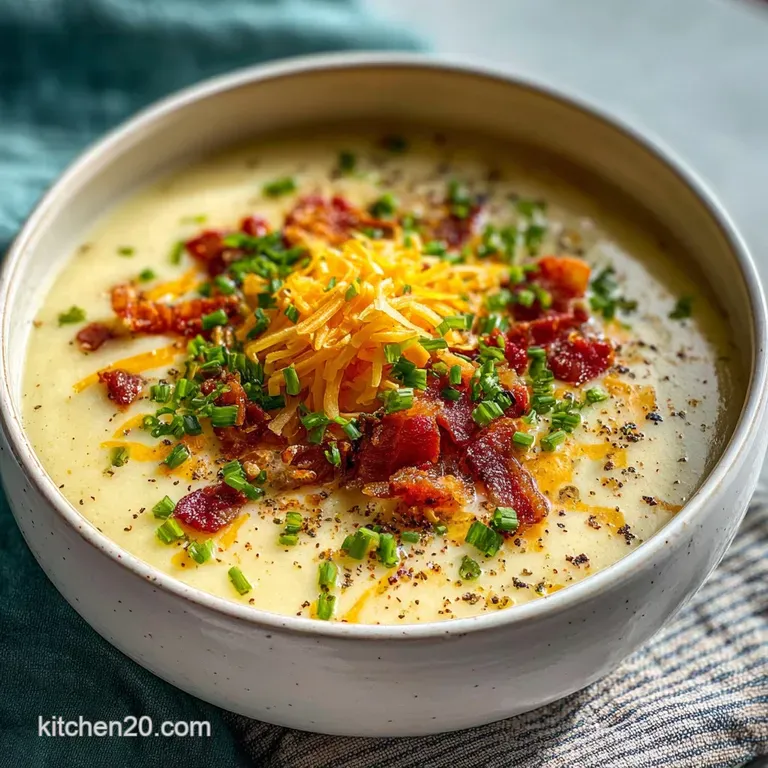
This process is a five phase operation. We start with fat extraction and end with a creamy finish. Follow these steps closely to ensure your textures stay distinct.
Phase 1: Crisping and Rendering
Place your diced bacon in the cold Dutch oven. Turn the heat to medium. Starting in a cold pan allows the fat to render out slowly before the meat browns, resulting in a more even "shatter" texture. Cook for about 8 minutes until deep mahogany and crispy.
Remove the bacon with a slotted spoon and set aside on paper towels.
Phase 2: Building the Aromatic Base
Leave about 2 tablespoons of bacon fat in the pot. Add your 4 tbsp of unsalted butter. Once melted and bubbling, toss in the onion. Sauté for 5 minutes until translucent and fragrant. Add the garlic and cook for exactly 60 seconds.
You’ll smell the garlic "bloom" as the oils hit the heat.
Phase 3: The Roux and Simmer
Sprinkle the 1/4 cup of flour over the onions and garlic. Whisk constantly for 2 minutes. This "cooks out" the raw flour taste without browning it too much. Slowly pour in the chicken bone broth, whisking as you go to prevent lumps. Add the cubed potatoes, salt, pepper, thyme, and cayenne.
Increase heat to bring to a boil, then immediately drop to a simmer.
Phase 4: The Texture Transformation
Simmer the soup uncovered for 15 to 20 minutes until potatoes are fork tender. Don't overcook them into mush! Take a potato masher and press down 4 or 5 times in different areas of the pot.
This breaks up some potatoes to thicken the broth while leaving most of them whole for that chunky "loaded" feel.
Phase 5: The Creamy Finish
Turn the heat to low. Stir in the heavy cream and the tempered sour cream. Add 1 cup of the cheddar cheese and stir until melted. Do not let the soup boil again after the dairy is added, or the sour cream might break. Fold in half of the crispy bacon.
Garnish each bowl with the remaining bacon, cheddar, and a heavy sprinkle of chives.
Avoiding Common Kitchen Disasters
Even the best of us hit a snag sometimes. The most common issue with potato soup is the "glue factor." If you overwork the potatoes, specifically with an immersion blender, you’ll release too much starch too fast, turning your soup into a bowl of library paste.
Why is my soup gummy?
This usually happens from over mashing or using a blender. If it's already gummy, there isn't a "perfect" fix, but you can thin it out with a little more warm broth to make the texture more palatable.
What if the base is too thin?
If you've reached the end and it feels like a thin broth, don't panic. You can whisk a tablespoon of cornstarch with a tablespoon of cold water and stir it into the simmering soup for 2 minutes.
| Problem | Root Cause | Solution |
|---|---|---|
| Curdled appearance | Cold sour cream added to boiling soup | Temper dairy with hot liquid before adding |
| Scorched bottom | Heat was too high or pot was too thin | Move to a heavy pot; stir more frequently |
| Bland flavor | Lack of salt or low quality broth | Add a splash of lemon juice or extra salt |
- 1. Potato Size
- Ensure cubes are 1/2 inch. Larger pieces won't cook through in time.
- 2. Simmer Temp
- Small bubbles only. A rolling boil will toughen the potatoes.
- 3. Cheese Temp
- Add cheese only after the pot is off the direct flame to ensure a silky melt.
Creative Twists and Ingredient Swaps
I love the classic version, but sometimes the "platform" needs a redesign. If you want to change the vibe, the "Decision Shortcut" below is your guide.
- If you want a smokier profile, swap the bacon for diced smoked kielbasa.
- If you want a kick, add a diced jalapeño with the onions and use pepper jack cheese.
- If you want more bulk, stir in 2 cups of chopped fresh spinach at the very end.
One of my favorite variations is the "Spicy Tex Mex" version. I swap the thyme for cumin and coriander, then top it with pickled jalapeños and avocado. It’s a total shift that keeps the soul of the dish intact. If you're looking for more soup inspiration after this, check out my Chicken Noodle Soup recipe which uses a similar bone broth foundation.
| Feature | Stovetop (Classic) | Instant Pot (Fast) |
|---|---|---|
| Texture | Controllable chunkiness | Softer, more integrated |
| Flavor Depth | Higher (due to open evaporation) | Concentrated but less complex |
| Hands on Time | 20 minutes | 10 minutes |
Keeping Your Leftovers Fresh and Safe
The beauty of a starch heavy soup is that it often tastes better the next day as the flavors have time to truly connect. However, dairy based soups require a little extra care during reheating.
Storage: Keep in an airtight container in the fridge for up to 4 days. I don't recommend freezing this soup. The potatoes tend to become grainy and the dairy can separate when thawed, ruining that velvety texture we worked so hard to build.
Reheating: Use the stovetop over medium low heat. If the soup has thickened too much in the fridge (which it will!), add a splash of milk or broth to loosen it up. Avoid the microwave if possible, as it heats unevenly and can cause "hot spots" that break the cream emulsion.
Zero Waste Tip: Don't throw away those potato peels! Toss them with olive oil, salt, and rosemary, then roast at 400°F until crispy. They make a brilliant, zero waste snack while your soup simmers.
Serving Suggestions for Maximum Visual Impact
Presentation is where we foster that community connection. A bowl of beige soup isn't very inviting on its own. We need to use our color accents to create a balanced look.
- Accents 1: Mahogany. The dark, crispy bacon bits provide the base contrast.
- Accents 2: Sharp Yellow. Freshly grated cheddar adds a warm, sun drenched glow.
- Accents 3: Vibrant Green. Chives provide a sharp, clean finish that tells the eye the dish is fresh.
Serve this in wide, shallow bowls. This allows more surface area for the toppings, ensuring every single bite has a "loaded" component. A side of crusty sourdough or even some Olive Garden Zuppa recipe inspired breadsticks can turn this into a restaurant level spread.
Strategic Decisions for Designing the Ultimate Soup Experience
When you're at the stove, you'll have to make a few calls. One common myth is that you must peel the potatoes. Honestly, if you like a rustic vibe, leave the skins on! They add fiber and a different texture. Another myth is that you need "soup" potatoes.
Any high starch potato will work, but Russets are king for a reason.
Another decision is the thickness. If you want a "chowder" style, increase the flour to 1/3 cup. If you want something more like a traditional soup, keep it at 1/4 cup. Just remember that the potatoes will continue to release starch as the soup sits, so it's better to start a little thinner than you think you want.
If you are looking for another easy veggie forward option for your meal prep rotation, I highly recommend checking out this How to Make recipe for a carrot based alternative. It’s a great way to use up the rest of that bag of potatoes!
By focusing on the science of the starch and the quality of the "platform" you're building, you're not just making dinner. You're revolutionizing your home cooking game. I can't wait to hear how your first batch turns out tag me when you post those crispy bacon shots!

Recipe FAQs
What are some common mistakes to avoid when making potato soup?
Don't over blend or over mash the potatoes. This releases too much starch, turning your soup gummy or paste like. Aim for a mix of creamy broth and distinct potato chunks for the best texture.
What is the most delicious soup in the world?
That's subjective, but this loaded potato soup is a top contender! It balances rich, creamy textures with savory, smoky bacon and sharp cheese, hitting all the comfort food notes.
Should you boil potatoes before adding them to soup?
No, simmer them directly in the soup broth. Boiling them separately can make them watery. Simmering them in the broth allows them to absorb flavor and release starches for natural thickening.
How to enhance potato soup?
Add flavorful toppings and quality ingredients. Crispy bacon, sharp cheddar, fresh chives, and a good quality bone broth foundation elevate the soup significantly. If you enjoyed the richness of this soup, you might also love the depth of flavor in our Roasted Fingerling Potatoes with Craveable Sauce: The Ultra Crispy Umami Aioli Recipe.
Can I use frozen potatoes in potato soup?
No, fresh potatoes are best for texture. Frozen potatoes tend to become mushy and watery when cooked, which can negatively impact the soup's consistency and flavor.
How do I make potato soup creamier?
Incorporate dairy like heavy cream and sour cream towards the end. Also, don't be afraid to mash a portion of the cooked potatoes directly in the pot to release their starches for natural thickening.
What kind of potatoes are best for soup?
Russet potatoes are ideal for creamy soups like this. Their high starch content breaks down beautifully, creating a naturally thick and velvety base. If you enjoyed mastering the starch technique here, see how it applies to achieving tender textures in our Green Bean Casserole: Homemade Wild Mushroom Cream Crispy Shallots.
Homemade Loaded Potato Soup

Ingredients:
Instructions:
Nutrition Facts:
| Calories | 708 calories |
|---|---|
| Protein | 23.4 g |
| Fat | 47.2 g |
| Carbs | 49.8 g |
| Fiber | 4.1 g |
| Sugar | 5.2 g |
| Sodium | 842 mg |
