Honey Glazed
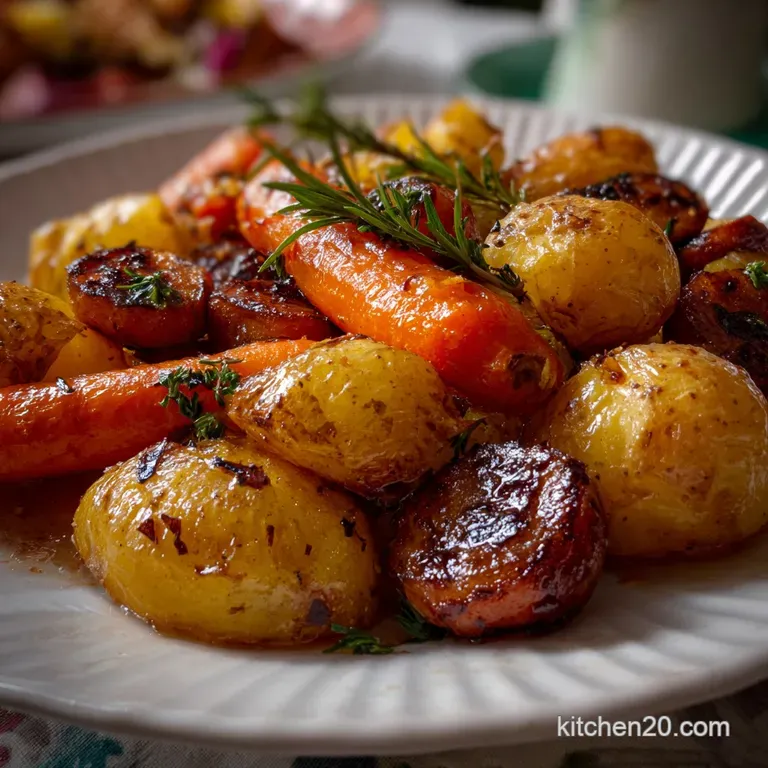
- Effort/Time: 1 hour total-time / Low-intensity assembly
- Flavor Hook: Sweet-savory honey-mustard snap with a rosemary-woodland finish
- Perfect for: High-stakes holiday gatherings and make-ahead festive feasts
- Mastering the Ultimate Christmas Side Dish with Roasted Potatoes
- The Culinary Physics Behind This Holiday Vegetable Medley
- Essential Metrics for Timing Your Festive Potato Roast
- The Alchemy of Umami: Selecting Your Elements
- Essential Tech for Achieving over High heat Thermal Conductivity
- Precision Assembly Protocol for a Seamless Christmas Service
- Avoiding Common Pitfalls and Troubleshooting Your Root Vegetables
- ⚗️ The Scaling Lab: The Physics of Quantity
- Common Myths
- Flavor Architecture and Reliable Substitution Frameworks
- Thermal Preservation and Sustainable Reheating Strategies
- Creative Presentation Methods for Your Connected Holiday Table
- Recipe FAQs
- 📝 Recipe Card
Mastering the Ultimate Christmas Side Dish with Roasted Potatoes
There is nothing more demoralizing than pulling a sheet pan from the oven only to find a grey, soggy mass of starch instead of the golden, glass crusted treasures you promised your guests.
I remember one specific Christmas Eve where I crowded two pounds of potatoes onto a single small pan, effectively steaming them in their own moisture for 45 minutes; the result was a limp, flavorless tragedy that cost me both my pride and the centerpiece of our dinner.
We’ve all been there rushing the prep, ignoring the physics of heat distribution, and ending up with vegetables that look more like a technical failure than a festive triumph.
I spent years chasing the "perfect" crunch, destroying countless batches of carrots by over glazing too early, which led to carbonized sugar rather than caramelization. It wasn't until I started treating my oven as a thermal platform for starch gelatinization that the game changed.
This Christmas Side Dish with Roasted Potatoes isn't just a recipe; it's a revolutionizing approach to how we handle root vegetables during the high pressure holiday window. We are moving away from guesswork and toward a connected system of timing and temperature.
The secret to this success isn't a "magic" ingredient, but rather the science of starch dehydration and the Maillard reaction. By quartering our 2 lbs Yukon Gold potatoes to maximize surface area and introducing the honey mustard glaze only after the initial moisture evaporation, we create a structural masterpiece.
The apple cider vinegar provides the necessary acidic "bright line" to cut through the 0.25 cup honey, ensuring the final result is sophisticated rather than cloying. Let’s look at how we build this platform for flavor.
The Culinary Physics Behind This Holiday Vegetable Medley
- Starch Gelatinization: High heat forces the potato's internal moisture to swell starch granules, creating a creamy, velvety interior texture.
- Surface Dehydration: Initial roasting without the glaze allows water to escape the vegetable skins, paving the way for a crisp, shattering crust.
- The Maillard Reaction: Amino acids in the Dijon mustard react with the sugars in the honey under heat, creating complex, mahogany colored flavor compounds.
- Acidic Balancing: The 1 tsp apple cider vinegar prevents "flavor fatigue" by breaking down the heavy sugar molecules on the palate.
Essential Metrics for Timing Your Festive Potato Roast
To ensure your Christmas Side Dish with Roasted Potatoes integrates perfectly with your main course, adhere to these three precision checkpoints:
- Thermal Floor: Ensure your oven reaches a true 425°F (218°C) before the Lodge Sheet Pan enters the chamber to prevent "soaking" the vegetables in lukewarm oil.
- The Glaze Window: Apply the honey mustard mixture only after 25 minutes of roasting; adding it earlier results in burnt sugars and bitter notes.
- Final Moisture Check: The 1 lb carrots are done when they provide zero resistance to a paring knife, usually at the 45 minutes mark.
| Method | Texture Outcome | Speed | Pro Connectivity |
|---|---|---|---|
| Oven Roast | Shattering exterior, velvety center | 45 minutes | Best for large batches (8 servings) |
| Stovetop Sear | Dense, browned edges, firm core | 20 minutes | High risk of internal rawness; requires constant monitoring |
The Alchemy of Umami: Selecting Your Elements
Selecting your components is the first step in revolutionizing your side dish game. For this Christmas Side Dish with Roasted Potatoes, we aren't just buying groceries; we are sourcing chemical building blocks that interact to create a specific sensory outcome.
| Ingredient | Chemical/Physical Role (Science) | The Pro Secret (Why This Matters) |
|---|---|---|
| 2 lbs Yukon Gold Potatoes | High starch-to-sugar ratio | Why this? Medium starch levels provide the best balance of structure and creaminess. |
| 0.25 cup Honey | Hygroscopic sweetener | Why this? Traps moisture while caramelizing into a tacky, glass like glaze. |
| 1 tsp Apple Cider Vinegar | Acetic acid catalyst | Why this? Brightens the earthiness of the rosemary and cuts through fat. |
| 2 tbsp Maille Dijon Mustard | Emulsifier and pungent sharpener | Why this? Prevents the oil and honey from separating during the final roast. |
- 1 lb Carrots: Cut these on 2 inch diagonals. This "Rangiri" cut increases the surface area for the honey to cling to.
- 3 tbsp Extra Virgin Olive Oil: Use a high-quality brand like Lucini. It acts as the primary heat transfer medium.
- 2 sprigs Fresh Rosemary: Finely chopped. The oils in rosemary are fat-soluble, so they infuse the olive oil during the roast.
- 0.5 tsp Ground Cinnamon & 0.25 tsp Smoked Paprika: These provide a warm, "wood fire" aromatic profile that connects the dish to the holiday season.
- 2 tbsp Unsalted Butter: Melted. The milk solids in the butter provide additional browning (Maillard reaction) that oil alone cannot achieve.
Essential Tech for Achieving over High heat Thermal Conductivity
To master the Christmas Side Dish with Roasted Potatoes, you need tools that can handle the thermal mass of three pounds of vegetables without losing heat.
- Lodge Cast Iron Baking Sheet or Heavy Nordic Ware Rimmed Sheet Pan: Thin pans warp and create "hot spots" that burn the honey glaze.
- Large Stainless Steel Mixing Bowl: Necessary for ensuring every quartered potato is fully encapsulated in the 3 tbsp extra virgin olive oil.
- Silicone Basting Brush: Crucial for applying the 0.25 cup honey and Dijon mixture evenly in the final 20 minutes.
- Parchment Paper or Silpat: While optional, this prevents the honey from bonding to your pan, making cleanup a zero stress experience.
Precision Assembly Protocol for a Seamless Christmas Service

Follow these steps exactly to ensure your Christmas Side Dish with Roasted Potatoes achieves its maximum potential. Every action is designed to manipulate the moisture and temperature of the vegetables.
- Preheat the oven to 425°F. Note: Critical for immediate surface dehydration.
- Toss the 2 lbs Yukon Gold potatoes and 1 lb carrots with 3 tbsp olive oil, 1 tsp sea salt, and 0.5 tsp black pepper. Note: Salt draws out initial surface moisture via osmotic pressure.
- Spread the vegetables across the Nordic Ware pan in a single layer until no pieces are overlapping.
- Roast for 25 minutes until the potato edges turn pale golden and a slight sizzle is audible.
- Whisk together 0.25 cup honey, 2 tbsp Dijon mustard, 2 tbsp melted butter, 0.5 tsp cinnamon, 0.25 tsp smoked paprika, and 1 tsp apple cider vinegar in a small bowl.
- Drizzle the glaze over the par-roasted vegetables and toss with a spatula to coat. Note: Introducing sugars now prevents early carbonization.
- Sprinkle the finely chopped rosemary sprigs over the top.
- Roast for an additional 20 minutes until the glaze bubbles into a mahogany lacquer and the rosemary smells nutty.
- Rest the pan for 5 minutes on a wire rack. Note: Allows the glaze to set into a "shatter crisp" state.
- Serve immediately until the internal steam begins to soften the crust.
Chef's Note: If you're looking for another texture to add to your spread, these potatoes share a similar starch management philosophy with my Roasted Fingerling Potatoes recipe.
Avoiding Common Pitfalls and Troubleshooting Your Root Vegetables
Why Your Potatoes Are Mushy
When potatoes turn out soft rather than crisp, it's usually due to "crowding." When vegetables are too close, the evaporating water has nowhere to go, creating a steam tent. This prevents the surface temperature from rising above 212°F, the point where the Maillard reaction begins.
| Problem | Root Cause | The Fix | Pro Protocol |
|---|---|---|---|
| Limp Texture | Pan Crowding | Use two pans | Rotate pans halfway through to normalize heat |
| Bitter/Burnt Glaze | Early Glazing | Apply glaze at T-20 mins | Check oven calibration with a thermometer |
| Uneven Cooking | Irregular Cuts | Uniform 2 inch diagonals | Use a ruler until your "eye" is trained |
Why the Honey Glaze Breaks
If you see pools of oil separated from the honey, your emulsion has failed. The Dijon mustard acts as the bridge here. If you omit it, the 0.25 cup honey will slide off the potatoes and burn on the pan. For another example of a stable glaze, you might enjoy the technique used in this Italian Christmas Cookies recipe.
⚗️ The Scaling Lab: The Physics of Quantity
When you double this Christmas Side Dish with Roasted Potatoes to 16 servings, the physics changes.
- Flavor Saturation: Do not double the salt to 2 tsp. Use 1.5 tsp instead. Spices and salt accumulate more intensely in larger volumes.
- Pan Crowding (The Maillard Killer): Doubling the 2 lbs of potatoes on one pan will drop the surface temperature of the metal by nearly 100°F. Mandatory: Use two separate large sheet pans on different racks.
- The Square Cube Law: A larger mass of vegetables will retain heat longer. If you are doubling the batch, pull the pans from the oven 5 minutes earlier than the 45 minute mark. The internal carry over heat will finish the cooking process on the counter.
- Evaporation Logic: With more vegetables in the oven, the ambient humidity increases. You may need to extend the final roasting stage by 5 10 minutes to achieve the same "shatter" effect.
Common Myths
Myth: You must peel Yukon Gold potatoes for the best roast. Truth: The skin of the Yukon Gold is incredibly thin and contains most of the potato's flavor. Leaving it on provides a structural "grip" for the honey mustard glaze.
Myth: Boiled potatoes roast faster and better. Truth: Par-boiling often introduces too much internal moisture, leading to a soggy Christmas Side Dish with Roasted Potatoes.
Roasting from raw at 425°F ensures the exterior dehydrates as the interior gelatinizes.
Flavor Architecture and Reliable Substitution Frameworks
Maintaining the "connected" nature of this recipe means knowing how to swap ingredients without breaking the chemical balance. If you're looking for a different profile, consider how these swaps affect the final roast.
| Original Ingredient | Substitute | Why It Works |
|---|---|---|
| Honey (0.25 cup) | Maple Syrup (Grade A) | Same sugar density; adds a woodsy, smoky profile |
| Dijon Mustard | Whole Grain Mustard | Provides a "pop" of texture but is less spicy |
| Apple Cider Vinegar | Lemon Juice | Provides the same pH level but with a citrusy top-note |
| Yukon Golds | Red Bliss Potatoes | Similar low-moisture profile; stays firm when quartered |
Easy Honey Glazed Carrots (Vegan Option)
To make this Christmas Side Dish with Roasted Potatoes vegan friendly, swap the 2 tbsp butter for a high-quality vegan butter substitute (like Miyoko's) and replace the honey with maple syrup. The chemistry of the "snap" remains identical because the sugar-to-acid ratio is maintained.
Roasted Carrots With Honey Mustard Glaze (Spicy Twist)
For a more innovative flavor profile, add 0.5 tsp of cayenne pepper or a teaspoon of chili crisp to the glaze. This creates a "Hot Honey" effect that pairs beautifully with the earthy rosemary.
Thermal Preservation and Sustainable Reheating Strategies
Storage: These vegetables will stay "fresh" in an airtight container for up to 4 days. However, the honey glaze is hygroscopic, meaning it will pull moisture from the air and lose its "shatter" over time.
Freezing: I do not recommend freezing this specific Christmas Side Dish with Roasted Potatoes. The cellular structure of the potato collapses when frozen, leading to a mealy, "water logged" texture upon thawing.
- The Oven Method (Best)
- Place leftovers on a sheet pan at 400°F for 10 minutes. This re-dehydrates the surface and restores the crunch.
- The Air Fryer Method
- 5 minutes at 380°F. This is the fastest way to "re-gelatinize" the interior while crisping the honey glaze.
- Avoid the Microwave
- The microwave excites water molecules, turning your crisp holiday side into a soggy mess in seconds.
💡 ZERO WASTE PHILOSOPHY: Don't discard the carrot peels or potato scraps! Transform: Toss peels in olive oil and salt, then roast at 400°F for 8 minutes. Science: These become "Root Veg Crisps." The high surface area-to-volume ratio makes them incredibly crunchy, while the concentrated sugars in the skin provide an intense umami hit. Much like the technique in this Roasted Red Peppers recipe, focusing on the skin maximizes flavor extraction.
Creative Presentation Methods for Your Connected Holiday Table
For a truly revolutionizing table, don't just dump these into a bowl. Presentation is the final step in the flavor platform.
- Festive Vegetarian Platter: Arrange the mahogany colored carrots in a radial pattern on a large white platter, nesting the golden potatoes in the center. Top with a few fresh, unchopped rosemary sprigs for a visual connection to the ingredients.
- The Traditional Holiday Roast: Serve these alongside a prime rib or a roasted turkey. The 1 tsp apple cider vinegar in the glaze acts as a palate cleanser for the heavy fats of the meat.
- Individual Service: In a more formal setting, place 3 potato quarters and 2 carrot diagonals on a small bed of arugula. The residual heat from the Christmas Side Dish with Roasted Potatoes will slightly wilt the greens, creating a sophisticated warm salad.
When you master the timing and the science of the glaze, this Christmas Side Dish with Roasted Potatoes becomes more than just a recipe it’s a reliable system for holiday success.
Trust the 425°F heat, respect the glaze timing, and your guests will be talking about these potatoes long after the tree comes down. Let's get roasting!

Recipe FAQs
What temperature should the oven be set to for optimal roasting?
425°F (218°C). This high initial heat rapidly evaporates surface moisture, which is critical for achieving a shattering crust instead of steaming the vegetables. Once the starch gelatinizes internally, the surface is ready for the Maillard reaction.
When should I add the honey mustard glaze?
After 25 minutes of initial roasting. Applying the sugar mixture too early causes the honey to carbonize and taste bitter before the internal starches fully hydrate. If you enjoyed controlling the timing of sugar application here, see how the same principle prevents scorching when tempering chocolate in our Italian Christmas Cookies recipe.
Why are my roasted potatoes coming out soggy instead of crisp?
Pan crowding prevents surface dehydration, causing steam to form. When vegetables are too close, the escaping water vapor cannot escape, effectively boiling them instead of roasting. This means the surface temperature never reaches the optimal level for crisping.
- Ensure a single, uncrowded layer
- Use two sheet pans if doubling the recipe
- Check oven calibration with a thermometer
Can I substitute the Yukon Gold potatoes with Russets?
Red Bliss potatoes are a better substitute for texture control. Russets have a very high starch content, which can lead to a fluffy interior that breaks apart easily under the heavy glaze. Red Bliss maintain better structure.
Myth: Par-boiling the potatoes makes them cook faster.
Myth: Par-boiling the potatoes makes them cook faster. Reality: Introducing pre-cooked water into the potato structure guarantees a mealy, sodden texture upon final roasting. Stick to dry, raw vegetables for maximum crust development.
What is the benefit of using unsalted butter instead of salted?
Unsalted butter allows for precise salt measurement. The sodium content in salted butter varies widely between brands, making it impossible to standardize the final flavor profile alongside the Dijon mustard. Unsalted butter ensures salt levels are controlled via added sea salt only.
Myth: It is safe to freeze these roasted vegetables for later use.
Myth: It is safe to freeze these roasted vegetables for later use. Reality: The cellular structure of cooked potatoes collapses when frozen, resulting in a mushy texture upon reheating. If you enjoy this sweet tart flavor balance, try making our Cranberry Sauce Recipe: The Proper make-ahead Version with Orange Zest instead, which freezes perfectly.
Honey Glazed Christmas Potatoes

Ingredients:
Instructions:
Nutrition Facts:
| Calories | 221 kcal |
|---|---|
| Protein | 3.2 g |
| Fat | 8.7 g |
| Carbs | 34.1 g |
| Fiber | 4.1 g |
| Sugar | 12.2 g |
| Sodium | 338 mg |
