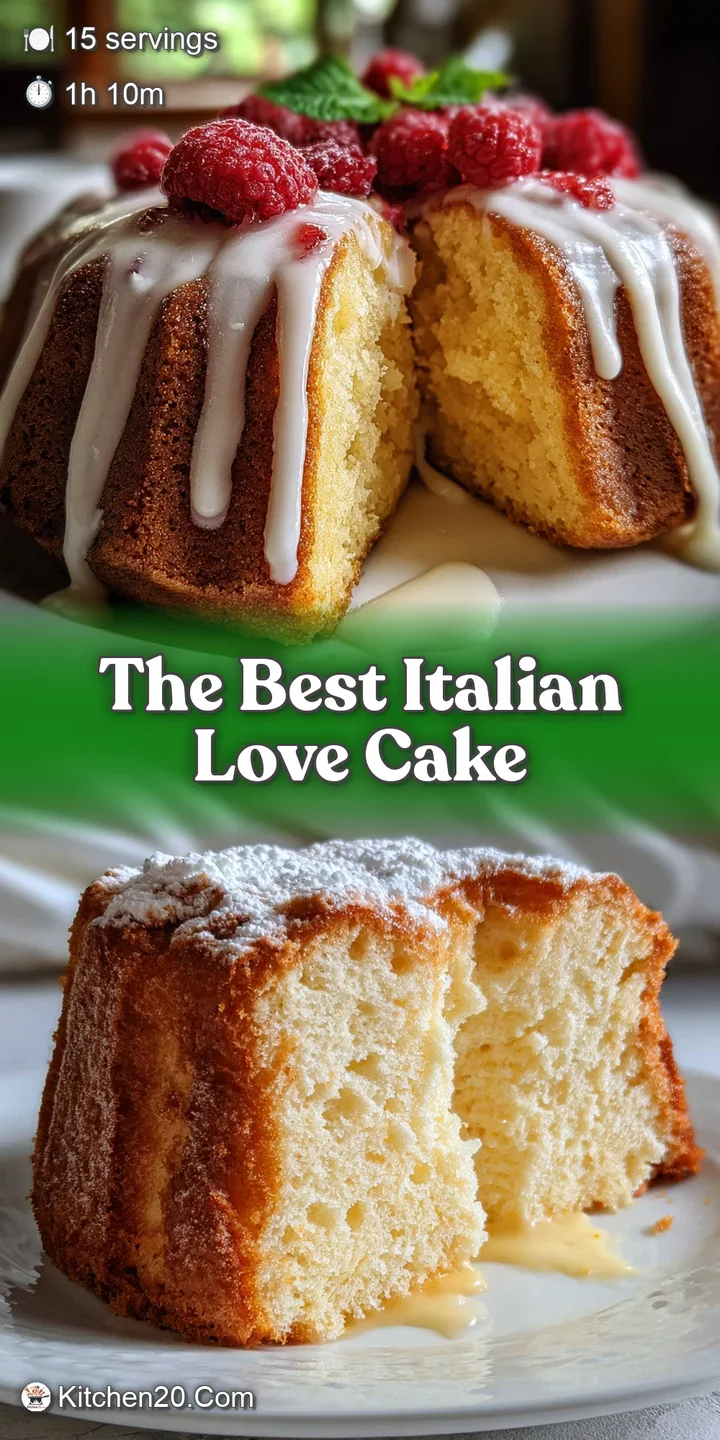
The Best Italian Love Cake
- Time: Active 20 minutes, Passive 50 minutes, Total 1 hours 10 mins
- Flavor/Texture Hook: A shatter crisp top layer hiding a silky, cloud like ricotta custard.
- Perfect for: Holiday gatherings, Sunday dinners, or when you need a "magic" center piece.
- Secrets to Mastering The Best Italian Love Cake
- Precision Metrics for Success
- Science of Flavor Components
- Essential Components and Substitutions
- Required Tools for Results
- Detailed Layering Process
- Fixes for Texture Issues
- Flour and Dairy Swaps
- Freezing and Leftover Ideas
- Ideal Presentation Ideas
- Recipe FAQs
- 📝 Recipe Card
Secrets to Mastering The Best Italian Love Cake
Have you ever put something in the oven and felt like you were performing a science experiment? That is exactly how I felt the first time I whipped up this dessert. You pour a heavy ricotta mixture right on top of a chocolate cake batter, and you're certain it's going to be a muddy disaster.
But then, the magic happens. While you're chatting and smelling that deep cocoa aroma, the layers physically swap places. It is a total platform for conversation at any dinner party, and honestly, seeing my friends' faces when they cut into it is half the fun.
I used to be a bit of a purist, thinking everything had to be from scratch. Then I realized that for this specific recipe, the cake mix provides a specific structural stability that is hard to replicate without a lot of fuss. We're talking about a connected system of ingredients here. I remember making this for a neighborhood block party after serving my favorite Italian Wedding Soup recipe, and people were hovering over the kitchen island waiting for the big reveal. It’s one of those dishes that builds community because everyone wants to know how you did it.
The real beauty here is that it’s nearly impossible to mess up if you follow the weights and measures. It’s not just a cake, it’s a revolutionizing way to think about density.
You get this moist, dark chocolate foundation and a light as-air ricotta topping that feels like it belongs in a high end bakery. Trust me on this, once you see those layers invert, you’ll be just as obsessed as I am.
Precision Metrics for Success
The Science of Why it Works: This recipe relies on "Mass Displacement" where the heavier, moisture rich ricotta mixture sinks through the aerated, lighter cake batter during the initial bake.
As the eggs in the ricotta layer reach 160°F, they undergo "Protein Denaturation," setting the custard firmly while the cake rises around it.
- Density Gradient: The air bubbles in the cake mix act as tiny flotation devices, pushing the cake upward while gravity pulls the dense cheese downward.
- Emulsification: Using whole milk ricotta ensures enough fat to bond with the egg proteins, creating a velvety crumb rather than a grainy texture.
- Syneresis Control: Draining the ricotta prevents excess water from turning the bottom layer into a soggy mess during the cooling phase.
- Thermal Lag: The pudding topping acts as an insulator, keeping the ricotta layer moist and preventing it from drying out after the bake.
| Method | Cook Time | Texture Outcome | Best For |
|---|---|---|---|
| Standard Oven | 50 minutes | Fluffy cake, firm custard | Classic results and clean layers |
| Toaster Oven | 45 minutes | Crispier edges, softer center | Small batches or quick cravings |
| Convection | 40 minutes | Very even rise, drier top | Pro level appearance and speed |
When choosing your method, remember that the oven's airflow changes the way the "inversion" happens. I usually stick to the standard oven at 350°F because it gives the layers enough time to migrate without the cake setting too quickly.
If the cake sets before the ricotta sinks, you'll end up with a marbled look instead of distinct layers.
Science of Flavor Components
Understanding what each part does helps you avoid those "mistake I once made" moments. For instance, the oil in the cake mix isn't just for fat, it's about staying power.
| Component | Science Role | Pro Secret |
|---|---|---|
| 32 oz Ricotta | Structural Base | Drain for 2 hours to ensure a velvety, non weepy custard layer. |
| 7 Eggs (Total) | Binding Agent | Use room temperature eggs to ensure they emulsify without breaking the fats. |
| Chocolate Pudding | Moisture Barrier | Acts as a stabilized mousse that prevents the cake from drying out. |
Essential Components and Substitutions
Using the right elements is like building a stable platform for your flavor profile. I always go for the full fat versions because the fat carries the vanilla and cocoa notes across your palate more effectively.
- 1 box (15.25 oz) chocolate cake mix: Provides the structure. Why this? The leaveners are precisely balanced for the inversion.
- Substitute: gluten-free chocolate cake mix (works surprisingly well).
- 32 oz whole milk ricotta cheese: The creamy heart of the dish. Why this? Higher fat content means a smoother, more decadent mouthfeel.
- Substitute: Mascarpone mixed with a little Greek yogurt for tang.
- 1 cup water or brewed coffee: Hydrates the cocoa. Why this? Coffee intensifies the chocolate notes without adding coffee flavor.
- Substitute: Whole milk for a more mellow, milky chocolate taste.
- 0.75 cup granulated sugar: Sweetens the ricotta. Why this? Fine grains dissolve quickly into the cheese without grit.
- Substitute: Honey (use 0.5 cup), but note it will brown faster.
- 8 oz whipped topping: The airy finish. Why this? It stays stable in the fridge unlike fresh whipped cream.
- Substitute: Stabilized whipped cream with a bit of gelatin.
| Original Ingredient | Substitute | Why It Works |
|---|---|---|
| Vegetable Oil (0.5 cup) | Melted Butter (0.5 cup) | Adds a rich, dairy forward flavor. Note: Result will be slightly denser. |
| Whole Milk Ricotta | Part Skim Ricotta | Reduces calories. Note: Texture will be significantly grainier and less silky. |
| Chocolate Pudding Mix | Vanilla Pudding Mix | Creates a "Black and White" visual contrast. |
Making sure your ricotta is drained is the biggest tip I can give you. If you skip this, the extra whey will leak out and make the cake layer mushy. I learned that the hard way during a holiday dinner where the cake looked beautiful but tasted like a wet sponge.
Required Tools for Results
You don't need a high tech lab, but a few specific pieces of gear make this much easier. A standard 9x13 inch baking pan is the workspace for this revolutionizing dessert.
- Stand Mixer: Using a KitchenAid or similar mixer ensures the ricotta and eggs are perfectly connected without over aerating.
- Fine Mesh Strainer: Essential for draining the ricotta cheese to get that velvety finish.
- Offset Spatula: This makes spreading the final pudding and whipped topping layers much smoother for a clean look.
- Rubber Spatula: You need this to fold the cake batter gently so you don't lose all the air bubbles.
Detailed Layering Process
Right then, let's crack on. This is where the magic happens. Don't overthink the "top to bottom" logic, just follow the steps and let the heat do the work.
- Preheat and Prep. Set your oven to 350°F and grease a 9x13 inch baking pan thoroughly. Note: Using butter and a light dusting of cocoa powder prevents sticking better than flour.
- Mix the Base. Combine the 15.25 oz chocolate cake mix, 3 eggs, 0.5 cup oil, and 1 cup water (or coffee). Beat until smooth and glossy.
- Level the Batter. Pour the cake batter into the prepared pan, smoothing it into the corners.
- Prepare the Cheese. In a separate bowl, whisk 32 oz drained ricotta, 0.75 cup sugar, 4 eggs, and 1 tsp vanilla. Mix until no large lumps remain.
- Apply the Ricotta. Gently pour or spoon the ricotta mixture over the raw cake batter. Spread it carefully to the edges.
- Initial Bake. Slide into the oven for 50 minutes until a toothpick comes out clean from the center.
- The Cool Down. Let the cake cool completely in the pan for at least 1 hours. Note: This is crucial for the layers to fully set and stabilize.
- Whisk the Topping. Mix 3.9 oz chocolate pudding with 1 cup cold whole milk. Whisk for 2 minutes until thickened.
- Fold the Mousse. Gently fold the 8 oz whipped topping into the pudding until it looks like a silky mousse.
- Final Assembly. Spread the mousse over the cooled cake. Chill for at least 4 hours before slicing.
Chef's Tip: If you want to take this up a notch, add a pinch of espresso powder to the ricotta mixture. It acts as a platform to boost the chocolate flavor in the layer below.
Fixes for Texture Issues
Even the best of us hit a snag sometimes. If your cake doesn't look like the photos, it’s usually a matter of temperature or moisture.
The Layer Blur Effect
If your layers didn't swap and just stayed mixed together, your cake batter was likely too thin or you over mixed the two layers when pouring. The cake batter needs to be thick enough to support the ricotta for a few minutes before the heat starts the movement.
Excessive Weeping or Sogginess
Seeing liquid at the bottom of the pan? This is almost always due to the ricotta cheese. If it isn't drained, the water has nowhere to go but down into the cake.
Cracked Surface After Baking
A large crack in the center usually means the oven was too hot or the cake stayed in too long. The eggs in the ricotta layer expand and then collapse. It’s okay, though, because the mousse topping hides everything!
| Problem | Root Cause | Solution |
|---|---|---|
| Grainy ricotta layer | Under beaten eggs/cheese | Beat cheese and eggs for at least 3 minutes until very smooth. |
| Cake is dry | Over baked | Start checking for doneness 5 minutes early; use a digital thermometer (200°F). |
| Mousse is runny | Milk was too warm | Ensure milk is ice cold before mixing with the instant pudding. |
Common Mistakes Checklist
- ✓ Always drain your ricotta for at least 2 hours (overnight is better).
- ✓ Do not use "light" or "low-fat" ricotta; the water content is too high.
- ✓ Ensure your eggs are at room temperature for a better emulsion.
- ✓ Let the cake cool entirely before adding the topping, or it will melt.
- ✓ Use a clear glass pan if you want to watch the layers swap in real time.
Flour and Dairy Swaps
Scaling this up for a crowd or down for a small family is pretty straightforward. Just remember that the pan size dictates the thickness of the layers, which affects the "swap."
- Downscaling (Half Batch): Use an 8x8 pan. Reduce the bake time by about 10 minutes. For the eggs, use 2 for the cake and 2 for the ricotta.
- Upscaling (Double Batch): Use two 9x13 pans rather than one giant one. The heat needs to reach the center of the cake evenly to trigger the inversion.
- Baking Adjustments: If you double the recipe, don't just double the time. Keep the time the same but use two separate oven racks, swapping them halfway through.
| Servings | Pan Size | Cake Mix | Ricotta Amount |
|---|---|---|---|
| 8 People | 8x8 square | 0.5 box | 16 oz |
| 15 People | 9x13 rectangle | 1 full box | 32 oz |
| 30 People | Two 9x13 pans | 2 full boxes | 64 oz |
If you are looking for another creamy, dairy heavy delight that uses similar stabilization techniques, you should check out my Tiramisu recipe. It uses mascarpone but hits those same silky notes.
Freezing and Leftover Ideas
Storing this cake properly is the key to keeping that "shatter" texture on top and the velvety middle. Honestly, don't even bother leaving it on the counter; the dairy needs the cold.
- Storage: Keep the cake in the fridge, covered tightly with plastic wrap or a lid. It will stay fresh and delicious for up to 4 days.
- Freezing: You can freeze the baked and cooled cake before adding the pudding topping. Wrap it in double foil. It lasts 2 months. Thaw in the fridge before adding the final topping.
- Zero Waste: If you have leftover ricotta that didn't make it into the cake, whisk it with a little honey and lemon zest for a quick morning spread on toast. If you have cake scraps, crumble them into vanilla ice cream for a "Love Cake" sundae.
Ideal Presentation Ideas
When you're ready to serve, the way you slice this matters. Use a sharp knife dipped in hot water and wiped dry between every single cut. This ensures those beautiful, distinct layers stay sharp and clean.
I love serving this with a few fresh raspberries on top. The tartness of the berries cuts through the richness of the ricotta beautifully. If it's a special occasion, a light dusting of high-quality cocoa powder or some shaved dark chocolate over the whipped topping adds that professional touch.
You could even go for a "Sicilian style" by adding a few crushed pistachios on top for a salty crunch. It’s all about creating those connected flavors that make people keep coming back for seconds. This cake has truly been revolutionizing for my dessert rotation, and I hope it becomes a staple in yours too!
Recipe FAQs
Is it possible for the cake layers to not swap places?
Yes, this can happen. If the cake batter is too thin or if the two layers are mixed during pouring, the inversion might not occur correctly, leading to a marbled appearance instead of distinct layers.
What causes the ricotta layer to weep or be soggy?
This is usually due to the ricotta. If the ricotta cheese is not properly drained, its excess water will leak into the cake layer, making it soggy and wet.
Can I use part skim ricotta cheese instead of whole milk?
No, it's not recommended for texture. While it reduces fat, part skim ricotta has higher water content and a coarser texture, which will result in a grainier and less silky custard layer.
How do I prevent the top of the cake from cracking?
Bake at the correct temperature and time. A cracked surface typically means the oven was too hot or the cake baked too long, causing the eggs in the ricotta layer to expand and then collapse. The mousse topping will hide minor cracks.
What's the best way to store leftovers?
Refrigerate it tightly covered. The cake should be stored in the fridge for up to 4 days to maintain its texture. Never leave it at room temperature due to the dairy content.
Can I make this gluten-free or dairy-free?
Yes, with adjustments. A gluten-free chocolate cake mix works well for the base. For a dairy-free version, you'd need to explore substitutes for ricotta and potentially the whipped topping, which can alter the classic texture significantly, similar to how substituting milk impacts the creaminess in How to Make Alfredo Sauce: The Best Homemade Creamy Delight.
How can I make this cake for a larger crowd?
Scale up using two pans. For a double batch, bake in two separate 9x13 inch pans rather than one very large one. This ensures the heat distributes evenly to achieve the layer inversion, much like managing heat distribution in a large batch of Easy Traditional Lasagna Recipe No Fuss All Flavor.
Italian Love Cake
Ingredients:
Instructions:
Nutrition Facts:
| Calories | 424 kcal |
|---|---|
| Protein | 11.6 g |
| Fat | 23.7 g |
| Carbs | 45.1 g |
| Fiber | 1.2 g |
| Sugar | 34.8 g |
| Sodium | 485 mg |
