Korean Bbq Beef Rice Stack Recipe
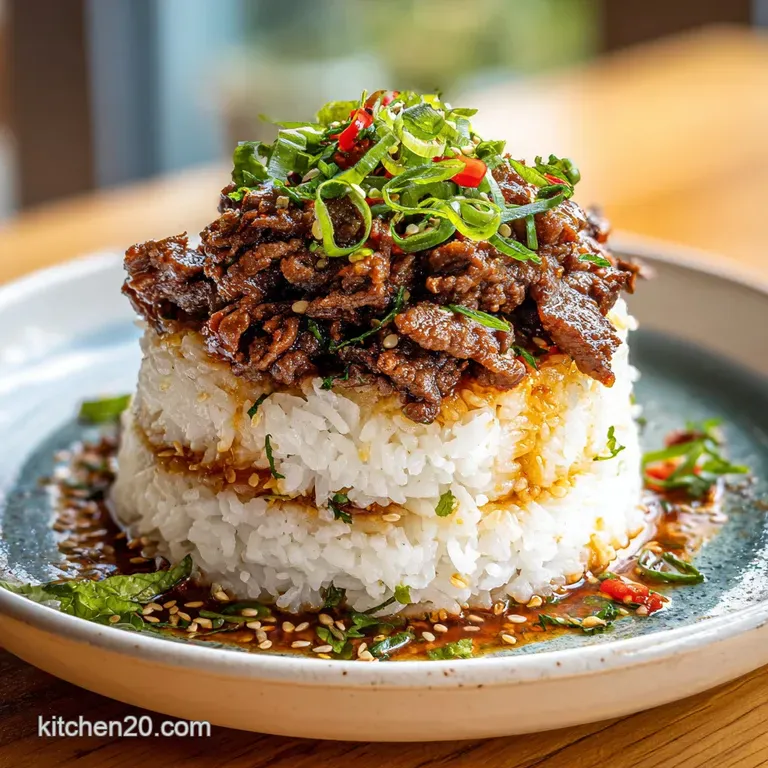
- Time: Active 10 mins, Passive 10 mins, Total 20 mins
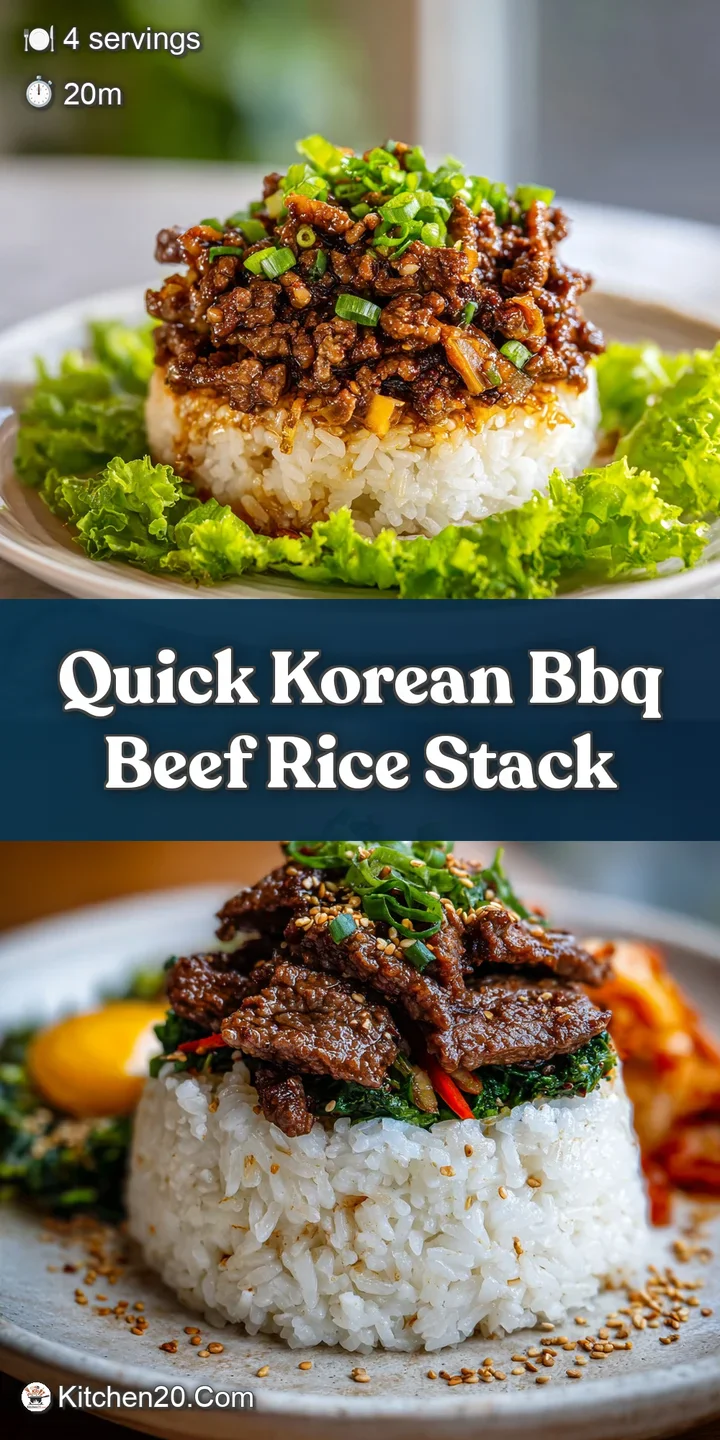
- Flavor/Texture Hook: Velvety seared beef against a zesty, crunchy cucumber slaw
- Perfect for: Impressing a date on a budget or a high speed weeknight dinner
- Constructing Your Very Own Korean BBQ Beef Rice Stack Masterpiece
- The Chemistry of the Char and Structural Rice Integrity
- Precision Metrics for the Perfect 20 Minute Dinner Sesh
- Smart Budget Essentials for a High End Tasting Experience
- The Essential Coding Tools for Your Kitchen Countertop Setup
- Step by Step Guide to Seared Beef and Layered Rice
- Avoiding Common Pitfalls for a Non Collapsing Rice Stack
- Creative Fusion Twists to Customize Your Beef Rice Stack
- Debunking Kitchen Myths About Korean BBQ
- Sustainable Storage Solutions and Zero Waste Leftover Strategies
- Plating Techniques for the Ultimate Visual and Sensory Impact
- High in Sodium
- Recipe FAQs
- 📝 Recipe Card
Constructing Your Very Own Korean BBQ Beef Rice Stack Masterpiece
Picture this: the kitchen is filled with that unmistakable, sweet savory aroma of soy sauce hitting a hot pan. You hear that fierce sizzle as the paper thin ribbons of sirloin curl up and caramelize in seconds.
I first stumbled onto this idea when I was trying to recreate a fancy $30 "deconstructed" bowl I saw on social media, but I only had twenty bucks in my pocket and about fifteen minutes before my hunger became a problem.
I grabbed a simple measuring cup, packed some seasoned rice into it, and flipped it over honestly, it changed how I look at leftovers forever.
The beauty of the Korean BBQ Beef Rice Stack isn't just about how it looks on the plate; it's about the architecture of the bite. You’ve got the warm, slightly tacky rice acting as the foundation, topped with cold, snappy cucumbers and then crowned with that hot, umami rich beef.
It’s a literal tower of flavor that solves the "soggy bowl" problem by keeping the wet ingredients layered. We’ve all made the mistake of mixing everything too early and ending up with a mushy mess. This stack keeps every texture distinct until the moment your fork breaks through the layers.
We aren't just making a meal here; we’re coding a better way to eat. Think of it as a fusion of traditional flavors and modern, fast paced efficiency. You get the depth of a slow marinated BBQ but with the "quick bites" philosophy that fits into a busy lifestyle.
Trust me, once you see that sriracha mayo drip down the side of a perfectly formed rice cylinder, you’ll never go back to just tossing everything into a bowl haphazardly.
The Chemistry of the Char and Structural Rice Integrity
The Starch Vinegar Binding Principle: Adding rice vinegar to warm jasmine rice creates a light chemical reaction that makes the starch tacky enough to hold its shape without becoming a mushy paste. This ensures your Korean BBQ Beef Rice Stack stands tall without collapsing before it hits the table.
The Maillard Flash Sear: Slicing the beef paper thin increases the surface area to volume ratio, allowing for near instant caramelization of the brown sugar and soy sauce. This creates a deeply savory crust in under two minutes, preventing the meat from becoming tough or rubbery.
| Meat Cut | Thickness | Internal Temp | Rest Time | Visual Cue |
|---|---|---|---|---|
| Sirloin/Ribeye | 2 mm | 145°F (63°C) | 2 mins | Edges are dark brown and curled |
| Ground Beef | N/A | 160°F (71°C) | 1 min | No pink remains, fat is rendered |
| Flank Steak | 3 mm | 145°F (63°C) | 4 mins | Deep sear with slight pink center |
Choosing the right method for your Korean BBQ Beef Rice Stack depends on your budget and how much time you've got to spend at the cutting board. While paper thin sirloin gives that authentic texture, high-quality ground beef is a fantastic budget friendly shortcut that still delivers massive umami.
Precision Metrics for the Perfect 20 Minute Dinner Sesh
| Component | Science Role | Pro Secret |
|---|---|---|
| Brown Sugar | Caramalization | Use dark brown sugar for more molasses depth and a stickier glaze. |
| Rice Vinegar | Acid Balance | Toss with the rice while it's still steaming to ensure even absorption. |
| Gochugaru | Controlled Heat | Toast the flakes in the oil for 30 seconds to release fat soluble flavors. |
| Toasted Sesame Oil | Aromatic Fat | Add this at the very end of cooking to preserve the delicate volatile oils. |
If you’re looking for a more traditional comfort meal that takes its time, you might prefer the The Winter Warmer recipe for those colder nights. But for today, we are keeping things fast, fresh, and visually stunning.
Smart Budget Essentials for a High End Tasting Experience
- 1 lb Sirloin or Ribeye: Sliced paper thin against the grain. Why this? Sirloin is a leaner, more affordable alternative to ribeye that still sears beautifully.
- 3 cloves garlic: Minced. Why this? Fresh garlic provides a sharp punch that bottled versions simply lack.
- 1 tbsp fresh ginger: Grated. Why this? Adds a bright, zesty top note to cut through the heavy soy sauce.
- 1/4 cup low sodium soy sauce: The salty backbone. (Substitute: Tamari for gluten-free).
- 2 tbsp brown sugar: For that classic BBQ sweetness. (Substitute: Honey or maple syrup).
- 1 tbsp toasted sesame oil: Essential for that nutty aroma.
- 1 tsp Gochugaru (Korean chili flakes): For a smoky, mild heat. (Substitute: Red pepper flakes).
- 3 cups cooked Jasmine rice: Must be warm for stacking. Why this? Jasmine has the perfect balance of stickiness and fluffiness for structural integrity.
- 1 tsp rice vinegar: Added to the rice.
- 1/2 tsp toasted sesame seeds: For a slight crunch.
- 1/4 tsp sea salt: To season the rice layers.
- 1 English cucumber: Thinly sliced for the "slaw" layer.
- 1 large carrot: Shredded for color and crunch.
- 1 ripe avocado: Sliced. Why this? Provides the "velvety" fat needed to balance the acidic slaw.
- 2 tbsp rice vinegar: For the quick cucumber pickle.
- 1 tsp honey: To balance the cucumber dressing.
- 1 tbsp neutral oil: For over high heat searing.
- 2 tbsp green onions: Sliced on a bias.
- 4 tbsp sriracha mayo: The "glue" that brings it all together.
The Essential Coding Tools for Your Kitchen Countertop Setup
To get that perfect "stack" look, you don't need fancy molds. A simple 1 cup measuring cup or a small ramekin works perfectly. You’ll also want a heavy bottomed skillet cast iron is king here because it retains heat like a pro.
When that thin beef hits the pan, we want the temperature to stay high so we get a sear, not a steam.
Chef's Tip: To get those "paper thin" slices of beef without losing your mind, put the meat in the freezer for about 15-20 minutes before cutting. It firms up the fat and muscle, making it easy to shave off translucent slices with a sharp knife.
If you enjoy the technique of searing meat for fast flavor, you’ll see similar principles applied in The Classic Beef recipe, though the flavor profile there is much more European. For this rice stack, we want that over high heat, rapid fire Asian fusion vibe.
step-by-step Guide to Seared Beef and Layered Rice
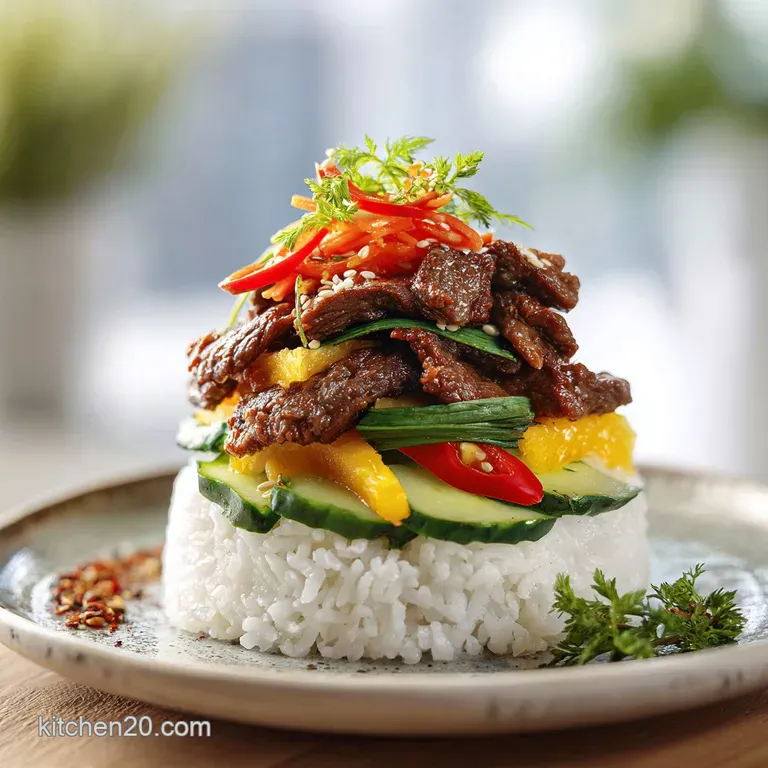
- Prep the beef. Slice the 1 lb sirloin into thin ribbons and toss with minced garlic, ginger, soy sauce, brown sugar, sesame oil, and Gochugaru. Note: Marinating even for 5 minutes makes a difference.
- Season the rice. Fold 1 tsp rice vinegar, sesame seeds, and 1/4 tsp salt into the 3 cups of warm Jasmine rice. Note: Keep the rice covered so it stays moist and tacky.
- Quick pickle the veg. Whisk 2 tbsp rice vinegar and 1 tsp honey, then toss with the sliced cucumber and shredded carrot.
- Heat the pan. Place 1 tbsp neutral oil in a large skillet over high heat until the oil shimmers and barely smokes.
- Flash sear the beef. Add the beef to the pan in a single layer. Cook for 2 minutes until edges are crispy and dark brown. Note: Don't crowd the pan; work in batches if needed.
- Prepare the mold. Lightly grease a 1 cup measuring cup with a drop of oil or water.
- Layer the base. Pack about 3/4 cup of the seasoned rice into the bottom of the cup, pressing down firmly with the back of a spoon.
- Add the veg. Place a layer of the cucumber and carrot mixture on top of the rice inside the cup.
- Flip and release. Carefully invert the cup onto the center of a plate. Tap the bottom until the rice stack slides out cleanly.
- Crown and garnish. Top the stack with a generous pile of seared beef, avocado slices, green onions, and a drizzle of sriracha mayo.
Avoiding Common Pitfalls for a Non Collapsing Rice Stack
Why is my beef tough?
If the beef feels chewy rather than velvety, you likely sliced it with the grain or cooked it too long. Thinly sliced sirloin only needs about 90 seconds to 2 minutes of contact with a hot pan. If it sits in its own juices and "stews," the protein fibers tighten up.
Always make sure the pan is screaming hot before the meat goes in.
My stack collapsed immediately!
This usually happens if the rice is too dry or too cold. Warm jasmine rice releases just enough starch to act as a natural adhesive. If you’re using leftover rice, microwave it with a splash of water first to revive that stickiness.
Also, make sure you really pack it into the measuring cup don't be afraid to give it a firm press!
| Problem | Root Cause | Solution |
|---|---|---|
| Beef is gray/steamed | Pan wasn't hot enough | Wait for oil to shimmer; cook in small batches. |
| Rice is falling apart | Too much vinegar or cold rice | Use warm rice and stick to the 1 tsp vinegar ratio. |
| Veggies are too watery | Cucumber seeds releasing liquid | Use an English cucumber and pat dry after slicing. |
Common Mistakes Checklist
- ✓ Pat the cucumber slices dry before pickling to keep the stack stable.
- ✓ Preheat your skillet for at least 3 minutes on high.
- ✓ Slice the beef across the grain to break up tough muscle fibers.
- ✓ Wet the measuring cup slightly before packing the rice to prevent sticking.
- ✓ Let the seared beef rest for 2 minutes before topping the stack so the juices don't soak the rice.
Creative Fusion Twists to Customize Your Beef Rice Stack
- If you want a low carb swap
- Replace the jasmine rice with cauliflower rice. Note: You'll need to add a teaspoon of cream cheese or mayo to the cauliflower rice to give it the "stick" needed for stacking.
- If you want more crunch
- Add a layer of crushed toasted seaweed (nori) between the rice and the beef.
- If you want a budget shortcut
- Use ground beef instead of sirloin. It sears faster and absorbs the marinade beautifully, much like the filling in our Wok This Way recipe.
| Servings | Beef Amount | Rice Amount | Prep Time |
|---|---|---|---|
| 2 People | 0.5 lb | 1.5 cups | 15 mins |
| 4 People | 1 lb | 3 cups | 20 mins |
| 6 People | 1.5 lbs | 4.5 cups | 30 mins |
Scaling this recipe for a crowd is easy, but remember that the "sear" is the most important part. If you try to cook 2 lbs of beef in one small pan, the temperature will drop and the meat will steam. Work in batches and keep the finished beef in a warm oven while you assemble the stacks.
Debunking Kitchen Myths About Korean BBQ
One huge misconception is that you need a specialized "Bulgogi" pan or a grill to get that authentic flavor. In reality, a heavy cast iron skillet actually provides more consistent surface contact, which leads to better caramelization (that Maillard reaction we talked about) than most home grills can achieve.
Another myth is that you have to marinate the beef overnight. Because we are slicing the meat so thin, the surface area is massive. The marinade penetrates almost instantly. A 10 minute soak while you prep the rice is more than enough to get that punchy Korean BBQ flavor into every fiber of the meat.
Sustainable Storage Solutions and Zero Waste Leftover Strategies
Storage: Keep the beef and rice in separate airtight containers in the fridge for up to 3 days. The cucumber slaw is best eaten fresh, as it will lose its "shatter" and become soggy after 24 hours.
Zero Waste: If you have leftover rice and beef but no veggies, turn it into a quick fried rice the next morning! Those carrot scraps and green onion ends? Throw them into a freezer bag for your next batch of homemade stock.
Even the leftover sriracha mayo can be used as a zingy spread for a sandwich or a dip for roasted potatoes.
Plating Techniques for the Ultimate Visual and Sensory Impact
When you're ready to serve your Korean BBQ Beef Rice Stack, think about color contrast. The vibrant orange of the carrots, the cool green of the avocado, and the deep, caramelized brown of the beef should all pop against each other.
Don't just dump the sriracha mayo on top use a small squeeze bottle or a spoon to create a zig zag pattern. It looks professional and ensures you get a bit of spice in every single bite.
Finish the plate with a final sprinkle of sesame seeds and some extra green onions sliced on a sharp bias (diagonal). It’s these small, coding like details that turn a simple 20 minute meal into something that feels like a total event.
Now, grab a fork (or chopsticks if you're feeling brave with a stack), break into that tower, and enjoy the sizzle of a job well done.
High in Sodium
920 mg of sodium per serving (40% of daily value)
The American Heart Association recommends limiting sodium intake to no more than 2,300mg per day for most adults.
Tips to Reduce Sodium in Your Korean Beef Bowl
-
Reduce/Omit Added Salt-25%
Eliminating or significantly reducing the 1/4 tsp of sea salt can greatly lower the sodium content. Taste the dish before adding any additional salt.
-
Low-Sodium Soy Sauce-20%
Even low-sodium soy sauce can still be high in sodium. Use it sparingly, reducing the 1/4 cup by half, or switch to a very low-sodium version.
-
Homemade Sriracha Mayo-15%
Sriracha mayo is often high in sodium. Make your own using low-sodium mayonnaise and a dash of sriracha (or Gochugaru) to control the sodium content. Reduce the amount used from 4 tbsp to 2 tbsp.
-
Unsalted Rice-10%
Ensure that the cooked Jasmine rice is prepared without any added salt. Even a small amount of salt in the rice can contribute significantly to the overall sodium content.
-
Control Honey Amount
Honey in the dressing can be reduced or omitted entirely, it does not impact the salt content but helps to control the overall sugar.
-
Flavor with Herbs & Spices
Enhance the flavor of the dish with sodium free herbs and spices like black pepper, garlic powder (in addition to fresh garlic), or onion powder to compensate for the reduced salt.
Recipe FAQs
Can I substitute the sirloin cut for a different type of beef?
Yes, high-quality ground beef works well. Since the flavor relies heavily on the marinade, ground beef absorbs the umami beautifully and is a great budget alternative for this fast cooking recipe.
How to ensure the rice stack holds its cylindrical shape firmly?
Pack warm jasmine rice tightly into a lightly oiled measuring cup. The warmth keeps the starch tacky, and pressing down firmly creates the necessary structural bond to prevent collapse when inverted.
Do I really need to cook the beef so quickly over high heat?
Yes, high heat is crucial for texture development. Cooking thinly sliced meat rapidly achieves the Maillard reaction for a savory sear without overcooking the interior; if you enjoy mastering rapid searing, see how this principle applies to a different flavor profile in our Proper Classic Homemade recipe for surface flavor development.
Is it true that using pre-cooked rice prevents the stack from holding shape?
No, cold pre-cooked rice is the problem, not the fact it's pre-cooked. You must reheat the rice with a splash of water until it is steaming and pliable again so the starches reactivate for good stacking.
How far in advance can I prepare the marinade for the beef?
You can marinate the sliced beef for up to 24 hours ahead of time. Because the meat is so thin, a 10-minute marinade is functionally sufficient, but a longer rest builds deeper flavor complexity.
What is the best way to keep the cucumber slaw from making the rice soggy?
Keep the slaw separate and place a dry rice layer barrier underneath. Layer the quick pickled cucumber and carrot directly on top of the packed rice, ensuring the beef is the last element added before serving.
Should I use low sodium soy sauce or regular soy sauce in the marinade?
We strongly recommend using low sodium soy sauce. This allows you to control the final salt level when adding the small amount of salt to the rice layer separately.
Korean Bbq Beef Rice Stack
Ingredients:
Instructions:
Nutrition Facts:
| Calories | 648 kcal |
|---|---|
| Protein | 31.6 g |
| Fat | 34.2 g |
| Carbs | 53.5 g |
| Fiber | 4.8 g |
| Sugar | 12.4 g |
| Sodium | 920 mg |
