Maple Glazed Roasted Sweet Potatoes Sticky Sweet and Sublime Sides
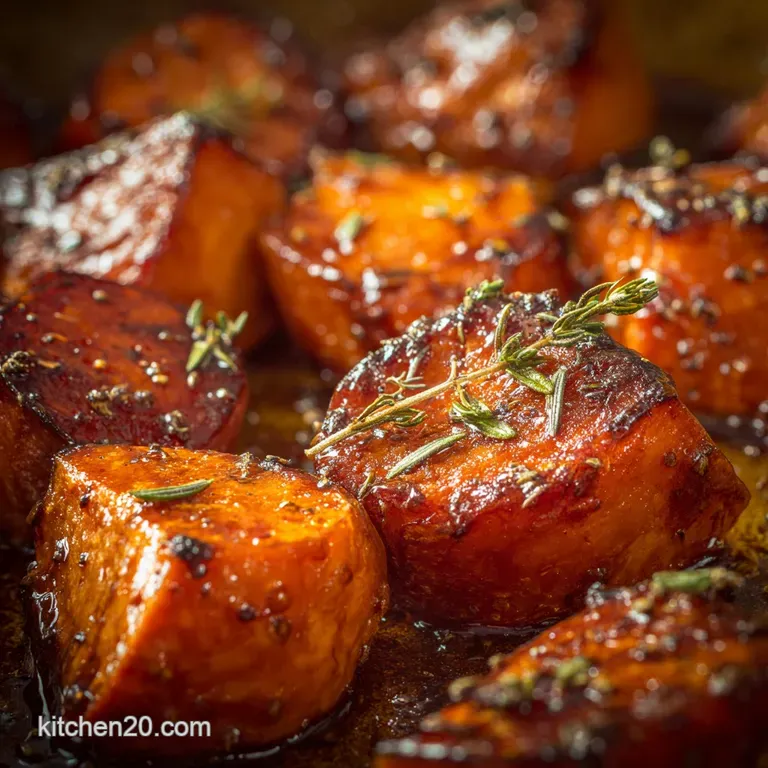
- The Secret to Perfect Maple Glazed Roasted Sweet Potatoes: Timing Is Everything
- Essential Components for the Sweet Potato Glaze and Roasting
- Step and by-Step Directions for Sticky, Sweet, and Sublime Results
- Troubleshooting and Pro Tips for Your Sweet Potato Glaze
- Make and Ahead Prep and Storage Guidelines
- Recipe FAQs
- 📝 Recipe Card
The Secret to Perfect Maple Glazed Roasted Sweet Potatoes: Timing Is Everything
Okay, look. If you’ve ever tried to make sweet potatoes that are both glossy and soft but ended up with blackened, asphalt and hard edges, you are not alone. I’ve been there.
I once ruined a perfectly good batch for a holiday potluck because I dumped all the pure maple syrup on before they even went into the oven. Total rookie move. The sugar hits the high heat too soon, burns, and tastes bitter. We are not doing that today.
The key to perfect Maple Glazed Roasted Sweet Potatoes isn't some fancy ingredient. It’s restraint. It’s timing. We need to let the potatoes roast, get tender, and develop those incredible, deep brown caramelised spots before we introduce the sugar.
Crispy Edges and the Non and Burnt Glaze Method
We are essentially employing a two and stage cooking process. Stage one is all about achieving interior softness and exterior crispness using oil, salt, and high heat (425°F/220°C). We want the Maillard reaction to kick in that scientific term for why things taste better when they brown.
Stage two is the quick, hot finish where the maple glaze is painted on and allowed just enough time to thicken into a sticky, sublime coating without turning into charcoal.
Why We Roast Before We Glaze
If you coat raw sweet potatoes in the glaze right away, the syrup essentially acts as a moisture barrier and a low and grade shield against true browning. The high water content in the syrup steams the potatoes instead of roasting them.
Plus, that pure maple syrup will inevitably burn long before the thick, dense sweet potato cube is fully cooked through. Roasting for 20 minutes naked (the potato, not you) gives the vegetable a head start. It develops that earthy flavour first.
Once they are almost done, the glaze becomes a finishing coat, not a cooking medium.
Sweet Potatoes That Are Holiday Ready
Honestly, this technique makes all the difference, especially when you are trying to impress guests or you need a reliable side dish for Thanksgiving or Christmas. These come out tasting complex, not just sweet. The little hit of acid in the glaze (don’t skip that!) balances the sugar perfectly.
These oven-roasted maple glazed sweet potatoes are truly a stunner.
Essential Components for the Sweet Potato Glaze and Roasting
This recipe is built on four core ingredients. If you nail the quality of these, you win.
Choosing the Right Sweet Potato Variety for Roasting
Stick with the varieties labeled as Jewel, Garnet, or Beauregard. These are the bright orange, firm and fleshed ones. They have a naturally high sugar content which enhances the caramelization process, and they hold their shape beautifully when diced and roasted.
Avoid the pale, white and fleshed sweet potatoes (often called Hannah or Japanese). They are starchier and better suited for mashing, not for getting that beautiful sticky and sweet crust.
The Simple Pantry Staples Making Up the Perfect Glaze
For the glaze, you need three things: pure maple syrup, cinnamon, and a tiny splash of acid.
| Ingredient | Role in the Glaze |
|---|---|
| Maple Syrup | Provides deep flavour and stickiness. Use Grade A Dark or Grade B. |
| Apple Cider Vinegar (ACV) | Crucial. Cuts the overwhelming sweetness and brightens the flavour profile. |
| Cinnamon | Classic warmth. Pairs perfectly with the maple. |
Trust me on the ACV. That teaspoon might seem insignificant, but it’s what keeps this dish from tasting like candy. It provides the necessary sharp contrast.
Prepping Your Ingredients for Maximum Caramelization
The most important prep step is dicing the sweet potatoes uniformly. If you have cubes ranging from half an inch to two inches, the small ones will be burnt chips while the large ones remain rock hard inside. Aim for uniform, 1 inch (2.5 cm) cubes.
Toss them generously in olive oil, salt, pepper, and that initial dash of cinnamon. The oil ensures over high heat conductivity for maximum surface crisping.
Required Kitchen Tools: Sheet Pan Selection Matters
You don't need fancy tools here, but you absolutely need the right pan setup.
Make sure you are using a large, rimmed half sheet pan and that it is lined with parchment paper. This is not optional. Maple syrup is essentially natural glue once baked, and parchment paper is your only savior for cleanup and easy serving.
Also, do not crowd the pan. Seriously. Use two sheet pans if your 900g of sweet potatoes are overlapping. If they’re stacked, they’re steaming, and you lose all that lovely, crunchy surface area we are fighting for.
Related Recipes Worth Trying
- Sweet Potato Casserole with Marshmallows The Best Brown Butter Pecan Streusel Recipe — Sweet Potato Casserole with Marshmallows is essential for the holidays This recipe features browned butter crunchy pecan streusel and roasted sweet potatoes...
- Autumn Squash Soup The Best Roasted Velvety Fall Comfort Recipe — Autumn Squash Soup is elevated by roasting the vegetables first creating a deep caramelized flavor unmatched by Panera recipes This healthy velvety...
- Homemade Salsa Recipe Easy FireRoasted Fresh Tomato Dip — Skip the jar Our best Homemade Salsa recipe uses fresh tomatoes and a simple roasting method to achieve incredible depth and smoky flavor This Easy Salsa...
Step and by-Step Directions for Sticky, Sweet, and Sublime Results
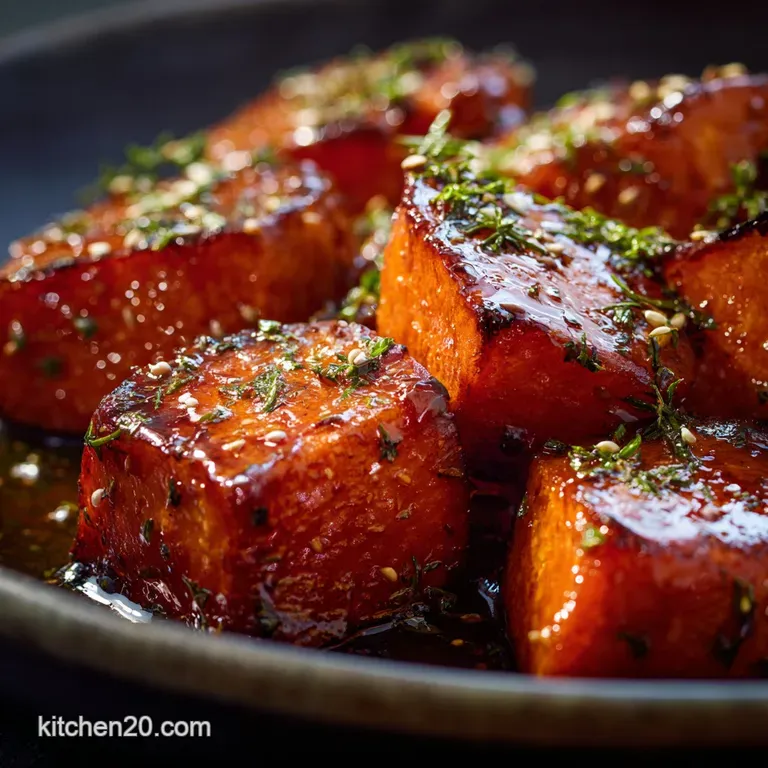
Right then. Let's crack on. Preheat your oven to a blazing 425°F (220° C).
over High heat Pre and Roast: Achieving Initial Tenderness
Once your uniformly diced sweet potatoes are coated in oil and spices, spread them out in a single layer on your parchment and lined pan. Give them some space. They need personal boundaries. Pop them into the preheated oven for exactly 20 minutes.
When to Introduce the Maple Glaze Mixture
While the potatoes are roasting, quickly whisk together your glaze ingredients: the maple syrup, apple cider vinegar, and the second hit of cinnamon.
After that initial 20 minutes, pull the pan out. The potatoes should have started turning golden brown on the corners, and a fork should pierce them with some resistance, but they shouldn't be fully tender yet. Drizzle the maple glaze mixture all over them.
Use a spatula to gently toss and coat them right there on the pan. Spread them back out immediately. Single layer, remember?
Finishing the Maple Glazed Roasted Sweet Potatoes: The Final Shine
Return the pan to the oven for another 15 to 20 minutes. This is the critical stage. You need to keep an eye on them now. The maple sugar is actively reducing and caramelising. At the 10 minute mark, check them.
If they look like they are browning too fast (especially the small pieces), turn the heat down slightly to 400°F (200°C) or move the pan to a lower rack. They are finished when the glaze is sticky and tight against the potato surface, and the colour is a deep, gorgeous mahogany.
Checking for Doneness and Optimal Internal Temperature
Forget the thermometer for this. A fork is your best tool. The sweet potatoes should be fork and tender all the way through, meaning the fork slides in easily without breaking the cube. The edges should feel deliciously sticky and slightly chewy from the reduced maple syrup. Pull them out immediately.
Troubleshooting and Pro Tips for Your Sweet Potato Glaze
I’ve made these maple glazed sweet potatoes hundreds of times, and I’ve learned a few tricks that make a huge difference.
- Final Salt Pop: As soon as they come out of the oven, hit them with a tiny pinch of flaky sea salt (like Maldon). I know it sounds weird since they are sweet, but that salt makes the flavour explode. It provides a crucial savoury and sweet contrast.
- Don't Over and Toss: When you apply the glaze, toss them minimally. You don't want to break up the perfectly crisped edges you worked hard to achieve in the first 20 minutes.
- Herb Garnish: If you’re serving this as a savory side (say, with roast chicken), finish with chopped fresh rosemary or parsley instead of pecans. It adds an incredible layer of freshness.
Make and Ahead Prep and Storage Guidelines
These are honestly best eaten right away when the glaze is hot and sticky. However, you can save some time.
Common Roasting Mistakes and How to Fix Them
It usually comes down to heat, space, or time.
| Mistake | Result | The Quick Fix |
|---|---|---|
| Crowding the Pan | Steamed, pale, and soggy potatoes. | Use two pans. Ensure space between pieces for dry heat circulation. |
| Glazing Too Early | Burnt syrup, undercooked interiors. | Wait until 20 minutes in. The potatoes must be nearly tender before the glaze goes on. |
| Pieces are Uneven | Half burnt, half raw. | Cut everything to 1 inch cubes. Be precise! |
Flavor Twists for Maple Glazed Roasted Sweet Potatoes
If you want to move beyond the simple cinnamon profile, I love adding heat:
The "Smoky Warmth" Twist: Swap out the cinnamon completely. Add 1/2 teaspoon of smoked paprika and 1/4 teaspoon of chipotle powder to the initial oiling stage. The maple syrup tames the heat, leaving a warm, smoky finish that’s brilliant with pork.
Safely Storing Leftovers and Reheating Tips
Leftovers should be cooled completely and stored in an airtight container in the fridge for up to 4 days. Reheating can be tricky because the glaze might liquefy. The best method is spreading them back out on a baking sheet (lined with parchment, obviously) and reheating them in a 350°F (175°C) oven for about 10 minutes.
This helps re and crisp the edges slightly. Microwaving makes them mushy; avoid it if you can.
Nutritional Breakdown of This Simple Side Dish
These beautiful roasted sweet potatoes are a fantastic, fibre and rich, and healthy side. The portion of maple syrup is manageable here because we use it as a coating, not a marinade.
Based on four servings, you’re looking at roughly 275 300 calories per serving, which includes about 4g of fiber and healthy fats from the olive oil. Enjoy! You just nailed the perfect roast vegetable. You deserve a glass of wine.
Recipe FAQs
Why did the maple glaze burn quickly, or stick hard to the tray?
This common mishap happens because maple syrup has a low burn point. To achieve that gorgeous, glossy finish, only introduce the glaze during the last 15 20 minutes of cooking, after the sweet potatoes are already mostly tender.
How can I avoid the sweet potatoes steaming and ensure they have crispy edges?
The secret is to give them breathing room; always spread the sweet potato cubes in a single layer without crowding the pan if they overlap, they will steam instead of caramelise. Also, ensuring you pat them dry after washing, and before oiling, helps the edges get beautifully crisp.
Can I prepare the ingredients for these Maple Glazed Roasted Sweet Potatoes ahead of time?
Absolutely, for ease of hosting, you can peel and cube the sweet potatoes up to 24 hours in advance. Keep the diced pieces submerged in cold water in the fridge, then drain and thoroughly pat them dry before roasting on the day.
I don't have apple cider vinegar (ACV); is it really essential, and what can I use instead?
The ACV is surprisingly crucial as it perfectly balances the richness of the maple syrup and the inherent sweetness of the potatoes, preventing the dish from tasting sickly sweet. You can easily substitute it with 1 teaspoon of fresh lemon juice or even white wine vinegar if that’s all you have lurking in the cupboard.
What are the best substitutions if I want to switch up the flavour profile?
The cinnamon base is lovely, but for a savoury twist that pairs wonderfully with a Sunday roast, omit the cinnamon and instead use a tablespoon of chopped fresh rosemary and thyme. Alternatively, add a pinch of smoked paprika or chilli powder to the glaze for a subtle smoky warmth.
Maple Glazed Roasted Sweet Potatoes
Ingredients:
Instructions:
Nutrition Facts:
| Calories | 300 kcal |
|---|---|
| Fat | 10 g |
| Fiber | 4 g |
