Masterclass Prime Rib Roast Recipe
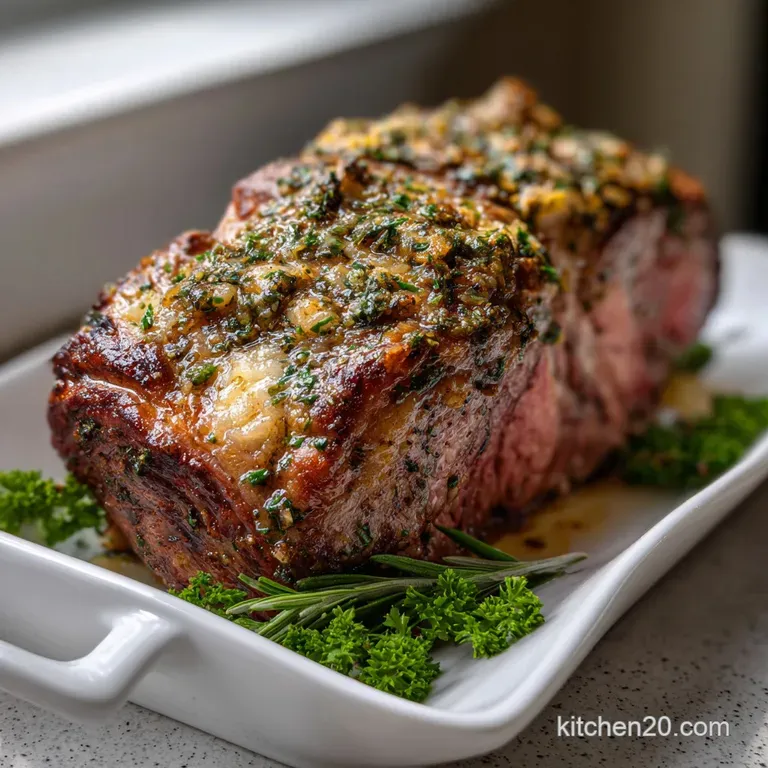
- Effort/Time: 4 hours 30 mins (Active: 30 minutes)
- Flavor Hook: Herb-heavy compound butter with a sharp Dijon-garlic bite.
- Perfect for: High-stakes holiday gatherings and legacy-building Sunday dinners.
- The Science of Succulence: Why This Prime Rib Roast Recipe Succeeds
- Precision Performance: Critical Metrics for the Best Prime Rib Roast Recipe
- The Foundation of Flavor: Component Sourcing Strategy for This Roast Recipe
- Essential Platform Tools for High-Performance Roasting
- The Execution Protocol: Achieving Culinary Equilibrium with a Reverse Sear
- Diagnostic Protocols for Common Roasting Anomalies
- ⚗️ The Scaling Lab: Physics of Quantity
- Customizing Your Results: Strategic Variations for the Prime Rib Roast Recipe
- Preserving Quality: Post-Event Storage and Regeneration
- The Final Connection: Presentation and Pairing Strategies
- Recipe FAQs
- 📝 Recipe Card
Few culinary failures hurt more than slicing into a $150 center piece roast only to discover a dry, grey, overcooked wasteland surrounding a tiny island of pink. It isn't just a waste of a prime cut; it’s the loss of the emotional payoff we expect from a celebratory meal.
When the outer three inches of the meat have the texture of cardboard, even the best horseradish sauce cannot save the experience.
I once served a "perfectly timed" roast to eight people, only to realize I hadn't accounted for the massive thermal mass of an 8 pound hunk of beef. I pulled it at 135°F, and by the time it finished resting, it had soared to a medium well 150°F.
I sat there in silence, watching guests chew through tough fibers, realizing that the standard "over high heat start" method I’d been taught was a recipe for uneven heat distribution and localized protein trauma.
The solution is a revolutionizing shift toward the reverse sear. By roasting at a low 250°F, we allow the enzymes to work longer and the heat to penetrate evenly, preventing the moisture squeezing effect of high intensity thermal shock.
The result is a velvety, uniform interior that shatters into a mahogany colored crust after a final over high heat blast. This isn't just a prime rib roast recipe; it's a precision engineered platform for connective dining.
The Science of Succulence: Why This Prime Rib Roast Recipe Succeeds
- Low-Thermal Gradient: Roasting at 250°F minimizes the temperature difference between the exterior and center, preventing the outer layers from overcooking while the core reaches target temperature.
- Enzymatic Tenderization: Cathepsins, naturally occurring enzymes in beef, remain active up to 122°F; the slow crawl through this temperature zone provides a "faux aging" effect that softens connective tissue.
- Surface Dehydration: The low and slow phase dries the surface of the meat, which accelerates the Maillard reaction during the final over high heat sear for a deeper, nuttier crust.
- Protein Denaturation Control: Gentle heating prevents muscle fibers from contracting too violently, which would otherwise squeeze out the internal juices.
- Carryover Management: By resting before the final sear, we stabilize the internal pressure, ensuring the juices stay locked in the fibers when sliced.
Precision Performance: Critical Metrics for the Best Prime Rib Roast Recipe
Success in roasting is a game of numbers. While a digital thermometer is your most important tool, understanding the interaction between weight, time, and heat allows you to command the kitchen with confidence.
This prime rib roast recipe demands adherence to these specific checkpoints to ensure the "masterclass" result.
| Metric | Target Value | Why It Matters |
|---|---|---|
| Oven Temperature (Phase 1) | 250°F | Prevents protein contraction and grey banding. |
| Pull Temperature (Rare) | 115°F - 120°F | Accounts for a 5°F - 10°F carryover rise during the rest. |
| Mandatory Rest Period | 30 minutes | Allows the "pressure cooker" effect of the heat to equalize. |
The Foundation of Flavor: Component Sourcing Strategy for This Roast Recipe
Choosing the right elements is the first step in revolutionizing your dinner service. We focus on high fat, high aromatic ingredients that can withstand the long thermal exposure without burning.
Ingredient Chemistry Breakdown
| Ingredient | Chemical/Physical Role (Science) | The Pro Secret (Why This Matters) |
|---|---|---|
| Diamond Crystal Kosher Salt | Osmotic pressure & protein solubilization | It breaks down myosin, allowing the meat to retain more moisture. |
| Maille Dijon Mustard | Emulsification & acidity balance | Acts as a "glue" for the herbs while the vinegar cuts through the heavy fat. |
| Unsalted Butter | Lipid based flavor carrier | Fat-soluble compounds in rosemary/thyme are distributed deeper into the crust. |
| Fresh Garlic | Sulfur based aromatic volatiles | These compounds transform from pungent to sweet savory under sustained heat. |
Ingredients & Substitutions
- 1 (3 to 4 bone) Prime Rib Roast (6 8 lbs): Bone-in preferred for structural integrity. Why this? Bones act as an insulator, protecting the bottom of the roast from direct heat.
- Substitute: Boneless Ribeye Roast (Reduce cook time by ~20%).
- 3 tbsp Diamond Crystal Kosher Salt: Why this? Large grains provide even coverage without over salting via density.
- Substitute: Sea Salt (Use 2 tbsp to account for finer grain density).
- 1 cup Unsalted Butter (softened): Why this? Controls the salt balance while providing the necessary lipids for searing.
- Substitute: Ghee (Higher smoke point, but less "browning" milk solids).
- 2 tbsp Fresh Rosemary & Thyme (finely chopped):
- Substitute: 2 tsp Dried Herbs (Note: Will lack the "shattering" fresh herb texture).
- 1 tbsp Maille Dijon Mustard:
- Substitute: Whole Grain Mustard (Adds a "pop" of texture but less even coverage).
- 6 cloves Garlic (minced):
- Substitute: 1 tbsp Garlic Paste.
Essential Platform Tools for High Performance Roasting
- Lodge Cast Iron Skillet (or heavy roasting pan): Provides the thermal mass needed to hold the roast steady.
- ThermoPro Digital Meat Thermometer: Non-negotiable for monitoring the low and slow ascent to 120°F.
- Stainless Steel Wire Rack: Elevates the meat to allow 360 degree convection, preventing a "soggy bottom."
- Chef's Knife (10 inch): A long blade allows for single stroke slices, preserving the internal grain structure.
The Execution Protocol: Achieving Culinary Equilibrium with a Reverse Sear
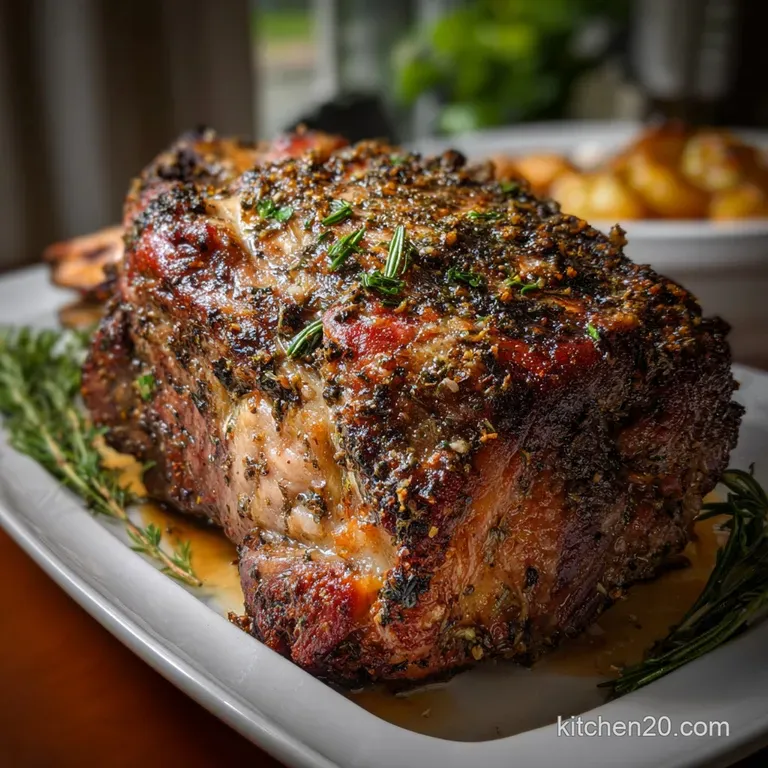
Follow these steps exactly. This prime rib roast recipe relies on the sequence of dehydration followed by intense heat.
- Temper the beef. Remove the roast from the fridge 2 hours before cooking until the chill is gone. Note: Reduces the "cold core" problem that leads to uneven cooking.
- Dry-brine the surface. Pat the meat bone dry with paper towels and coat with the 3 tbsp Kosher salt. Note: Draws out moisture, which then reabsorbs as a concentrated brine.
- Construct the compound butter. Mix softened butter, minced garlic, rosemary, thyme, and Dijon in a bowl.
- Apply the flavor shield. Slather the herb butter over the entire roast until a thick, even coat is established.
- Preheat and position. Set your oven to 250°F and place the roast on a wire rack over a roasting pan.
- Slow roast. Bake for approximately 4 hours until the internal temperature hits 115°F for rare or 125°F for medium rare.
- Initiate the crucial rest. Remove from the oven and tent loosely with foil for 30 minutes until juices redistribute and sizzle stops.
- Blast the heat. Crank the oven to 500°F.
- Flash sear. Return the roast to the oven for 6–10 minutes until the crust is mahogany colored and smells intensely nutty.
- Final carve. Slice between the bones or remove the rack and slice into 1/2 inch thick slabs.
Diagnostic Protocols for Common Roasting Anomalies
Why Your Prime Rib Roast Recipe is Grey
When the oven is too hot initially, the outer layers of the beef reach 160°F+ (well done) before the center even reaches 100°F. This creates the "bullseye" effect where only the very center is edible. This is why we use the reverse sear. It’s similar to how we manage heat when making a Roasted Fingerling Potatoes recipe, where consistent temp ensures the interior is creamy while the skin stays crisp.
| Problem | Root Cause | The Fix | Pro Protocol |
|---|---|---|---|
| Tough, Stringy Meat | over High heat shock | Lower oven to 250°F. | Use a probe thermometer with an alarm. |
| No Crust/Pale Surface | Excess moisture | Pat dry with paper towels before buttering. | Dry-brine in the fridge for 24 hours. |
| Butter Smokes/Burns | Sear phase too long | Keep the 500°F blast under 10 minutes. | Watch for "wisps" of blue smoke, then pull. |
⚗️ The Scaling Lab: Physics of Quantity
When you decide to roast two 4 bone roasts side-by-side to serve a larger crowd, the thermodynamics change significantly.
- The Square Cube Law: Two separate roasts will cook faster than one massive 8 bone roast because they have more surface area relative to their weight. Do not double the time; instead, check the temperature 30% earlier than you expect.
- Pan Crowding: If you put two roasts in one pan, the moisture released can create a "steam tent." Ensure at least 3 inches of space between the pieces of meat for proper convection.
- Scaling Spices: When doubling the butter rub, scale the herbs and garlic by 1.5x rather than 2x. Strong aromatics like rosemary can become soapy when over concentrated.
- The Thermal Sink: Two cold roasts will drop your oven temperature more significantly than one. Pre-heat your oven for an extra 20 minutes to "charge" the walls with heat.
Customizing Your Results: Strategic Variations for the Prime Rib Roast Recipe
While the bone-in oven method is the gold standard, modern kitchen technology allows for some incredible connected variations.
- Prime Rib Roast Recipe Smoker / Traeger: Replace the oven with a pellet grill set to 225°F. Use hickory or oak pellets. The smoke molecules bind to the fat in the butter rub, creating a deep, campfire inspired flavor.
- Prime Rib Roast Recipe Boneless: If using a boneless cut, tie the roast with butcher's twine every 2 inches. This maintains a cylindrical shape, ensuring the ends don't overcook before the middle is ready.
- Shortcut vs. Fresh:
| Method | Result | Time Trade off |
|---|---|---|
| Reverse Sear (Fresh) | Edge-to-edge pink, deep crust | 4.5 hours |
| Traditional over High heat Start | Large grey band, crispier fat | 3 hours |
Preserving Quality: Post Event Storage and Regeneration
- Storage: Wrap leftovers tightly in plastic wrap followed by foil. Store in the fridge for up to 4 days.
- The "Cold Slice" Hack: Prime rib is significantly easier to slice thin when cold. If you plan to make sandwiches, do not carve the leftovers until you are ready to eat.
- Reheating: Avoid the microwave, which turns the fat rubbery. Place slices in a baking dish with a splash of beef broth, cover with foil, and warm at 250°F until just heated through (about 10 minutes).
- Zero Waste: Don't discard the bones. Transform: Simmer the rib bones with onions and carrots for 6 hours to create a marrow rich beef stock. Science: The collagen in the connective tissue breaks down into gelatin, providing a velvety mouthfeel for your next soup.
The Final Connection: Presentation and Pairing Strategies
This roast is a monumental centerpiece that demands sides that can stand up to its richness. I love serving this alongside a batch of Monkey Bread recipe for a festive brunch vibe, or sticking to the classics.
Common Myths
- Myth: Searing first "locks in" the juices.
- Truth: Searing actually creates a moisture wicking effect. The reverse sear is scientifically proven to retain more internal liquid.
- Myth: You must bring the meat to room temperature for 4 hours.
- Truth: A 4 hour temper is a food safety risk. 2 hours is sufficient to remove the "refrigerator chill" without encouraging bacterial growth.
Decision Shortcut
- If you want maximum crust, dry-brine the roast uncovered in the fridge for 24 hours.
- If you want maximum tenderness, pull the meat at exactly 115°F and rest it for 45 minutes.
- If you want easier carving, go with a boneless roast and tie it tightly.
For the morning after, these leftovers make an incredible topping for a Classic French Toast recipe if you're feeling adventurous with a savory sweet breakfast. But for the main event, trust the physics of the low and slow heat. Your guests will notice the difference the moment the knife glides through that first velvety slice of this prime rib roast recipe.
Recipe FAQs
how to make prime rib roast?
Use the reverse sear method. Start low (250°F) until internal temperature hits 115°F, then rest 30 minutes, and finish with a 500°F blast for crust. If you master controlling the thermal gradient here, see how that same precision logic applies when making Simple Granola: The Perfectly Clustered Homemade Recipe.
how to make prime rib roast in oven?
Roast at 250°F, then sear at 500°F. This low-to-high technique minimizes the dreaded grey band by achieving even heat penetration. Low heat maximizes enzymatic tenderization while the high heat ensures deep Maillard reaction crust development.
how to make prime rib roast at home?
Use a heavy cast iron pan and wire rack. The cast iron provides the necessary thermal mass to stabilize the oven temperature during loading and resting phases. This elevation prevents surface moisture accumulation, which inhibits perfect crust formation.
how to make prime rib roast in crock pot?
Not recommended for true roast results. Crock pots trap steam, yielding braised texture rather than a crisp, dry exterior. For a moist, slow cooked result, use a dedicated smoker or low-temperature oven setting instead.
how to make prime rib roast au jus?
Deglaze the roasting pan drippings. After removing the roast, pour liquid (broth or wine) into the hot pan to lift the fond. If you master the technique of flavor extraction here, see how the same principle works when creating our Homemade Ketchup: The Best Rich, Spiced Classic Recipe.
Should I rest prime rib before cooking?
Yes, temper for two hours before seasoning. Allowing the cold core to neutralize prevents severe temperature shock when it enters the oven. Protein fibers contract less violently when heat is applied gradually, preserving internal moisture better.
Myth: Must I use the bone-in cut for flavor?
Myth: Bone-in is mandatory for flavor. Reality: While bones insulate, the majority of flavor compounds are fat-soluble and transfer from the surrounding fat cap, not the bone itself. The primary benefit of the bone is structural support during slow cooking.
Masterclass Prime Rib Roast
Ingredients:
Instructions:
Nutrition Facts:
| Calories | 955 kcal |
|---|---|
| Protein | 62g |
| Fat | 78g |
| Carbs | 2g |
| Fiber | 0.5g |
| Sugar | 0.1g |
| Sodium | 2590mg |
