Make Ahead Overnight French Toast Casserole
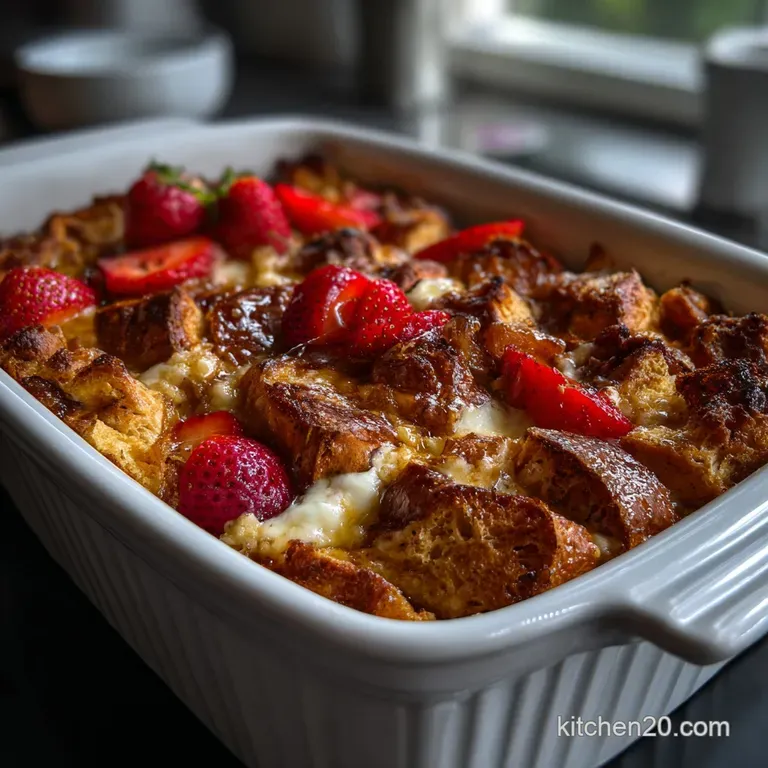
- Effort/Time: 20 minutes active prep / 8 hours chill time
- Flavor Hook: Buttery, cinnamon-spiked mahogany crust with a silky, crème brûlée center.
- Perfect for: Low-stress holiday mornings, high-volume brunch meal-prep, and weekend streamlining.
- Decoding the Perfect Easy Overnight French Toast Casserole
- The Physics of Hydration and Protein Set
- Precision Metrics for a Fail-Proof Breakfast Assembly
- Selecting High-Performance Elements for Your Breakfast Arsenal
- Streamlining Your Workflow with Minimal Kitchen Tools
- Executing the 10 Step Assembly and Bake Protocol
- Solving Structural Failures and Texture Imbalances
- Adaptable Flavor Profiles for Modern Meal Prep
- Preservation Logistics and Zero-Waste Repurposing Strategies
- Curating a Balanced and High-Efficiency Brunch Spread
- Debunking Traditional Breakfast Folklore and Kitchen Myths
- Recipe FAQs
- 📝 Recipe Card
Decoding the Perfect Easy Overnight French Toast Casserole
Whether you are hosting a frantic Christmas morning or a streamlined Sunday brunch, this overnight french toast casserole eliminates the morning-of chaos. I have spent years refining this method to solve the "soggy center" problem that plagues most baked breakfast dishes.
By utilizing a specific ratio of heavy cream to whole milk, we create a custard that sets firmly while maintaining a melt-in-the-mouth texture. This recipe isn't just about convenience; it is about the structural engineering of bread and egg.
The beauty of the overnight french toast casserole lies in its efficiency. You do 90% of the work while you sleep, allowing the bread to act as a sponge for the vanilla bean and nutmeg infused liquid.
In my kitchen, efficiency is king, and using a single 9x13-inch Pyrex baking dish for both soaking and baking means fewer dishes to scrub. We are focused on high impact results with minimal tool intervention.
This specific overnight french toast casserole relies on brioche a high yeast, high butter bread that can withstand a 12 hour soak without dissolving into mush. If you’ve ever had a french toast bake that felt like wet cardboard, the culprit was likely thin sandwich bread.
By switching to a dense, enriched loaf, we achieve a texture that mimics a premium bread pudding but retains the soul of a classic breakfast.
The Physics of Hydration and Protein Set
The Science of Why it Works
- Starch Gelatinization: During the overnight soak, starch granules in the brioche swell and trap the custard, creating a cohesive, non-leaking internal structure.
- Protein Denaturation: The egg proteins uncoil and rebond during the bake, transforming the liquid milk into a solid, velvety matrix that supports the weight of the bread.
For a Custard That Never Curdles
When we mix the 8 Large eggs with the 1 cup of heavy cream and 2 cups of whole milk, we are creating a lipid heavy emulsion. The fat in the cream coats the egg proteins, raising the temperature at which they coagulate. This prevents the "scrambled egg" texture often found in lower fat versions.
For the Ultimate Textural Contrast
The 1/2 cup of Cold unsalted butter in the topping is the key to the shattering crust. When cold fat hits the hot oven, the water content evaporates instantly, leaving behind tiny air pockets and a crisp, fried sugar shell. This provides the essential "crunch" factor that balances the soft interior.
Precision Metrics for a Fail Proof Breakfast Assembly
| Ingredient | Chemical/Physical Role (Science) | The Pro Secret (Why This Matters) |
|---|---|---|
| 8 Large Eggs | Act as the primary structural binder via protein coagulation | Use room temperature eggs for a smoother, faster emulsion with the milk |
| Brioche Loaf | Enriched crumb provides structural support and high fat absorption | Stale bread (low moisture) allows for 15% more custard intake than fresh bread |
| Heavy Cream | High butterfat content inhibits tight protein bonding in eggs | Prevents the "rubbery" texture; ensures a silky, custard like mouthfeel |
| Brown Sugar | Hygroscopic nature retains internal moisture while caramelizing the exterior | Adds molasses depth that enhances the Maillard reaction on the crust |
Selecting High Performance Elements for Your Breakfast Arsenal
- 1 lb Brioche loaf, cut into 1 inch cubes Why this? High egg/butter content prevents the bread from disintegrating during the long soak.
- 2 tbsp Unsalted butter, melted
- 8 Large eggsWhy this? Provides the lecithin needed for a stable, creamy emulsion.
- 2 cups Whole milk
- 1 cup Heavy creamWhy this? 36% fat content creates a luxurious, "pudding like" interior.
- 3/4 cup Brown sugar, packed
- 2 tbsp Pure vanilla extract
- 1 tsp Ground cinnamon
- 1/2 tsp Ground nutmeg
- 1/4 tsp Fine sea salt
- 1/2 cup Cold unsalted butter, cubed Why this? Cold fat is required for the "sandy" texture of the streusel topping.
- 1/2 cup Brown sugar (for topping)
- 1/2 cup All-purpose flour
- 1/2 cup Chopped pecans
- 1 tsp Ground cinnamon (for topping)
| Original Ingredient | Substitute | Why It Works |
|---|---|---|
| Brioche | Challah | Similar enriched dough; slightly less buttery but maintains great structure |
| Whole Milk | Oat Milk (Full Fat) | High fat oat milk mimics the viscosity of dairy, though it adds a toasted grain flavor |
| Heavy Cream | Coconut Cream | Provides the necessary fat; results in a tropical flavor profile and slightly denser set |
| Pecans | Walnuts | Similar fat content and crunch; slightly more bitter/earthy notes |
Streamlining Your Workflow with Minimal Kitchen Tools
To master the overnight french toast casserole, you don't need a pantry full of gadgets. I recommend a Pyrex 9x13-inch Glass Baking Dish because glass conducts heat more evenly than metal, preventing scorched corners.
A KitchenAid Balloon Whisk is essential for fully incorporating the egg yolks and whites into the milk; any remaining streaks of egg white will cook into rubbery bits in the final bake.
For the topping, skip the pastry cutter. I use my fingers to work the cold butter into the flour and sugar. The warmth of your hands slightly softens the butter just enough to bind the flour, creating those coveted "clumps" of streusel. If you are prepping for a large group, like when making my Green Bean Casserole recipe, having these minimal tool systems in place saves significant cleanup time.
Executing the 10 Step Assembly and Bake Protocol
- Grease the 9x13-inch dish with 2 tbsp melted Unsalted butter until the surface is slick and shimmering.
- Distribute 1 lb cubed Brioche loaf into the dish until the bread forms an even, jagged landscape.
- Whisk 8 Large eggs in a large bowl until no streaks of yolk or white remain.
- Incorporate 2 cups Whole milk, 1 cup Heavy cream, 3/4 cup Brown sugar, 2 tbsp Pure vanilla extract, 1 tsp Ground cinnamon, 1/2 tsp Ground nutmeg, and 1/4 tsp Fine sea salt until the sugar is fully dissolved and the liquid is a uniform tan color. Note: Dissolving the sugar now prevents gritty spots after baking.
- Pour the custard slowly over the bread cubes until every piece is submerged or coated in liquid.
- Compress the bread gently with the back of a spatula until you see the liquid rise to the surface, ensuring full saturation.
- Cover and refrigerate for 8 hours or overnight until the bread has absorbed 90% of the liquid and feels springy.
- Combine 1/2 cup Cold unsalted butter, 1/2 cup Brown sugar, 1/2 cup All-purpose flour, 1/2 cup Chopped pecans, and 1 tsp Ground cinnamon in a small bowl until the mixture resembles coarse, wet sand with pea-sized lumps.
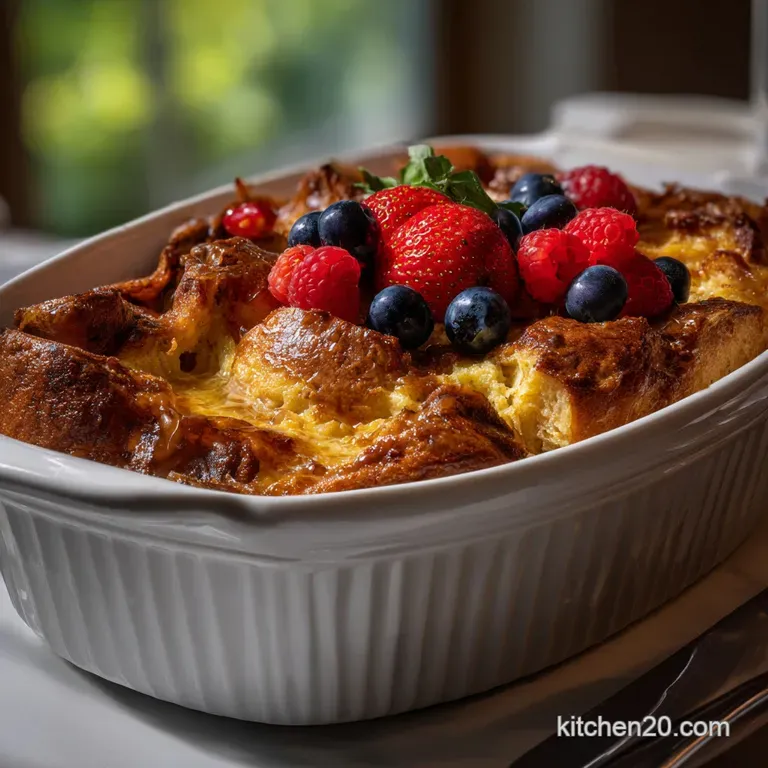
- Sprinkle the topping over the chilled casserole and bake at 350°F for 45 minutes until the center jiggles slightly but feels set, and the top is a deep mahogany brown.
- Rest the casserole for 10 minutes until the internal steam subsides, which allows the custard to fully set for clean slicing.
Solving Structural Failures and Texture Imbalances
Why Your Overnight Casserole is Soggy
If your casserole comes out weeping liquid, it’s usually a matter of bread-to-custard ratio or under baking. When the internal temperature doesn't reach 160°F, the egg proteins haven't fully bonded, leaving the milk trapped in the bread fibers. This is similar to the moisture management needed in my Green Bean Casserole recipe.
| Problem | Root Cause | The Fix | Pro Protocol |
|---|---|---|---|
| Soggy Bottom | Excess liquid or fresh bread | Use stale brioche; bake on the bottom rack for the last 10 mins | Toast bread cubes in a 300°F oven for 10 mins before soaking to maximize absorption |
| Burnt Topping | Sugar caramelizing too fast | Tent the dish with foil halfway through baking | Grate the butter while frozen into the flour mixture for a more aerated, resistant crust |
| Dry Top Cubes | Inadequate soaking | Flip the top cubes halfway through the overnight soak | Use a heavy plate to weigh down the bread for the first hour of soaking |
Adaptable Flavor Profiles for Modern Meal Prep
For a Tangy Twist
Fold in 4 oz of cubed cream cheese alongside the brioche. The lactic acid in the cheese cuts through the rich custard, providing a sharp contrast to the sweet maple syrup. This makes it a great companion to more savory dishes like a Homemade Green Bean recipe.
For a Berry Burst
Add 1.5 cups of fresh blueberries before pouring the custard. The berries will burst during the bake, releasing pectin which acts as a natural thickener and adds a vibrant, acidic pop.
⚗️ The Scaling Lab
- The Evaporation Paradox: If doubling this recipe into two 9x13-inch pans, do not double the cinnamon or nutmeg exactly. Scale spices to 1.5x to avoid an overpowering woody flavor.
- Thermal Mass: Baking two casseroles at once increases the humidity in the oven. Extend the bake time by 10 15 minutes and rotate the pans halfway through to ensure even browning.
- Pan Crowding: Do not try to fit a double batch into one deep dish. The center will remain raw while the edges burn due to the Square Cube Law—the volume increases faster than the surface area's ability to conduct heat.
Preservation Logistics and Zero Waste Repurposing Strategies
Fridge: This overnight french toast casserole stays fresh for up to 4 days in an airtight container. The texture will become denser as the starches retrograde, but the flavor remains intact.
Freeze: You can freeze the baked casserole for up to 2 months. I recommend slicing it into individual portions first, wrapping each in plastic wrap, and then placing them in a heavy duty freezer bag.
Reheat: For the best results, avoid the microwave as it turns the crust rubbery. Reheat in a 350°F oven or air fryer for 8 10 minutes until the sizzle returns and the topping recrisps.
Zero Waste Philosophy: Don't discard broken bread crumbs at the bottom of the bag. Transform: Toss them into the custard; they will dissolve and act as a natural thickener.
Science: Small particles increase surface area for hydration, creating a smoother base. Don't discard excess pecan dust. Transform: Mix it into the butter topping.
Science: The fine nut flour adds an intense toasted flavor and helps the butter emulsify with the sugar.
Curating a Balanced and High Efficiency Brunch Spread
A rich overnight french toast casserole requires acidic or salty partners to balance the palate. I often serve this alongside crispy thick cut bacon or a sharp fruit salad macerated in lime juice. The saltiness of the bacon provides a necessary foil to the brown sugar and vanilla notes.
If you are looking for a complete menu, this pairs excellently with a Campbells Green Bean recipe for a holiday style brunch. The umami from the mushrooms and the crunch of the shallots provide a savory counterpoint to the sweet custard.
Chef's Note: If your brioche is too fresh, slice it and leave it on a wire rack for 4 hours before cubing. This "staling" process is actually starch retrogradation, which prepares the bread to hold the custard without collapsing.
Debunking Traditional Breakfast Folklore and Kitchen Myths
Myth: You must use expensive "pure" maple syrup inside the custard. Truth: Using maple syrup inside the custard often gets lost among the eggs and milk.
It is more efficient to use brown sugar for the soak (which provides deep molasses notes) and save the high-quality maple syrup for drizzling over the finished overnight french toast casserole.
Myth: The longer you soak the bread, the better it gets. Truth: There is a point of diminishing returns. After 14 hours, the cellular structure of the brioche begins to break down due to enzymatic activity, leading to a mushy, "wet bread" texture rather than a creamy custard.
Aim for the 8 to-12 hour window for the best structural results.
By following this streamlined system, you can produce a masterclass level overnight french toast casserole that is as consistent as it is effortless. The combination of high fat dairy, enriched bread, and a cold cure period ensures a result that far exceeds the traditional stovetop method. Much like a Classic French Toast recipe, success lies in the quality of the bread and the patience of the soak.

Recipe FAQs
how to make overnight french toast casserole?
Cube brioche, whisk custard, pour, and soak overnight in the refrigerator. The custard ratio must favor high fat dairy to fully saturate the enriched bread structure without dissolving it. After soaking, top with streusel and bake at 350°F until the center is set.
how to make overnight french toast bake?
Use dense, enriched bread like brioche or challah for proper hydration. The long soak allows starch granules to swell and trap the custard, preventing separation during baking, a principle similar to controlling cookie spread in our Sugar Cookie recipe.
how long to cook overnight french toast casserole?
Bake for 45 to 55 minutes at 350°F, testing for doneness. The residual heat continues cooking the center after removal, so slight jiggle is desirable for a creamy texture. Always rest the final dish for 10 minutes before slicing to allow protein matrix setting.
how to make baked french toast casserole?
Use cold butter cubes in the streusel topping. Cold butter hitting the hot oven causes instantaneous steam release, creating tiny air pockets essential for a crisp crust.
- Ensure butter is cubed, not melted
- Mix topping until coarse crumbs form
- Sprinkle topping just before baking
how to make french toast casserole not soggy overnight?
Stale, cubed brioche absorbs the maximum liquid effectively. Using fresh bread has too much moisture already, leading to structural collapse when saturated with custard. Ensure you compress the bread gently after pouring the custard to force liquid into air pockets.
Can I substitute milk for the heavy cream?
No, heavy cream is vital for textural integrity. Heavy cream provides the high butterfat content (36%+) required to keep the egg proteins tender during coagulation. Lower fat dairy results in a dense, almost rubbery texture, unlike the desired velvety set in this casserole.
Myth: Freezing the casserole before baking improves results.
Myth: Freezing before baking improves results. Reality: Freezing the assembled casserole stops the ideal 8-12 hour enzymatic absorption process; it merely pauses it. Thawing can cause uneven thawing and protein denaturation, leading to dry edges.
Overnight French Toast Casserole
Ingredients:
Instructions:
Nutrition Facts:
| Calories | 701 kcal |
|---|---|
| Protein | 15.5 g |
| Fat | 42.5 g |
| Carbs | 68.3 g |
| Fiber | 2.1 g |
| Sugar | 35.4 g |
| Sodium | 442 mg |
