Peas and Okra: Velvety Comfort
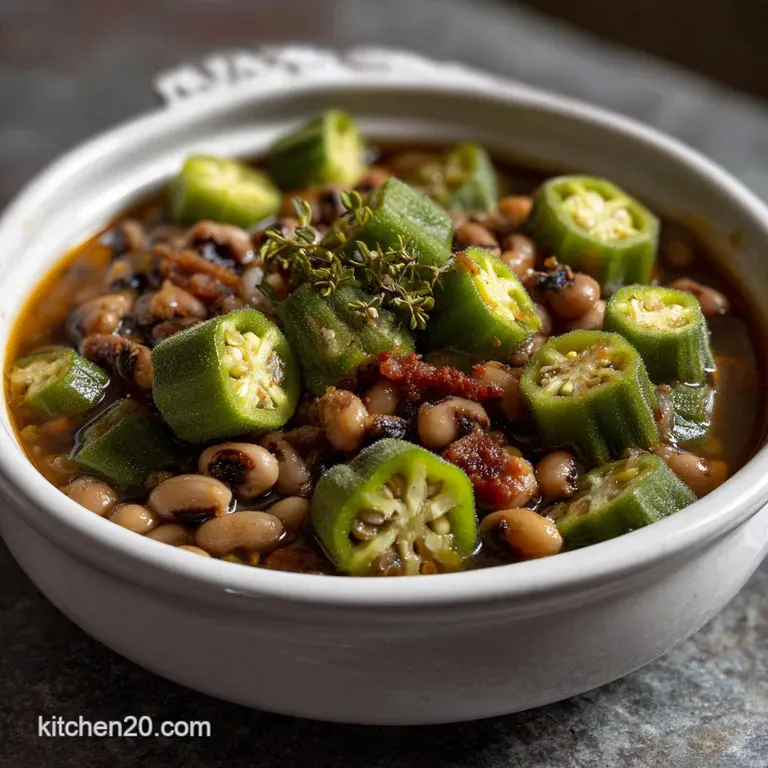
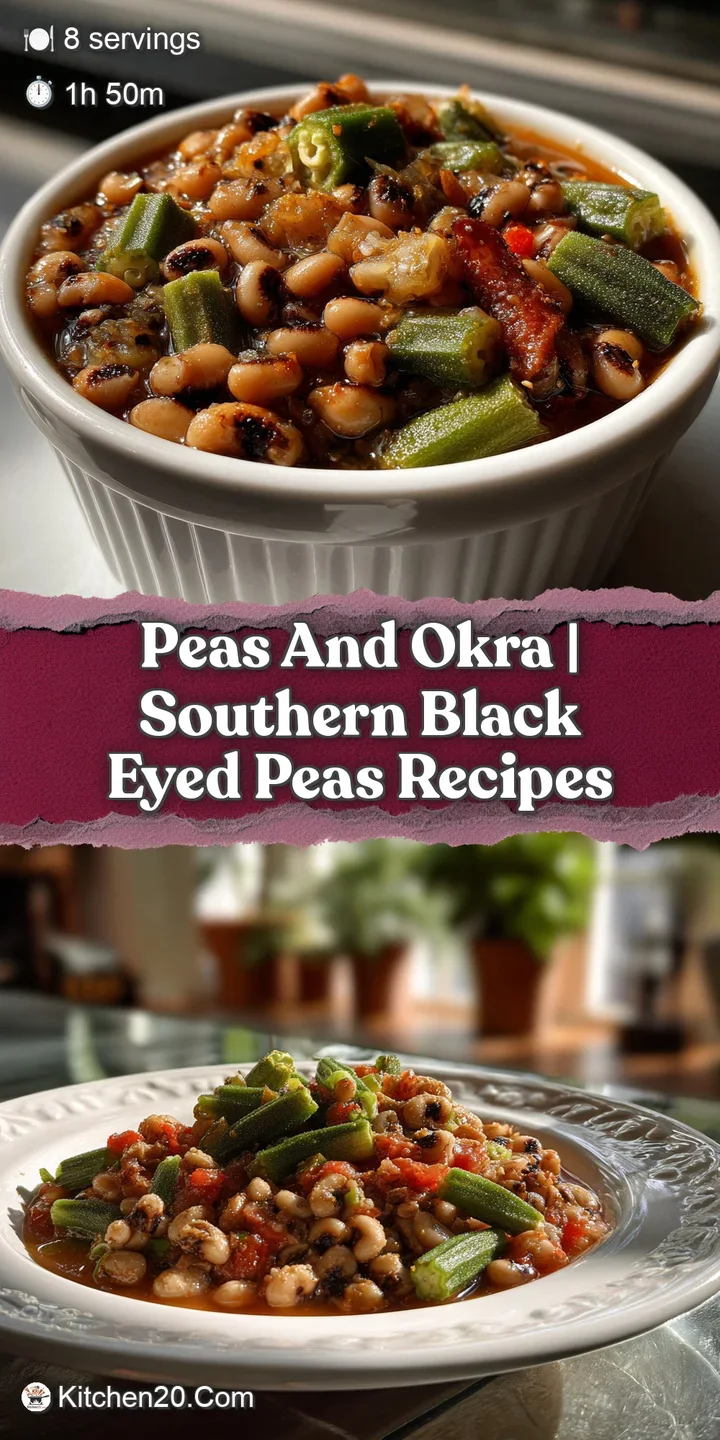
- Time: Active 20 minutes, Passive 1 hours 30 mins, Total 1 hours 50 mins
- Flavor/Texture Hook: Velvety peas paired with snappy, smoke kissed okra
- Perfect for: New Year celebrations, Sunday family gatherings, or meal prep enthusiasts
- Achieving Savory Depth in Your Peas And Okra
- Timing and Precision Specs for Kitchen Success
- Essential Elements for a Smoke Infused Pot
- Tools to Revolutionize Your Braising Process
- Execution Steps for a Velvety Finish
- Solving Common Texture Issues in the Pot
- Adapting the Flavor Profile for Every Crowd
- Preserving Your Batch for Future Gatherings
- Side Dishes That Bridge the Flavor Gap
- Recipe FAQs
- 📝 Recipe Card
Achieving Savory Depth in Your Peas And Okra
Can you smell that? The heavy, sweet scent of rendered bacon fat hitting a hot pan is the literal heartbeat of this dish. I used to think putting everything in a pot at once was the way to go, but I quickly realized that's how you end up with a muddy, uninspired mess.
This specific method of making Peas And Okra is all about building a platform of flavor, layer by layer, until the liquid becomes a "pot likker" so rich you could practically drink it with a straw.
We're moving beyond the basic boil in-a bag mentality. This recipe is a connection between the smoky depth of a ham hock and the brightness of fire roasted tomatoes. It's a revolutionizing approach to a Southern staple that respects the individual integrity of each component.
You want the peas to be tender but not mushy, and the okra to be tender crisp without the dreaded mucilage taking over the pot.
Right then, let's get into why this specific sequence of events matters. When we talk about Eyed Peas And Okra, we're talking about a dish that needs to stand up to the test of time, whether it's sitting on a holiday buffet or being reheated for a Tuesday lunch.
The secret is in the science of the simmer and the timing of the acid. Trust me on this, once you nail the order of operations, you'll never look back at the old school way of doing things.
Timing and Precision Specs for Kitchen Success
Cooking is often an art, but great braising is a science. To ensure your Peas And Okra turns out consistent every single time, I've mapped out the exact checkpoints you need to watch for.
Precision here doesn't mean being stressed, it means being connected to the process and knowing exactly when to move to the next phase.
The Science of Why it Works: The Maillard reaction creates complex flavor compounds as the ham hock sears, while the pectin stability in the okra is preserved by the vinegar's low pH. This prevents the vegetables from dissolving into the broth during the final simmer.
| Checkpoint Type | Target Metric | Visual/Sensory Cue |
|---|---|---|
| Sauté Phase | 8 minutes | Onions are translucent and edges turn golden brown |
| Braising Temp | 190°F (88°C) | A gentle, lazy bubble rather than a rolling boil |
| Pea Doneness | 60-75 minutes | Peas are "toothsome" but crush easily against the palate |
Decision Shortcut for Texture
- If you want a thicker, creamier broth, smash 1/2 cup of the cooked peas against the side of the pot before adding the okra.
- If you want a clean, clear liquor, avoid stirring the pot once the okra and tomatoes have been added.
- If you want the okra to stay bright green, blanch it separately for 2 minutes before folding it into the finished peas.
Whether you're making this as a Comforting Black Eyed Peas And Okra dish for a crowd or just for yourself, knowing these numbers gives you the freedom to step away from the stove without fear. If you find yourself enjoying the process of slow cooked legumes, you might also find success with our Black Eyed Peas recipe which explores different smoky profiles.
Essential Elements for a Smoke Infused Pot
The quality of your output is directly linked to the quality of your input. For this Peas And Okra masterpiece, we aren't just using "beans and greens," we are selecting ingredients that play specific roles in the flavor architecture. Using a smoked ham hock (approx.
12 oz or 340g) provides a collagen rich base that gives the liquid a velvety mouthfeel you simply can't get from salt alone.
Component Analysis
| Ingredient | Science Role | Pro Secret |
|---|---|---|
| Dried Black Eyed Peas | Starch source | Sort twice; one hidden pebble can ruin the whole experience |
| Bacon Drippings | Fat/Emulsifier | Use chilled drippings for a cleaner melt and better sear |
| Apple Cider Vinegar | pH Regulator | Adds brightness and prevents the okra from becoming "ropy" |
| Ham Hock | Gelatin provider | Score the skin to release more collagen into the broth |
What You'll Need
- 1 lb dried black eyed peas (450g): Sorted and rinsed. Why this? Dried peas absorb the braising liquid better than canned versions.
- 6 cups cold water: For the initial soak. Why this? Gradually hydrates the skins to prevent splitting during the hot cook.
- 2 tbsp bacon drippings: Why this? Essential for that old school smoky foundation.
- 1 large yellow onion: Finely diced.
- 2 stalks celery: Diced.
- 1 green bell pepper: Diced.
- 4 cloves garlic: Minced.
- 1 smoked ham hock: Approx. 12 oz (340g).
- 6 cups low sodium chicken stock: Why this? Controlled sodium levels allow you to season at the end.
- 1 tsp smoked paprika: For color and depth.
- 1/2 tsp cayenne pepper: For a subtle, back of-the throat warmth.
- 2 dried bay leaves: Adds a hidden floral note.
- 1 tbsp apple cider vinegar: Why this? Balances the fat and preserves okra texture.
- 1 lb fresh okra (450g): Trimmed and cut into 1/2 inch rounds.
- 14.5 oz canned fire roasted diced tomatoes: Why this? The char on the tomatoes echoes the smoky ham hock.
- 1 tsp sea salt & 1/4 tsp black pepper: To taste.
Tools to Revolutionize Your Braising Process
You don't need a spaceship to cook great food, but having the right platform makes the journey much smoother. For this recipe, a heavy bottomed vessel is non negotiable. I personally swear by a large cast iron Dutch oven (like a Lodge 6 quart).
The thick walls distribute heat evenly, which is crucial when you're simmering something for over an hour. It prevents the bottom from scorching while you're busy prepping the okra.
Stovetop vs Oven Comparison
| Feature | Stovetop Braising | Oven Braising (325°F/165°C) |
|---|---|---|
| Evaporation | Higher; needs occasional liquid checks | Minimal; liquid stays consistent |
| Pea Texture | Creamier due to slight agitation | Whole and distinct |
| Convenience | Faster to adjust seasoning | Hands off; no stirring required |
Chef Tip: Freeze your bacon drippings in an ice cube tray. Each cube is roughly 1 tablespoon, making it incredibly easy to pop one into the pot whenever you need a boost of fat and flavor without measuring.
Execution Steps for a Velvety Finish
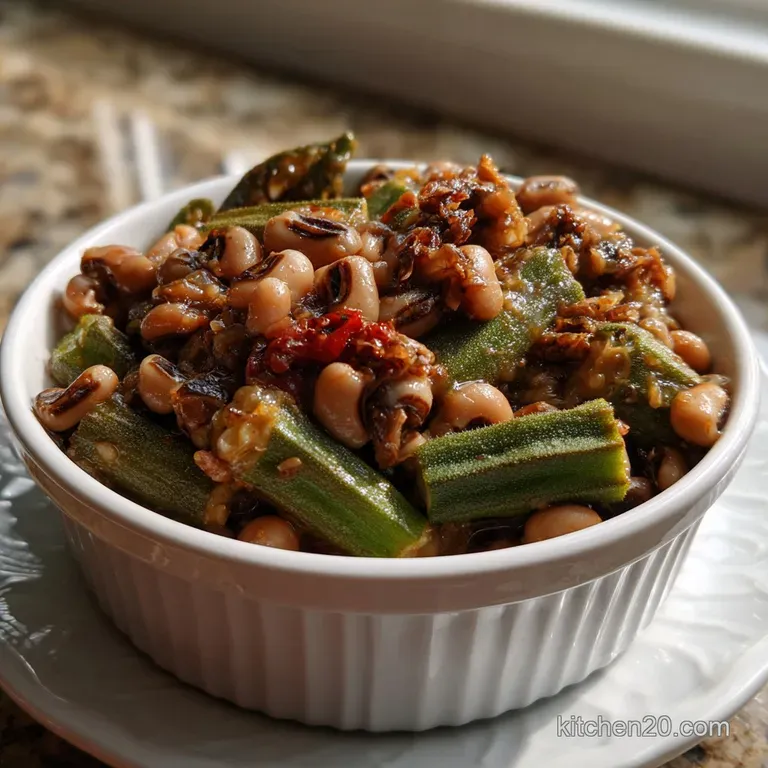
The key to a successful batch of Black Eyed Peas And Okra lies in the patience of the first hour. If you rush the peas, they’ll be hard in the middle. If you rush the okra, it won't have time to absorb the flavors of the pot likker. Let's walk through the sequence.
1. Preparing the Peas
Sort through your 1 lb dried black eyed peas to remove any debris. Place them in a large bowl with 6 cups cold water and 1 tsp sea salt. Let them soak for at least 6 hours or overnight.
Note: This hydrates the starch and reduces the cooking time significantly.
2. Rendering and Sautéing
In your Dutch oven, melt 2 tbsp bacon drippings over medium heat. Add the yellow onion, celery, and green bell pepper. Sauté for about 8 minutes until the vegetables are soft and the onion is translucent.
Add the minced garlic and cook for another minute until fragrant.
3. Simmering for Depth
Drain the soaked peas and add them to the pot along with the smoked ham hock, 6 cups chicken stock, smoked paprika, cayenne, and bay leaves. Bring the mixture to a boil, then immediately reduce the heat to low.
Cover and simmer for 1 hours 15 mins until the peas are tender but still holding their shape.
4. Integrating the Okra
Once the peas are soft, stir in the 1 lb fresh okra rounds, canned fire roasted tomatoes, and 1 tbsp apple cider vinegar. The acid in the vinegar and tomatoes is what keeps the okra from getting too soft.
5. Perfecting the Seasoning
Simmer uncovered for another 15 minutes until the okra is tender and the liquid has thickened slightly. Remove the ham hock; shred any meat from the bone and return it to the pot. Discard the bone and bay leaves.
Season with the freshly cracked black pepper and extra salt if needed.
Solving Common Texture Issues in the Pot
The most frequent complaint with any And Okra dish is usually about the texture. Either the peas are too hard, or the okra has turned the pot into a science experiment of "slime." Most of these issues are easily corrected if you understand what's happening at a molecular level inside the pot.
Dealing with Tough Peas
If your peas are still hard after an hour, it's likely due to "hard water" or old beans. Calcium in water can strengthen the cell walls of the peas, preventing them from softening. To fix this, add a tiny pinch (1/8 tsp) of baking soda to the liquid.
This increases the pH and helps break down those stubborn pectin bonds.
Fixing a Thin Broth
Sometimes the liquid doesn't achieve that velvety consistency we're looking for. If it looks more like water than gravy, take a wooden spoon and mash a small portion of the peas against the side of the pot. Stir them back in. The released starches will naturally emulsify with the bacon fat, creating a richer texture.
Quick Fix Table
| Problem | Root Cause | Solution |
|---|---|---|
| Soggy Okra | Overcooking or lack of acid | Add 1 tsp lemon juice; reduce cook time next time |
| Bland Broth | Not enough salt or aromatics | Add a splash of Worcestershire sauce or more salt |
| Peas Splitting | Boiling too vigorously | Reduce heat to a bare simmer immediately |
Common Mistakes Checklist
- ✓ Don't skip the soak - it's the only way to get a uniform texture throughout the pot.
- ✓ Never add salt at the very beginning of the soak (except for the 1 tsp mentioned) as it can toughen the skins.
- ✓ Avoid stirring the okra constantly - it breaks the vegetable down and releases more mucilage.
- ✓ Use fire roasted tomatoes instead of plain - the char adds a layer of complexity that mimics a long smoked dish.
Adapting the Flavor Profile for Every Crowd
One of the things I love about this recipe is how it acts as a platform for your own creativity. While the ham hock is the classic engine of flavor here, you can pivot based on what you have in the pantry or who you're serving. If you're looking for something that incorporates rice into the mix, you should definitely check out my Hoppin John Recipe which uses a similar flavor base.
Making it Plant Based
You can easily transform this into a vegetarian black eyed peas okra dish. Swap the chicken stock for a rich vegetable broth and replace the bacon drippings with smoked olive oil or avocado oil.
To mimic the smokiness of the ham hock, add 2 teaspoons of liquid smoke or a tablespoon of white miso paste for that savory umami hit.
Adding a Cajun Kick
If you want more heat, replace the smoked paprika with a high-quality Cajun seasoning blend. You can also add sliced andouille sausage during the sauté phase to provide extra protein and a different kind of spice.
The fat from the sausage will integrate with the peas, creating an even more intense flavor profile.
Scaling the Batch
- Scaling Down (1/2 batch): Use a smaller 3 quart pot. Reduce the simmer time for the peas by about 10 minutes as the smaller mass heats through faster. Use half a ham hock or a small smoked turkey wing.
- Scaling Up (2x batch): Use a 10 quart stockpot. Do not double the salt or cayenne initially; start with 1.5x and adjust at the end. Braising liquids actually evaporate slower in larger quantities, so reduce the total stock by about 10% to prevent the dish from being too soupy.
Preserving Your Batch for Future Gatherings
This is one of those rare dishes that actually tastes better the next day. As it sits, the starches in the peas continue to bond with the fats and spices, deepening the overall flavor. It's the perfect occasion ready dish because you can make the bulk of it ahead of time.
Storage and Zero Waste
Keep your leftovers in an airtight container in the fridge for up to 4 days. If you find you have extra "pot likker" but no peas left, don't throw it away! That liquid is liquid gold. Use it as a base for a soup, or even better, use it to cook your next batch of rice or collard greens.
It's packed with vitamins and collagen.
Freezing: This dish freezes beautifully for up to 3 months. However, the okra will lose some of its snap after thawing. If you are planning to freeze the whole batch, consider undercooking the okra by about 5 minutes.
To reheat, thaw overnight in the fridge and warm gently on the stovetop. If it's too thick, add a splash of water or stock to loosen it up.
Side Dishes That Bridge the Flavor Gap
When serving Peas And Okra, you want sides that can soak up that incredible broth. Cornbread is the obvious choice specifically a gritty, Southern style cornbread with no sugar. The cornmeal provides a structural contrast to the velvety peas.
If you're looking for a lighter pairing, a simple slaw with a vinegar based dressing provides a sharp, crunchy counterpoint to the rich, smoky legumes. For a truly hearty meal, serve it alongside some braised greens or even a piece of fried catfish.
The connection between the earthy peas and the crispy fish is a culinary match made in heaven.
Chef Tip: For an unconventional twist, add a teaspoon of finely ground espresso to the pot along with the smoked paprika. It doesn't make the dish taste like coffee; instead, it deepens the "dark" notes of the ham hock and makes the whole pot taste like it’s been simmering for twelve hours instead of two.
It's a major shift in how you'll view bean seasonings!
Finally, always finish with a fresh squeeze of lemon or a dash of hot sauce right before serving. That final hit of acidity wakes up all the heavy, smoky flavors we've worked so hard to build. Now, grab a bowl and get to it!
Recipe FAQs
Can I use frozen okra instead of fresh?
Yes, with a slight adjustment. Frozen okra can be used, but it may release more moisture and potentially become a bit mushy if overcooked. Add it during the last 10-15 minutes of simmering to ensure it's tender but not disintegrated.
How do I prevent my okra from getting slimy?
Add acid and avoid over stirring. A splash of vinegar or tomatoes, as used in this recipe, helps break down the mucilage. Also, try to stir the okra as little as possible once it's in the pot to minimize slime production.
What's the best way to cook dried peas for this dish?
Soak them overnight or for at least 6 hours. This hydration step is crucial for even cooking and preventing them from remaining tough in the center. Thoroughly sorting them first also prevents any unexpected pebbles.
Can I make this dish without a ham hock?
Yes, but you'll need to add smoky flavor elsewhere. You can substitute with smoked turkey wings or use smoked paprika and a touch of liquid smoke for a vegetarian option. The collagen from the hock provides a lovely richness, so consider adding a tablespoon of miso paste for umami.
How long should the peas simmer before adding the okra?
Simmer for 1 hour to 1 hour 15 minutes. The peas should be tender but still hold their shape. If you rush this step, they will be hard in the middle and the okra will become mushy trying to cook them.
Is it true that stirring okra makes it slimy?
No, excessive stirring can exacerbate sliminess. While not the sole cause, vigorous and constant stirring breaks down the okra's structure, releasing more of its natural mucilage. Gentle folding is preferred once the okra is added.
Can I use canned black eyed peas instead of dried?
Yes, but the texture will be different. Canned peas are already cooked and softer, so they will absorb flavors differently and may break down more. Add them during the last 20-30 minutes of cooking, along with the okra, to prevent them from becoming too mushy.
Peas Okra
Ingredients:
Instructions:
Nutrition Facts:
| Calories | 315 kcal |
|---|---|
| Protein | 19g |
| Fat | 8g |
| Carbs | 43g |
| Fiber | 11g |
| Sugar | 5g |
| Sodium | 640mg |
