The Proper Pint Slowsimmered Beef Stew Rich Tender and Absolutely Cracking

- Why This Slow-Simmered Beef Stew Redefines Comfort Food
- Unlocking Deep Flavour: The Secret to This Rich Broth
- Curating Your Culinary Arsenal: What You'll Need
- The Spice Rack Deep Dive: Building Aromatic Foundations
- The Searing Ritual: Creating The Flavour Crust
- Simmering to Submission: The Low-and-Slow Journey
- Troubleshooting and Tweaks for Your Next Batch
- Elevating The Final Presentation and Pairing
- Recipe FAQs
- 📝 Recipe Card
Why This Slow Simmered Beef Stew Redefines Comfort Food
Beef Stew is the sort of hearty, warming dish that reminds you why you bother getting out of bed on a dreary Tuesday. It’s proper comfort food, akin to putting on your favourite cardigan.
We’re going to create a recipe that’s rich, deeply flavourful, and straightforward enough that even a novice cook can pull it off without turning their kitchen into a scene from Hell’s Kitchen . This "Proper Pint" Slow Simmered Beef Stew isn't your average watery concoction, cobber.
We’re taking humble ingredients plump beef chuck, root vegetables, and a deeply savoury broth fortified with a secret ingredient (a splash of dark ale, naturally!) and simmering them low and slow until the meat falls apart with the mere suggestion of a fork.
Expect deep umami notes, a luscious, glossy gravy, and the comforting aroma of a proper British pub on a chilly evening. This recipe is classified as Medium difficulty; the active cooking time is minimal, but success hinges on proper searing technique and patient simmering, setting the stage for one of the truly great Hearty Winter Meals .
Unlocking Deep Flavour: The Secret to This Rich Broth
The success of any truly great Best Beef Stew Recipe lies entirely in building layers of flavour, not just boiling meat in liquid. We start with the Maillard reaction the browning of the beef which is the single most important step.
This process develops hundreds of complex flavour compounds that water alone cannot replicate. After that initial high heat searing, we move to deglazing the pot with dark ale. This releases the sticky, flavour packed 'fond' stuck to the bottom of your pot, transforming it into the foundation of your luscious gravy.
The combination of flour dredged beef, aromatic vegetables, and that malty ale creates a depth that truly distinguishes this Classic Beef Stew from lesser attempts.
The Philosophy Behind Our Perfect Pint Pairing
Why use ale? The subtle bitterness and maltiness of a dry dark ale think porter or stout cut through the richness of the beef fat and complement the earthiness of the root vegetables in a way that wine sometimes cannot. It's non-negotiable for this version of Beef Stew .
If you are looking for a similar depth in an Easy Beef Stew Recipe modification, we discuss substituting the ale later, but for this signature dish, the dark pint provides essential background complexity that elevates the entire experience.
Beyond Bland: Setting Expectations for Next Level Beef Stew
Many home cooks struggle with How To Make Beef Stew that tastes intensely savoury rather than merely meaty. To avoid this, we rely on minimal, potent additions: Worcestershire sauce for tang and umami depth, and tomato paste, which caramelizes slightly when heated with the aromatics, adding necessary backbone.
By focusing on technique especially the initial sear and utilizing these flavour boosters, we guarantee a stew that stands up perfectly on its own, making it a superior Beef Stew Meat Recipe .
The Essential Cookware for Stew Mastery
For this project, a large, heavy bottomed Dutch oven (ideally 4 to 6 quarts) is your best friend. The thick, even base distributes heat perfectly, which is vital for achieving that deep, even sear on the beef cubes and maintaining a gentle, consistent simmer for the hours required.
If you prefer convenience over the traditional stovetop/oven method, this same process translates beautifully into a Beef Stew Crock Pot or Beef Stew Instant Pot environment, though the searing stage must always happen first on the stovetop before transferring the ingredients to the slow cooker or pressure cooker.
Curating Your Culinary Arsenal: What You'll Need
To create six generous servings of this masterpiece, we require quality foundational elements. The core of the recipe relies on about 2.5 pounds of beef chuck, cut into uniform 1.5 inch cubes.
Before anything hits the heat, these cubes are tossed lightly in half a cup of all-purpose flour seasoned with kosher salt and black pepper. This light dredging is key, as it aids in browning and contributes slightly to the final gravy’s body.
For the initial searing fat, we use a combination of 2 tablespoons of neutral oil and 2 tablespoons of unsalted butter the oil prevents scorching, and the butter adds a crucial note of richness.
The Spice Rack Deep Dive: Building Aromatic Foundations
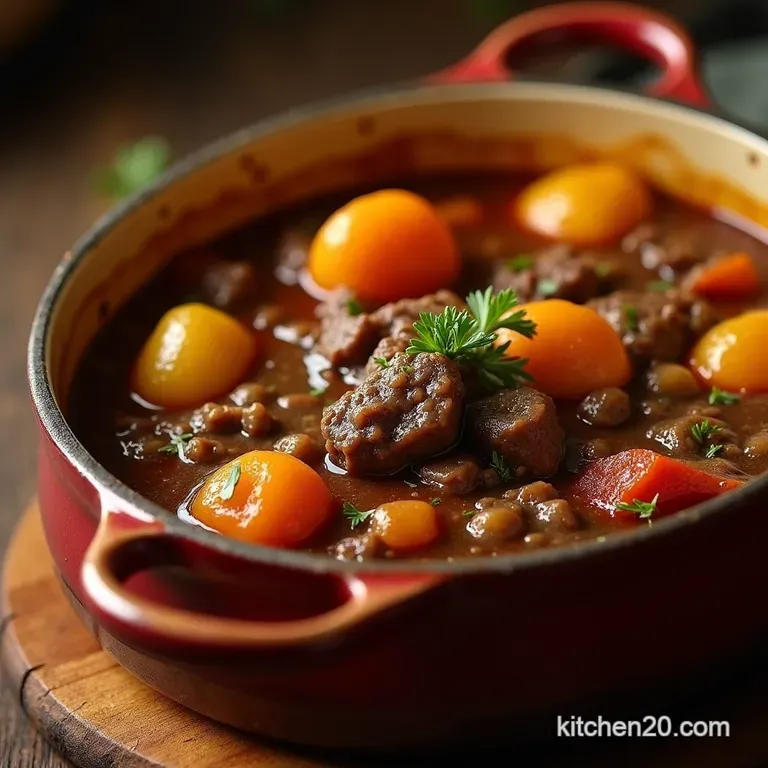
The flavour base starts with robust aromatics. You’ll need one large yellow onion, two large carrots, and two celery stalks, all chopped roughly to withstand the long cooking time.
After these soften, four cloves of minced garlic and one tablespoon of flavour concentrated tomato paste join the party, cooked until fragrant. In terms of herbs, we rely on simplicity: two sprigs of fresh thyme and one sturdy bay leaf to infuse the broth with classic, savoury notes throughout the long simmer.
Selecting The Ideal Cut of Beef for Tender Results
When discussing the Beef Stew Meat Recipe , chuck roast is the undisputed champion. This cut comes from the shoulder area, meaning it’s marbled with connective tissue.
While this tissue seems tough initially, the long, slow cooking process breaks down that collagen into rich, velvety gelatin, resulting in meat that literally melts on the tongue. Ensure you trim off any large, obvious chunks of hard fat, but leave the internal marbling intact for moisture.
The Vegetable Lineup: Incorporating Root Goodness
The choice of vegetables determines texture. We are adding the primary flavour vegetables onions, carrots, and celery early so they soften completely and essentially melt into the sauce, thickening it naturally.
The heartier vegetables, such as one pound of russet or Yukon Gold potatoes (cut into 1.5 inch chunks), pearl onions, and quartered mushrooms, are added later. This staged introduction ensures the potatoes don’t turn to complete mush by the time the beef is perfectly tender, providing necessary textural contrast.
Maximizing Umami: Liquids and Thickeners Explained
The liquid base must be powerful. We use four cups of low-sodium beef stock to ensure control over the final seasoning. This is enhanced by one tablespoon of Worcestershire sauce for that classic acidic tang. And, of course, the star: one cup of dry dark ale.
The flour used to dredge the beef acts as the primary thickener, but we ensure there is enough liquid reduction during the deglazing step to concentrate the sauce properly, moving us away from the need for heavy post cooking thickening.
Related Recipes Worth Trying
- The Ultimate Winter Warmer Rich Classic Beef Stew Recipe — Forget watery versions This easy Beef Stew Recipe delivers forktender meat and a rich gravy Perfect for a hearty weeknight meal Get the foolproof method
- The Ultimate Weekend Warrior Beef Bean Chili Recipe — Forget bland dinners This robust easy Chili Recipe builds incredible depth with coffee and cocoa ensuring the Worlds Best Chili Recipe flavour Ready in 3 hours
- The Weeknight Wonder Stovetop Beef Chili Recipe — Forget the slow cooker This easy stovetop beef chili delivers hearty deep flavour using toasted spices Ready tonight
The Searing Ritual: Creating The Flavour Crust
This stage demands high heat and a little patience. Heat your oil and butter in the Dutch oven over medium high until shimmering. It is absolutely vital to sear the beef in small batches. If you crowd the pan, the temperature drops, and the meat steams instead of browns, robbing you of essential flavour.
Cook each batch until a deep, mahogany crust forms on all sides before using a slotted spoon to remove the meat to a waiting bowl. Do not wipe out the pot after the searing is complete that dark residue is pure gold.
Simmering to Submission: The Low-and-Slow Journey
Once the beef is seared and the aromatics are softened and fragrant, the magic of low-temperature cooking begins. This gentle heat coaxes maximum tenderness from the tough chuck while allowing the complex flavours of the stock and ale to meld deeply.
Mastering The Initial Browning Technique
The initial browning must be aggressive. Aim for dark brown, almost verging on black in spots, on the surface of the beef. This dark crust is the precursor to the rich colour and robust taste of the final stew.
Remember to pat the beef thoroughly dry before dredging in the flour mixture; moisture inhibits effective browning.
Deglazing Secrets for Intense Base Notes
After sweating down your onions, carrots, and celery, introduce the tomato paste and cook it for about a minute until it darkens slightly this concentrates its flavour. Then, pour in the cup of dark ale.
As it bubbles, use a wooden spoon or spatula to vigorously scrape every last bit of browned material (the fond) from the bottom of the pot. This brief reduction step concentrates the malt flavours beautifully before the main stock is introduced.
Timing the Vegetable Addition for Perfect Texture
The total cooking time for this recipe is approximately 3 to 3. 5 hours, carried out in the oven at 325° F ( 160° C) or maintained at a very low simmer on the stovetop. We cook the beef alone, covered, for the initial two hours.
It is only after this initial breakdown period that you introduce the potatoes, pearl onions, and mushrooms. This staging prevents the root vegetables from dissolving entirely before the beef has fully softened.
How to Achieve Peak Beef Stew Thickness Without Flour Dusting
Since the beef was dredged in flour, that starch begins working immediately upon hitting the liquid. The long, slow simmer allows this starch to hydrate and thicken the liquid into a glossy gravy.
If, after the full cooking time (when the beef is fork tender), the gravy remains too thin for your liking, use the cornstarch slurry method: remove a ladle of hot liquid, whisk in one tablespoon of cornstarch until smooth, and return it to the simmering stew, stirring constantly until it achieves that perfect clinging consistency.
Troubleshooting and Tweaks for Your Next Batch
If you find your Beef Stew seems too salty early on, resist the urge to add more salt until the final 30 minutes of cooking; liquids reduce, concentrating saltiness.
If the liquid level drops too low during simmering, causing the meat to dry out, simply top it up with a splash more hot beef stock. If the meat seems tough after 3. 5 hours, it simply needs more time; cover it and continue simmering gently.
This dish rewards patience; rarely is it ruined by overcooking, only by undercooking.
Elevating The Final Presentation and Pairing
Once the stew has rested for 10 minutes allowing the liquids to redistribute and the stew to firm up slightly it’s ready. Remove the thyme sprigs and bay leaf, and garnish generously with freshly chopped parsley.
This vibrant green finish provides a necessary visual counterpoint to the rich brown tones of the stew.
Optimal Cooling and Storage of Your Hearty Meal
Beef stew is one of those miraculous dishes that tastes even better the next day. Allow the stew to cool fully before transferring it to airtight containers. Store in the refrigerator for up to four days. The flavours continue to marry overnight, resulting in an even richer experience the following evening.
Creative Variations: Introducing Barley or White Bean Accents
To increase the textural complexity, consider adding half a cup of pearl barley along with the potatoes, or stir in a can of rinsed white beans (like cannellini) during the last 30 minutes of cooking for added protein and creaminess.
These additions transform the stew into an even more substantial meal.
Freezing Fundamentals: Preserving That Home Cooked Taste
This is an excellent candidate for batch cooking. Cool the stew completely, portion it into freezer safe containers, leaving about an inch of headspace for expansion. It freezes beautifully for up to three months. Thaw overnight in the refrigerator and reheat gently on the stovetop.
Serving Suggestions That Complement The Richness
While it’s magnificent ladled over buttery mashed potatoes, remember the importance of bread. A thick slice of crusty sourdough or a baguette is essential for ‘mopping up’ every last bit of that glorious gravy.
For a green element that cuts the richness, serve alongside simply buttered green beans or wilted spinach. Enjoy this deeply satisfying result of your efforts!
Recipe FAQs
What's the absolute best cut of beef to use for this Beef Stew recipe?
For true melt-in-your mouth results, you can't beat Beef Chuck. It has the perfect amount of connective tissue which breaks down during the long simmer, turning into glorious gelatin that thickens the gravy beautifully. Avoid pre-cut 'stewing beef' if you can, as that can often be tougher cuts.
My stew gravy seems a bit thin; how can I thicken it up without ruining the flavour?
Don't fret, it happens to the best of us! The easiest fix is a cornstarch slurry: mix one tablespoon of cornstarch with two tablespoons of cold water until smooth, then whisk it into the simmering stew.
Let it bubble gently for a few minutes until it thickens to a lovely, glossy consistency, much like a decent gravy boat.
Can I make this stew ahead of time, and does it taste better the next day?
Absolutely, make it ahead! Stews are brilliant for this the flavours meld and deepen overnight, making it arguably better the next day. Store it in an airtight container in the fridge for up to 3-4 days, or freeze it for a future rainy day; it freezes like a dream.
I don't want to use alcohol; what can I substitute for the dark ale in the Beef Stew?
If you’re steering clear of the booze, you can substitute the ale with a cup of very strong black tea or, even better, use a cup of beef stock mixed with a tablespoon of balsamic vinegar or Worcestershire sauce. This will help replicate that necessary depth and slight tanginess.
How long should I really simmer the stew, and can I use a slow cooker instead?
Patience is a virtue here! You need at least 3 hours total cooking time to tenderise the chuck properly. If using a slow cooker, sear the meat and sauté the veg first, then transfer everything to the slow cooker on LOW for 7-8 hours, or on HIGH for 4 hours, adding the potatoes about 1.5 hours before the end.
Is this Beef Stew recipe very high in calories since it's so rich?
It is hearty, as comfort food should be, but you can manage the calories by choosing leaner cuts of chuck and skimming any excess fat off the surface of the stew once it has chilled overnight. If you serve it over a modest portion of mashed potato instead of smothering it, it’s a perfectly balanced, filling meal.
Proper Pint Beef Stew
Ingredients:
Instructions:
Nutrition Facts:
| Calories | 764 kcal |
|---|---|
| Protein | 12.8 g |
| Fat | 38.5 g |
| Carbs | 66.8 g |
| Fiber | 19.1 g |
| Sodium | 777 mg |
