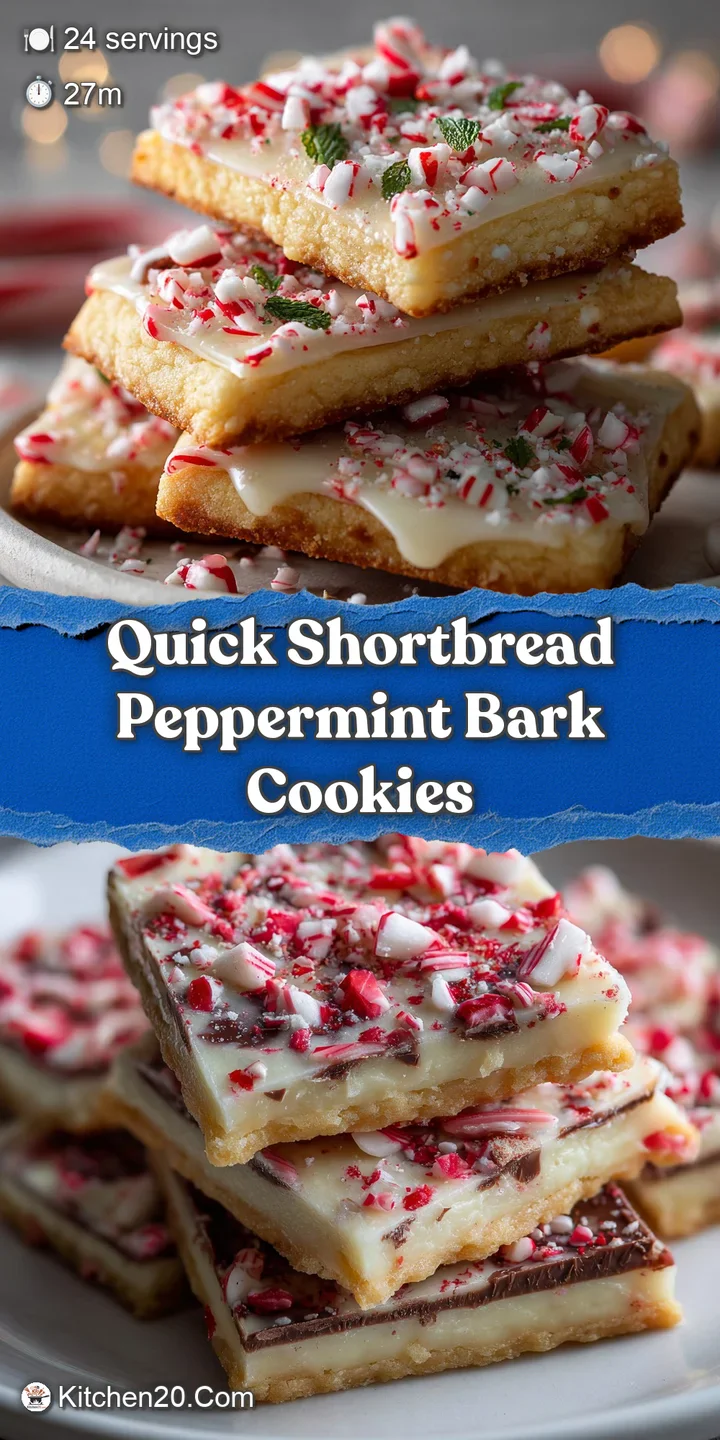
Quick Shortbread Peppermint Bark Cookies
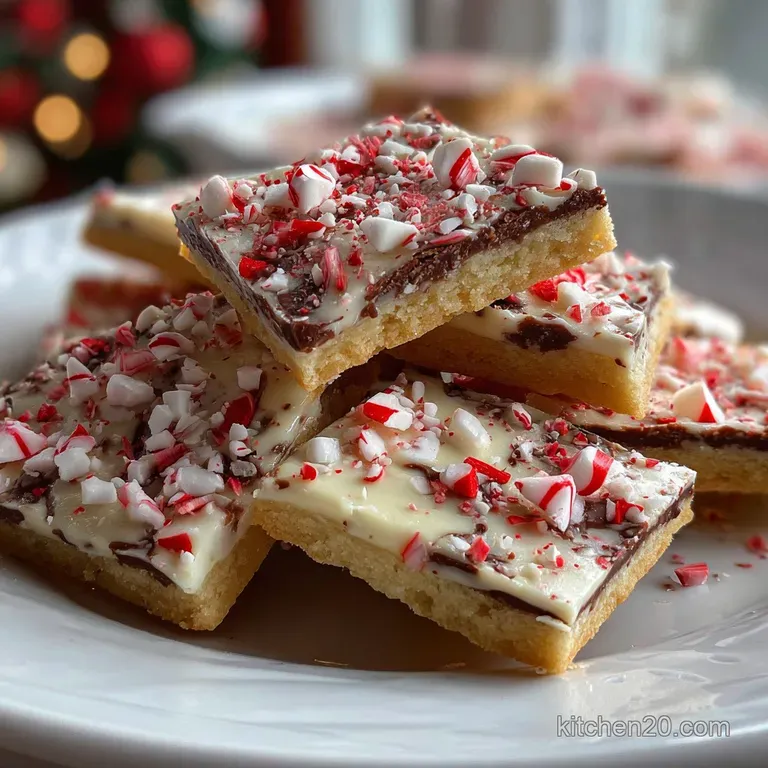
- Time: Active 15 minutes, Passive 12 minutes, Total 27 minutes
- Flavor/Texture Hook: A shatter crisp shortbread foundation topped with velvety marbled chocolate and crunchy, tangy peppermint shards.
- Perfect for: Holiday gift tins, large family gatherings, or a last minute festive "wow" factor.
- Crafting The Ultimate Quick Shortbread Peppermint Bark Cookies Today
- The Science of Why it Works
- Technical Specifications for Successful Holiday Baking
- Component Analysis and Ingredient Functions
- Curating Your Inventory for Maximum Flavor Impact
- Essential Tech and Tools for the Modern Kitchen
- Navigating the Production Flow for Seamless Results
- Debugging Common Issues for Flawless Cookie Batches
- Connecting Every Guest Through Inclusive Ingredient Pivots
- Optimized Storage Protocols for long-term Texture Retention
- Design Strategies for a Memorable Presentation Experience
- Kitchen Myths Debunked
- Recipe FAQs
- 📝 Recipe Card
Crafting The Ultimate Quick Shortbread Peppermint Bark Cookies Today
Imagine the scent of cooling butter mingling with a sharp, cooling burst of peppermint filling your kitchen. That's the moment your home transforms into a holiday workshop, and it's exactly why I'm obsessed with this recipe.
I used to spend hours cutting out individual stars and circles, only to end up with a flour covered kitchen and a sore back. Then I realized we could be revolutionizing the process by baking everything in one go and shattering it into rustic, beautiful shards.
This method isn't just a time saver, it's a way of connecting our modern, busy lives with the nostalgic flavors we crave. We've all been there, staring at a mountain of holiday tasks, wondering if we can actually pull off homemade treats. This recipe is your secret platform for success.
It provides that high end bakery aesthetic without the high stress execution. Honestly, once you see how the white and semi sweet chocolates swirl together over that golden base, you'll never go back to the individual cookie grind.
I remember a mistake I once made where I tried to use room temperature butter to save time. The result was a greasy, flat mess that lacked that iconic shortbread "snap." That's when I learned that the temperature of your ingredients is the most important tech spec in your kitchen.
We're looking for a specific, velvety crumb that only comes from treating the fats with respect. Trust me on this, following the temperature cues is what separates a good cookie from a legendary one.
The Science of Why it Works
Solid Fat Suspension: Using cold, cubed butter ensures that tiny pockets of fat remain intact within the flour, which vaporize during baking to create a flaky, aerated structure.
Starch Gelatinization: The low moisture content in this dough limits gluten development, allowing the starch granules to swell just enough to provide a delicate, melt in-your mouth texture rather than a bready chew.
Technical Specifications for Successful Holiday Baking
Before we jump into the mixing bowl, let's look at the different ways you can approach this bake. Whether you are aiming for a classic look or a more modern vibe, choosing your method early changes how you interact with the dough.
I've found that the "Slab Method" is the real winner here because it maximizes the surface area for that gorgeous chocolate marbling.
| Method | Time | Texture | Best For |
|---|---|---|---|
| The Slab Method | 27 minutes | Shatter crisp edges | Quick gifting and large parties |
| Individual Squares | 35 minutes | Uniformly buttery | Formal dessert platters |
| Thick Bark Style | 40 minutes | Dense and fudgy | True chocolate lovers |
Deciding on the thickness of your base is a key decision shortcut. If you want a more "cookie forward" bite, keep the dough at a half inch thickness. If you prefer the chocolate to be the star, press the dough thinner across a larger area.
This flexibility is what makes the recipe a versatile tool in your holiday arsenal. It really is about connecting the technique to your specific needs for the day.
While this recipe is incredibly fast, it shares a similar structural DNA with a Classic Scottish Shortbread recipe, focusing on that high fat, low moisture ratio. The main difference here is the peppermint integration, which adds a refreshing top note to the rich base.
Component Analysis and Ingredient Functions
Understanding what each element brings to the "platform" of your cookie is essential. We aren't just throwing things in a bowl, we are building a flavor profile that needs to stand up to the bold peppermint topping.
| Ingredient | Science Role | Pro Secret |
|---|---|---|
| Cold Unsalted Butter | Provides structure and "short" texture | Keep it below 60°F for the best crumb |
| Powdered Sugar | Dissolves instantly for a silky feel | Sift it to prevent tiny white "sugar spots" |
| All Purpose Flour | Forms the skeletal frame of the cookie | Weigh it (300g) rather than using cups |
| Peppermint Extract | Provides aromatic volatility | Use oil based extract for a cleaner scent |
The interaction between the powdered sugar and the cold butter is where the magic happens. Unlike granulated sugar, which can leave a gritty texture if not creamed for a long time, powdered sugar contains a tiny amount of cornstarch.
This additional starch helps absorb any stray moisture from the butter, ensuring the dough stays "short" and crisp.
Curating Your Inventory for Maximum Flavor Impact
To get that perfect balance of cooling mint and rich cocoa, you'll need to gather your supplies. I always suggest high-quality chocolate chips because they have just enough stabilizers to hold their shape during the marbling process without becoming a puddle.
- 225g cold unsalted butter, cubed: Why this? Provides the foundational flavor and the necessary "shatter" texture.
- Substitute: Salted butter (just omit the extra sea salt).
- 65g powdered sugar: Why this? Ensures a velvety, fine grained crumb that melts on the tongue.
- Substitute: Superfine (caster) sugar, though the texture will be slightly crunchier.
- 300g all purpose flour: Why this? The perfect protein level for a sturdy yet tender base.
- Substitute: A 1 to-1 gluten-free flour blend with xanthan gum.
- 0.25 tsp fine sea salt: Why this? Sharpens the chocolate notes and balances the sugar.
- Substitute: Standard table salt, but use a pinch less.
- 1 tsp peppermint extract: Why this? Distributes the holiday flavor evenly throughout the shortbread.
- Substitute: Vanilla extract if you want the mint only on top.
- 150g semi sweet chocolate chips: Why this? Provides a deep, slightly bitter contrast to the white chocolate.
- Substitute: Dark chocolate chunks for a more intense flavor.
- 150g white chocolate chips: Why this? Adds creamy sweetness and allows for beautiful visual marbling.
- Substitute: Milk chocolate chips, though you'll lose the "bark" look.
- 0.5 tsp neutral oil: Why this? Helps the chocolate melt smoothly and prevents it from cracking when sliced.
- Substitute: Refined coconut oil.
- 5 standard candy canes, crushed: Why this? Delivers the essential crunch and a festive visual pop.
- Substitute: Peppermint candies or "baking bits" found in the spice aisle.
Essential Tech and Tools for the Modern Kitchen
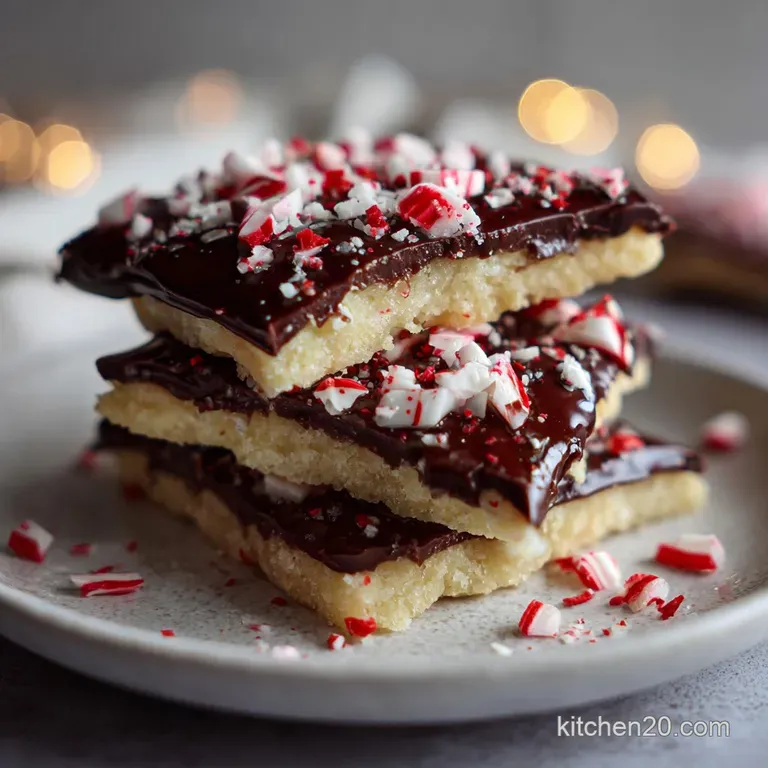
You don't need a lab full of gadgets, but a few specific pieces of equipment make the production flow much smoother. I personally love using a stand mixer such as KitchenAid for the dough because it keeps the heat from my hands away from the butter. If you're mixing by hand, use a pastry cutter to keep things cool.
| Original Ingredient | Substitute | Why It Works |
|---|---|---|
| All Purpose Flour | Oat Flour | Adds a nutty flavor. Note: Crumb will be much more fragile. |
| White Chocolate | Cacao Butter + Sugar | Pure fats. Note: Harder to work with, may require tempering. |
| Candy Canes | Dried Cranberries | Fruity tartness. Note: Changes the profile from mint to "Winter Berry." |
The neutral oil mentioned in the ingredients is a small but vital component. When you melt chocolate, it can sometimes become too brittle once it resets. Adding that half teaspoon of oil (or coconut oil) gives the chocolate a bit of flexibility.
This prevents the entire top layer from shattering into a million pieces when you try to cut it into clean squares. It's a small "hack" that keeps the presentation professional.
Navigating the Production Flow for Seamless Results
Let's crack on with the process. The key here is speed not because we're in a rush, but because we want to keep that butter cold until the very second it hits the hot oven.
- Prep the oven. Heat it to 350°F (175°C) and line a 9x13 inch baking pan with parchment paper. Note: Leave an overhang on the sides to lift the whole slab out later.
- Combine the dry base. In a large bowl, whisk together the 300g all purpose flour and 65g powdered sugar.
- Cut in the butter. Add the 225g of cold, cubed butter and the 0.25 tsp sea salt. Use a pastry blender or mixer until the mixture looks like coarse sand with pea sized lumps.
- Flavor the dough. Drizzle in the 1 tsp peppermint extract and mix just until the dough starts to clump together. Note: Don't over process; it should still look a bit crumbly.
- Press and firm. Transfer the dough to the lined pan and press it into an even layer about 0.5 inch thick. Use the bottom of a flat measuring cup to smooth the surface.
- Bake the foundation. Slide the pan into the oven for 12 minutes until the edges are just barely starting to turn golden.
- Melt the layers. While the base bakes, melt the semi sweet and white chocolates in separate bowls. Add 0.25 tsp of the neutral oil to each. Note: Use 30 second bursts in the microwave, stirring between each.
- Marble the bark. Immediately after the pan comes out of the oven, drop spoonfuls of both chocolates over the hot shortbread. Use a knife to swirl them together into a marbled pattern.
- Add the crunch. Sprinkle the 5 crushed candy canes over the wet chocolate until the surface is brightly speckled with red and white.
- Set and shatter. Let the pan cool at room temperature for 20 mins, then refrigerate for 1 hour 30 mins until the chocolate is completely firm. Lift the parchment and break or cut into shards.
Debugging Common Issues for Flawless Cookie Batches
Even with a straightforward recipe, things can go sideways. The most common hurdle is the chocolate not sticking to the base. This usually happens if the base has cooled too much before the chocolate is applied. The residual heat from the oven helps "bond" the layers together.
To Fix Crumbly Dough That Won't Bind
If your dough is so dry it won't even press into the pan, your butter might have been too cold or your flour measurement was slightly heavy. Don't panic. Simply add a teaspoon of cold water and pulse the mixer again. You're looking for the point where a handful of dough holds its shape when squeezed.
To Prevent Chocolate Seizing
Water is the enemy of melted chocolate. Even a single drop from a wet spoon can cause your semi sweet chips to turn into a gritty, hard clump. If this happens, you can sometimes save it by whisking in another teaspoon of neutral oil very quickly, but it's best to ensure all your bowls and spatulas are bone dry before you start.
| Problem | Root Cause | Solution |
|---|---|---|
| Separating Layers | Base was too cool | Apply chocolate the second the pan leaves the oven. |
| Greasy Bottom | Butter was too soft | Chill the pressed dough for 10 mins before baking. |
| Soggy Shortbread | Too much extract | Measure extract carefully; excess liquid ruins the snap. |
Common Mistakes Checklist
- ✓ Always use cold butter straight from the fridge to ensure a flaky texture.
- ✓ Don't skip the parchment paper - it's the only way to get the bark out cleanly.
- ✓ Avoid over swirling the chocolates, or you'll end up with a muddy brown rather than a pretty marble.
- ✓ Wait until the chocolate is fully set before cutting, or the topping will smear.
- ✓ Press the candy cane bits lightly into the wet chocolate to ensure they don't fall off later.
Connecting Every Guest Through Inclusive Ingredient Pivots
I believe that holiday treats should be a platform for everyone to feel included. If you have friends with dietary restrictions, these Quick Shortbread Peppermint Bark Cookies are actually quite easy to adapt.
For a plant based version, you'll want to use a high-quality vegan butter stick (look for one with a high fat content like Miyoko’s). The science remains the same: the fat must be solid.
For the chocolate, many dark chocolate chips are naturally dairy-free, but you'll need to source a specific vegan white chocolate, which can sometimes be found at specialty grocers or online.
When it comes to the fresh vs. shortcut debate, there is a distinct difference in how the peppermint is delivered. Using extract in the dough provides a consistent, mellow background, while the crushed candy canes on top provide the "punch."
| Aspect | Fresh Mint (Infused) | Peppermint Extract (Shortcut) |
|---|---|---|
| Flavor Profile | Herbal and subtle | Bold and cooling |
| Complexity | High (requires steeping) | Low (mix and go) |
| Consistency | Can be variable | Always reliable |
Optimized Storage Protocols for long term Texture Retention
One of the best things about this recipe is its "holding" power. Because shortbread has very little moisture, it doesn't go stale nearly as fast as a chewy cookie. You can keep these in an airtight container at room temperature for up to 1 week.
If your kitchen is particularly warm, I'd suggest the fridge so the chocolate doesn't soften.
For long term storage, these cookies freeze beautifully. Place them in a single layer on a baking sheet to freeze solid, then transfer them to a freezer bag with parchment paper between the layers. They'll stay fresh for up to 2 months.
When you're ready to serve, just let them come to room temperature on the counter for about 20 minutes.
Zero Waste Tip: Don't throw away the "dust" and tiny crumbs left over from crushing your candy canes or breaking the bark! Save those minty shards in a jar. They are incredible when stirred into a Dreamy Homemade Cookies recipe or sprinkled over your morning latte. It’s a great way of revolutionizing your "scraps" into something gourmet.
Design Strategies for a Memorable Presentation Experience
If you really want to wow your friends, think about how you present these shards. I love piling them into a glass jar tied with a simple red ribbon. The marbling of the chocolate and the red speckles of the peppermint do all the decorating work for you.
For a more sophisticated pairing, serve these alongside a dark roast coffee or a spicy chai tea. The bitterness of the drink cuts through the richness of the butter and chocolate perfectly. If you are feeling extra adventurous, you could even use this shortbread as a base for a holiday sundae.
For a Sophisticated Pairing
- The Wine Route: A slightly bubbly Brachetto d'Acqui or a sweet Port complements the chocolate beautifully.
- The Coffee Path: An espresso macchiato provides a sharp contrast to the creamy white chocolate.
For the Ultimate Kids' Treat
- Hot Cocoa Toppers: Place a small shard on top of a whipped cream covered cocoa.
- Milk Dunkers: These are sturdy enough to survive a long soak in a cold glass of milk without falling apart.
Kitchen Myths Debunked
One thing you'll hear often is that you must sift your flour for shortbread. Honestly, unless your flour is remarkably clumpy, a good whisking in the bowl is usually enough to aerate it. The real secret isn't sifting; it's the weight.
If you use a measuring cup, you might pack the flour down and end up with a dry, tough cookie. Use a scale for that 300g, and you'll get the same result every single time.
Another myth is that you need "expensive" European butter for a good bake. While the higher fat content is nice, standard grocery store butter works perfectly here. The peppermint and chocolate are the stars of the show, so don't feel like you need to break the bank on the base.
The most important thing is that the butter is cold and unsalted, giving you total control over the seasoning of your holiday masterpiece.
Recipe FAQs
What is the 3:2:1 rule for shortbread?
It's a ratio of ingredients. The 3:2:1 rule refers to 3 parts flour, 2 parts butter, and 1 part sugar, traditionally granulated. While this recipe deviates slightly for a finer texture, if you enjoyed mastering this shortbread technique, see how a similar fat-to-flour ratio creates structure in our Classic Scottish Shortbread recipe.
What is the secret to making good shortbread cookies?
Keep ingredients cold and don't overwork the dough. Cold butter creates flaky layers as it steams in the oven, and minimal mixing prevents tough gluten development. If you enjoyed controlling cookie spread here, the same fat ratio logic applies to our Valentine's Day Cookie with Pink Frosting: No Chill Dough.
What are common shortbread mistakes?
Using warm butter or overmixing. Warm butter melts into the flour, creating a greasy texture, and overmixing develops gluten, leading to a tough, bready cookie instead of a tender crumb.
What's the difference between Scottish shortbread and regular shortbread?
Scottish shortbread typically uses less sugar and no eggs. This results in a more crumbly, buttery texture and a less sweet flavor, often featuring ingredients like cornmeal or rice flour for added crispness, similar to the foundational bake here.
Can I use salted butter instead of unsalted butter?
Yes, but adjust the salt. If you use salted butter, omit the added sea salt in the recipe to avoid making the cookies too salty.
How do I prevent the chocolate bark from cracking?
Add a small amount of neutral oil to the melted chocolate. A teaspoon of oil, like refined coconut oil or a neutral vegetable oil, helps to keep the chocolate flexible as it sets, preventing it from becoming too brittle and cracking when cut.
How do I get clean breaks when cutting the bark?
Chill thoroughly and use a sharp knife. Ensure the chocolate is completely firm after refrigeration, then use a large, sharp chef's knife, wiping it clean between cuts if necessary, to achieve precise edges.
Quick Peppermint Bark Cookies
Ingredients:
Instructions:
Nutrition Facts:
| Calories | 197 kcal |
|---|---|
| Protein | 2.0 g |
| Fat | 11.6 g |
| Carbs | 22.2 g |
| Fiber | 0.7 g |
| Sugar | 12.4 g |
| Sodium | 26 mg |
