Reverse-Sear Beef for Your New Years Dinner
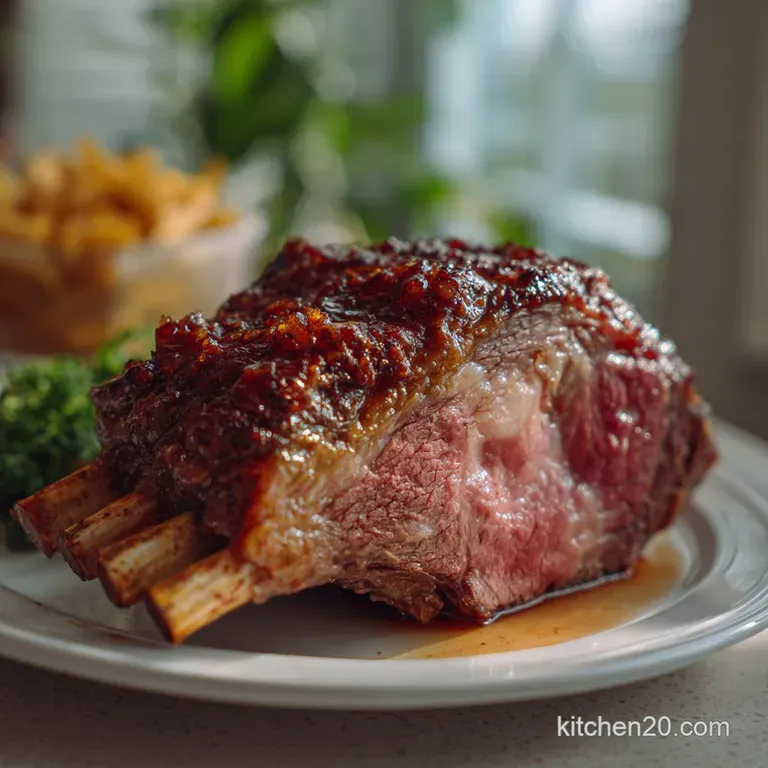
- Time: Active 20 minutes, Passive 3 hours, Total 3 hours 20 mins
- Flavor/Texture Hook: Shattering herb crust with a velvety, succulent center.
- Perfect for: High-stakes holiday hosting and celebratory midnight feasts.
- Make-ahead: Dry-brine the roast up to 24 hours before cooking for maximum seasoning penetration.
- The Ultimate New Years Dinner Standing Rib Roast
- The Physics of Perfect Crust and Tenderness
- Precision Timing for Your Holiday Menu Success
- Chemical Blueprint of the Ultimate Herb Rub
- Technical Tools for Professional Searing Performance
- Step-by-Step Architecture for a Prime Feast
- Resolving Structural Failures in Large Roasts
- Innovative Flavor Modalities for Global Palates
- Preserving Quality and Minimizing Culinary Waste
- Connected Sides for a Holistic Dining Experience
- Facts vs Fiction in Beef Roasting
- Proportional Adjustments for Batch Size
- FAQ: New Years Dinner Rib Roast
- Recipe FAQs
- 📝 Recipe Card
The Ultimate New Years Dinner Standing Rib Roast
The sound of a carving knife hitting a salt cured, herb flecked crust is the true anthem of a celebratory midnight feast. We often wonder why restaurant prime rib possesses a uniform, silky texture while home cooked versions often suffer from a "grey ring" of overcooked protein.
The answer isn't a secret industrial oven; it is the strategic manipulation of thermodynamics and osmotic pressure, key elements for any successful new years dinner.
I remember my first attempt at this cut; I blasted it with high heat from the start, resulting in a charred exterior and a center that was still shivering. By shifting our perspective to see the roast as a thermal battery, we can achieve a result that connects every guest at the table through a shared sensory experience.
This recipe acts as a platform for your culinary confidence, ensuring the meat is the star of your new years dinner.
Preparing a roast of this magnitude is about more than just a meal; it’s about revolutionizing how we interact with large format proteins. We are moving away from the "set it and forget it" mentality toward a precision based approach.
The succulent, mahogany colored results of this new years dinner will become the benchmark for every celebratory gathering you host in the future. Planning the perfect new years dinner starts right here.
The Physics of Perfect Crust and Tenderness
- Osmotic Deep Seasoning: Salt draws moisture out of the muscle fibers, dissolves into a brine, and is then reabsorbed deep into the protein structure via osmosis. This seasons the meat from within, not just on the surface, improving the flavor profile of this new years dinner.
- Reverse Sear Dynamics: By starting at a low temperature, we slowly raise the internal temperature without shocking the outer layers. This prevents the "bullseye" effect where the edges are dry and the center is raw.
- Enzymatic Tenderization: Maintaining a low internal temperature for a longer duration allows naturally occurring enzymes (cathepsins) to break down tough connective tissues before they are deactivated by high heat.
- Surface Dehydration: A 24 hour uncovered rest in the fridge dries the pellicle (outer skin). This allows the Maillard reaction to occur almost instantly during the final over high heat blast, creating a shatteringly crisp crust, essential for a show stopping new years dinner.
Precision Timing for Your Holiday Menu Success
Managing a new years dinner requires a synchronized timeline to ensure the host stays connected with the guests rather than trapped in the kitchen. This recipe is designed with built-in holding periods, allowing for a stress free transition from appetizers to the main event.
For a grand new years dinner, timing is everything.
| Feature | Fresh/Technique Focus | Shortcut/Standard Method |
|---|---|---|
| Texture | Silky, edge-to-edge pink gradient | Tough, grey outer ring with raw center |
| Crust | Thick, mahogany herb butter bark | Thin, soggy surface with minimal crunch |
| Juiciness | 10 15% less moisture loss during cooking | High moisture expulsion due to heat shock |
Why is the low-temperature start better?
High heat causes muscle fibers to contract violently, squeezing out precious intracellular juices like a wrung sponge. A low-temperature start (250°F) gently coaxes the proteins to set, preserving the internal moisture and ensuring a velvety mouthfeel.
This gentle approach is foundational to making your new years dinner superior.
Why do we salt the meat 24 hours in advance?
Immediate salting before cooking only seasons the surface. A 24 hour dry brine allows the salt to denature the protein structure, increasing its ability to hold onto water even as it heats up, resulting in a more succulent bite for your new years dinner.
Chemical Blueprint of the Ultimate Herb Rub
The success of your new years dinner hinges on the interaction between fats and aromatics. Each element in this matrix serves a specific physical purpose in developing the final flavor profile and structural integrity of the roast.
| Ingredient | Chemical/Physical Role (Science) | The Pro Secret (Why This Matters) |
|---|---|---|
| Standing Rib Roast | High fat-to-protein ratio with collagen | Marbling melts at 130°F, self basting the meat from the inside out. |
| Kosher Salt | Proteolysis and osmotic seasoning | Denatures proteins to increase moisture retention and enhances savory perception. |
| Unsalted Butter | Lipid based flavor carrier | Suspends herbs against the meat surface and facilitates even heat distribution. |
| Fresh Rosemary | Heat stable polyphenols | Piney notes survive the long cook time, providing a deep forest aroma. |
- 1 (3 bone) Standing Rib Roast: Approx. 7.5 lbs. Why this? Bones act as an insulator, protecting the meat from direct heat contact.
- 3 tbsp Diamond Crystal Kosher salt: Why this? Larger flakes allow for even coverage without over salting the exterior.
- 1/2 cup Unsalted butter: Why this? High fat content creates a medium for the Maillard reaction to thrive.
- 4 cloves Garlic, minced: Why this? Sulfur compounds transform into sweet, nutty notes under prolonged heat.
- 1 tsp Smoked paprika: Why this? Adds a subtle earthy base and provides a deep mahogany color to the crust.
Technical Tools for Professional Searing Performance
To execute this new years dinner with precision, we must rely on tools that provide accurate data. Guesswork is the enemy of a 7.5 pound investment. Using a Thermapen MK4 or similar high-quality digital thermometer is non-negotiable for monitoring the thermal mass of the beef.
A Lodge Cast Iron Roasting Pan or a heavy duty stainless steel pan provides the necessary heat retention for the final sear. Unlike thin aluminum pans, heavy vessels won't warp or cause the butter rub to scorch unevenly.
You will also need a sturdy wire rack; this is essential for airflow. Elevating the meat allows heat to circulate 360 degrees, preventing a soggy bottom and ensuring the fat renders on all sides.
step-by-step Architecture for a Prime Feast
How do I prepare the meat for the best crust?
- Pat the 7.5 lb Standing Rib Roast bone dry with paper towels. Note: Moisture on the surface inhibits the Maillard reaction.
- Apply 3 tbsp Coarse Kosher salt evenly over every square inch of the meat. Note: This initiates the dry-brining process via osmosis.
- Rest the roast uncovered on a wire rack in the refrigerator for 24 hours. Note: This dehydrates the surface to ensure a shattering crust.
How do I apply the flavor layer?
- Combine 1/2 cup softened butter, 4 minced garlic cloves, 2 tbsp rosemary, 2 tbsp thyme, 1 tbsp black pepper, and 1 tsp smoked paprika in a small bowl.
- Slather the butter mixture over the cold roast, creating a thick, even layer. Note: The cold meat helps the butter "set" and stick to the surface.
- Insert a digital probe thermometer into the thickest part of the meat, away from the bone. Note: Bones conduct heat differently and can give false readings.
What is the "Low and Slow" phase?
- Roast at 250°F for approximately 3 hours until the internal temperature reaches 115°F for medium rare. Note: We pull early to account for the over high heat sear and carryover cooking.
- Remove the roast from the oven and tent loosely with foil for 30 minutes. Note: This allows the muscle fibers to relax and reabsorb juices.
How do I get the shattering crust?
- Crank the oven to 500°F (or the highest setting) while the meat rests.
- Blast the roast for 6 10 minutes until the exterior is dark mahogany, sizzling, and the herb rub has formed a hard crust. Note: This rapid heat provides the final textural contrast without overcooking the center.
Resolving Structural Failures in Large Roasts
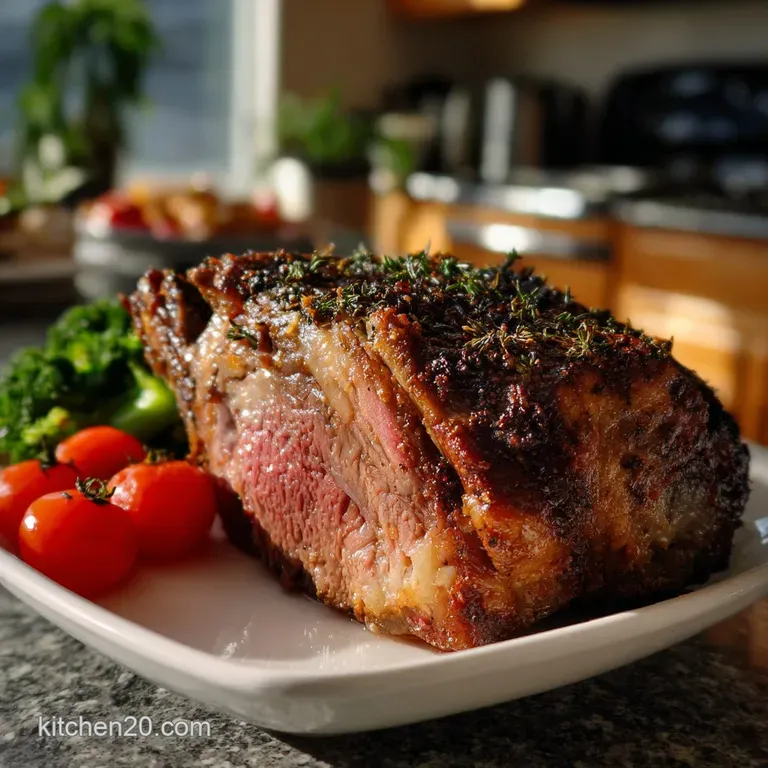
When managing a large new years dinner centerpiece, small errors can have big consequences. Most issues stem from the relationship between time and temperature. If your roast feels "spongy" rather than firm, it likely hasn't rested long enough to allow the proteins to set.
Why Your Roast is Bleeding Juices
If you cut into the meat and a puddle of red liquid immediately floods the board, the pressure inside the muscle fibers was still too high. This is a common failure in the new years dinner timeline.
During cooking, heat causes moisture to migrate toward the cooler center; resting allows that moisture to redistribute evenly through the roast.
| Problem | Root Cause | The Fix | Pro Protocol |
|---|---|---|---|
| Grey Ring | Oven temperature too high initially | Start at 250°F exclusively | Use a calibrated oven thermometer |
| Soggy Bottom | Roast sat in its own juices | Always use a wire rack | Ensure 1 inch clearance from pan |
| Rub Falling Off | Surface was too wet/oily | Pat dry and dry-brine | Apply butter rub while meat is cold |
Innovative Flavor Modalities for Global Palates
This roast serves as a versatile platform that can be adapted to suit various new years feast ideas. Whether you want a spicy profile or a more Mediterranean lean, the fundamental physics remain the same for your holiday meal.
- Mediterranean Profile: Substitute the rosemary/thyme for dried oregano and lemon zest. The acidity of the zest cuts through the rich fat of the rib eye.
- Umami Bomb: Mix 1 tbsp of white miso paste into the herb butter. The fermented soy adds a savory depth that connects beautifully with the beef's natural flavor.
- Horseradish Kick: Add 2 tbsp of prepared horseradish to the butter rub. The heat from the horseradish mellows during the slow roast but leaves a distinct, sharp finish.
Chef's Note: If you find yourself needing to serve a larger crowd, consider pairing this with a Homemade Stuffing recipe to stretch the meal. The savory bread will soak up any rogue juices from the carving board.
Preserving Quality and Minimizing Culinary Waste
Storing a high value item like prime rib requires a strategy to maintain the integrity of the cellular structure. For your new years dinner leftovers, the goal is to prevent oxidation and moisture loss.
- Fridge: Store in an airtight container for up to 4 days.
- Freezer: Wrap individual slices tightly in plastic wrap, then foil, for up to 3 months.
- Zero Waste - The Bones: Never discard the 3 bone rack. These are collagen goldmines. Simmer them with onion scraps and peppercorns for 8 hours to create a bone broth that is naturally thick with gelatin. This broth can serve as a platform for a Classic Pot Roast recipe later in the week.
- Zero Waste - Fat Caps: Render any excess fat trimmings (tallow). Use this liquid gold for roasting potatoes; the high smoke point and beefy aroma are revolutionizing for simple side dishes.
Connected Sides for a Holistic Dining Experience
A successful new years dinner menu is about balance. Since the rib roast is incredibly rich and fatty, your side dishes should provide either acidity to cut the fat or a soft starch to absorb the savory juices.
I recommend a high-quality starch to complete the plate. A tray of 30Minute Dinner Rolls recipe is perfect for mopping up the herb butter drippings. If you have more time, the pillowy texture of a How to Make recipe provides a connected dining experience where the bread becomes a vessel for the meat's juices.
For a crunch factor, roasted root vegetables or a crisp green salad with a sharp vinaigrette will provide the necessary contrast to the velvety beef. This holistic approach ensures your new years dinner is a well rounded culinary event.
Facts vs Fiction in Beef Roasting
Myth: Searing the meat at the beginning "locks in the juices." Truth: Searing does nothing to prevent moisture loss. In fact, high initial heat often causes more juice to be expelled. Searing is purely for flavor (Maillard reaction), which is why we do it at the end for better control.
Myth: You must bring the meat to room temperature before roasting. Truth: It would take over 4 hours for a 7.5 lb roast to reach room temperature, posing a safety risk.
It is actually better to start with a cold roast for the reverse sear method, as it gives the exterior more time to dehydrate before the center overcooks.
Myth: The "red juice" on the plate is blood. Truth: It is myoglobin, a protein that delivers oxygen to muscle cells. It is perfectly safe and contains the majority of the meat's savory flavor.
Proportional Adjustments for Batch Size
Scaling Down (1.5 2 lbs): For a smaller roast, reduce the initial roasting time by 40%. Use a smaller 6 inch oven safe skillet to prevent the butter rub from burning on the empty pan surface. Check the temperature 1 hour earlier than the main recipe suggests.
- Flavor (Spices)
- Scale the salt and herbs to 1.5x, NOT 2x. Overshooting the salt on a massive surface area can lead to an unpalatable crust.
- Cooking Time
- The cooking time will not double. It will increase by roughly 30 50% because the thickness of the roast is the primary factor in heat penetration, not just the length.
- Resting
- Increase the rest time to 45 minutes. The larger thermal mass will experience more carryover cooking (up to 10°F-12°F).
Precision Checkpoints for Success
- Dry Brine Check: After 24 hours, the meat should look dark purple and the surface should feel dry to the touch, like parchment paper.
- Pull Temp: 115°F is the "Golden Number." Do not wait for 125°F in the oven, or carryover cooking will push you into "medium" territory (140°F+).
- The Rest: If the meat doesn't rest for at least 30 minutes, the internal pressure will force the juices out the moment you slice, leaving the meat grey and dry.
Decision Shortcut
- If you want a deeper bark: Increase the smoked paprika and black pepper in the rub.
- If you want a more tender interior: Lower the oven to 225°F and extend the cook time by 45 minutes.
- If you are short on time: Skip the 24 hour dry brine, but you will lose the "shatter" effect on the crust for your final new years dinner presentation.
By following this architectural approach to your new years dinner, you aren't just making a meal; you are creating a connected platform for celebration. This recipe revolutionizes the way we think about the holiday centerpiece, ensuring every slice is a succulent testament to the power of precision and patience, making it the ideal new years dinner.
FAQ: New Years Dinner Rib Roast
Can I prep the garlic butter the night before?
Yes, you can prepare the butter rub and store it in an airtight container at room temperature if using within 12 hours, or in the fridge for up to 3 days. Soften it slightly before applying to the cold roast so it spreads easily without tearing.
How long does this last in the fridge?
The cooked roast will stay fresh and succulent for up to 4 days when wrapped tightly. Avoid slicing the entire roast at once to preserve quality for potential leftovers beyond the main event.
How far ahead can I prep the meat?
You can salt the meat up to 48 hours in advance. This actually improves the texture and crust. However, do not apply the butter rub more than 2 hours before cooking, as the moisture in the butter can soften the dried pellicle you worked so hard to achieve for a stunning new years dinner.
What is the best way to reheat leftovers without overcooking?
Place slices in a baking dish with a splash of beef broth, cover tightly with foil, and warm in a 250°F oven until just heated through (about 10 15 minutes). This "steaming" method prevents the meat from reaching the toughening point of 150°F.
What if my oven doesn't go down to 250°F?
Use the lowest setting available (usually 275°F) and check the internal temperature 30 minutes earlier. The results will still be excellent, though the "pink-to-edge" gradient might be slightly less uniform.

Recipe FAQs
how to make new years dinner?
Follow the reverse sear method: dry-brine 24 hours, apply herb butter, cook low (250°F) to 115°F, then blast high (500°F) for a crust.
when to cook new years dinner?
Start the low roast 3.5 hours before serving time. This timing allows for the essential 30-minute post roast rest period before carving and serving the centerpiece.
when to cook new year's eve dinner?
Plan the dry brine 24 hours prior to cooking for optimal seasoning. The actual cooking process is slow and low, demanding advance planning for a successful evening.
what to cook new year's day dinner?
Myth: Reheating roast beef in the microwave yields tender results. Reality: Microwave radiation excites water molecules too rapidly, causing immediate and irreversible protein tightening.
Warm leftovers gently in a 250°F oven with added broth to reintroduce moisture.
when do you make new year's dinner?
For New Year's Eve, plan the final sear just before midnight or the main meal hour. This timing maximizes the sensory impact of the hot crust and velvety interior when serving.
Can I use a different cut of beef?
Filet Mignon is leaner and cooks much faster than Rib Roast. Its lower fat content means it requires less cooking time to reach temperature, demanding tighter thermal monitoring to avoid drying out during the high heat sear phase of your New Years Appetizer with Smoked Salmon preparation.
Why do I need to rest the roast after cooking?
Resting for 30 minutes equalizes internal moisture pressure. Heat forces juices to the center; resting allows muscle fibers to relax and reabsorb this liquid, leading to juicier slices rather than pooling on the board.
- Relaxes contracted muscle fibers
- Allows heat gradient to minimize
- Prevents immediate juice expulsion
Reverse Sear New Years Dinner
Ingredients:
Instructions:
Nutrition Facts:
| Calories | 892 kcal |
|---|---|
| Protein | 56g |
| Fat | 74g |
| Carbs | 1.2g |
| Fiber | 0.4g |
| Sugar | 0.1g |
| Sodium | 2540mg |
