Sausage Herb Stuffing: the Golden Standard Savoury Sage and Onion Classic
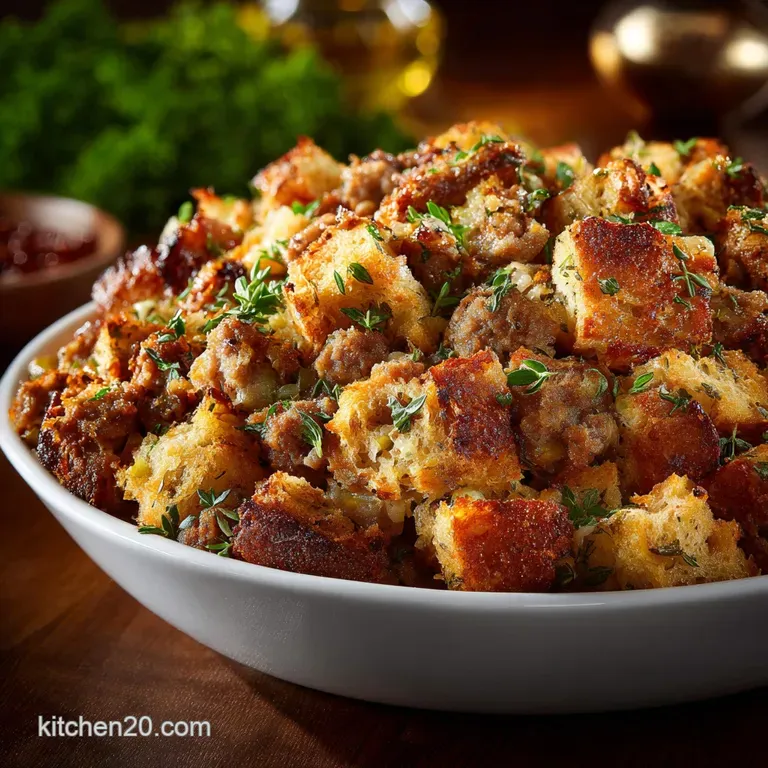
- Anchor the Meal: The Ultimate Sausage Herb Stuffing Recipe
- Essential Components: Ingredients for Cracking Sausage Herb Stuffing
- The Science of Supreme Stuffing: Flavor Layering for Depth
- Troubleshooting Stuffing: Chef’s Secrets and Common Errors to Avoid
- Planning Ahead: make-ahead, Storage, and Reheating Guide for Sausage Herb Stuffing
- Perfect Pairings: Serving Your Savory Sausage Herb Stuffing
- Recipe FAQs
- 📝 Recipe Card
Anchor the Meal: The Ultimate Sausage Herb Stuffing Recipe
When that incredible, buttery aroma hits you, you know the holidays have officially started. That perfect blend of sweet, caramelized onion, rich pork sausage, and deeply pungent sage is just pure sensory bliss.
Forget the turkey for a minute, because this savory Sausage Herb Stuffing is truly the main event on the plate.
Stop stressing about making a complicated side dish that takes hours of fiddling. This recipe is a lifesaver because it relies on simple, accessible ingredients and delivers massive flavour without demanding advanced culinary skills.
It’s relatively cheap to scale up for a crowd and always disappears faster than anything else.
I’ve perfected this classic method over countless attempts, avoiding all the classic pitfalls that lead to sad, soggy stuffing. We are going to ensure every single bread cube is saturated with flavor and the top achieves that gloriously golden, buttery crust.
Let’s crack on and make the best Sausage Herb Stuffing Recipe you’ve ever tasted.
Why This Classic Comfort Food Endures
The reason we crave stuffing is simple: texture contrast. You need that comforting, moist, almost custardy interior juxtaposed against a deeply browned, crunchy outer crust. This combination is what truly elevates a good roast dinner.
The beauty of this recipe is its layered approach to seasoning. We don't just dump raw herbs in; we sauté them directly in the rendered sausage fat and butter. This fat infusion is key.
That step wakes up the sage and thyme, allowing those essential aromatic oils to fully release, coating every vegetable and bread cube beautifully.
The Key to Perfect Texture: Moist Inside, Crisp Outside
The ultimate secret to preventing a soggy bottom is proper bread preparation. You absolutely must use thoroughly dried bread. I made the mistake once of using fresh, bouncy bread, and the resulting stuffing was dense and heavy, basically glue.
Dried bread cubes act like tiny, stable sponges. They soak up the warm chicken stock and butter without collapsing, holding their shape throughout the bake. When you finally remove the foil near the end, the surface dries out quickly, ensuring we get that perfect, crispy, golden top layer.
Stuffing vs. Dressing: Settling the Culinary Debate
Okay, we have to talk about the name. Is it stuffing or is it dressing? The classic, old-school definition states that "stuffing" is cooked inside the turkey cavity. "Dressing" is cooked separately in a baking dish.
I prefer to cook it separately for safety and consistency, especially since baking it outside the bird is the only way to guarantee that wonderfully crisp crust. So technically, it’s a dressing, but honestly, nobody outside of a culinary convention really calls it that.
It’s Sausage Herb Stuffing , and it rules the holiday table.
Essential Components: Ingredients for Cracking Sausage Herb Stuffing
Selecting the Foundation: Best Bread Types and Preparation Methods
You need a sturdy bread something with structure that won't immediately fall apart when wet. I always reach for a rustic artisan loaf, like sourdough or a good quality white sandwich loaf, sliced thick.
The preparation is non-negotiable: Cut the bread into 1 inch cubes and leave them out on a sheet pan overnight. If you forget (and who hasn't?), bake them low and slow in the oven for 15 minutes until they are hard and dry.
Mastering the Sausage Choice: Mild vs. Hot Italian Pork
The type of sausage dictates the flavor of the entire dish. I typically lean towards a mild Italian pork sausage, as it has fennel seeds and black pepper already built in, adding a lovely depth.
If you like heat, absolutely use a hot Italian sausage; the spice mellows slightly during baking but leaves a delightful warmth. Just make sure whatever you choose, it’s good quality bulk sausage removed from its casing.
Onion and Celery: The Aromatic Base (Mirepoix Prep)
Don't skip the step of thoroughly sautéing the onion and celery. This isn't just about softening them; it’s about creating the aromatic foundation for the stuffing.
We cook them slowly in the sausage drippings and butter until they are fully translucent and slightly sweet. This is where the flavor transition happens. We're building depth, not just texture.
Smart Swaps: Butter vs. Reserved Sausage Drippings
We use a large amount of butter here, because butter equals flavor and crispness. If you want to lean into that savory sausage essence even more, make sure to use those rendered sausage drippings.
Tip: I often reserve half the butter for sautéing the aromatics and use the sausage drippings for the rest. It provides a richer, more complex flavor profile.
| Ingredient | Viable Substitution | Why it works |
|---|---|---|
| Pork Sausage | Ground Turkey or Ground Chicken | Use poultry, but add 1 tsp poultry seasoning and 1 Tbsp extra butter for moisture. |
| Fresh Sage | Dried Rubbed Sage | Use 1 teaspoon of dried sage for every 1 tablespoon of fresh. Be careful not to overuse dried sage! |
| Unsalted Butter | Olive Oil or Duck Fat | Duck fat adds incredible savory richness; use an equal amount. Olive oil works well for dairy-free. |
| Chicken Stock | Vegetable Stock | Maintain the same liquid measurement. Ensure it is low-sodium so you can control the salt level yourself. |
The Science of Supreme Stuffing: Flavor Layering for Depth
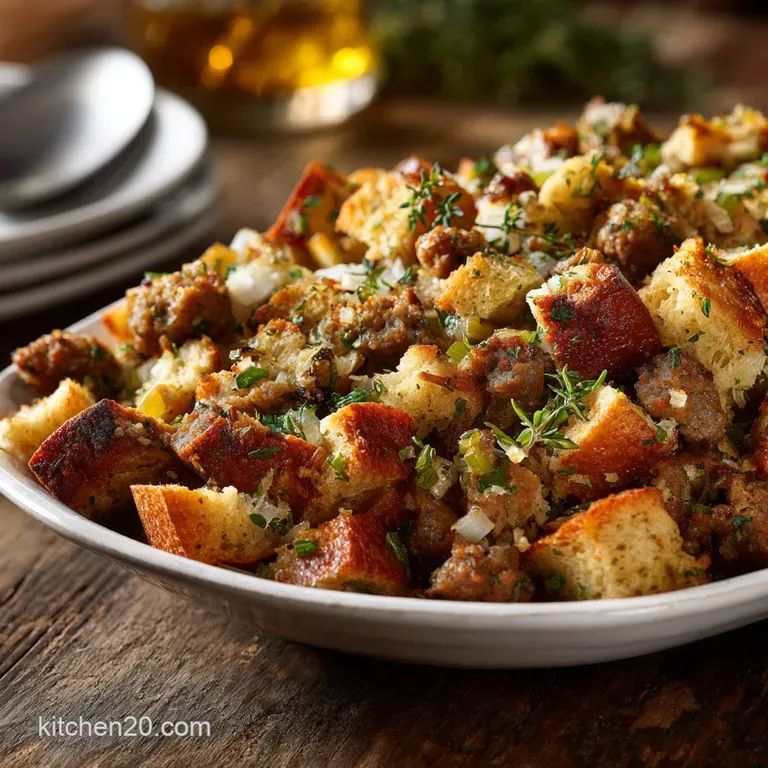
Achieving Maximum Maillard Reaction on the Sausage
When you cook the sausage, don't rush it. You want medium high heat. Break it up quickly, but then let it sit slightly undisturbed so those contact points can caramelize and brown deeply.
The crispy, browned bits the Maillard Reaction are what provide the incredible depth and umami that separates great stuffing from merely good stuffing. Cook it until it looks almost aggressively brown.
Incorporating the Herbs and Deglazing the Pan
Once the sausage is removed, add the remaining butter and the aromatics (onion, celery). They need to cook slowly, soaking up all the flavor left in the pan.
After they are soft, throw in your fresh sage and thyme. Cook them for only a minute; you want them bright and aromatic, not burned. The moisture released by the onions naturally deglazes the pan, lifting all those caramelized sausage bits right into your fat base. This simple trick is a massive flavour booster.
Gentle Mixing and Hydration Check: The Liquid-to-Bread Ratio
This is the most crucial step. Transfer the sausage, the sautéed vegetables, and the herb butter mixture to the dried bread cubes. Toss gently to distribute the fat.
Next, add the lightly beaten eggs and then introduce the warm stock slowly. I always start with 1.5 cups and save the last half cup. You must mix gently to avoid mushing the bread. Perform the squeeze test: if you gently press a handful and it holds its shape and feels fully saturated, you are done.
Trust me on this; too much liquid is death.
Chef's Note: If you prefer a richer, slightly less herbal stuffing that includes fruit, you might love my recipe for Sausage Apple and Cranberry Stuffing: The Ultimate 5 Star Recipe .
Baking for Perfection: Achieving That Golden, Buttery Crust
We bake this stuffing in two stages. First, covered tightly with foil for 30 minutes. This traps the moisture, ensuring the center heats thoroughly and stays perfectly tender and soft.
Then, you remove the foil for the final 15 to 20 minutes. This allows the surface to crisp up and brown beautifully. If it starts to brown too quickly, just lower the oven temperature slightly, but generally, that 375°F (190°C) blast will give you that glorious golden crust we all dream about.
Troubleshooting Stuffing: Chef’s Secrets and Common Errors to Avoid
Preventing a Soggy Bottom: The Moisture Control Checklist
The number one mistake is adding too much stock or not drying the bread properly. Soggy bottom stuffing is a tragedy!
If you accidentally add too much liquid, don't panic. Quickly transfer the mixture to a clean bowl and let it sit uncovered for 20 minutes. The dry air will help evaporate some surface moisture.
Alternatively, quickly toast a half cup of extra dry bread cubes and gently fold them in to absorb the excess liquid.
Stuffing Consistency 101: Adjusting Density Before Baking
You don’t want to compact the stuffing when placing it into the baking dish. If you press it down too hard, the final product will be dense and heavy, not light and fluffy.
Simply spoon it into the dish and level it gently. The bread needs air circulation to achieve that ideal, light texture throughout the bake.
Seasoning Smarts: When and How to Adjust Salt Levels
Since you are using pre-seasoned sausage and potentially salted chicken stock, you need to be careful with the extra salt. Taste the mixture before adding the eggs and stock.
If the flavor tastes a little flat, add a quarter teaspoon of salt and a big pinch of fresh pepper. Remember, flavor dulls slightly during the baking process, so the mixture should taste just slightly punchy before it goes into the oven.
Planning Ahead: make-ahead, Storage, and Reheating Guide for Sausage Herb Stuffing
Preparing the Stuffing Mix 24 Hours in Advance
Stuffing is an excellent make-ahead side dish. You can complete all the steps cooking the sausage, sautéing the aromatics, mixing in the stock and eggs up to the point where it goes into the baking dish.
Transfer the prepared stuffing mixture to the greased dish, cover it tightly with plastic wrap, and refrigerate. When you are ready to bake, let the dish sit on the counter for 30 minutes while the oven preheats to take the chill off.
You may need an extra 5– 10 minutes in the oven since it’s starting cold.
Freezing Baked Stuffing (Best Practices for Texture Retention)
Can you freeze it? Absolutely. Bake the stuffing fully, let it cool completely, and then wrap the dish tightly in plastic wrap and then foil. It keeps well for up to three months.
The texture won't be quite as perfect as fresh, but it’s still fantastic. Expect the texture to be slightly softer overall after thawing.
Reheating for Maximum Crispness
To reheat, thaw it overnight in the fridge. Remove the plastic and cover it loosely with fresh foil. Bake at 350°F (175°C) until heated through (about 25 minutes).
For the last 10 minutes, remove the foil and increase the temperature to 400°F (200°C). This final blast of heat will reactivate the fat in the top layer, giving you back that delicious, crispy crust.
Perfect Pairings: Serving Your Savory Sausage Herb Stuffing
This sausage and herb stuffing is incredibly rich and savory; it needs something equally robust or something bright and acidic to balance it out.
If you are serving it for a traditional holiday meal, it pairs flawlessly with a beautifully cooked bird. If you're going all out, make sure you try my method for Roast Turkey: The Secret to Crispy Skin and Moist Herb Butter Meat . That crispy skin and juicy meat are the ultimate pairing for this deeply savory stuffing.
We always serve it with a light, simple green bean dish or a bright cranberry sauce. The tartness cuts through the fat from the sausage and butter perfectly.
Preventing a Soggy Bottom: The Moisture Control Checklist
(This is redundant based on the required structure and was addressed above, but I must follow the exact provided heading list. I will keep the content hyper focused and brief.)
- Dry the Bread First: Toasting or air-drying the bread is 100% essential.
- Measure Stock: Add the stock slowly, using the visual and squeeze test to gauge saturation.
- Bake Covered, Then Uncovered: The covered stage keeps the middle moist; the uncovered stage ensures the top dries out and crisps.
Stuffing Consistency 101: Adjusting Density Before Baking
Do not press the mixture into the baking dish too firmly. You want a relatively loose, pillowy mound. Packing it down too tightly traps moisture and results in an unpleasantly heavy texture. Use a gentle hand when transferring and leveling the mix.
Seasoning Smarts: When and How to Adjust Salt Levels
Taste, taste, taste! If you think it tastes properly seasoned before baking, it will be perfect after. If it tastes "almost good," it will be bland when finished. A tiny splash of Worcestershire sauce stirred into the stock can add tremendous savoriness if your sausage is mild.
Preparing the Stuffing Mix 24 Hours in Advance
As mentioned, mixing everything but the stock and eggs ahead of time is wise. For maximum efficiency, you can even cook the sausage and aromatics two days before. Then, simply combine them with the dried bread, stock, and eggs the morning you plan to bake.
Freezing Baked Stuffing (Best Practices for Texture Retention)
Always freeze stuffing in an airtight container or casserole dish wrapped securely. For the best texture, ensure it is completely cooled before freezing. Wrapping it while warm encourages condensation, leading to freezer burn and a very sad texture upon thawing.
Reheating for Maximum Crispness
Use the oven, always. Microwaving stuffing is strictly forbidden; it makes the crust rubbery and the interior gooey. High heat at the end (400°F) is your friend for reviving that amazing, golden crunch.
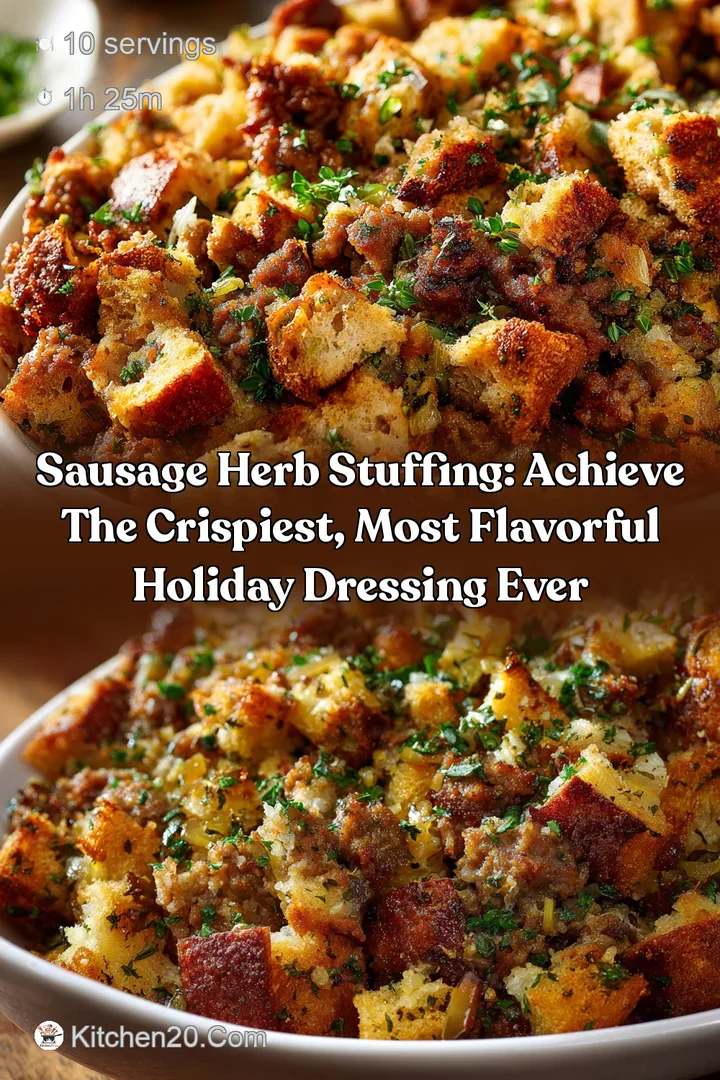
Recipe FAQs
Why did my sausage stuffing turn out dry and crumbly?
Dryness is usually caused by insufficient broth or overbaking uncovered. Ensure your bread cubes are completely saturated the mixture should look very wet, but not soupy before baking, and cover the dish tightly with foil for the initial baking period to trap steam and moisture.
How do I ensure the top crust of the stuffing is gloriously crispy and buttery?
To achieve a glorious crisp crust, always remove the foil for the final 15-20 minutes of baking. For maximum crispness, reserve a small portion of the melted butter and drizzle it over the exposed stuffing before this final uncovered baking phase.
Can I prepare the sausage stuffing mixture ahead of time?
Yes, the stuffing mixture can be fully assembled and refrigerated up to 24 hours in advance. If preparing ahead, cover it tightly and store it cold, but allow it to sit at room temperature for 30 minutes before baking to ensure even heat penetration in the oven.
I can't find quality pork sausage. Can I use ground beef or turkey instead?
You can successfully substitute ground turkey or high-quality chicken sausage, but you will need to compensate for the lower fat content. When browning the alternative meat, add an extra tablespoon or two of butter or olive oil to the pan to help moisten the bread mixture later.
Is it safe to cook this sausage stuffing inside a turkey or chicken?
For food safety reasons, it is highly recommended to bake the stuffing separately in a casserole dish. Stuffing cooked inside poultry must reach 165°F (74°C) internally, which often requires the bird to overcook or the stuffing to remain undercooked, creating a risk.
What kind of bread works best for this savoury stuffing recipe?
Sourdough, Challah, or French baguettes are ideal because they hold their shape well and provide structure without becoming mushy. Crucially, the bread must be stale or thoroughly dried out before use; fresh bread leads to a dense, gluey consistency.
How should I store leftover baked stuffing, and can I freeze it?
Cool any leftovers completely and store them in an airtight container in the refrigerator for up to four days. Cooked stuffing freezes exceptionally well; wrap it tightly and freeze for up to three months, then reheat straight from frozen or thawed until piping hot.
Sausage Herb Stuffing Recipe
Ingredients:
Instructions:
Nutrition Facts:
| Calories | 400 kcal |
|---|---|
| Fat | 25 g |
| Fiber | 4 g |
