Scientific Charcuterie Board Assembly
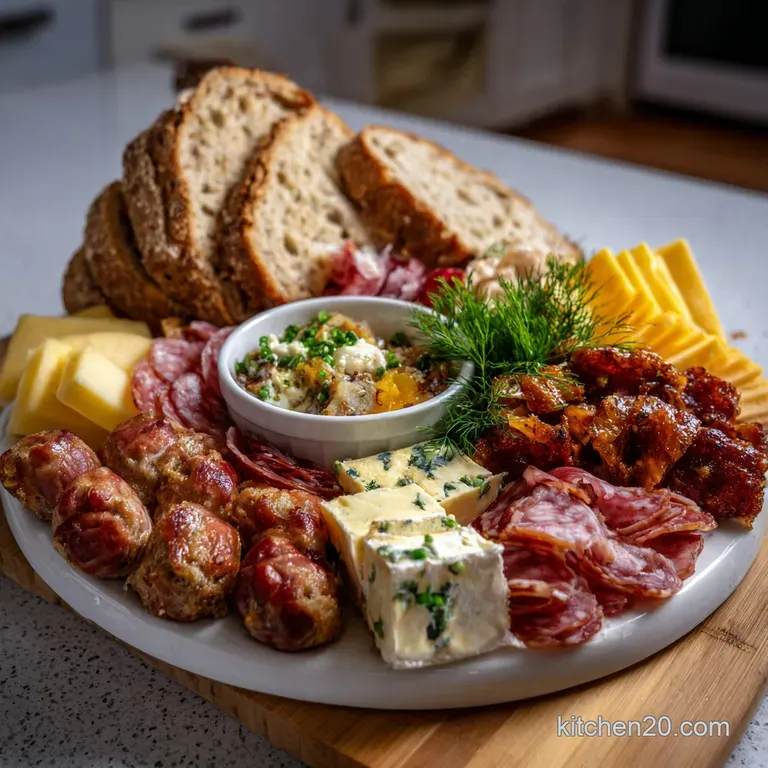
- Effort/Time: 30 minutes assembly; no-cook.
- Flavor Hook: Creamy, salt-cured, and sharp-acid profiles.
- Perfect for: Low-stress hosting and holiday-ready gatherings on your charcuterie board.
- Mastering the Architecture of an Elegant Charcuterie Board
- The Scientific Synergy of Lipid and Acid Balance
- Operational Parameters for High Efficiency Hosting
- Curating the Component Platform for Optimal Flavor Profiles
- Technical Hardware for Precision Presentation and Assembly
- The Logic of Spatial Arrangement and Assembly
- Resolving Architectural Failures in Flavor Design
- Modular Iterations for Every Dietary Context
- Maintaining Structural Integrity and Freshness Post Event
- Enhancing the User Experience through Strategic Pairings
- Recipe FAQs
- 📝 Recipe Card
Mastering the Architecture of an Elegant Charcuterie Board
There is nothing more frustrating than investing $80 in artisanal components only to watch your guests ignore a pile of "sweating" cheese and limp prosciutto on your charcuterie board.
I’ve seen boards where the moisture from the grapes migrated into the crackers, transforming a premium snack into a textureless, soggy disaster. This failure isn't just about aesthetics; it's a breakdown in the physics of food preservation and structural integrity that ruins the financial investment you've made in your ingredients when planning a charcuterie board.
I’ll be the first to admit I’ve failed at this I once assembled an easy charcuterie board hours in advance, only to have the oils from the Genoa Salami oxidize into a puddle that made the entire board smell metallic.
I realized then that a successful charcuterie board isn't just a random assortment; it’s a carefully connected system that requires specific staging to maintain the "snap" of the crackers and the "velvety" mouthfeel of the cheese.
The resulting structure, the perfect charcuterie board, demands attention to detail.
The secret to a professional result lies in lipid management and enzymatic control. By understanding how the high fat content in a Double Cream Brie interacts with the acidity of a cornichon, we create a sensory loop that prevents palate fatigue.
When you master the spatial arrangement, you’re essentially revolutionizing the user interface of your party, ensuring every bite provides a shattering crunch followed by a rich, savory finish on your impressive charcuterie board.
The Scientific Synergy of Lipid and Acid Balance
- Lipid Palate Coating: High fat cheeses like Galbani Double Cream Brie coat the taste buds in a hydrophobic layer, which can dull flavors over time.
- Acid Cleansing: The acetic acid in Maille Cornichons and the citric acid in raspberries break through the fat layer, resetting the palate for the next bite.
- Enzymatic Breakdown: Aged cheeses like Manchego contain protein crystals (tyrosine) that provide a physical "crunch" through long term proteolysis.
- Osmotic Pressure: Salt cured meats like Citterio Prosciutto use high salt concentrations to draw out moisture, creating a dense, concentrated umami flavor.
- Hygroscopic Barrier: Using Marcona almonds as "spacers" prevents moisture from fruits from reaching the crackers, maintaining structural crispness across the entire charcuterie board.
| Ingredient | Chemical/Physical Role (Science) | The Pro Secret (Why This Matters) |
|---|---|---|
| Aged Manchego | Proteolysis driven tyrosine crystal formation | Provides a structural "crunch" within a semi hard dairy matrix |
| Prosciutto di Parma | Myofibrillar protein denaturation via salt | Creates a translucent, melt-on-the-tongue texture without heat |
| Castelvetrano Olives | Lactic acid fermentation balance | High oil content ensures a buttery mouthfeel that mimics the cheese |
| Fig Jam | Polysaccharide (Pectin) viscosity | Acts as a flavor bridge between the salty fats and the sharp acids |
Operational Parameters for High Efficiency Hosting
This charcuterie board for a party is designed for maximum throughput with zero active cook time. The "platform" approach allows you to scale the assembly based on guest count without changing the fundamental physics of the board.
Building a large charcuterie board relies on this scalability.
- Prep Time: 30 minutes
- Cook Time: 0 minutes
- Total Time: 30 minutes
- Yield: 9 servings
| Method | Texture | Time Investment | Flavor Depth |
|---|---|---|---|
| Fresh Assembly | Shattering crackers, supple meat | 30 minutes | Peak aromatic volatile release |
| Shortcut (Pre-cut) | Slightly oxidized edges | 10 minutes | Muted fat-soluble flavors |
| make-ahead (Wrapped) | Potential moisture migration | 2 hours prep | Best for high volume logistics for your charcuterie board |
Curating the Component Platform for Optimal Flavor Profiles
To build a truly elegant charcuterie board, you need a balanced ratio of dairy fats, cured proteins, and acidic "cleansers." I always look for a "connected" mix of textures from the velvety Brie to the firm Manchego.
This balanced approach is what makes a visually stunning charcuterie board.
- 7 oz Aged Manchego or Sharp Cheddar: Why this? High protein density provides structural integrity for fanning and stacking. Sliced into triangles.
- 8 oz wheel of Double Cream Brie or Camembert: Why this? High butterfat content (60%+) creates a luxurious, spreading medium. Keep whole or cut a small wedge.
- 4 oz Gorgonzola or Goat Cheese log: Provides a sharp, pungent counterpoint to the milder fats.
- 4 oz thinly sliced Prosciutto di Parma: Why this? Paper thin slices allow for maximum surface area exposure and aroma release.
- 5 oz Genoa Salami or Sopressata: A firmer, garlic forward protein that holds its shape.
- 3 oz sliced Chorizo or Pepperoni: Adds a smoky, piquant note and a distinct red hue.
- 6 oz assorted crackers: Ensure at least two varieties for diverse "crunch" profiles.
- 1 small baguette: Sliced and lightly toasted on a Lodge Cast Iron Griddle.
- 0.5 cup Marcona almonds or candied walnuts: Adds a necessary roasted, earthy crunch.
- 1 cup green or red grapes: Provides a burst of liquid to hydrate the palate between bites.
- 0.5 cup fresh raspberries: High acid and fiber to cut through the heavy lipids.
- 0.25 cup dried apricots or figs: Concentrated sugars for a chewy, sweet contrast.
- 0.5 cup Castelvetrano olives: Buttery, mild, and firm.
- 0.25 cup cornichons: Essential for high acid palate cleansing.
- 0.25 cup fig jam or honey: The "glue" that connects the salty and sweet elements of the charcuterie board.
| Original Ingredient | Substitute | Why It Works |
|---|---|---|
| Aged Manchego | Sharp White Cheddar | Similar low-moisture profile and crystalline texture. |
| Prosciutto di Parma | Bresaola | Leaner, air-dried beef provides a similar umami depth. |
| Marcona Almonds | Roasted Hazelnuts | High fat content and firm snap match the original texture. |
| Fig Jam | Hot Honey | Adds a spicy sweet dimension that breaks through heavy fats. |
Technical Hardware for Precision Presentation and Assembly
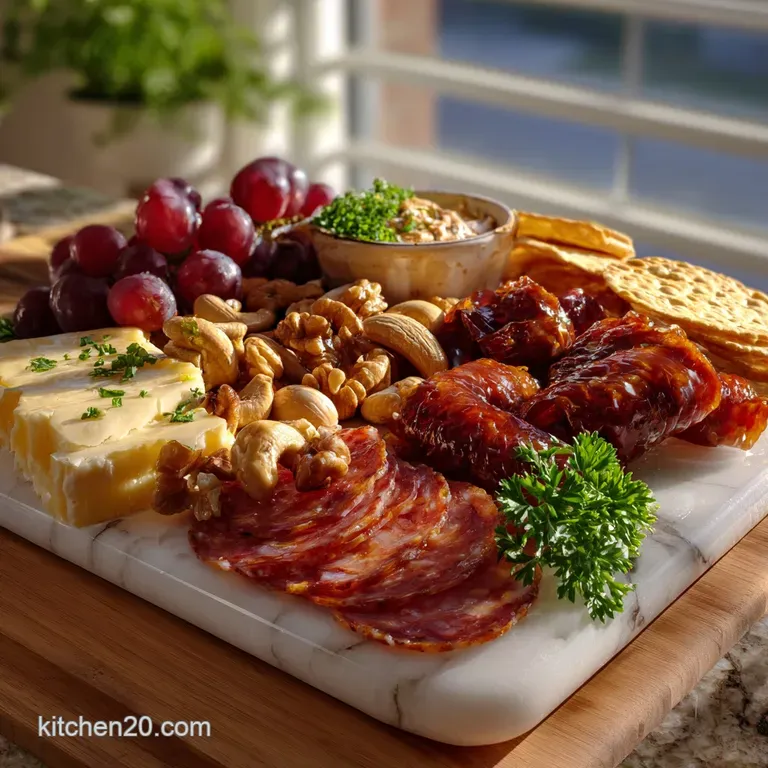
The right tools are the foundation of your charcuterie board ingredients organization. Using a dedicated board ensures the flavors don't pick up "ghost" aromas from previous onion or garlic prep. The foundation of any good charcuterie board starts with the right equipment.
- Large Wooden Board (Boos Block): Provides a non-reactive, porous surface that prevents "sweating" underneath the cheese.
- Cheese Knives (Wüsthof): Use a skeleton knife for soft Brie (prevents sticking) and a spade for hard Manchego.
- Small Ceramic Ramekins: Essential for containing "wet" items like olives and honey to prevent moisture migration.
- Petty Knife: For precision slicing of the baguette and fruit.
The Logic of Spatial Arrangement and Assembly
The architecture of a holiday charcuterie board follows a specific "inside out" logic. We start with the largest, most stable anchors and fill the gaps with smaller, more delicate items to create a sense of abundance.
- Place 8 oz wheel of Double Cream Brie.Note: Anchoring the largest item first establishes the board's center of gravity.
- Arrange 7 oz Aged Manchego triangles.Note: Fanning the triangles creates a visual path for the eye to follow.
- Position 4 oz Gorgonzola or Goat Cheese.Note: Keep pungent cheeses slightly isolated to prevent flavor contamination.
- Nestle 2 small ramekins.Note: Fill these with 0.5 cup olives and 0.25 cup cornichons to keep brine away from crackers.
- Ribbon 4 oz Prosciutto di Parma.Note: Loosely folding the meat increases surface area for better fat-melt on the tongue.
- Shingle 5 oz Genoa Salami.Note: Overlapping the slices prevents them from drying out too quickly.
- Stack 6 oz assorted crackers and baguette slices.Note: Place these near the soft cheeses for intuitive pairing logic.
- Cluster 1 cup grapes.Note: Use the grapes as a "barrier" between different meat types.
- Scatter 0.5 cup Marcona almonds.Note: Fill small gaps to create a "connected" and dense aesthetic.
- Tuck 0.5 cup fresh raspberries.Note: Place near the Brie; the acid perfectly complements the creaminess.
- Drizzle 0.25 cup fig jam.Note: Add a small spoon to the jam jar to manage portioning and prevent mess.
Chef's Tip: If you’re assembling this as a summer charcuterie board, freeze your grapes for 20 minutes before serving. They act as "edible ice cubes" that keep the surrounding cheese cool without diluting the flavors.
Resolving Architectural Failures in Flavor Design
A common issue when making a charcuterie board for beginners is the "sweating" effect, where moisture or oils pool on the surface of the meats and cheeses. This is often caused by temperature shock or high humidity.
Why Your Cheese Sweats
When cheese is pulled from a cold fridge (38°F) to a warm room (72°F), moisture from the air condenses on the surface. Plus,, fats in soft cheeses like Brie begin to liquefy at room temperature.
To fix this, temper your cheese for only 20 30 minutes and keep it away from direct sunlight or heat sources.
| Problem | Root Cause | The Fix | Pro Protocol |
|---|---|---|---|
| Soggy Crackers | Moisture migration from fruit/brine | Use ramekins for wet items | Create a "nut barrier" between fruit and bread |
| Discolored Meat | Oxidation from air exposure | Cover tightly until serving | Brush a tiny amount of olive oil on salami edges |
| Brittle Cheese | Excessive drying/dehydration | Slice just before guests arrive | Keep hard cheeses in a single block until serving |
Modular Iterations for Every Dietary Context
The beauty of the charcuterie board is its ability to adapt to different seasonal platforms. Whether you are building a christmas charcuterie board or a casual weekend snack, the ratios of fat to acid remain the same, ensuring a balanced presentation on your charcuterie board.
- If you want a bold profile, do this: Increase the Gorgonzola and add a spicy Chorizo to lean into high intensity umami.
- If you want a light profile, do this: Swap the salami for more fresh raspberries and add a light goat cheese log.
- If you want a crunchy profile, do this: Double the Marcona almonds and include a wider variety of rye and seeded crackers.
This versatility is why the winter b kind recipe is so successful it adapts the core principles to seasonal produce.
Maintaining Structural Integrity and Freshness Post Event
Proper storage is the key to preventing waste. Because this is a "grazing" platform, the components have been exposed to room temperature for several hours, which affects their shelf life.
- Fridge: Store meats and cheeses separately in parchment paper (not plastic wrap). Plastic traps moisture, which can lead to mold growth on cheese. Use within 3 4 days.
- Freezer: Do not freeze the soft cheeses or fresh fruits; the cellular structure will collapse upon thawing, resulting in a grainy texture. Hard meats like Salami can be frozen for up to 2 months if vacuum sealed.
- Reheating: To revive a baguette, splash it with a few drops of water and toast in a 350°F oven for 5 minutes until the exterior is "shattering" again.
⚗️ The Scaling Lab When doubling this for a large crowd, do not simply buy bigger blocks of cheese. Instead, buy two smaller wheels of Brie. This increases the "edge-to-center" ratio, providing more people with the flavorful rind.
Also, remember that flavor compounds in cured meats accumulate non-linearly; scale your spicy Chorizo to 1.5x rather than 2x to avoid overwhelming the palate on your expansive charcuterie board.
Zero Waste Philosophy: Don't discard the cheese rinds (especially from the Manchego or Parmesan). Transform: Drop them into a simmering pot of Pantry Pasta This recipe. Science: The heat releases the residual glutamates and fat, creating a deep, umami rich sauce base for your next meal.
Enhancing the User Experience through Strategic Pairings
To truly maximize the charcuterie board ideas you've implemented, consider the liquid pairings. The goal is to find drinks that mirror or cut through the fats on the board. A well paired drink elevates the entire charcuterie board experience.
- Wine Pairing: A crisp Prosecco or Champagne. The carbonation and high acidity act as a "scrubbing bubble" for the palate, lifting the heavy fats from the Brie.
- Beer Pairing: A Belgian Saison. Its spicy, earthy notes connect perfectly with the Marcona almonds and the funky Gorgonzola.
- Non-Alcoholic: A sparkling apple cider with a dash of bitters. The tannins in the cider mimic wine and help break down the protein structures in the cured meats.
- Myth
- "All cheese should be served at room temperature for hours."
- Truth
- Only 30 minutes is necessary. Any longer and the fats begin to separate (sweat), compromising the velvety texture of your charcuterie board.
- Myth
- "You need 10 different types of meat for a good board."
- Truth
- Three distinct profiles (salty/soft, spicy/firm, fatty/cured) create a more focused and intentional tasting experience for the ultimate charcuterie board.
By focusing on these technical details, you're not just throwing food on a piece of wood. You're revolutionizing the way your guests interact with your menu, creating a connected platform of flavors that are scientifically designed to satisfy. If you enjoyed this guide, you should check out my Charcuterie Board recipe for even more visual assembly tips. Next time you host, remember: it's not about the quantity of the food, but the quality of the connections between the ingredients on your beautiful charcuterie board.
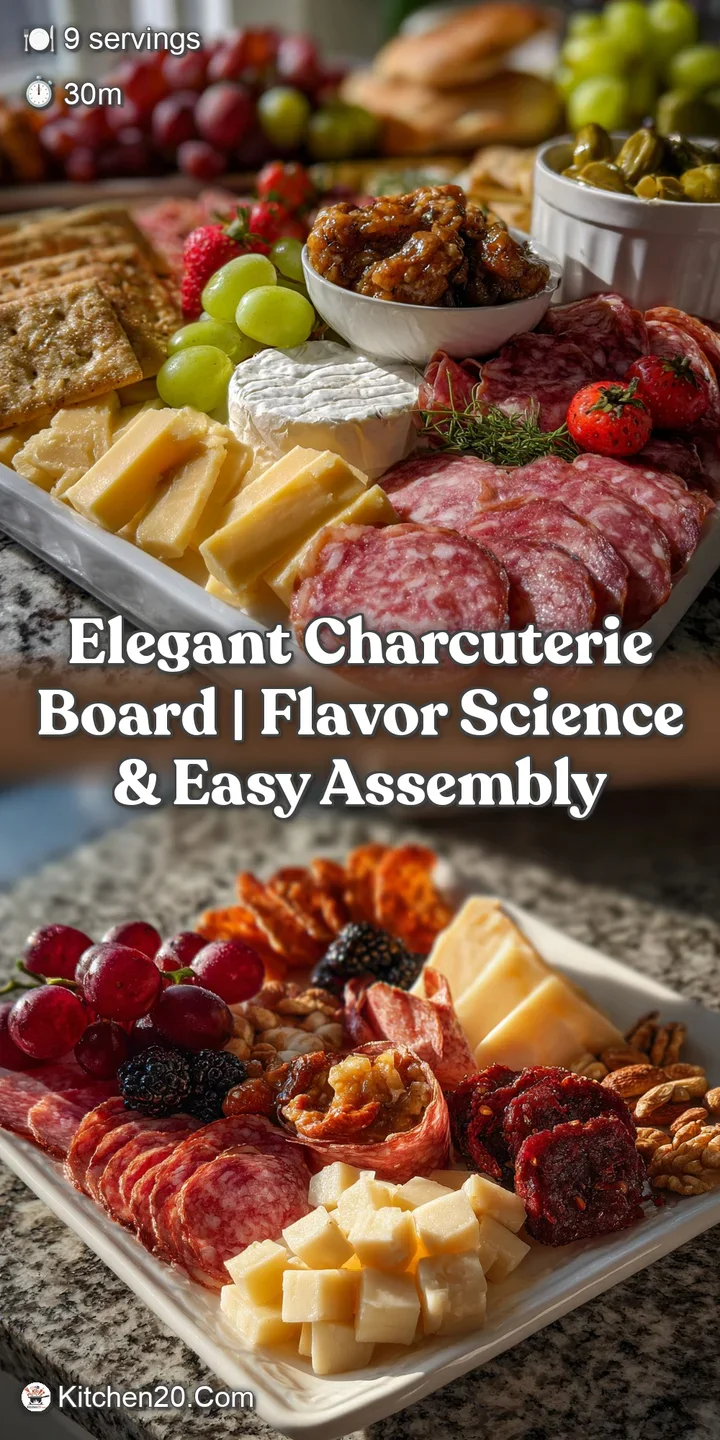
Recipe FAQs
how to make charcuterie board?
Anchor large cheeses, then place ramekins for wet items. Create visual paths by fanning meats and scattering nuts into gaps to prevent moisture migration. Use acid alongside high fat components to reset the palate.
how to make charcuterie board roses?
Fold salami thinly, overlapping slices on a glass rim. This technique maximizes surface area for flavor release while the curve creates the floral shape. Invert carefully onto the board.
how to make charcuterie board flowers?
Use thin crackers or apple slices as petal bases for soft cheese mounds. This technique uses structural elements to visually contain the cheese, providing both height and texture contrast. Use berries as the central stamen.
how to make charcuterie board out of wood?
Select a dense, food safe hardwood like maple or acacia. Hardwoods resist scoring and liquid absorption better than soft woods, preventing cross contamination and staining from acidic components.
how to make charcuterie board easy?
Buy three core items: one soft cheese, one firm cheese, and one cured meat. Focus assembly on contrast place a wet item next to a dry one using a nut barrier. This minimizes decision fatigue and streamlines staging.
Should I slice all the cheese beforehand?
No. Slicing hard cheese exposes more surface area to air. Exposure accelerates moisture loss and flavor fading due to volatile compound evaporation. Keep semi hard cheeses whole and supply a cheese knife.
Is serving temperature important for cheese?
Yes. Cold cheese dampens the flavor profile significantly. Allowing cheese to temper for 30 minutes raises its temperature, allowing the fat micelles to soften for optimal mouthfeel.
Scientific Charcuterie Board Design
Ingredients:
Instructions:
Nutrition Facts:
| Calories | 556 kcal |
|---|---|
| Protein | 23g |
| Fat | 38g |
| Carbs | 32g |
| Fiber | 3g |
| Sugar | 11g |
| Sodium | 1140mg |
