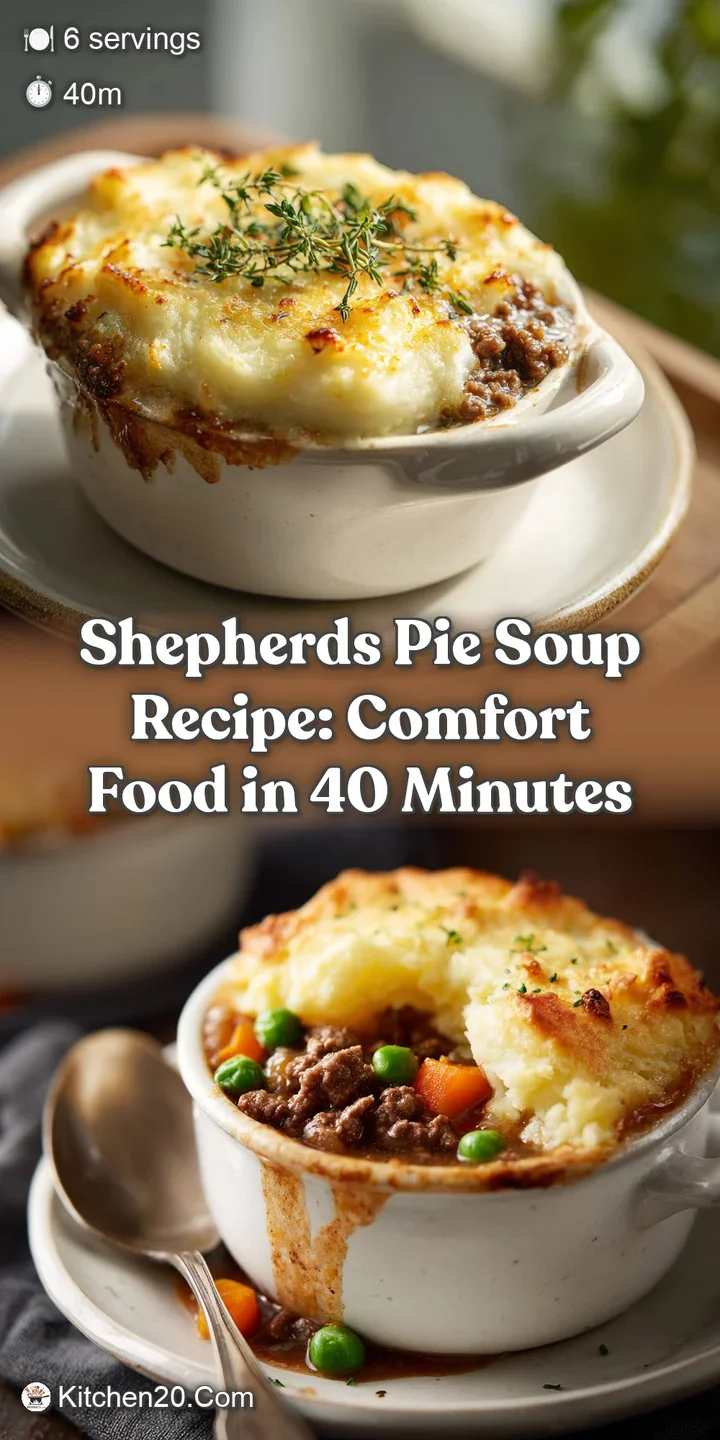
Shepherds Pie Soup: Savory & Silky
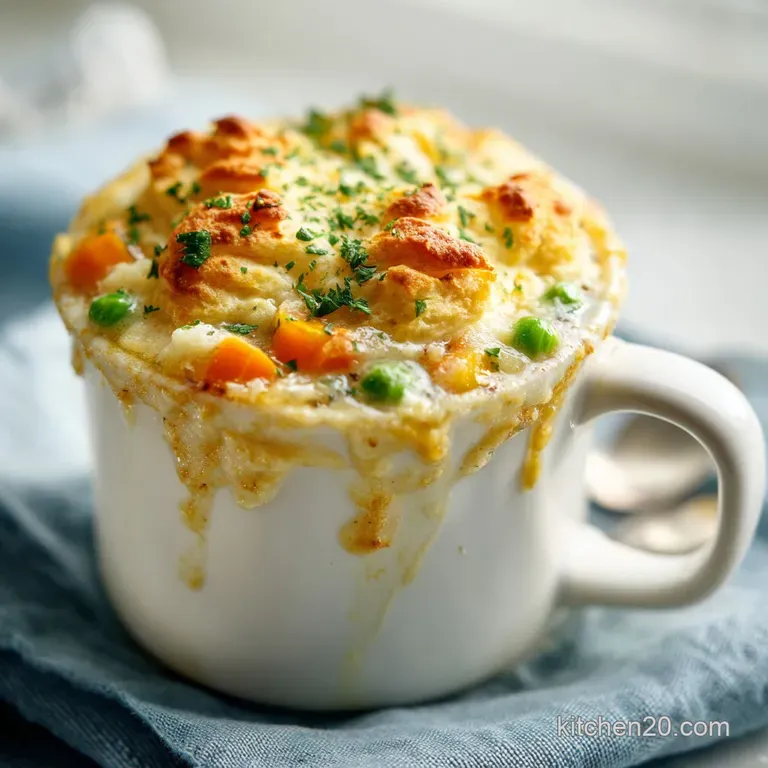
- Time: Active 15 minutes, Passive 25 minutes, Total 40 minutes
- Flavor/Texture Hook: Silky, umami dense, and buttery
- Perfect for: Cold weather weeknights or high efficiency meal prepping
- The Ultimate Comforting Shepherds Pie Soup Recipe
- Performance Metrics for Savory Success
- The Physics of the Potato Slurry
- Sourcing Your Premium Meal Components
- Hardware for Seamless Meal Processing
- Executing Your Liquid Pie Design
- Debugging Common Batch Culinary Errors
- Dynamic Iterations and Component Swaps
- Guidelines for Optimal Long-Term Storage
- Designing Your Final Plating Interface
- Recipe FAQs
- 📝 Recipe Card
The Ultimate Comforting Shepherds Pie Soup Recipe
Imagine the sound of ground beef hitting a hot Dutch oven - that sharp, rhythmic hiss that signals the start of something serious. The kitchen fills with the scent of browning meat and sharp onions, a sensory notification that the platform for your dinner is being built.
I remember the first time I tried to turn a pie into a soup; it was during a massive snowstorm when my home office network went down, and I needed a win that didn't involve a keyboard.
I’d spent all day troubleshooting server errors, and honestly, the last thing I wanted was to wait for a pie to bake for an hour. I wanted those flavors, but I wanted them now, connected and flowing.
That's when I realized that by modifying the potato component from a heavy crust to a suspended slurry, I could create a liquid version that felt just as substantial. It’s about revolutionizing how we view comfort food by making it more accessible and faster to deploy.
The result is this Shepherds Pie Soup, a dish that feels like a warm embrace for your internal hardware. We aren't just making soup; we’re optimizing the user experience of a classic British staple. It's thick enough to feel like a meal but fluid enough to drink from a mug if you're still stuck at your desk.
Performance Metrics for Savory Success
Getting this dish right requires a few specific precision checkpoints to ensure the texture doesn't become grainy or thin. We’ve benchmarked these numbers to help you achieve a consistent output every single time you fire up the stove.
| Metric | Target Value | Visual/Tactile Cue |
|---|---|---|
| Beef Thickness | 1/2 inch crumbles | Browned but still tender to the bite |
| Internal Temp | 165°F (74°C) | No traces of pink remain in the beef |
| Potato Softness | Fork tender | Cubes should shatter easily when pressed |
The Physics of the Potato Slurry
Starch Suspension: When the 1.5 lbs Yukon Gold potatoes simmer in the 4 cups beef bone broth, they release amylose molecules that naturally thicken the liquid. This creates a velvety mouthfeel without the need for a heavy flour roux, keeping the flavor profile clean and focused on the beef.
Chef's Tip: Freeze your tomato paste in a flat silicone bag and break off a 2 tbsp chunk whenever you need it. This prevents waste and allows the paste to melt slowly into the aromatics, creating a deeper color and more concentrated umami.
Another trick I've learned is to use a potato ricer directly over the pot for about 1/4 of the cooked potatoes. This instantly adds body to the soup while leaving the rest as whole, buttery chunks for texture. Much like a Meatball Soup in recipe, the key is balancing the liquid to solid ratio.
Sourcing Your Premium Meal Components
The success of this Shepherds Pie Soup depends on the quality of your inputs. Think of your ingredients as the source code for the flavor; if the code is buggy, the final program won't run smoothly.
Component Analysis
| Ingredient | Science Role | Pro Secret |
|---|---|---|
| Yukon Gold Potatoes | Texture stabilizer | These have more natural sugars than Russets, which helps with browning and creaminess. |
| Beef Bone Broth | Umami backbone | High collagen content provides a richer mouthfeel than standard stock. |
| Tomato Paste | Acidity balancer | It acts as a bridge between the savory meat and the sweet carrots. |
For the aromatics, you'll need 1 large yellow onion (200g), 2 large carrots (150g), and 2 stalks of celery (100g). This trio, known as mirepoix, provides the baseline frequency of flavor. We also include 3 cloves of garlic, 1 tsp dried thyme, and 1 tsp dried rosemary to build out the aromatic profile.
Don't forget the finishing touches: 1 cup frozen peas for a pop of color, 1/2 cup heavy cream for a silky finish, and 1/2 cup sharp white cheddar to tie everything together. 1 tbsp Worcestershire sauce and 2 tbsp fresh parsley are the final updates that bring the whole system online.
Hardware for Seamless Meal Processing
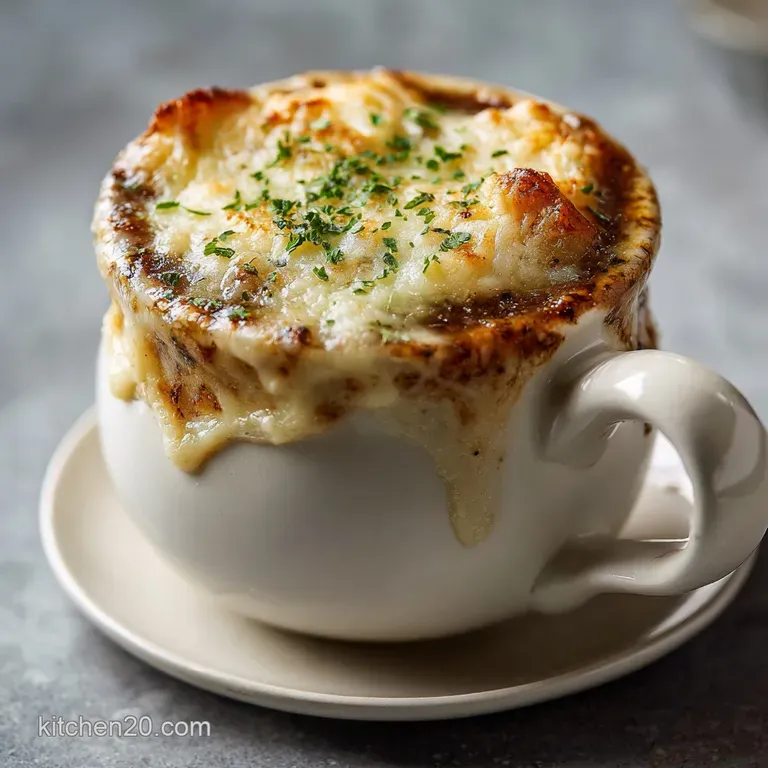
To execute this recipe, you don't need a high end laboratory, but having the right tools makes the process much more efficient. I recommend a heavy bottomed Dutch oven (like a Le Creuset or Lodge) because it retains heat effectively, ensuring the beef sears rather than steams.
You will also need a sharp chef's knife for dicing the vegetables into uniform 1/2 inch cubes. Uniformity isn't just for looks; it ensures that the carrots and potatoes reach the finished state at the exact same time.
A sturdy wooden spoon is essential for scraping the "fond" those brown bits at the bottom of the pan which contain the most concentrated flavor data.
| Original Ingredient | Substitute | Why It Works |
|---|---|---|
| Ground Beef (1 lb) | Ground Lamb (1 lb) | Creates a "true" shepherd's flavor; slightly gamier and higher fat content. |
| Heavy Cream (1/2 cup) | Full fat Coconut Milk | Provides similar fat density. Note: Adds a subtle tropical scent to the base. |
| Yukon Gold Potatoes | Cauliflower Florets | Lowers the carb count. Note: Will result in a much thinner soup base. |
If you find yourself wanting to experiment with the base, you can look at how different proteins interact with broth, much like the variations found in this How to Make recipe which uses meat alternatives.
Executing Your Liquid Pie Design
- Sauté the meat. Add 1 tbsp olive oil to your Dutch oven over medium high heat. Add 1 lb ground beef and brown it for about 6 minutes until it's sizzled and dark brown.
- Prep the aromatics. Remove the beef with a slotted spoon. In the remaining fat, add the diced onion, carrots, and celery.
- Soften the base. Cook for 5 minutes until the onions look translucent and glassy. Note: This builds the flavor foundation.
- Activate the aromatics. Stir in 3 cloves minced garlic, 1 tsp thyme, and 1 tsp rosemary. Cook for 1 minute until the scent fills the room.
- Deglaze the pan. Add 2 tbsp tomato paste and 1 tbsp Worcestershire sauce. Stir constantly for 2 minutes until the paste turns a deep brick red.
- Integrate the liquids. Pour in 4 cups beef bone broth, scraping the bottom of the pan to release the fond.
- Add the potatoes. Drop in 1.5 lbs cubed Yukon Gold potatoes. Season with 0.5 tsp sea salt and 0.25 tsp black pepper.
- Simmer the system. Bring to a boil, then reduce heat and simmer for 15 minutes until the potatoes are tender when pierced.
- Final texture update. Stir in 1 cup frozen peas and 1/2 cup heavy cream. Let it heat through for 2 minutes.
- The cheesy finish. Turn off the heat and whisk in 1/2 cup shredded cheddar and 2 tbsp fresh parsley until the cheese is fully melted and velvety.
Debugging Common Batch Culinary Errors
Even with the best instructions, sometimes the system glitches. If your soup doesn't look like the photos, don't worry most errors are easily patched in real time.
Why Your Soup Feels Off
| Problem | Root Cause | Solution |
|---|---|---|
| Greasy surface | High fat meat | Skim the top with a wide spoon or use a paper towel to blot the oil. |
| Thin consistency | Low starch release | Mash a few more potatoes against the side of the pot to release starch. |
| Bland aftertaste | Lack of acidity | Add a teaspoon of balsamic vinegar or extra Worcestershire sauce. |
Common Mistakes Checklist
- ✓ Don't drain the beef fat entirely; it carries the flavor of the herbs into the vegetables.
- ✓ Cut the potatoes into 1/2 inch cubes exactly; larger chunks won't cook in the 15 minute window.
- ✓ Use bone broth instead of water; the protein in the broth adds structural integrity to the liquid.
- ✓ Wait to add the cheese until the heat is off to prevent it from clumping or becoming oily.
- ✓ Crush the dried rosemary between your fingers before adding it to release the trapped oils.
Dynamic Iterations and Component Swaps
Scaling this recipe up for a larger community or down for a solo user is a simple matter of adjusting the hardware and thermal settings.
- Scaling Down (1/2 batch): Use a smaller saucepan. The cook time remains similar, but watch the liquid levels as they may evaporate faster in a wider pan.
- Scaling Up (2x batch): Double the beef and potatoes, but only increase the salt and spices to 1.5x initially. You can always add more, but you can't remove it once it's integrated.
- Batch Cooking: This soup is a meal prepper's dream. It's built on a platform that actually improves after 24 hours in the fridge as the flavors continue to network.
| Method | Time | Texture | Best For |
|---|---|---|---|
| Stovetop | 40 minutes | Bright and fresh | Quick weeknight dinners |
| Oven (Braised) | 1 hours 15 mins | Deep, caramelized | Weekend slow cooking |
| Slow Cooker | 6 hours | Very soft, unified | Busy workdays |
Guidelines for Optimal Long Term Storage
Managing your leftovers is like maintaining an archive. You want to ensure the data stays uncorrupted for future use. This Shepherds Pie Soup stores incredibly well due to its high fat and starch content.
Fridge Storage: Store in an airtight container for up to 4 days. When reheating, you might notice the soup has thickened significantly (the potatoes continue to absorb liquid). Add a splash of broth or water to bring it back to the original fluid state.
Freezer Guidelines: This soup can be frozen for up to 3 months. However, be aware that the heavy cream can sometimes separate upon thawing. To fix this, reheat slowly on the stovetop while whisking vigorously to re emulsify the fats.
Zero Waste Tip: Don't throw away those potato peels! Toss them with a little oil and salt, then air fry them until they shatter. They make a fantastic "crouton" for the top of the soup, adding a much needed crunch to the velvety base.
Designing Your Final Plating Interface
The way you present this Shepherds Pie Soup is the final "user interface" for your guests. We can look at this in three distinct levels of complexity.
- Simple Plating: Serve in a deep ceramic bowl with a heavy sourdough crust on the side. This is about pure function and comfort.
- Polished Plating: Add a swirl of heavy cream to the center, top with a pinch of extra cheddar, and a dusting of fresh parsley. Use a shallow bowl to show off the chunks of beef and carrot.
- Restaurant Plating: Use the "deconstructed" approach. Serve the soup in a wide bowl, but top it with a scoop of actual mashed potatoes and a drizzle of herb infused oil. This creates a visual bridge back to the original pie format.
| Level | Key Element | Visual Impact |
|---|---|---|
| Simple | Large Spoon | Approachable and rustic |
| Polished | Swirl of Cream | Contrast and professional |
| Restaurant | Mashed Topper | Height and texture variety |
Debunking Kitchen Myths
"You must peel the potatoes for a smooth soup." This is a misconception. If you use Yukon Golds, the skins are thin enough to blend in, adding extra fiber and a rustic texture. The starch is what provides the smoothness, not the absence of skins.
"Boiling the soup longer makes it thicker." Actually, over boiling can cause the starch molecules to break down too much, leading to a gluey, sticky texture rather than a velvety one. Once the potatoes are tender, stop the boil.
"Frozen peas are inferior to fresh." In this specific application, frozen peas are actually better because they are flash frozen at peak ripeness and maintain their structural "pop" better than fresh peas, which can turn mushy during the simmer.
Recipe FAQs
What is shepherds pie soup?
It is a deconstructed, liquid version of the classic casserole. This soup captures the essential savory flavors of ground meat, herbs, and gravy but uses potatoes suspended in broth to create a fluid, spoonable texture.
What was Princess Diana's favorite soup?
Reports suggest her favorite was a simple tomato soup. While this Shepherd's Pie Soup is rich and hearty, Diana often preferred lighter, familiar comfort foods made with fresh ingredients.
What is the best soup to break up mucus?
Spicy broths or those rich in gelatin, like bone broth, are generally recommended. The steam helps loosen congestion, and the salt content can help thin secretions; consider trying a classic like our Chicken Noodle Soup recipe for a traditional approach.
What is the most delicious soup in the world?
This is highly subjective, but flavor density usually wins. The most delicious soups often achieve perfect balance between umami, fat, and acidity, much like the base we build for this recipe.
How to make shepherd's pie soup taste richer?
Use high-quality beef bone broth and allow the tomato paste to caramelize deeply. Browning the meat well and scraping up the fond creates a rich foundation; this technique is crucial for depth, similar to how you build flavor in Wonton Soup with recipe.
Is it true you must use an immersion blender for a silky texture?
No, this is a common misconception, especially with this recipe. For this soup, we want some texture remaining; mashing about a quarter of the cooked potatoes directly in the pot achieves the necessary velvety thickness without eliminating all the solid pieces.
Can I substitute ground beef with lamb?
Yes, substituting ground lamb creates a 'Cottage Pie Soup' flavor profile. Lamb brings a slightly gamier, richer taste that complements the root vegetables nicely, just as ground lamb is the traditional meat for authentic shepherd's pie.
Shepherds Pie Soup Recipe
Ingredients:
Instructions:
Nutrition Facts:
| Calories | 408 kcal |
|---|---|
| Protein | 28.3 g |
| Fat | 18.5 g |
| Carbs | 32.1 g |
| Fiber | 4.4 g |
| Sugar | 5.6 g |
| Sodium | 745 mg |
