The Silkiest Homemade Tahini Roasted Sesame Butter Youll Never Buy Again
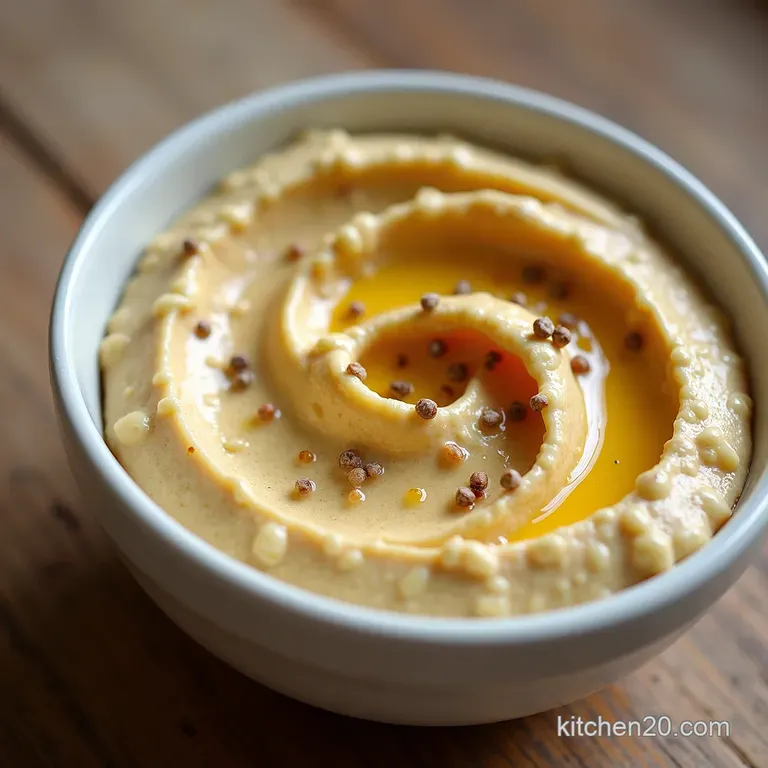
- Unveiling the Secret to Luxurious Homemade Tahini
- Why Freshly Ground Sesame Butter Outshines Store-Bought
- Essential Components for Perfect Sesame Paste
- Selecting and Prepping Your Sesame Seeds
- Mastering the Roasting and Cooling Phase
- The Art of High-Speed Blending for Creaminess
- Achieving the Signature Smooth Texture of Homemade Tahini
- Elevating Your Creation: Variations and Culinary Uses
- Storage Secrets for Extended Freshness
- Recipe FAQs
- 📝 Recipe Card
Unveiling the Secret to Luxurious Homemade Tahini
Forget those jars lurking at the back of the cupboard that might have seen better days; nothing beats the rich, nutty flavour of fresh tahini. Tahini, originating across the Middle East and Eastern Mediterranean, is fundamentally just ground sesame paste, but the difference between a tired, store-bought jar and freshly made is night and day.
Making it at home is surprisingly straightforward less fiddly than baking a Victoria sponge, I promise! This guide will lead you through crafting the silkiest Homemade Tahini Recipe , transforming simple seeds into a culinary powerhouse that forms the bedrock of great dips, sauces, and dressings.
Why Freshly Ground Sesame Butter Outshines store-bought
The magic of this process lies in harnessing the volatile aromatic compounds locked within sesame seeds, which are only released through proper heating and immediate grinding. Commercial versions often suffer from oxidation during long storage periods, leading to dullness.
The Flavor Difference: Moving Beyond Bitter Commercial Batches
Many commercially available tahinis carry a slightly sharp or bitter edge. This frequently stems from using less than-fresh seeds or inadequate removal of the outer hull before processing.
By controlling the roasting environment in our Homemade Tahini process, we unlock the deep, buttery essence of the seed, resulting in a naturally sweeter, more profound nutty profile perfect for everything from savoury dips to sweet applications.
From Pantry Staple to Culinary Star: Tahini’s Versatility
Once you master this technique, this Simple Ingredient Tahini becomes indispensable. It’s the secret weapon in fantastic hummus, it provides depth when drizzled over roasted root vegetables, and it forms the crucial, creamy emulsifier in a vibrant Tahini Sauce Recipe .
It’s more than just a dip component; it’s a foundational element of flavour.
A Simple Process for Truly Velvety Homemade Tahini
Our Toasted Sesame Seeds Recipe forms the core of this transformation. The entire process hinges on two fundamental actions: achieving the perfect toast and then blending with focused patience.
We aim for a yield of approximately 1 cup (240ml) of this glorious paste, using only a handful of basic components.
Essential Components for Perfect Sesame Paste
Creating authentic, smooth sesame butter requires surprisingly few elements, underscoring the natural quality of the raw materials. You will require 1 ½ cups (180g) of hulled white sesame seeds ensuring they are hulled is key for achieving a pale, smooth final product.
To aid the blending process and achieve that signature pourable consistency, you’ll incorporate 1 to 3 tablespoons of a neutral oil, like sunflower or grapeseed. Finally, a ¼ teaspoon of fine sea salt balances the inherent nutty sweetness of the sesame.
Selecting and Prepping Your Sesame Seeds
The quality of your final product is directly proportional to the quality of your starting seeds. Look for bright, uniformly white, hulled seeds, which are widely available in the baking or international aisle.
Tool Kit Checklist: Equipment for Optimal Grinding
While this is an accessible recipe, a capable machine is necessary. You will absolutely need a high powered food processor or a heavy duty blender. You’ll also need a large, heavy bottomed dry skillet for stovetop roasting, or a large baking sheet if you opt for the oven method.
A rubber spatula is handy for scraping down the sides during processing to ensure everything incorporates evenly.
Secrets to Toasting: Unlocking Deep, Nutty Notes
Roasting the seeds is arguably the most crucial step in the entire Tahini Recipe . This process doesn't just dry them out; it coaxes the oils to the surface and caramelizes their sugars slightly.
For stovetop preparation, this takes about 5 to 7 minutes of constant stirring over medium heat until they become deeply fragrant think warm biscuits, not burnt popcorn.
If using an oven, spread them in a thin layer on a baking sheet and roast at 350° F ( 175° C) for 10 to 12 minutes. The goal is a uniform, golden hue that smells intensely nutty.
Related Recipes Worth Trying
- Simple Homemade Milk Kefir Recipe A Beginners Cultured Guide — Forget the shopbought stuff Learn how to make fantastic homemade milk kefir using just grains and milk Its foolproof and far better for your gut health Get...
- The Best Homemade Lasagna with Rich Ragu Béchamel — Master the ultimate homemade lasagna recipe featuring a slowsimmered ragu and silky béchamel Every step is worth it for this classic comfort food
- The Best Homemade Banana Pudding Recipe from Scratch — Tired of thin custard This classic banana pudding recipe features a silky homemade vanilla bean custard caramelised bananas and a crisp meringue topping...
Mastering the Roasting and Cooling Phase
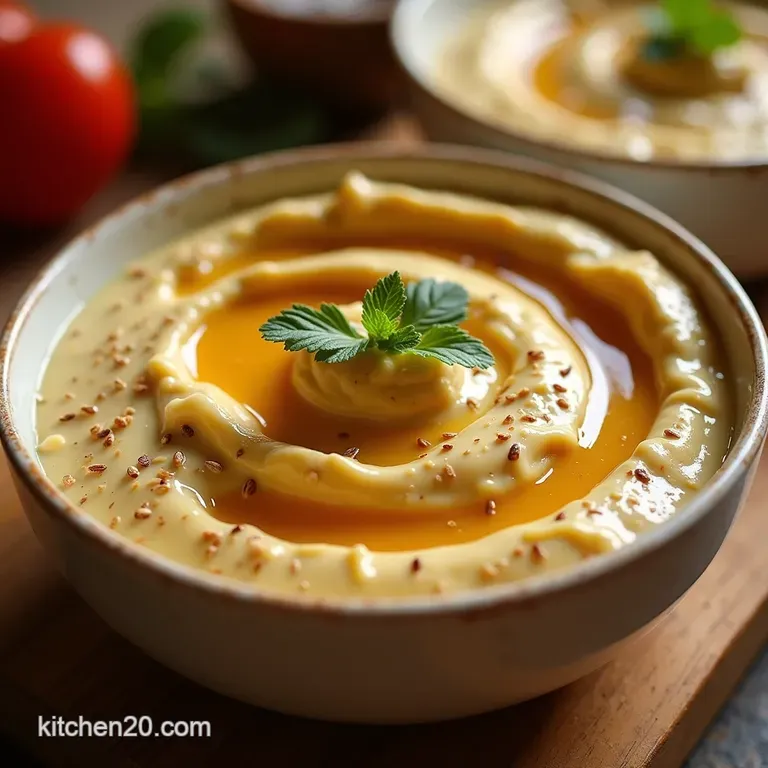
Once those beautiful seeds hit their peak fragrance, immediate action is required. Transfer the hot seeds instantly to a clean, heat proof bowl. They must cool completely about 10 minutes before entering your food processor.
Introducing hot seeds to a sealed machine can create steam, which you want to avoid at this stage.
The Art of High Speed Blending for Creaminess
Now comes the waiting game, but trust the process. When blending sesame seeds, you must pass through three distinct textural stages: meal, a thick paste resembling wet sand or dough, and finally, smooth liquid butter.
Do not be tempted to add liquid or oil during the first few minutes; the friction from the blades must first break down the seed structure entirely.
Achieving the Signature Smooth Texture of Homemade Tahini
This part of the procedure demands patience, but your reward is unparalleled smoothness, making this ideal for your next batch of Homemade Tahini for Hummus .
Step 1: Achieving an Even, Golden Roast
As mentioned, the roast must be consistent. If you notice small patches browning much faster than others, quickly toss the seeds during the last couple of minutes of cooking to ensure every seed contributes equally to the final flavour profile.
Step 2: The Critical Cooling Period Before Processing
Resist the urge to rush this. Allow the seeds to cool until they are merely warm to the touch, if not completely room temperature. This ensures that the oils release slowly and consistently once grinding begins, leading to a smoother emulsion rather than a grainy separation.
Blending Techniques: Slow Addition for Emulsification
Once you start the processor, let it run for a full minute before pausing. It will turn into a coarse powder. Keep going. After several minutes, it will clump into a ball. Keep processing! Only once this clump breaks down into a thick, somewhat gritty liquid should you introduce the oil.
Drizzle the first tablespoon of neutral oil in slowly while the motor runs. This gentle addition helps the oil integrate fully into the sesame solids, creating that luxurious, pourable texture associated with the best Homemade Tahini Dressing .
If it remains too thick to pour easily, add the remaining oil bit by bit until your desired consistency is met.
Troubleshooting: Fixing Separation in Your Tahini
If, after adding all the oil, your tahini still seems stiff or slightly separated, it’s usually due to insufficient processing time rather than ingredient ratio. Stop the machine, scrape down the sides vigorously, add the salt, and process for another 2 to 3 minutes.
The mechanical action should force the remaining solids and oils to fully bind.
Elevating Your Creation: Variations and Culinary Uses
Once you have perfected the base recipe, you can easily customize your spread. Remember, this is Healthy Fats Tahini at its finest, so experiment with how you deploy it!
Incorporating Flavors: Black Sesame and Spicy Twists
For a dramatic visual and a richer, earthier flavour perfect for Asian inspired dishes, try swapping out half of your white sesame seeds for black sesame seeds this creates an incredible Black Sesame Tahini .
If you prefer heat, incorporate ½ teaspoon of smoked paprika or a pinch of cayenne pepper during the final stage of blending to create a smoky, spicy variant.
Pairing Ideas: Dips, Dressings, and Even Chicken Marinades
The uses for fresh tahini are endless. Beyond the obvious use in dips, whisk this fresh paste with fresh lemon juice, minced garlic, and cold water to create a superior Tahini Sauce Recipe that brightens up falafel or grilled halloumi.
It also works beautifully as a creamy element in marinades for chicken or white fish before grilling.
Storage Secrets for Extended Freshness
Because you are using fresh ingredients and no commercial preservatives, proper storage is essential to maintain the incredible flavour you’ve worked hard to achieve.
Long Term Care: Keeping Your Tahini Fluid and Fresh
Transfer your finished Homemade Tahini into a sterilised, airtight glass jar. At room temperature, it will keep well for about two weeks, though its flavour is best within the first week. For significantly longer storage, refrigerate it.
While refrigeration will cause the natural oils to firm up, making it look dense, simply let it sit on the counter for 30 minutes or whisk it vigorously before use to restore its pourable state.
Nutritional Insights: The Health Benefits of Homemade Tahini
Sesame seeds are nutritional powerhouses, rich in copper, magnesium, zinc, and fibre. By making your own, you control the quality and ensure you are consuming beneficial Healthy Fats Tahini without any questionable additives often found in commercial products.
Enjoy this superb, scratch made staple!
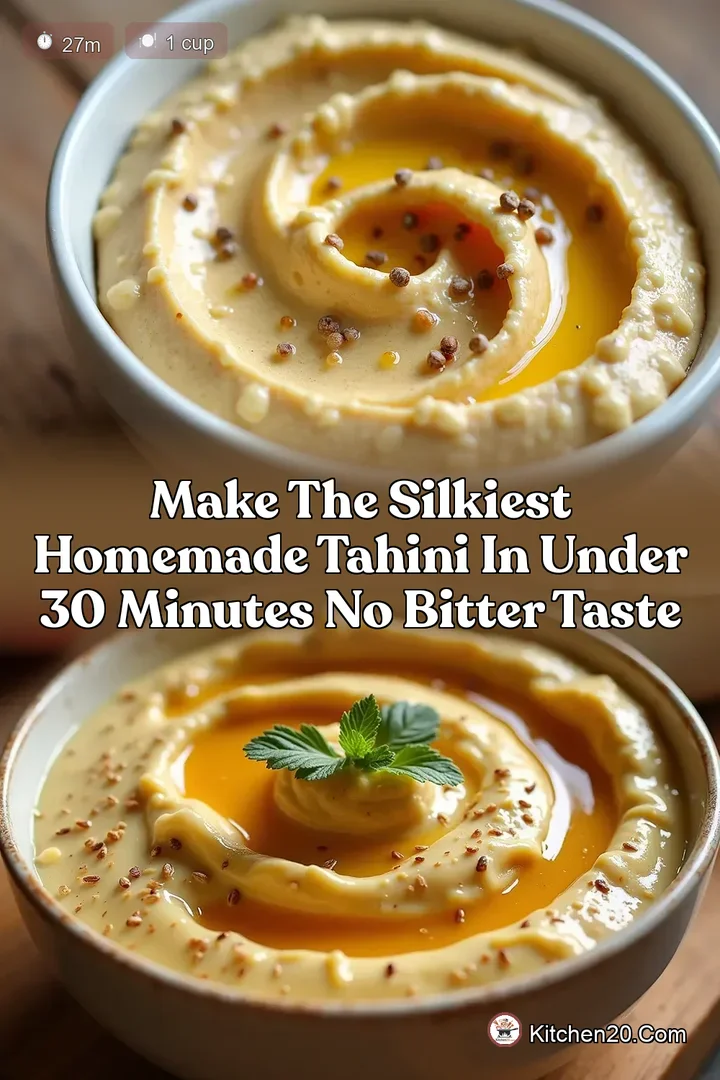
Recipe FAQs
I've heard homemade tahini can be bitter. How do I stop my Homemade Tahini from tasting like I’ve accidentally burned the seeds?
That bitterness usually comes from under roasting (leaving them raw) or over roasting (scorching them). You need that sweet spot toast them just until they smell wonderfully nutty and are lightly golden, not dark brown.
Keep them moving constantly on the stovetop or watch them like a hawk in the oven; think 'perfectly toasted crumpets,' not charcoal!
My food processor has stopped working! Why did my tahini turn into a thick, dry clump instead of getting smooth?
Ah, the dreaded 'clump stage' it’s completely normal, so don’t panic! This happens when the seeds release enough oil to form a rough paste but haven't reached full liquid smoothness yet.
Keep processing, even if it looks stubborn; it can take 5 to 8 minutes of continuous blending before it breaks down into that beautiful, pourable liquid butter. Patience is your main ingredient here.
How should I store homemade tahini, and how long will it actually last before going off?
Treat it like quality olive oil: store it in a clean, airtight jar in a cool, dark cupboard, away from the cooker. Because it’s fresh, it’s best used within 3 4 weeks for peak flavour, though it will last longer if refrigerated.
Don't worry about oil separation; just give it a vigorous stir before using it.
Do I absolutely need to add oil, or can I make this completely oil-free for a lower fat option?
You don't have to add oil, as the sesame seeds provide plenty of natural fat, but the oil helps achieve that silky, pourable consistency we're aiming for. If you skip it, your result will be much thicker more like a dense butter or dough. If you prefer it thicker, just omit the added oil entirely.
Can I make this recipe using black sesame seeds instead of white ones?
Absolutely! Black sesame seeds give a fantastic, bolder, slightly earthier flavour profile, and the colour contrast is rather dramatic. You can swap them 50/50 with the white seeds, or use 100% black seeds.
Be aware that black seeds sometimes require an extra minute or two of roasting time to reach the same level of fragrance.
Silky Homemade Tahini Butter
Ingredients:
Instructions:
Nutrition Facts:
| Calories | 4054 kcal |
|---|---|
| Protein | 12.5 g |
| Fat | 102.3 g |
| Carbs | 73.5 g |
| Fiber | 17.3 g |
| Sodium | 40012 mg |
