Acorn Squash in Oven with Brown Sugar Butter
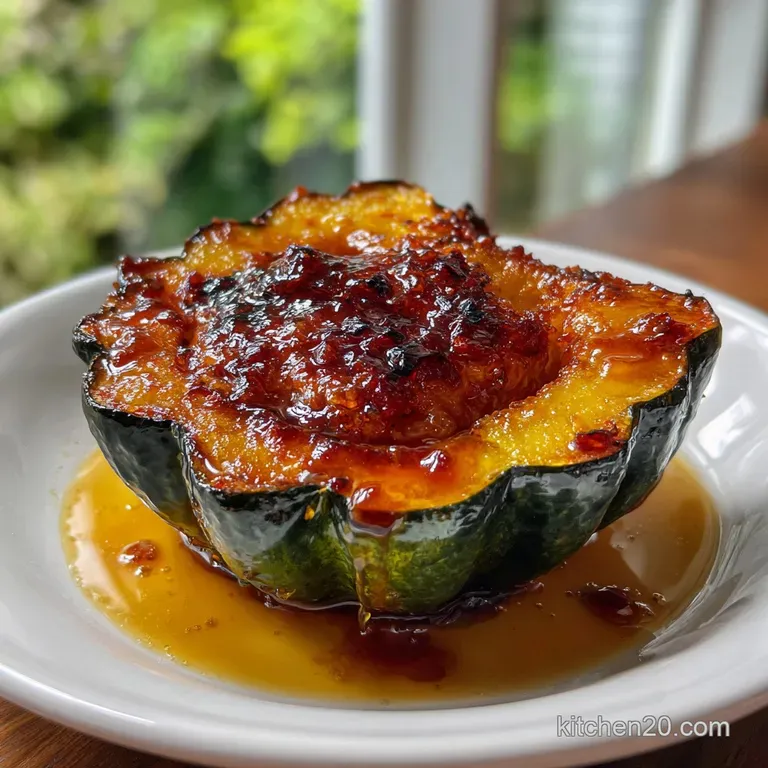
- The Essential Guide to Perfectly Roasted Acorn Squash
- The Culinary Science Behind Our Best Roasted Acorn Squash Recipe
- Gathering Your Staples: The Simple Ingredients for Success
- Essential Flavor Notes and Handling Acorn Squash
- Step-by-Step Method: Roasting Acorn Squash In Oven
- From Prep to Plate: Mastering the Glazing Technique
- Expert Fixes: Troubleshooting Common Acorn Squash Roasting Issues
- The Full Spread: Pairing Your Honey-Glazed Acorn Squash
- Recipe FAQs
- 📝 Recipe Card
The Essential Guide to Perfectly Roasted Acorn Squash
When that nutty, buttery aroma starts wafting out of your oven, announcing that fall is finally here, you know exactly what’s cooking. That deep, comforting scent belongs to the humble acorn squash, transformed by heat into something truly magical.
The flesh turns silken, almost fudgy, and the sweet caramelization of the edges is just divine.
This method for cooking Acorn Squash In Oven is absolutely a lifesaver, especially during the busy holiday season. It’s ludicrously simple, requires almost zero hands-on time once prepped, and uses budget ingredients you probably already have lurking in your pantry.
If you are looking for a show stopping side dish without the struggle, this is your new best friend.
So ditch the complicated techniques and come see how we take this gourd from sturdy green armour to fork tender autumn perfection. We’re going to achieve the best roasted acorn squash using butter, brown sugar, and a stealthy steam trick that guarantees tenderness every single time.
Get ready to master the perfect Acorn Squash In Oven recipe.
The Culinary Science Behind Our Best Roasted Acorn Squash Recipe
This isn’t just about tossing squash in the oven; we have specific logic behind every step we take when making the best Acorn Squash In Oven . I learned these tricks the hard way, many years ago, by ending up with half dry, half burned squash more times than I care to admit.
Why Acorn Squash Belongs on Your Autumn Menu
Acorn squash is inherently sweet, but it also has a lovely underlying earthiness that begs for strong flavours. Because of its size and shape, it’s one of the easiest winter squashes to prepare for roasting whole (or halved, in our case).
You don't have to worry about peeling that tough skin either, which is a massive win in my book.
Maximising Natural Sweetness: The Maillard Effect in the Oven
The secret to why this Acorn Squash In Oven tastes so good is the two-part cooking method. We apply the brown sugar and butter directly into the cavity. When placed under strong heat (we use an acorn squash in oven temp of 400°F (200°C)), the natural sugars in the squash combine with the added sugar, leading to a deep caramelization, also known as the Maillard effect.
That brown, sticky, delicious stuff around the edges? That's flavour you can’t get any other way.
Beyond Boiling: The Superiority of Roasting Squash
If you boil squash, you drain away all the nutritional goodness and flavour, leaving a watery mess. Roasting, however, concentrates the flavour, pulls out the excess internal moisture, and develops that wonderful texture.
To cook acorn squash in the oven properly, you must hit it with dry heat for texture, but use some moisture for tenderness.
Recipe Highlights: What Makes This Glaze So Special?
Our glaze method incorporates the cinnamon right at the start, ensuring the spice penetrates the flesh deeply. And the little bit of boiling water we add to the pan? That tiny amount of steam initially tenderizes the squash rapidly, preventing the edges from hardening or drying out before the centre melts.
This is the simple secret to success when you plan to cook acorn squash in the oven .
Gathering Your Staples: The Simple Ingredients for Success
You absolutely do not need an endless list of ingredients to make something spectacular. This recipe relies on four crucial flavour components that turn the everyday squash into comfort food royalty.
Essential Flavor Notes and Handling Acorn Squash
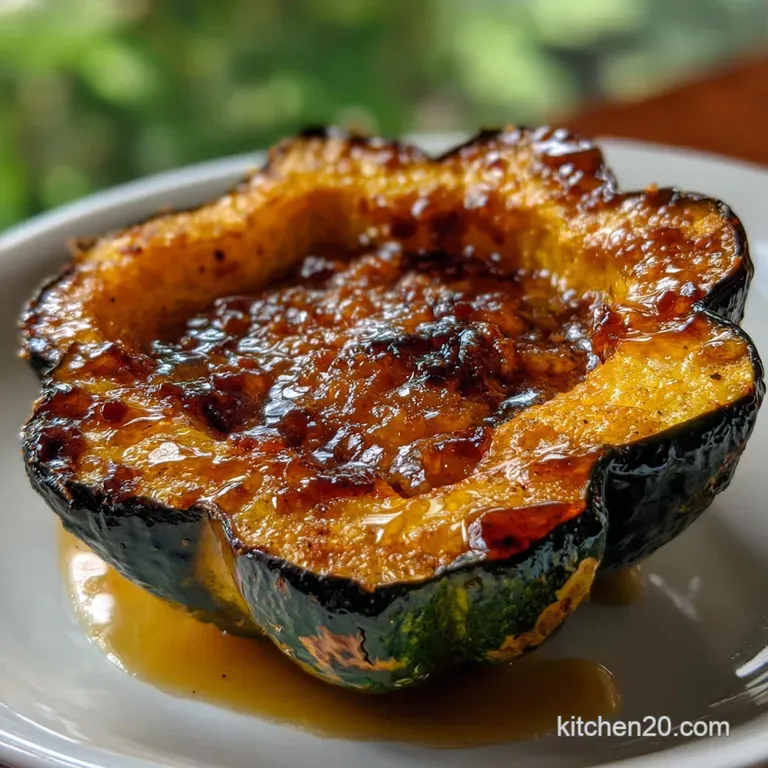
Ingredient Deep Dive: Notes on Brown Sugar vs. Maple Syrup
We opted for acorn squash in oven with brown sugar and butter because brown sugar inherently contains molasses, which provides a richer, more complex caramel note than white sugar.
If you prefer a cleaner flavour, swap in pure maple syrup it offers a fantastic depth and pairs beautifully with the earthy squash.
The Role of Salt and Cinnamon in Balancing Sweetness
A common mistake is forgetting salt in sweet dishes. Salt is essential! It doesn't make the squash taste salty; it just amplifies the brown sugar and fat, ensuring the sweetness isn’t one-dimensional. The tiny pinch of cinnamon adds warmth, making this truly feel like an autumnal dish.
How to Choose the Freshest Acorn Squash Ripe Indicators
Look for acorn squash that is deep black green in colour. It should feel particularly heavy for its size and have a dull, matte finish, not glossy. Crucially, check the stem end: it should be firm, dry, and intact.
Avoid any squash with large soft spots or yellow colouring, which indicates it’s overly mature and likely stringy.
Quick Substitutions for the Honey Butter Glaze
If you need a quick swap for any of the main ingredients, don't sweat it. Good food is flexible!
| If you don't have... | Use this instead... |
|---|---|
| Brown Sugar | Honey or Maple Syrup (use 3 tbsp) |
| Unsalted Butter | Ghee or high-quality Coconut Oil for a dairy-free choice |
| Cinnamon | Nutmeg, Allspice, or a touch of Pumpkin Pie Spice Blend |
step-by-step Method: Roasting Acorn Squash In Oven
Let’s crack on with the method. It’s straightforward, but a few key temperature checks make all the difference, especially regarding acorn squash in oven time .
Chef’s Note: Preheating to 400°F (200°C) is key. You want the heat to hit the squash hard initially to get that rich caramelization underway. Avoid using acorn squash in oven 350 , as the caramelization will take too long or might not happen at all.
From Prep to Plate: Mastering the Glazing Technique
Halving and Seeding: Preparing the Acorn Squash for Roasting
This is the hardest part. The skin is tough! Use a sharp, sturdy knife, and remember my tip: if it's too difficult, microwave the whole squash for three minutes. Once halved, scoop out all the stringy bits and seeds from the cavity. Don’t leave any strings behind, or they become tough little surprises later.
The Initial Roast: Achieving Perfect Tenderness
Place the squash cut-side up on your baking sheet. After seasoning, put the butter chunk and the sugar into the cavity. Pour your boiling water onto the pan not into the squash! and tent the whole thing lightly with foil.
This initial blast of moist heat for 30 minutes at acorn squash in oven 400 softens the heart of the squash beautifully.
When and How to Apply the Honey Butter Glaze
After the initial 30 minutes, remove the foil. The butter and sugar will have melted into a glossy pool. Use a spoon to lift this hot glaze and gently brush it all over the visible flesh, especially along the edges.
This basting introduces the sugar directly to the surface cells, ensuring a deeper, richer flavour when you finish the roast.
Doneness Check: Testing for Fork Tender Perfection
Return the uncovered squash to cook acorn squash in the oven for another 15 to 30 minutes. How do you know it’s done? Pierce the thickest part of the flesh near the skin with a fork or the tip of a knife.
If it slides in easily with almost no resistance, you are golden. If you meet any significant stiffness, keep going. Total acorn squash in oven time is usually 45- 60 minutes, depending on the size of your squash.
Expert Fixes: Troubleshooting Common Acorn Squash Roasting Issues
It feels wrong to call this complicated, but there are two main ways I see people mess up this classic recipe for Acorn Squash In Oven .
Mistake 1: Avoiding Soggy Squash (The Temperature Problem)
If you roast at a low temperature, your squash won't caramelize and it can turn out watery and bland. That’s why we stick firmly to 400°F. If you skip the initial steam (the boiling water/foil step), the squash edges might dry out and crisp up before the centre is tender.
Using that high heat combined with a little initial steam guarantees soft flesh and crunchy edges.
Pro Tip: Scoring the Flesh for Deep Flavour Penetration
Want an even richer, sweeter flavour? Before adding the butter and sugar, take a paring knife and lightly score the internal flesh of the squash in a criss cross pattern. Be careful not to cut through the skin!
This allows the melted mixture of brown sugar and butter to sink deeper into the squash rather than just pooling in the cavity, ensuring every bite is uniformly sweet and buttery.
The Full Spread: Pairing Your Honey Glazed Acorn Squash
This dish is versatile, but it shines brightest next to hearty comfort food.
Beyond the Side Dish: Serving Suggestions for Leftovers
If you have leftover roast squash, scoop the flesh out and mash it with a little cream cheese and fresh thyme for an
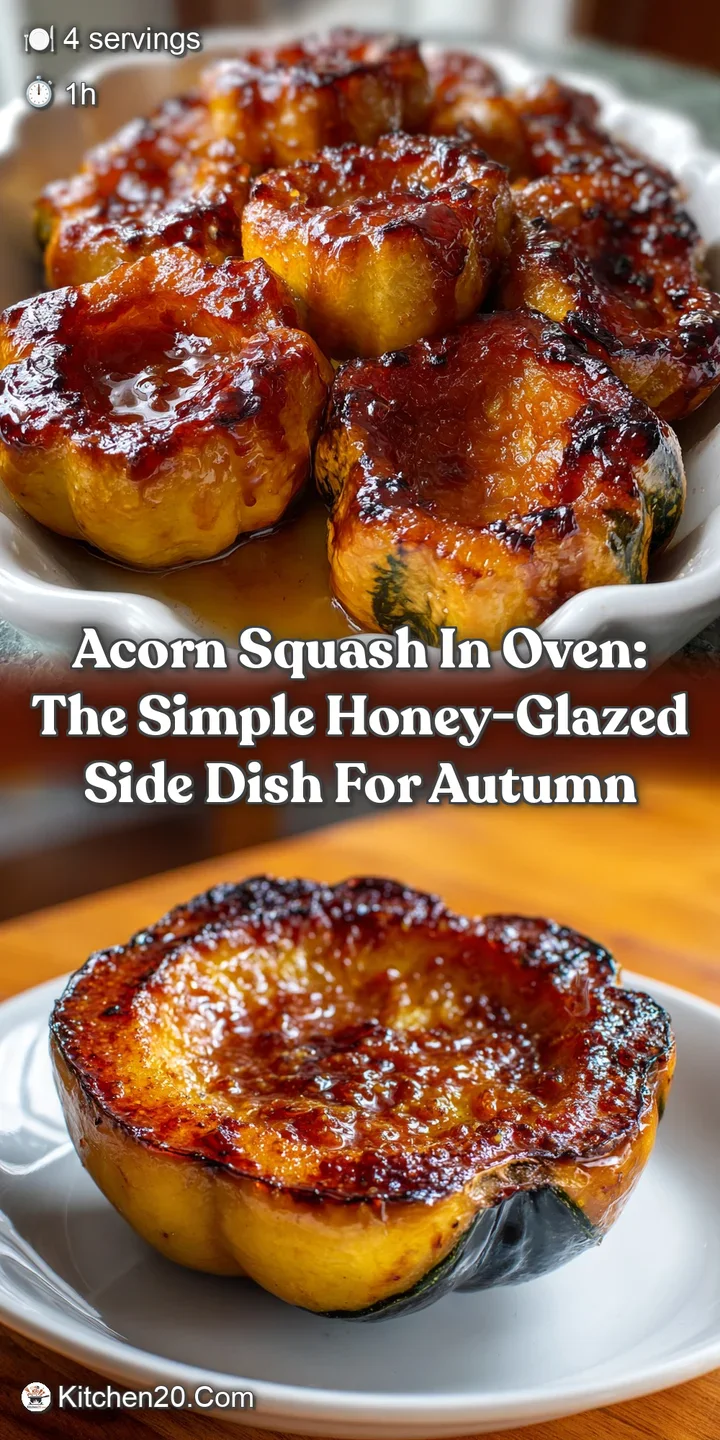
Recipe FAQs
Do I need to peel the acorn squash before roasting?
No, definitely not! Unlike butternut squash, the skin of the acorn squash is very difficult to remove when raw. It softens significantly during the long roasting time, becoming perfectly edible, though some prefer to simply scoop out the flesh and leave the skin behind.
My squash came out dry and hard. What went wrong?
This usually indicates the squash hasn't cooked long enough or your oven temperature was too high, causing the exterior to firm up quickly. Ensure you are cooking at the recommended temperature (typically 375-400°F) and test for doneness by easily piercing the flesh with a fork it should yield with minimal resistance.
Additionally, make sure to add the butter/glaze at or slightly before the half way point to keep the surface moisturized.
What is the best way to safely cut acorn squash in half?
The skin can be extremely hard, so stability is key for safety. First, carefully slice a small, flat edge off the bottom to ensure the squash lies steady on the cutting board. Then, using a large, sharp knife, carefully slice downward starting from the stem indentation, rocking the knife gently to cut through to the base.
Can I make this honey glazed recipe vegan?
Yes, absolutely. To make this recipe vegan, simply substitute the butter for a plant based vegan butter alternative or use high heat oil like coconut oil or refined olive oil. Furthermore, replace the honey with an equal measure of maple syrup or agave nectar for that satisfying sweetness and gorgeous glaze.
How far in advance can I prepare and store the roasted squash?
Leftover roasted acorn squash can be stored, covered tightly, in the refrigerator for up to
Simple Acorn Squash In Oven
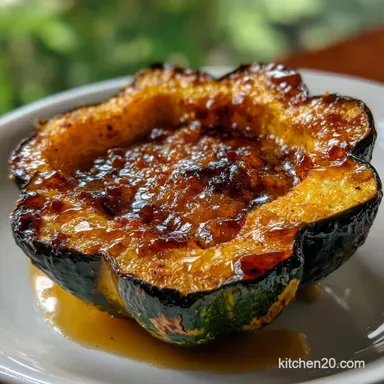
Ingredients:
Instructions:
Nutrition Facts:
| Calories | 331 kcal |
|---|---|
| Protein | 4.5 g |
| Fat | 11.4 g |
| Carbs | 57.7 g |
