Smoky Fried Rice with Velvety Egg Ribbons
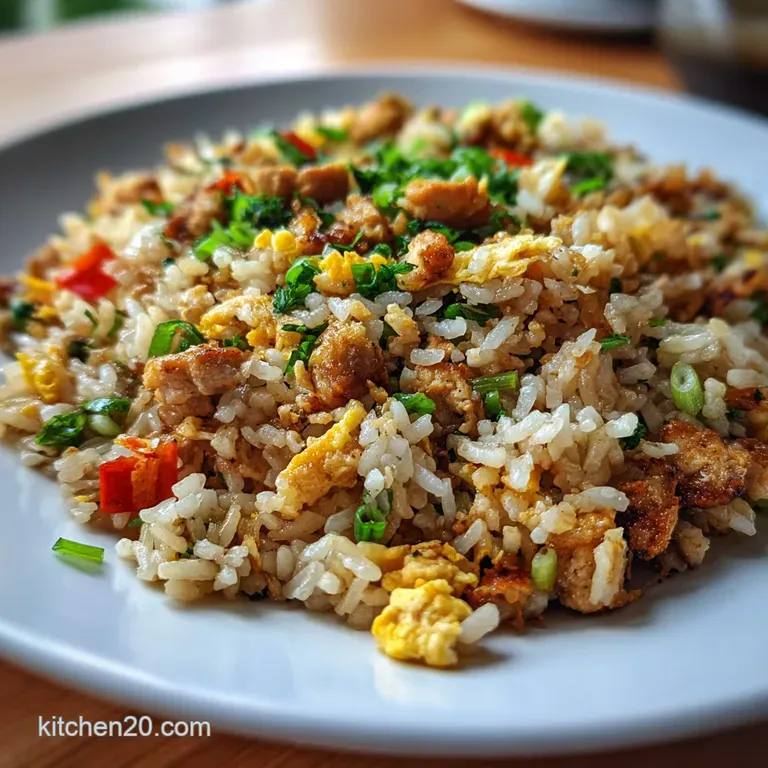
- Time: Active 15 minutes, Passive 10 minutes, Total 25 minutes
- Flavor/Texture Hook: Smoky, individual grains with a subtle chew and velvety egg ribbons.
- Perfect for: Busy weeknights where you need a high protein, one pan platform for leftovers.
- Creating a Vibrant and Healthy Fried Rice
- Science of the Starch Bounce
- Essential Recipe Specifications
- Selecting the Right Components
- Tools for High Heat Cooking
- Precise Step by Step Guide
- Fixing Common Cooking Errors
- Creative Flavor and Ingredient Swaps
- Adjusting Servings and Batches
- Debunking Popular Kitchen Tales
- Storage and Sustainability Practices
- Finishing Touches for Color Balance
- Recipe FAQs
- 📝 Recipe Card
Creating a Vibrant and Healthy Fried Rice
The sizzle hits the pan, and suddenly the kitchen smells like a late night street food stall. I remember the first time I tried making this; I ended up with a gummy, grey pile of mush that looked more like porridge than anything you'd find in a white cardboard box.
It was a total disaster, but it forced me to stop guessing and start looking at how the heat actually interacts with the starch.
We've all been there, standing over a stove that isn't quite hot enough, wondering why the grains aren't dancing. But once you realize that this dish is basically a platform for texture and color, everything changes.
We're moving away from the heavy, oil soaked versions and towards something that feels light but hits those deep umami notes. It’s about connecting the right ingredients with the right technique to get that signature "wok hei" at home.
This recipe is about more than just tossing leftovers together. It’s a method for achieving structural integrity in every bite. When you get that first bite where the grain is firm, the chicken is seared to a golden brown, and the peas pop with sweetness, you’ll know you’ve nailed the balance.
This is the Fried Rice you'll keep in your back pocket for every "nothing in the fridge" emergency.
Science of the Starch Bounce
Starch Retrogradation: Chilling the grains overnight allows the starches to recrystallize, which is why the best rice for fried rice doesn't turn into a sticky mess when it hits the heat.
Maillard Reaction: over High heat searing of the chicken and aromatics creates complex flavor compounds that bridge the gap between simple ingredients and deep umami.
Surface Dehydration: Air drying the rice, even for just 15 minutes under a fan, ensures the oil coats each grain rather than steaming them.
Protein Denaturation: Whisking the eggs lightly before they hit the pan allows them to set into silky ribbons that provide a velvety contrast to the crispy grains.
| Thickness | Internal Temp | Rest Time | Visual Cue |
|---|---|---|---|
| 1/2 inch cubes | 165°F | 2 mins | Opaque center with slight golden exterior |
| 1 inch strips | 165°F | 3 mins | Juices run clear when pressed |
| Ground meat | 165°F | None | No pink remaining and crumbly texture |
Essential Recipe Specifications
Choosing High Amylose Grains
When we talk about the best rice for fried rice, we're looking for grains that stay separate. Jasmine rice is the standard because its amylopectin content is just high enough to be tender but low enough to avoid becoming a gluey block.
If you use a short grain variety like sushi rice, the moisture content is too high, and the grains will clump into a mass that refuses to fry.
Mastering the Maillard Reaction
The secret to that restaurant flavor isn't more soy sauce; it's the Maillard reaction. This happens when the sugars and proteins in the chicken and garlic meet high heat. You want to hear a constant sizzle. If the sound drops to a simmer, you're losing the battle against moisture.
That char is what provides the savory backbone for the entire dish.
Understanding Surface Dehydration
Fried Rice lives or dies by the surface of the grain. If the outside is wet, the oil won't stick, and you won't get that "shatter" texture. If you're using fresh rice, spread it on a baking sheet and put it in front of a fan for 15 minutes.
This small technological tweak mimics the drying effect of a professional kitchen's walk in cooler.
| Ingredient | Science Role | Pro Secret |
|---|---|---|
| Jasmine Rice | High Amylopectin | Fan dry it for 10 mins if you forgot to cook it yesterday. |
| Large Eggs | Emulsification | Whisk until no streaks remain to create a velvety "gold over silver" coat. |
| Avocado Oil | High Smoke Point | This oil allows for the high temperatures needed without burning or tasting "off." |
Selecting the Right Components
- 4 cups cooked Jasmine rice, chilled (Sub: Basmati rice - firmer grain, less floral) Why this? Jasmine provides the balance of aroma and structural integrity when chilled.
- 1 tbsp avocado oil (Sub: Grapeseed oil) Why this? High smoke point prevents the kitchen from filling with smoke.
- 1 lb chicken breast, diced into 1/2 inch cubes (Sub: Extra firm tofu) Why this? Lean protein that sears quickly without releasing excessive moisture.
- 3 large eggs, lightly whisked (Sub: Just Egg or silken tofu crumble) Why this? Provides a velvety fat source that binds the grains together.
- 3 cloves garlic, minced (Sub: 1/2 tsp garlic powder) Why this? Essential for the aromatic base and deep savory notes.
- 1 tbsp fresh ginger, grated (Sub: 1/4 tsp ground ginger) Why this? Brightens the dish and cuts through the richness of the oil.
- 1/2 cup scallions, whites and greens separated (Sub: Finely diced shallots) Why this? Whites for cooking, greens for a sharp, fresh finish.
- 1 cup carrots, finely diced (Sub: Diced butternut squash) Why this? Adds sweetness and a crunch that survives the high heat.
- 1 cup frozen peas, thawed (Sub: Edamame) Why this? Pops of color and plant based protein in every bite.
- 1/2 cup red bell pepper, diced (Sub: Snap peas) Why this? Adds a subtle sweetness and vibrant visual contrast.
- 2 tbsp low sodium soy sauce (Sub: Tamari for gluten-free) Why this? Adds umami and salt without overwhelming the other flavors.
- 1 tsp toasted sesame oil (Sub: Perilla oil) Why this? Purely for aroma; do not use it as the primary frying oil.
- 1/2 tsp white pepper (Sub: Black pepper) Why this? Traditional floral heat that doesn't muddy the color of the grains.
- 1 pinch sea salt (Sub: Celery salt) Why this? Enhances the natural flavors of the vegetables.
Tools for High Heat Cooking
A carbon steel wok is the revolutionizing piece of tech every home cook needs, but a large cast iron skillet (like a Lodge) works wonders too. The goal is heat retention. When you add the cold rice for fried rice, the temperature of the pan will plummet. A heavy pan acts as a thermal battery, keeping the sizzle alive.
You also need a wide, thin spatula. A metal one is best for scraping those delicious brown bits off the bottom of the pan. This isn't the time for a delicate silicone tool; you need something that can handle the aggressive tossing required to coat every single grain in oil and seasoning.
Chef's Tip: Freeze your fresh ginger for 10 minutes before grating. It prevents the ginger from becoming a stringy mess and creates a fine snow that distributes perfectly through the rice.
| Feature | Fresh Grains | Cold Leftovers |
|---|---|---|
| Texture | Tends to be sticky | Individual grains shatter |
| Prep Time | 20 mins extra | Zero minutes |
| Char | Harder to achieve | Excellent wok char |
Precise step-by-step Guide
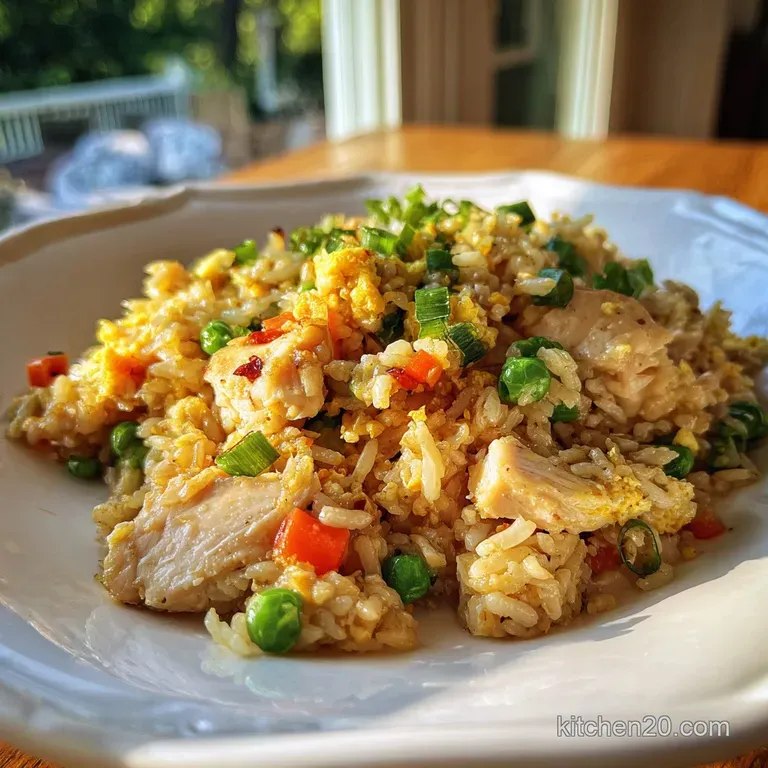
Preparing the Grains
Remove the 4 cups of chilled Jasmine rice from the fridge. Use your hands to gently break up any large clumps until the grains are mostly individual. If the rice feels damp, spread it on a tray for 10 minutes.
Searing the Protein
Heat the 1 tbsp avocado oil in your pan over high heat until it shimmers. Add the 1 lb diced chicken in a single layer. Let it sear for 2 minutes until a golden crust forms before tossing. Remove and set aside.
Scrambling the Silk
Reduce heat to medium high. Pour the 3 whisked eggs into the pan. Stir quickly for 30 seconds until velvety and just set, then remove and place with the chicken.
Charring the Aromatics
Add a splash more oil if the pan is dry. Toss in the 1 cup carrots and 1/2 cup red bell pepper. Sauté for 2 minutes until edges are slightly softened.
Frying the Grains
Turn the heat to its maximum setting. Add the scallion whites, 3 cloves garlic, and 1 tbsp ginger. Stir for 30 seconds until fragrant and sizzling. Immediately add the rice.
Finishing with Seasoning
Toss the rice aggressively for 3 minutes. Add the 2 tbsp soy sauce, 1 tsp sesame oil, 1/2 tsp white pepper, and a pinch of sea salt. Stir fry until the grains start to "jump" or pop in the pan.
Ending the Process
Return the chicken, eggs, and 1 cup peas to the pan. Toss for 1 minute until everything is heated through and connected. This is the same technique we use for our Wok This Way recipe to ensure heat distribution.
Garnish and Serve
Turn off the heat. Fold in the scallion greens. The residual heat will wilt them just enough to release their oil without losing their bright green color.
Fixing Common Cooking Errors
Ending the Soggy Nightmare
If your rice for fried rice turns into a clump, it’s usually because the pan wasn't hot enough or you used fresh, warm rice. The moisture in warm rice creates steam, which softens the exterior of the grain.
To fix this mid cook, spread the rice out in the pan and stop stirring for a full minute to let the moisture evaporate.
Rescuing Burnt Garlic
Garlic burns in seconds at high heat. If you see it turning dark brown or black, it will become bitter and ruin the dish. The only fix is to wipe the pan and start the aromatic step over.
To prevent this, always add your garlic after the harder vegetables like carrots have already been cooking for a few minutes.
| Problem | Root Cause | Solution |
|---|---|---|
| Grains are sticking | Pan not hot enough | Wait for oil to shimmer before adding rice |
| Flavor is flat | Lack of salt/acid | Add a tiny splash of rice vinegar or more salt |
| Chicken is dry | Overcooked | Sear at high heat and remove immediately |
- ✓ Pat chicken completely dry before searing to prevent steaming.
- ✓ Preheat your pan for at least 3 full minutes before adding oil.
- ✓ Don't overcrowd the pan; if doubling the recipe, work in batches.
- ✓ Use a high smoke point oil like avocado or grapeseed, never butter.
- ✓ Always break up rice clumps before they hit the hot pan.
Creative Flavor and Ingredient Swaps
Switching to Basmati
If you prefer a nuttier profile, Basmati is the best rice for fried rice at home when you want a very dry, distinct grain. It doesn't have the same floral aroma as Jasmine, but it handles high heat exceptionally well without breaking.
Going Low Carb
For a lighter version, you can do a 50/50 split of rice and cauliflower rice. This is a great way to keep the volume high while reducing the caloric density. Just make sure to sauté the cauliflower rice separately first to cook off its high water content.
| Original Ingredient | Substitute | Why It Works |
|---|---|---|
| Low sodium Soy Sauce | Liquid Aminos | Similar salty profile. Note: Slightly sweeter than traditional soy. |
| Chicken Breast | Shrimp | Searing shrimp adds a snap texture. Note: Cook for only 90 seconds. |
| Avocado Oil | Ghee | High smoke point with a rich, buttery finish. |
Adjusting Servings and Batches
When you need to scale this recipe up for a crowd, do not simply double the ingredients in the same pan. The rice for fried rice needs surface area to fry; if the layer of rice is too thick, the bottom will burn while the top steams. Work in two separate batches to maintain that crispy texture.
If you are scaling down for a single serving, reduce the oil slightly but keep the heat high. A small batch can actually be harder to cook because the pan stays too hot, so you’ll need to move the ingredients constantly. For more tips on managing large family meals, our How to Make recipe covers batch cooking in detail.
Debunking Popular Kitchen Tales
A common misconception is that you need a huge amount of oil to prevent sticking. In reality, a well seasoned pan and high heat do the heavy lifting. Excessive oil just leads to a greasy mouthfeel that masks the delicate aromatics of the ginger and garlic.
Another myth is that you can't make this with fresh rice. You absolutely can, provided you use the fan drying method mentioned earlier. The goal is surface dehydration, and while an overnight stay in the fridge is the easiest way to achieve it, it isn't the only way to get rice for fried rice to behave in the pan.
Storage and Sustainability Practices
Storage: Keep leftovers in an airtight container in the fridge for up to 3 days. When reheating, add a teaspoon of water and cover the dish to create steam that re hydrates the grains without making them mushy.
Zero Waste: Don't toss those broccoli stalks or kale ribs. Peel the tough outer layer, dice them small, and throw them in with the carrots. They add a fantastic crunch and prevent food waste. You can also save your onion skins and carrot peels in a freezer bag to make a savory vegetable stock later.
Finishing Touches for Color Balance
The beauty of a connected kitchen is how we use simple garnishes to create a professional look. For this Fried Rice, we focus on three distinct color accents to make the plate pop:
- Emerald Green: Use the scallion greens. Add them only after the heat is off so they stay vibrant and crisp.
- Electric Orange: The carrots aren't just for flavor; their color intensifies as they sear, providing a warm contrast to the pale rice.
- Ruby Red: The red bell peppers offer a sweetness that balances the salty soy sauce and adds a high end visual appeal.
Chef's Note: If you want a deeper color on the grains themselves without adding more salt, use a teaspoon of dark soy sauce. It’s thick like molasses and provides that classic mahogany hue found in best rice for fried rice chinese restaurant versions.
Recipe FAQs
What kind of rice do Chinese restaurants use for fried rice?
Jasmine rice, chilled overnight. Restaurants rely on day-old, cooked long grain rice because the starches retrograde in the fridge, preventing the grains from clumping when hit with high heat.
Should I use basmati or jasmine rice for fried rice?
Jasmine is preferred, but Basmati works well. Jasmine offers a better balance of tenderness and separation; Basmati has a firmer grain structure and is an excellent substitute if you need extra structural integrity.
What is the secret to great fried rice?
High heat and dry grains. The secret is achieving "wok hei" by cooking quickly in a very hot wok so the surface of the rice sears instead of steaming. If you're mastering the searing technique here, you'll find similar principles apply when learning How to Make Fried Chicken Deliciously Crispy in 30 Minutes: My Grandma's Secret!.
How do I stop my fried rice from turning out gummy or mushy?
Use cold, dry rice and don't overcrowd the pan. Cold rice has less surface moisture; if the pan isn't hot enough, the rice releases residual moisture and steams itself into a starchy mess.
Can I substitute the cooking oil for butter?
No, stick to a high smoke point oil like avocado or grapeseed. Butter burns far too easily at the necessary high temperatures required to achieve that smoky sear.
How do I get that deep, savory brown color without adding too much soy sauce?
Use a small amount of dark soy sauce at the end. Dark soy sauce has molasses and provides intense color without adding the massive salt load that regular soy sauce would bring.
How do I ensure the scrambled egg looks like silky ribbons and not dry chunks?
Whisk the eggs lightly and cook them very quickly over medium high heat. You only want the egg set for about 30 seconds before removing it from the pan; it finishes cooking when you reintroduce it with the other ingredients.
Smoky Fried Rice At Home
Ingredients:
Instructions:
Nutrition Facts:
| Calories | 528 kcal |
|---|---|
| Protein | 45.6 g |
| Fat | 12.8 g |
| Carbs | 56.2 g |
| Fiber | 3.8 g |
| Sugar | 3.1 g |
| Sodium | 345 mg |
