Southern Cornbread Recipe: Crispy Skillet
- Time: Active 10 mins, Passive 20 mins, Total 30 mins
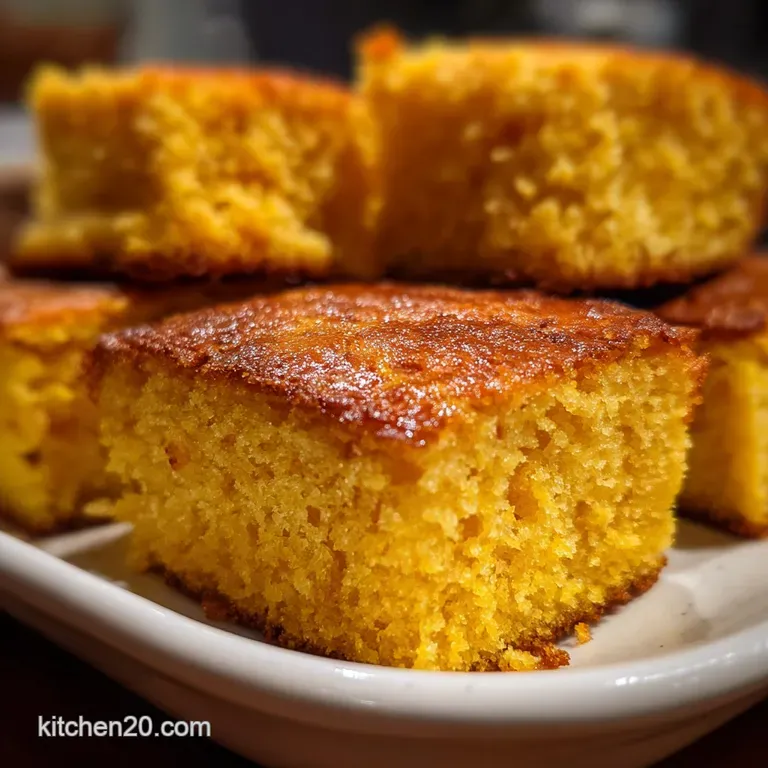
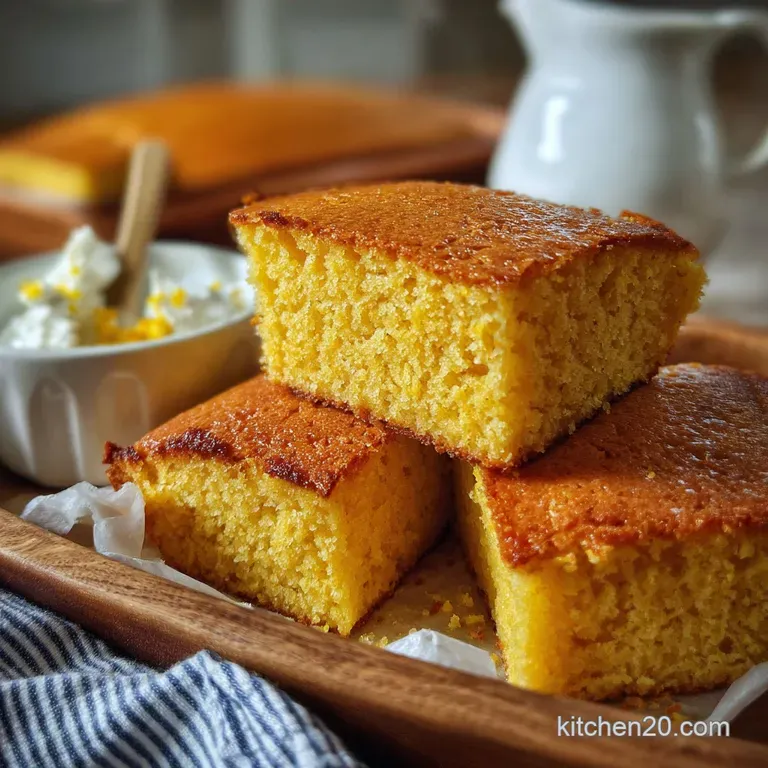
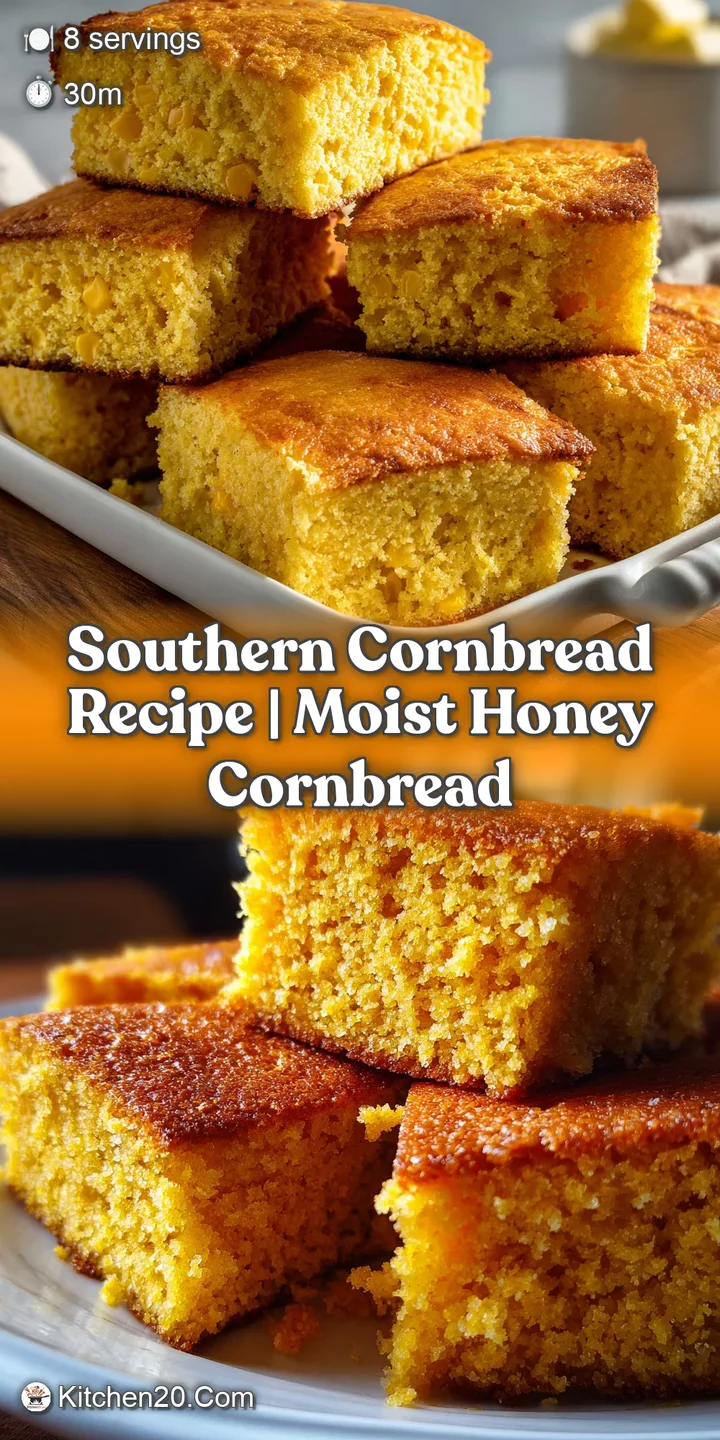
- Flavor/Texture Hook: Shattering toasted crust with a moist, tangy buttermilk crumb
- Perfect for: Holiday gatherings, Sunday dinners, or pairing with smoky chilis
- The Science of the Skillet Sizzle and Rise
- Essential Specs for Your Next Big Family Gathering
- Component Analysis for the Ultimate Savory Texture
- Sourcing Your Elements for Authentic Grit and Flavor
- Selecting the Right Tools for a Professional Finish
- Mastering the Batter and the Heat Step by Step
- Troubleshooting Tips to Ensure a Perfect Golden Loaf
- Adjusting the Yield for Large Holiday Crowds
- Flavor Variations for a Unique Personal Twist
- Preservation Strategies for Keeping That Fresh Corn Flavor
- Curating the Perfect Table with Ideal Side Pairings
- Recipe FAQs
- 📝 Recipe Card
The Science of the Skillet Sizzle and Rise
Thermal Shock Emulsification: Dropping cold buttermilk batter into 200°C fat creates an instant steam barrier, preventing the bread from sticking while flash frying the bottom crust.
This intense initial heat also triggers the baking soda to react immediately with the buttermilk acids, ensuring the crumb stays airy despite the heavy cornmeal.
| Method | Time | Texture | Best For |
|---|---|---|---|
| Cast Iron Oven | 20 mins | Thick, deep fried crunchy crust | Authentic Sunday dinner |
| Stovetop Start | 25 mins | Extra dark bottom, softer top | Controlling the "sizzle" factor |
| Standard Baking Pan | 22 mins | Uniform, soft, cake like edges | Large batches or potlucks |
Finding the right approach depends on your gear, but the cast iron skillet is the undisputed champion for this southern cornbread recipe. It holds heat with incredible stability, which is exactly what you need to get that professional finish. If you're looking to expand your menu, this bread pairs beautifully with our Southern Sweet Potato Pone recipe for a full table of textures.
Essential Specs for Your Next Big Family Gathering
To get this right every single time, we need to focus on precision. Home cooking shouldn't be a guessing game, especially when people are waiting at the table. I've found that these three checkpoints are the difference between a "good" batch and the one everyone asks for the recipe for.
- Internal Temperature: Aim for exactly 93°C (200°F) in the center for a crumb that is set but still holds its moisture.
- The 10 Minute Chill: Let your buttermilk and eggs sit on the counter for 10 minutes, but no longer, to keep the batter slightly cool before it hits the hot skillet.
- The Smoke Point: Heat your bacon drippings in the skillet until the very first wisp of blue smoke appears before pouring in the batter.
Chef Science Note: If you don't hear a loud, aggressive sizzle the second the batter touches the pan, your skillet wasn't hot enough. Don't be afraid of the heat!
Component Analysis for the Ultimate Savory Texture
Selecting the right ingredients is where the revolution starts. We aren't just throwing things in a bowl; we are building a structure. This specific southern cornbread recipe relies on the interaction between fat and acidity.
| Ingredient | Science Role | Pro Secret |
|---|---|---|
| Stone Ground Cornmeal | Provides structural "grit" and intense corn flavor | Use yellow for a richer, more toasted aroma |
| low-fat Buttermilk | Activates leavening and tenderizes the cornmeal proteins | Shake the carton vigorously to aerate before measuring |
| Bacon Drippings | Provides the over high heat medium for the crust | Store your drippings in a jar in the fridge for deeper flavor |
Sourcing Your Elements for Authentic Grit and Flavor
- 2 cups (300g) stone ground yellow cornmeal: Why this? Stone ground retains the germ, offering way more flavor than mass produced versions.
- 0.5 cup (65g) all purpose flour: Why this? Provides enough gluten to prevent the bread from being too crumbly.
- 1 tsp (6g) fine sea salt: Why this? Enhances the natural sweetness of the corn without using sugar.
- 1 tsp (5g) baking powder: Why this? Ensures a consistent rise throughout the entire baking process.
- 0.5 tsp (3g) baking soda: Why this? Reacts with the buttermilk for an instant lift and browning.
- 1.5 cups (355ml) low-fat buttermilk: Why this? The acidity breaks down the tough corn kernels for a softer bite.
- 2 large eggs: Why this? Acts as the binder and adds richness to the crumb.
- 2 tbsp (30ml) avocado oil: Why this? A neutral over high heat oil that keeps the interior moist.
- 1 tbsp (14g) bacon drippings: Why this? This is the secret to that classic, smoky, salty crust.
| Original Ingredient | Substitute | Why It Works |
|---|---|---|
| Buttermilk (355ml) | Plain Yogurt + Milk (1:1) | Maintains the acidity needed for the baking soda reaction |
| Bacon Drippings (14g) | Salted Butter | Provides fat, though it will brown faster and have less smoke |
| Avocado Oil (30ml) | Melted Coconut Oil | Similar fat content. Note: Adds a very subtle nutty sweetness |
The trick is making sure your dry ingredients are whisked until they look like a single, uniform powder. Any lumps of baking soda will leave bitter, green spots in your finished bread, and trust me, I've made that mistake enough times to tell you it's not a vibe.
Selecting the Right Tools for a Professional Finish
You don't need a spaceship, but a few specific items will make this southern cornbread recipe much easier to manage. The absolute must have is a 25cm (10 inch) cast iron skillet. If you don't have one, you can use a heavy stainless steel pan, but the crust won't be quite as legendary.
A solid whisk is better than a fork here because you want to get some air into those eggs. Also, grab a heat proof silicone spatula to help fold the wet into the dry without overmixing. Since we are dealing with high heat, make sure you have some heavy duty oven mitts ready.
That skillet is going to be incredibly hot when it comes out of the oven.
Mastering the Batter and the Heat step-by-step
- Place your 25cm cast iron skillet into the oven and preheat to 220°C (425°F). Note: This ensures the pan is evenly hot for that perfect sizzle.
- Whisk the 300g cornmeal, 65g flour, 6g salt, 5g baking powder, and 3g soda in a large bowl.
- Beat the 2 eggs in a separate jug, then stir in the 355ml buttermilk and 30ml avocado oil.
- Carefully remove the hot skillet from the oven using thick mitts and place it on the stove over medium high heat.
- Drop the 14g bacon drippings into the skillet and swirl it until it is shimmering and just starting to smoke.
- Pour the wet ingredients into the dry bowl and fold quickly with a spatula. Note: Only mix until just combined; lumps are totally fine.
- Scrape the batter into the hot, greased skillet. You should hear a loud sizzle immediately.
- Spread the batter slightly with your spatula and return the skillet to the center rack of the oven.
- Bake for 20 minutes until the top is golden and a toothpick comes out clean.
- Invert the cornbread onto a wire rack or cutting board immediately to keep the bottom crust from steaming and getting soft.
For a Shattering, Mahogany Crust
The secret is that brief moment on the stovetop. If your oven doesn't get the skillet hot enough, keeping it on the burner for 30 seconds after adding the batter ensures the bottom "fries" before it even starts baking. This creates a barrier that is almost like a cracker.
For a Tender, Velvety Crumb
Don't overmix! The second the flour and cornmeal are moistened, stop. If you keep stirring, you'll develop the gluten in the 65g of flour, which turns your cornbread into a tough, rubbery brick. We want the crumb to be delicate enough to melt when it hits a bowl of hot soup.
Troubleshooting Tips to Ensure a Perfect Golden Loaf
To Fix a Dry, Crumbly Texture
If your bread falls apart the second you touch it, you likely overbaked it or your cornmeal was too coarse. Next time, try adding an extra tablespoon of buttermilk. For this batch, a heavy drizzle of honey or a pat of melted butter can help "re hydrate" the slice on the plate.
To Prevent a Stuck Bottom
This usually happens if the skillet wasn't hot enough or if the seasoning on your cast iron is a bit thin. Make sure that bacon grease is really moving around the pan before the batter goes in. If it does stick, let it cool for 5 minutes; sometimes the steam helps release the bread from the iron.
| Problem | Root Cause | Solution |
|---|---|---|
| Dark bottom, raw center | Oven temp too high or rack too low | Move to middle rack and drop temp by 10°C |
| No "sizzle" when pouring | Skillet wasn't preheated long enough | Preheat skillet for at least 15 mins inside the oven |
| Bitter aftertaste | Baking soda wasn't distributed | Sift dry ingredients or whisk more thoroughly before adding liquids |
✓ Always use full fat or low-fat buttermilk, never skim (it's too watery) ✓ Preheat your skillet for at least 15 minutes to ensure heat saturation ✓ Don't let the batter sit on the counter; get it in the pan as soon as it's mixed ✓ Use a scale for the cornmeal (300g) to
avoid the "packed cup" dryness trap ✓ Slice the bread while warm, but let it rest for 5 minutes first
Adjusting the Yield for Large Holiday Crowds
Scaling this recipe is pretty straightforward, but you have to watch your pan size. If you want to double this for a huge Thanksgiving dinner, don't just put it all in one giant skillet, or the center will be gummy while the edges burn.
Scaling Up (2x): Use two 25cm skillets or a large 23x33cm (9x13 inch) baking pan. If using a rectangular pan, increase the bacon drippings to 28g to ensure the entire surface is coated. You might need to add about 5 minutes to the bake time, but keep an eye on it.
Scaling Down (1/2): Use a smaller 15cm (6 inch) skillet. Reduce the bake time to about 15 minutes. For the eggs, beat one egg in a cup and use roughly half of it. It’s a bit of a pain, but it keeps the moisture levels correct.
Flavor Variations for a Unique Personal Twist
Once you have the base down, this southern cornbread recipe is like a canvas for your own creativity. I love throwing in things that add a bit of texture or a punch of heat.
For a Zesty Kick
Fold in 50g of chopped pickled jalapeños and 100g of sharp cheddar cheese. The cheese creates these little "lace" edges where it hits the hot skillet, which is honestly my favorite part. It’s a bit of a revolution for your standard chili night.
For a Smoky Garden Version
Add 100g of fresh corn kernels (cut right off the cob) and a teaspoon of smoked paprika. The fresh corn pops in your mouth, providing a burst of sweetness that works perfectly with the savory bacon grease. If you’re serving this with our Southern Thanksgiving Menu recipe, the extra corn texture is a total win.
| If you want... | Then do this... |
|---|---|
| Sweeter profile | Add 2 tbsp of honey to the wet ingredients |
| Extra moistness | Replace 30ml of buttermilk with 30ml of sour cream |
| A crunchier top | Sprinkle a tablespoon of dry cornmeal over the batter before baking |
Preservation Strategies for Keeping That Fresh Corn Flavor
Storage: This bread is best eaten within 2 hours of baking. If you have leftovers, wrap them tightly in foil or an airtight container and keep them at room temperature for up to 2 days. Don't put it in the fridge; the cold air dries out the cornmeal faster than you'd believe.
Freezing: You can freeze this! Wrap individual slices in plastic wrap, then put them in a freezer bag for up to 3 months. To reheat, don't use the microwave unless you want it to be rubbery.
Put the slices on a sheet tray in a 175°C (350°F) oven for 10 minutes until the edges get crispy again.
Zero Waste: If the bread gets truly stale, don't toss it. Crumble it up and bake it at a low temp until it’s completely dry. Now you have the perfect base for a dressing or croutons for a winter salad. You can also use the crumbs to thicken up a watery chili!
Curating the Perfect Table with Ideal Side Pairings
This cornbread is the ultimate connector on a dinner table. It bridges the gap between the heavy proteins and the lighter vegetable sides. I almost always serve it alongside a big pot of slow cooked collard greens or a smoky ham hock bean soup.
The way the bread soaks up the "pot likker" (that flavorful liquid at the bottom of the greens) is legendary.
If you are doing a full Southern themed brunch, try serving a slice with a poached egg and a side of our Creamy Southern Cheese recipe. The textures are very different, but the corn flavors really reinforce each other. It’s a modern way to look at classic comfort food, connecting old school techniques with a fresh presentation.
"Searing the bottom" is a phrase people use, but technically it’s a quick fry. While some people think you should never use flour, that small 65g portion actually helps the bread hold together when you're dipping it into a hearty stew. Without it, you're basically eating corn sand.
Also, don't worry about "over greasing" the pan; that extra fat is what gives you the crust of your dreams. Enjoy the sizzle, my friend!
Recipe FAQs
How is Southern cornbread different?
Typically, it's made without sugar and cooked in a hot skillet. Southern cornbread emphasizes a savory, slightly crumbly texture with a distinct corn flavor, often achieved using buttermilk and bacon drippings for richness and a crispy crust.
What are the four ingredients in traditional cornbread?
Cornmeal, buttermilk, eggs, and fat are the core four. While flour is common for structure, these four provide the essential base for flavor, texture, and leavening in most authentic recipes.
Do Southerners put sugar in their cornbread?
Generally, no, true Southern cornbread is unsweetened. The focus is on the savory corn flavor. Sweetened versions are often considered "Yankee" style or a variation rather than traditional.
What's the secret to moist cornbread?
Using buttermilk and not overbaking are key. Buttermilk's acidity tenderizes the cornmeal, and eggs add richness. Pulling it from the oven as soon as a toothpick comes out clean prevents it from drying out.
Can I substitute buttermilk?
Yes, a milk and vinegar or lemon juice mixture works well. For every cup of buttermilk needed, use one cup of milk with one tablespoon of white vinegar or lemon juice, let it sit for 5-10 minutes until it slightly curdles, mimicking the acidity needed for recipes like our Classic Mini Corn Dogs The Best American Finger Foods Recipe.
Why is my cornbread dry and crumbly?
Likely causes are overbaking or using too much flour. Overbaking bakes out the moisture, and an excessive flour ratio can make the texture too cake like and dry. Ensure you're using the correct amount of cornmeal to flour and watch the bake time closely.
How do I get a crispy crust on my cornbread?
Preheat your skillet with fat until smoking hot. Using bacon drippings or lard in a cast iron skillet that has been heated in a very hot oven (around 220°C/425°F) creates thermal shock when the batter hits, frying the exterior for that signature crispness. If you enjoyed mastering heat control here, see how the same principle applies to achieving perfect texture in our Pecan Pie: Easy No-Fuss Classic Buttery Recipe for Holiday Baking.
Southern Cornbread Recipe
Ingredients:
Instructions:
Nutrition Facts:
| Calories | 248 kcal |
|---|---|
| Protein | 6.9 g |
| Fat | 8.3 g |
| Carbs | 37.2 g |
| Fiber | 2.9 g |
| Sugar | 2.2 g |
| Sodium | 438 mg |
