Spinach Feta Quesadillas: Crispy Mediterranean Center
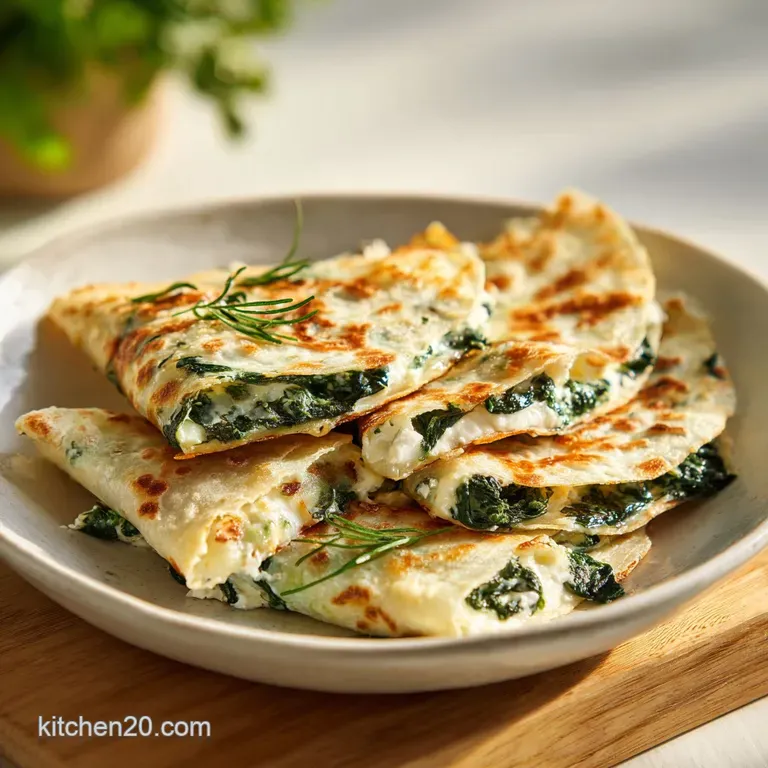
- Time: Active 5 minutes, Passive 10 minutes, Total 15 minutes
- Flavor/Texture Hook: Shatter crisp exterior with a velvety, melted Mediterranean center
- Perfect for: High speed weeknight dinners or a sophisticated weekend brunch
- Mastering the Ultimate Spinach Feta Quesadillas
- Why This Briny Combo Works
- Essential Metrics for Success
- Deep Dive into Ingredients
- Hardware for the Best Crunch
- Executing the Precise Golden Sizzle
- Fixes for Common Cooking Hurdles
- Scaling for Larger Groups
- Expanding Your Flavor Portfolio
- Preservation and Texture Recovery
- Creative Ways to Enjoy Today
- Recipe FAQs
- 📝 Recipe Card
Mastering the Ultimate Spinach Feta Quesadillas
The first time I tried to make these, I followed a "dump and cook" method that resulted in a sad, gray puddle inside a limp tortilla. It was a culinary heartbreak. I’d just tossed raw leaves and big chunks of cheese into the pan, thinking the heat would do the work for me.
Instead, the spinach released every drop of its internal moisture, steaming the tortilla from the inside out until the whole thing disintegrated. It was a mess, but it taught me everything I needed to know about the physics of leafy greens.
Since then, I’ve been revolutionizing the way I look at this platform. The secret isn't just in the ingredients; it's in how we manage the interaction between heat and water.
When you get it right, you hear that specific, rhythmic sizzle as the olive oil meets the flour tortilla, followed by the rewarding shatter of the first bite. It’s a connected experience where the sharpness of the Greek feta cuts through the richness of the melted cheese, all held together by the earthy, softened spinach.
We are essentially building a flavor network here. This isn't just a snack; it's a blueprint for a quick, high performance meal that respects the integrity of each component. I’ve refined this process over hundreds of Tuesday nights, and I’m ready to share the exact protocol that ensures your tortillas remain structural and your filling stays bright.
Let’s get the pan hot and start this culinary connection.
Why This Briny Combo Works
Connecting these specific ingredients requires an understanding of how they behave under thermal stress. We aren't just heating food; we are managing a series of chemical reactions to reach a state of textural equilibrium.
- Thermal Wilt: Pre cooking the 150g of fresh baby spinach allows the cellular walls to collapse and release moisture before it enters the tortilla.
- Bimodal Melting: Using 50g of low moisture mozzarella provides the "glue" that the non melting 75g Greek feta lacks.
- Aromatic Infusion: Dicing the 30g of red onion finely ensures it softens in the same 10 minutes it takes for the cheese to fuse.
- Lipid Conduction: The 1 tbsp of extra virgin olive oil acts as a heat transfer medium, creating a uniform, golden crust on the 2 large flour tortillas.
| Method | Time | Texture | Best For |
|---|---|---|---|
| Cast Iron Skillet | 8 minutes | Ultra shatter crisp | Traditional texture lovers |
| Air Fryer | 6 minutes | Uniformly dry crisp | Minimal oil preference |
| Oven Sheet Pan | 12 minutes | Soft crunch hybrid | Batch cooking for groups |
The cast iron method remains the standard for those who want that localized, uneven browning that signals deep flavor development. If you are looking for a more hands off approach, the air fryer is a revolutionizing tool for getting that dry, cracker like finish.
Essential Metrics for Success
The following component analysis breaks down why these specific measurements are vital for a successful outcome. We aren't just following a list; we are optimizing the internal architecture of the dish.
| Component | Science Role | Pro Secret |
|---|---|---|
| 150g Baby Spinach | Moisture Reservoir | Squeeze dry after wilting to prevent a soggy base. |
| 75g Greek Feta | Ionic Brine | Crumble into small pebbles to maximize surface area contact. |
| 50g Mozzarella | Protein Binder | Use low moisture blocks to avoid "oil off" during the sear. |
| 10 inch Tortillas | Structural Platform | Choose flour over corn for better gluten driven flexibility. |
The interaction between the moisture in the spinach and the fats in the cheese is where most cooks fail. By precisely weighing your 150g of spinach, you ensure you have enough bulk to taste the greens without overwhelming the binding capacity of the 50g of mozzarella.
Deep Dive into Ingredients
Every element in this recipe serves a distinct purpose in the final flavor profile. We want high-quality inputs to ensure the final output is sophisticated rather than greasy.
- 150g fresh baby spinach: This provides the earthy base. Why this? Baby leaves are tender and wilt faster than mature, stemmed spinach.
- 75g Greek feta cheese, crumbled: The source of salt and tang. Why this? Sheep's milk feta provides a creamy but firm texture that won't disappear.
- 50g low moisture mozzarella cheese, shredded: The structural adhesive. Why this? It has the perfect stretch to fat ratio for handheld stability.
- 30g red onion, finely diced: Adds a sharp, sulfuric counterpoint to the rich fats.
- 1 clove garlic, minced: Essential for an aromatic background note.
- 0.5 tsp dried oregano: Connects the dish to its Mediterranean roots.
- 0.25 tsp red pepper flakes: Provides a subtle, glowing heat.
- 2 large (10 inch) flour tortillas: The flexible, golden envelope for our filling.
- 1 tbsp extra virgin olive oil: The conduit for heat and flavor.
| Original Ingredient | Substitute | Why It Works |
|---|---|---|
| Greek Feta | Goat Cheese | Similar tang. Note: Will be much creamier and less structural. |
| Baby Spinach | Swiss Chard | Earthy flavor. Note: Requires longer pre cooking of the stems. |
| Red Onion | Shallots | Provides a more delicate, garlicky sweetness. |
Using high-quality olive oil here is a game changer for the crust flavor. If you find yourself wanting to experiment with the base, this recipe is a great starting point for the How to Cook recipe if you decide to add protein later.
Hardware for the Best Crunch
To achieve a professional grade sear, your equipment needs to be as prepared as your ingredients. I recommend a 12 inch cast iron skillet if you have one. The thermal mass of cast iron ensures that when the tortilla hits the pan, the temperature doesn't drop, leading to an immediate sizzle.
If you don't have cast iron, a heavy bottomed stainless steel pan works well, though you'll need to be more vigilant about heat management. You'll also need a wide, thin spatula something that can slide under the tortilla without tearing the delicate, toasted skin.
A box grater for the mozzarella and a sharp chef's knife for the onion and garlic are the only other tools required to keep this process streamlined.
Executing the Precise Golden Sizzle
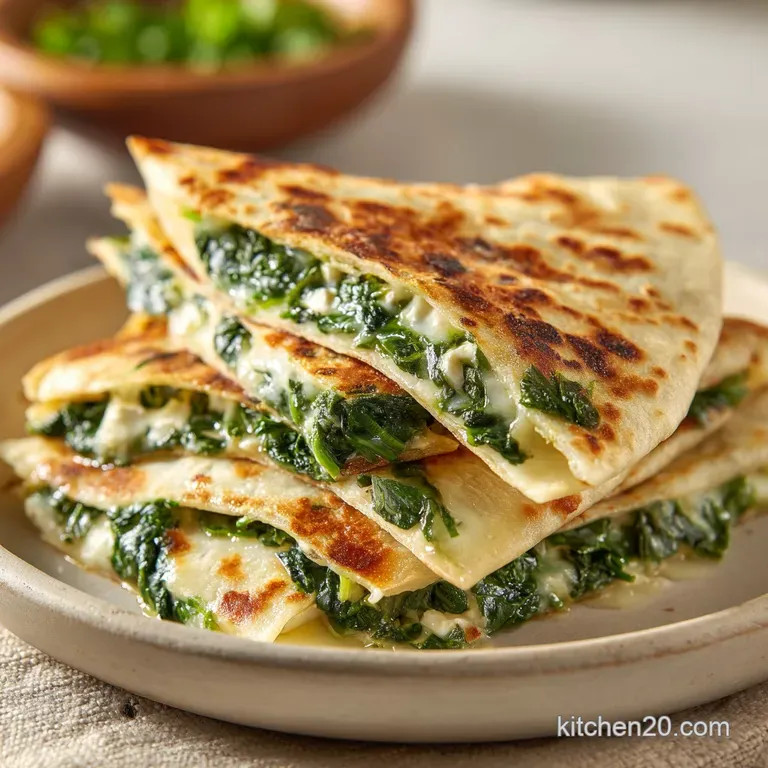
- Wilt the spinach. Place 150g baby spinach in a dry pan over medium heat until the leaves collapse and turn dark green.
- Expel the moisture. Transfer the wilted spinach to a colander and press with a spoon Note: This prevents the tortilla from becoming a soggy mess.
- Sauté aromatics. Heat a tiny drop of oil in the pan and cook the 30g red onion and 1 clove minced garlic until translucent and fragrant.
- Create the mixture. In a medium bowl, combine the wilted spinach, onions, garlic, 75g crumbled feta, 0.5 tsp oregano, and 0.25 tsp red pepper flakes.
- Prepare the tortilla. Lay one large tortilla flat and spread 25g of the mozzarella over one half.
- Layer the filling. Spread the spinach feta mixture evenly over the mozzarella, then top with the remaining 25g of mozzarella Note: This "cheese sandwich" method locks the filling in place.
- Heat the skillet. Add 0.5 tbsp olive oil to the pan over medium high heat until the oil shimmers slightly.
- The first sear. Fold the tortilla over and place it in the pan. Cook for 3 minutes until the bottom is deep golden and rigid.
- The flip. Carefully turn the quesadilla over and add the remaining oil if the pan looks dry.
- Final melt. Cook the second side for 2-3 minutes until the cheese is bubbling at the edges.
Chef's Tip: Use a heavy press or another smaller pan to weigh down the quesadilla for the first 60 seconds. This ensures maximum contact between the tortilla and the heat, leading to a more uniform, glass like crunch.
Fixes for Common Cooking Hurdles
Even with a simple recipe, minor variables in humidity or stove temperature can create issues. Understanding the "why" behind a failure is the fastest way to master the platform.
Managing a Soggy Bottom
If your tortilla feels soft and damp instead of crispy, the culprit is almost always residual moisture in the spinach. Spinach is roughly 90% water; if that water isn't squeezed out after wilting, it turns to steam the moment it hits the hot pan.
| Problem | Root Cause | Solution |
|---|---|---|
| Tortilla is limp | Excess spinach water | Squeeze spinach in a clean kitchen towel before mixing. |
| Cheese isn't melted | Heat too high | Lower heat and cover the pan for 60 seconds to trap steam. |
| Filling falls out | No binder | Increase mozzarella ratio or dice the spinach finer. |
Another trick to avoid the soggy bottom is to ensure you aren't using too much oil. You want a thin film that fries the surface, not a bath that soaks into the flour. If you find the center is still cold while the outside is browning, you likely started with a pan that was too hot.
Common Mistakes Checklist
- ✓ Skipping the pre wilt step for the spinach (raw spinach will ruin the texture)
- ✓ Using "salad" feta in brine without draining (it adds too much liquid)
- ✓ Forgetting to season the spinach mixture (feta is salty, but the greens need the oregano and pepper)
- ✓ Crowding the pan if making multiples (steam builds up between them)
- ✓ Cutting the quesadilla immediately (let it sit 60 seconds so the cheese can "set")
If you love the flavor of spinach but want something a bit more bite sized for a party, you can apply these same moisture management principles to my Mini Spinach and recipe.
Scaling for Larger Groups
Scaling this recipe is straightforward, but you have to be careful with the aromatics. Spices don't always scale linearly; if you double the recipe, start with 1.5x the red pepper flakes and oregano, then taste.
For 4 people (4 quesadillas), you’ll need 300g of spinach and 150g of feta. Use a large sheet pan in a 200°C oven if you want to serve everyone at once. Brush both sides of the assembled tortillas with oil and bake for 6 minutes per side.
This won't give you the exact "shatter" of a cast iron skillet, but it ensures a connected dining experience where everyone eats at the same time.
Expanding Your Flavor Portfolio
Once you have mastered the basic connection of spinach and feta, the platform is open for revolutionizing additions.
- Sun dried Tomato Twist: Add 20g of chopped sun dried tomatoes (oil packed) to the filling for a concentrated umami burst.
- Protein Boost: Shredded rotisserie chicken or sautéed shrimp can be layered in between the cheese and spinach.
- The Greek Salad Version: Add a few sliced kalamata olives and a smear of hummus inside the tortilla before adding the cheese.
Two Simple Dietary Swaps
- gluten-free: Use high-quality almond flour tortillas. They brown faster, so lower your heat slightly to avoid scorching.
- Vegan Connection: Replace feta with a firm, salted tofu crumble mixed with lemon juice and use a plant based mozzarella style shred for the melt.
Preservation and Texture Recovery
Storage: These are best enjoyed fresh, but you can store leftovers in the fridge for up to 3 days. Store them in an airtight container with a piece of parchment paper between layers to prevent sticking.
Freezing: You can freeze the assembled, uncooked quesadillas for up to 2 months. Wrap them individually in plastic wrap and then foil. To cook from frozen, go directly into a medium low skillet and cover with a lid to ensure the inside thaws as the outside crisps.
Reheating: Never use a microwave; it will turn the tortilla into a rubbery disc. Instead, use a dry skillet over medium heat for 2 minutes per side, or place them in a 180°C air fryer for 3 minutes.
Zero Waste Tip: Don't throw away those spinach stems! If they are too woody for the filling, finely mince them and sauté them with the onions for extra fiber. The outer layers of the red onion can be saved in a freezer bag for making vegetable stock later.
Creative Ways to Enjoy Today
Achieving the Maillard Reaction
The Maillard reaction is the chemical dance between amino acids and reducing sugars that gives the tortilla its brown color and toasted flavor. To optimize this, don't keep moving the quesadilla. Let it sit undisturbed for the full 3 minutes.
This allows the heat to build up enough energy to trigger the reaction, creating those iconic leopard spots of flavor.
The Physics of the Wilt
When you heat spinach, the heat breaks down the cell walls, releasing the water stored in the vacuoles. This is why 150g of fresh spinach looks like a mountain but shrinks to a small pile.
By wilting it first, you are pre shrinking the vegetable so the structural integrity of your quesadilla remains intact throughout the eating process.
Myths About Feta
One common misconception is that feta doesn't melt. While it doesn't "stretch" like mozzarella because of its high acid content and protein structure, it does soften and become creamy.
By pairing it with the mozzarella, we create a hybrid texture the "cheese bridge" that provides both the flavor of the Mediterranean and the functional melt we expect from a quesadilla.
Another myth is that you need a lot of oil. Too much oil actually lowers the temperature of the tortilla surface initially and can lead to greasiness. A thin, shimmering layer is all you need to conduct the heat and produce that exquisite, paper thin crunch.
Trust the process, keep your pan at a steady medium heat, and enjoy the sizzle.
Recipe FAQs
Is it true that I must pre-cook the spinach before adding it to the tortilla?
Yes, absolutely. Raw spinach releases too much water when heated inside the tortilla, steaming the bread and resulting in a soggy, structureless filling.
How to achieve the signature shatter crisp texture on the outside?
Use medium high heat in a cast iron skillet. Allow the tortilla to sit undisturbed for at least three minutes to achieve full Maillard browning contact with the hot metal.
Why do I need both Feta and Mozzarella in this recipe?
No, you cannot substitute one for the other entirely. Feta provides the necessary salty tang, but mozzarella is essential as the protein binder that melts and holds the filling together.
How to prevent the cheese from leaking out while frying?
Layer the mozzarella cheese on both sides of the spinach mixture. This creates a "cheese sandwich" that seals the filling before you fold the tortilla in half.
How to reheat leftovers to restore the crispness?
Place them in an air fryer at 180°C for three minutes. Avoid the microwave entirely, as reheating in damp heat will immediately negate the achieved crisp texture.
Can I make this recipe vegan by swapping out the dairy?
Yes, but success depends on the cheese quality. You must use a firm, salted tofu crumbled with lemon juice for the feta replacement, and ensure your plant based mozzarella has high melt characteristics.
What is the best way to season the spinach mixture for optimal flavor?
Season aggressively after wilting and squeezing the spinach dry. Mix the spinach with the feta, oregano, and red pepper flakes; if you enjoy this kind of balanced flavor profile, review the technique used in the Classic Tortilla Espanola recipe for contrasting savory components.
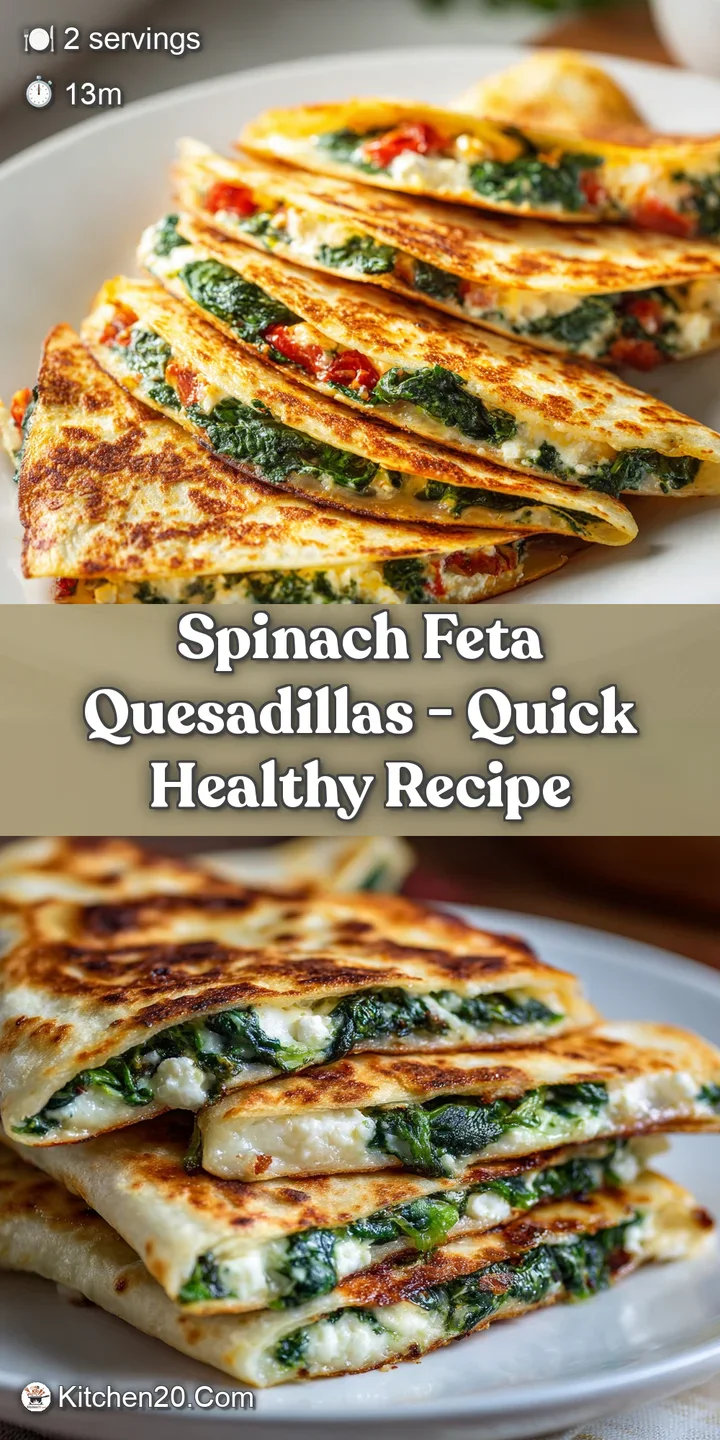
Spinach Feta Quesadillas Quick
Ingredients:
Instructions:
Nutrition Facts:
| Calories | 471 kcal |
|---|---|
| Protein | 18.7 g |
| Fat | 25.6 g |
| Carbs | 41.6 g |
| Fiber | 3.8 g |
| Sugar | 2.9 g |
| Sodium | 720 mg |
