Spring Roll Peanut Sauce: Easy 10-Minute Dip
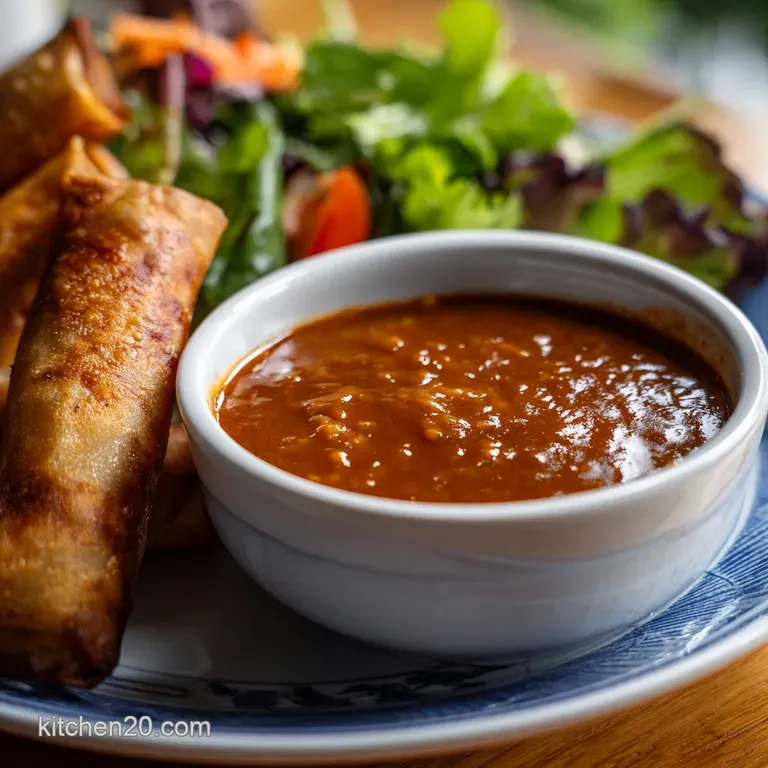
- Mastering Vietnamese Dipping: The Ultimate Spring Roll Peanut Sauce
- The Science of Flavor: Why Sweet, Sour, and Savory Tastes So Good
- Essential Ingredients and Smart Substitutions
- Simple Steps to Prepare Your Spring Roll Peanut Sauce
- Troubleshooting and Expert Tips for Success
- Proper Storage, Shelf Life, and Freezing Guide
- Delicious Ways to Serve Homemade Peanut Dipping Sauce
- Recipe FAQs
- 📝 Recipe Card
Mastering Vietnamese Dipping: The Ultimate Spring Roll Peanut Sauce
Okay, listen up. When you think about making fresh spring rolls, you probably focus on chopping the perfect veggies or soaking the vermicelli. But let’s be real: none of that matters without the right dip. The truly perfect Spring Roll Peanut Sauce is the anchor of the meal.
It needs to be rich, creamy, savory, and hit that back-of-the-tongue heat. If your homemade Spring Roll Peanut Sauce recipe isn't fast, flavorful, and so thick it coats the back of a spoon, you’re doing it wrong.
I used to use jars of premade stuff, and it was always too sweet or gritty. Learning to make this Spring Roll Peanut Sauce Easy changed my entire approach to Vietnamese food. It literally takes 10 minutes from pantry to plate.
This recipe delivers pure, luscious bliss. We are talking velvety texture, a major umami kick from hoisin, and a bright finish from fresh lime. This is the Best Spring Roll Dipping Sauce you will ever encounter, period.
The Science of Flavor: Why Sweet, Sour, and Savory Tastes So Good
What Makes This Peanut Sauce Authentic?
Authentic Vietnamese Spring Roll Peanut Sauce (often called tương chấm gỏi cuốn when hoisin is included) is distinct from Thai peanut sauces. The key ingredient that separates this Roll Peanut Sauce is hoisin.
Hoisin sauce provides a deeply savory, slightly fermented sweetness that peanut butter alone cannot replicate. It’s what gives the sauce its signature dark hue and complex umami.
Balancing the Five Tastes for Maximum Umami
This recipe is built on the foundation of balancing five core tastes: Sweetness (brown sugar/hoisin), Saltiness/Umami (soy sauce/hoisin), Sourness (lime/vinegar), Fat (peanut butter), and Heat (chili garlic sauce).
When you stir everything together and gently warm it, these elements fuse into a magnificent, single flavor profile. You need that fat from the peanut butter to carry all the spice and acid; without it, the flavors just taste sharp.
Textural Harmony: Achieving the Perfect Creamy Consistency
The most common issue with Peanut Sauce is grittiness or separation. My secret? We start with hot water and gently heat the mixture, coaxing the oils and liquids to emulsify perfectly.
This process transforms simple ingredients into a beautiful, silky Creamy Peanut Sauce that clings perfectly to your spring rolls. It should be thick, almost like thinned out pancake batter.
Essential Ingredients and Smart Substitutions
This Spring Roll Sauce Ingredients list is short and mighty.
The Core Five: Peanut Butter, Hoisin, Lime, Sugar, and Chili
| Ingredient | Role | Why It Works | Smart Substitution |
|---|---|---|---|
| Smooth Peanut Butter | Base, Fat, Texture | Must be natural (less sugar) and smooth for the best mouthfeel. | Smooth Almond Butter or Sunflower Seed Butter |
| Hoisin Sauce | Savory, Umami, Color | Provides depth and complexity crucial for Vietnamese style. | Plum Sauce + a dash of Soy Sauce |
| Hot Water/Broth | Dilution, Emulsifier | Mandatory for preventing a gritty or oily texture. | Full fat Coconut Milk (for a curry twist) |
| Lime Juice | Acid, Brightness | Essential counterpoint to the sweetness of the hoisin. | Lemon Juice or 1 extra Tbsp of Rice Vinegar |
| Brown Sugar | Sweetness, Balance | Dissolves easily and adds a hint of caramel flavor. | Honey or Maple Syrup |
| Chili Garlic Sauce | Heat, Spice | My favorite is Sambal Oelek for texture and flavor. | Sriracha or crushed Red Pepper Flakes (adjust amount!) |
Choosing the Best Peanut Butter for Smooth Sauces
I always recommend smooth, natural peanut butter (the kind you have to stir before using). Why? Because it generally contains fewer stabilizers and less added sugar than conventional brands, allowing it to emulsify better with the hot liquid.
If you use chunky peanut butter, you get chunky Roll Peanut Sauce —which is fine, but definitely not silky smooth.
Simple Steps to Prepare Your Spring Roll Peanut Sauce
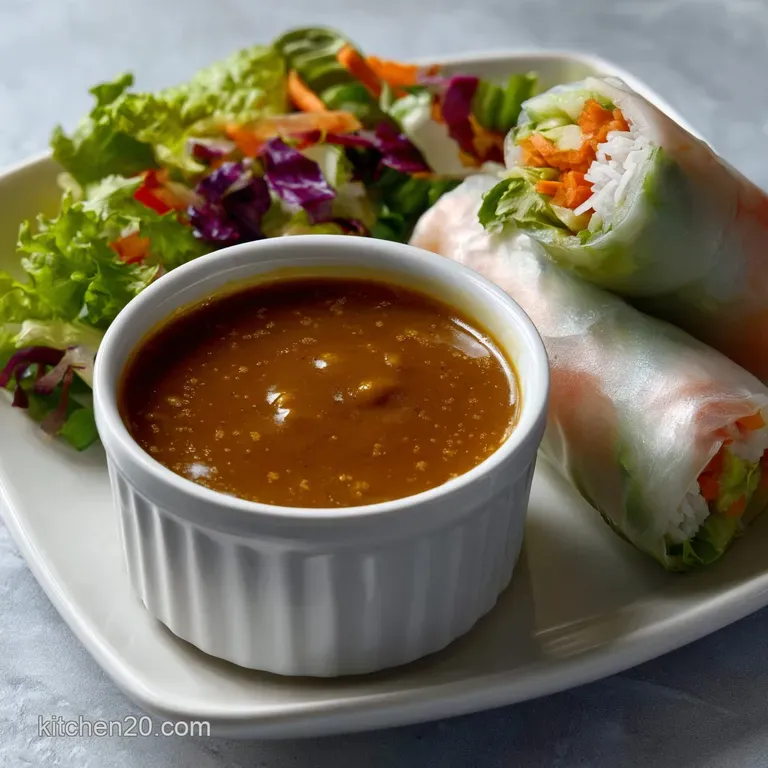
This is how we get from jar to jaw in ten minutes flat.
- Build the Peanut Base: Grab a small saucepan. Whisk together the peanut butter, hoisin, soy sauce, and the initial 1/2 cup (120 mL) of hot water. It will look like a very thick, stubborn paste that's okay! We use hot water right now because it prevents the peanut butter from seizing up and becoming gritty.
- Gentle Heat Activation: Place the pan over medium low heat. Stir constantly. As the mixture warms, it will relax and loosen, smelling richly of roasted peanuts and spices. Continue stirring for about two minutes until the mixture is uniform and lightly steaming. Do not let it bubble violently; we are just warming it up.
- Incorporate the Balance: Remove the saucepan from the heat. Stir in the brown sugar, fresh Peanut Sauce Lime juice, rice vinegar, and the chili garlic sauce. Stir until the sugar is completely dissolved it should only take 60 seconds with the residual heat.
- Check Consistency: Now, look at the sauce. Is it thick enough to coat your rolls beautifully? Or is it too stiff? Slowly whisk in the remaining hot water, one tablespoon at a time, until it reaches your desired consistency. For dipping, I like it thick enough to stay on the roll, but thin enough to drip slowly.
- Taste and Finish: This is the most important step. Taste! Need more zing? Add a splash more lime. Want more depth? A tiny dash more hoisin. If it tastes perfect, transfer it to a serving bowl. This homemade Vietnamese Spring Roll Peanut Sauce will thicken slightly as it cools.
- Garnish: Right before serving, sprinkle generously with coarsely chopped roasted peanuts.
Troubleshooting and Expert Tips for Success
I have ruined enough Spring Roll Peanut Sauce batches to know the pitfalls. Here’s how you avoid them.
Gentle Heating: The Key to Preventing Separation
If you heat this sauce too quickly or let it boil hard, the emulsion can break, meaning the oil in the peanut butter separates from the liquids. You will see a layer of oil floating on top. If this happens, take the pot off the heat immediately and whisk in 1 2 teaspoons of ice-cold water (or broth).
Whisk vigorously, and it should shock the emulsion back together.
How to Fix a Sauce That Is Too Thick or Too Thin
If your sauce is too thick (like modeling clay), whisk in hot water, one teaspoon at a time, until it flows smoothly. If it's too thin (like watery soup), the easiest fix is to put it back on low heat and let it simmer very gently for 2- 3 minutes while stirring, allowing some of the excess moisture to evaporate.
Alternatively, stir in an extra teaspoon of peanut butter, which adds density.
Boosting Spice and Heat Levels
I suggest starting with just 1 teaspoon of chili garlic sauce for the perfect balance. If you love heat, you can double that. Pro Tip: Don't add chili flakes directly to the cooking sauce; they won’t soften much.
Instead, stir in more of the chili garlic sauce (like Sambal Oelek) at the end, or sprinkle a few drops of hot oil right on top of the finished sauce for garnish.
Proper Storage, Shelf Life, and Freezing Guide
Refrigeration Guidelines for Maximum Freshness
This amazing Spring Roll Peanut Sauce keeps really well! Store it in an airtight container in the refrigerator for up to 7 days. Be aware: when refrigerated, it will become very thick almost like firm pudding. That’s totally normal.
Reheating and Restoring Peanut Sauce Consistency
Do not try to microwave a huge block of cold peanut sauce. You’ll get hot edges and a cold center. Instead, just spoon the amount you need into a small bowl and whisk in a spoonful or two of hot water or microwaved broth. The moisture instantly restores that beautiful dipping consistency.
Delicious Ways to Serve Homemade Peanut Dipping Sauce
This Peanut Sauce Hoisin Recipe is so versatile, it deserves to be in your regular rotation.
The most classic pairing, of course, is with fresh summer rolls. If you're looking for the absolute best guide to wrapping them, you have to read my recipe on Rice Paper Wraps: Easy Fresh Summer Rolls Recipe .
Beyond rolls, this sauce is dynamite on almost anything:
- Noodle Bowls: Toss warm noodles (like cold peanut noodles!) with a few spoonfuls.
- Grilled Meats: Use it as a satay dipping sauce for skewers of grilled chicken or pork.
- As a Dressing: Thin it slightly more with water or vinegar and use it as a vibrant dressing for crunchy salads, swapping out the traditional flavors you might use for something like my Greek Cucumber Sauce: Real Tzatziki Recipe Made Easy .
- Vegetables: We dip everything from steamed broccoli to bell pepper sticks in this!
The ease and flavor of this homemade Spring Roll Peanut Sauce make it a winner every single time. It truly is the defining factor for excellent spring rolls, and once you make this specific Spring Roll Peanut Sauce , you will never go back to bottled versions.
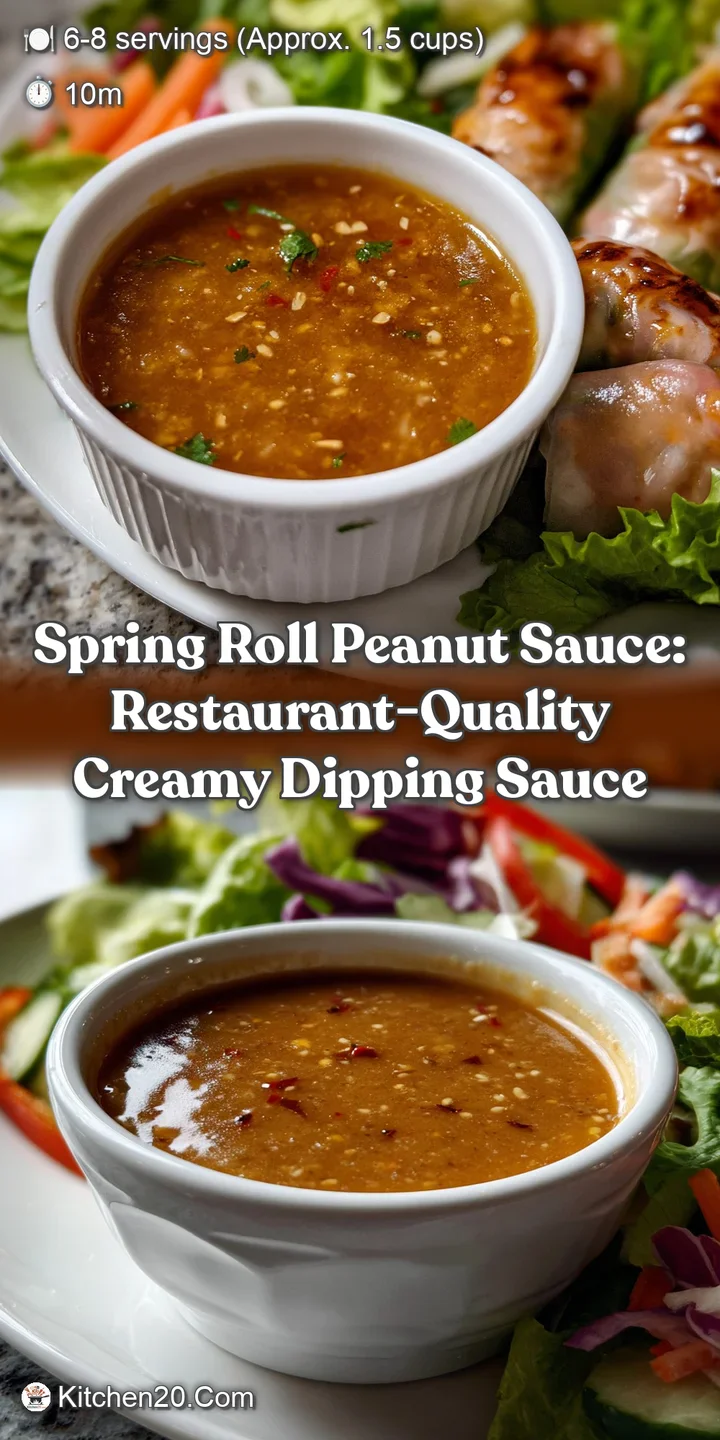
Recipe FAQs
What kind of peanut butter should I use for the best texture?
For the smoothest and richest flavor, use creamy, natural style peanut butter, ideally one that requires stirring, as it tends to have less sugar and stabilizers. Avoid using chunkier varieties, which will result in a grainy sauce, and steer clear of heavily sweetened processed peanut butter.
My sauce is too thick after mixing. How can I adjust the consistency?
If the sauce is overly thick, gradually thin it out by stirring in hot water, one teaspoon at a time, until it reaches the desired dipping consistency. Alternatively, you can use a small splash of additional rice vinegar or lime juice if you prefer a brighter, tangier flavor profile.
How can I customize the level of chili spice in the sauce?
The heat level is fully customizable by adjusting the amount of chili paste (like Sriracha or sambal oelek) added to the recipe. Begin by adding half the amount specified, taste the sauce, and slowly mix in more until you achieve your preferred level of heat and kick.
For a very mild sauce, you can omit the chili paste entirely.
Can I make this Spring Roll Peanut Sauce gluten-free or vegetarian?
This recipe is typically vegetarian, provided your hoisin sauce does not contain any animal products, honey, or oyster sauce. To ensure the sauce is gluten-free, substitute the traditional soy sauce with tamari or a certified gluten-free soy sauce alternative.
How long does the sauce last, and should I refrigerate it?
Yes, always store the finished peanut sauce in an airtight container in the refrigerator, where it will remain fresh and flavorful for 5 to 7 days. Be aware that the sauce will naturally thicken considerably upon chilling due to the peanut butter.
The refrigerated sauce is too firm to pour. What is the best way to reheat it?
To restore the smooth, dip-able texture, simply let the sauce sit at room temperature for about 15 minutes before serving. If you need it ready immediately, stir in a spoonful of hot water or microwave it for 10-15 seconds, stirring vigorously to re-emulsify the ingredients.
Spring Roll Peanut Sauce Recipe
Ingredients:
Instructions:
Nutrition Facts:
| Calories | 265 kcal |
|---|---|
| Protein | 14.1 g |
| Fat | 18.2 g |
| Carbs | 14.2 g |
