Thai Green Chicken Curry
- Time: Active 15 minutes, Passive 10 minutes, Total 25 minutes
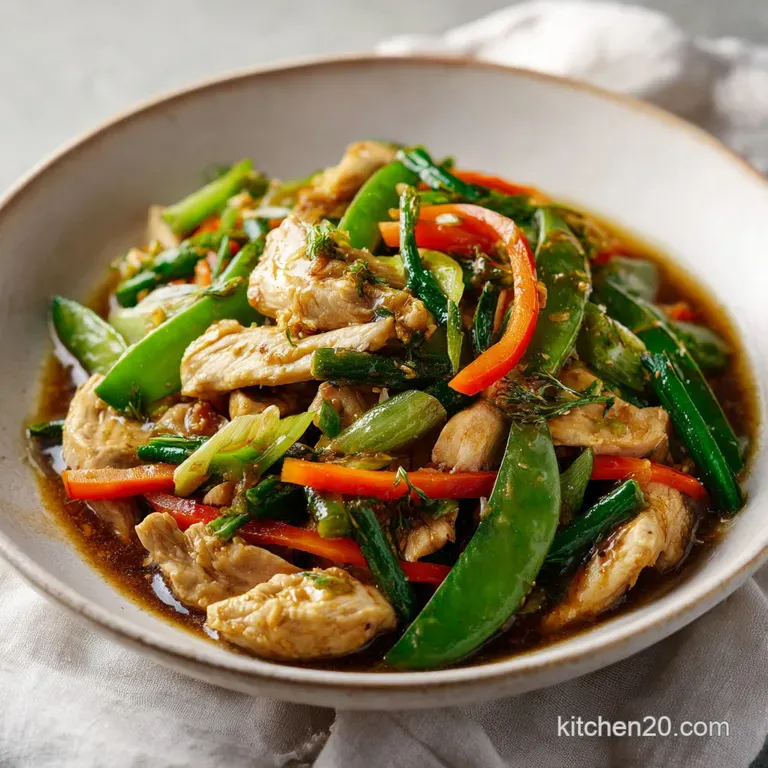
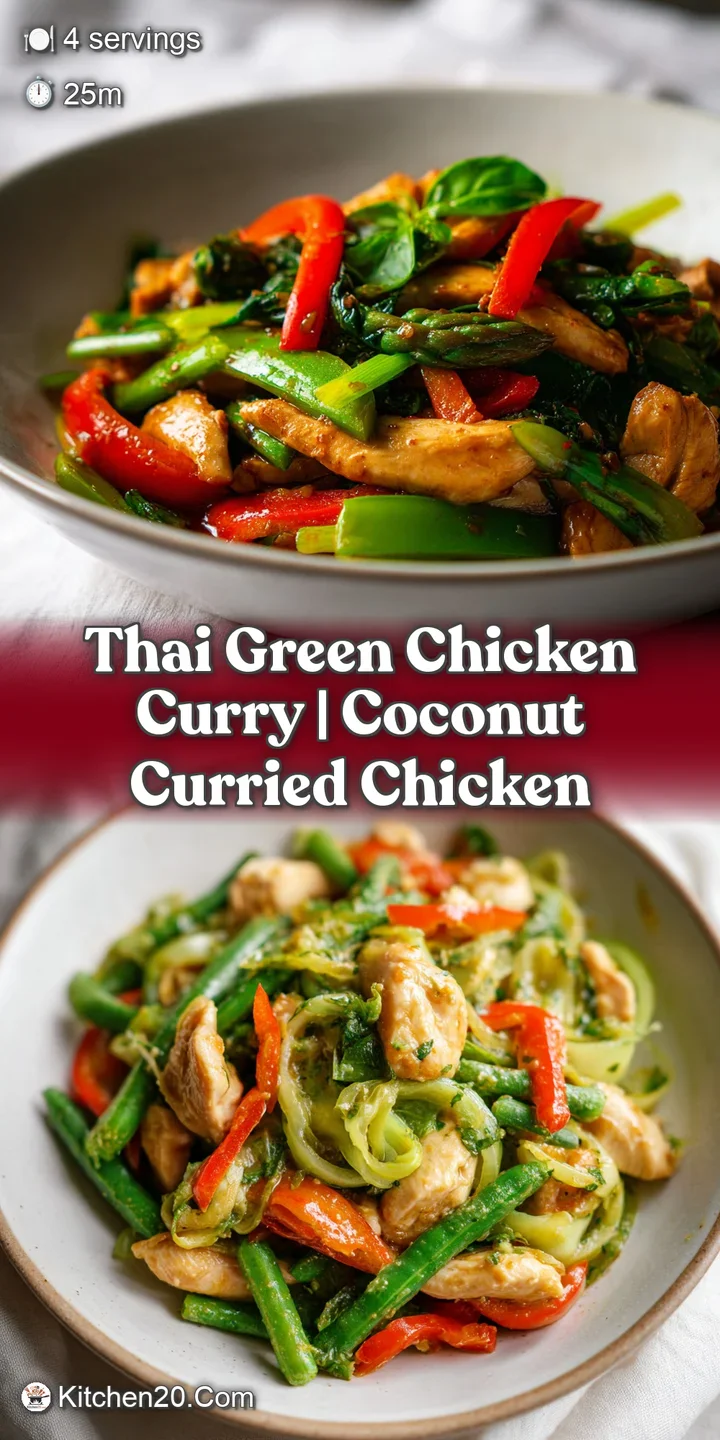
- Flavor/Texture Hook: Velvety chicken strips swimming in a zesty, herb forward green curry sauce.
- Perfect for: Busy weeknights when you crave vibrant, restaurant quality food without the heavy price tag.
- Cooking Authentic Thai Chicken at Home
- Why This Recipe Simply Works
- Essential Ingredient Deep Dive
- Smart Swaps for Better Flavor
- Essential Tools for Best Results
- Step by Step Walkthrough
- Fixing Common Cooking Mistakes
- Scaling the Recipe Up or Down
- Debunking Common Kitchen Beliefs
- Storage and Zero Waste Guidelines
- The Best Side Dish Ideas
- Very High in Sodium
- Recipe FAQs
- 📝 Recipe Card
Cooking Authentic Thai Chicken at Home
I still remember the first time I sat on a plastic stool in a humid, bustling market in Sukhothai. The air was thick with the scent of charred chilies and sweet basil, and the sound of woks clanging was like a rhythmic heartbeat.
I ordered a bowl of green curry, and the first bite changed everything I thought I knew about poultry. It wasn't just "spicy" it was a complex balance of salt from the sea, sweetness from the earth, and a sharp citrus kick that woke up every part of my palate.
That cultural foundation of "Khruang Kaeng" (curry paste) is what makes this dish legendary.
In Thailand, cooking is rarely about rigid measurements and more about the "simmer and taste" philosophy. Every family has their own version of this staple, often passed down through generations.
While we are using some clever budget hacks today, like using light coconut milk and honey instead of palm sugar, the soul of the dish remains rooted in that Central Thai tradition of balancing heavy fats with bright, fresh herbs.
It is a meal designed to be shared, usually served family style with plenty of jasmine rice to soak up every drop of the liquid gold sauce.
The beauty of this Thai Chicken is that it doesn't require a plane ticket or a hundred dollar grocery bill. We are focusing on high impact ingredients that punch way above their weight class.
By understanding a few basic principles like how to "velvet" your meat or why we fry the curry paste before adding liquid you can replicate those deep, layered flavors in your own kitchen. Let's get into the mechanics of why this method actually beats the local takeout spot every single time.
Why This Recipe Simply Works
Velveting Technique: Coating the chicken in cornstarch and soy sauce creates a protective barrier that prevents the fibers from toughening up under high heat. This results in a silky, slippery texture that mimics high end stir fry.
Aromatic Blooming: Frying the curry paste in oil before adding the coconut milk releases fat soluble flavor compounds that stay dormant if you just boil the paste. It turns a flat sauce into a multi dimensional experience.
Balanced Emulsification: Combining chicken bone broth with light coconut milk provides a rich mouthfeel without the heavy calorie load of full fat cream. The collagen in the bone broth adds a natural thickness that clings to the snap peas.
Residual Heat Finish: We fold the Thai basil in at the very end after turning off the stove. This preserves the delicate essential oils of the leaves, ensuring they taste fresh and peppery rather than bitter and wilted.
| Method | Total Time | Resulting Texture | Best Usage |
|---|---|---|---|
| Stovetop Wok | 25 minutes | Seared edges, crisp veggies | Traditional quick meal |
| Oven Bake | 40 minutes | Softer texture, uniform sauce | Hands off bulk prep |
| Slow Cooker | 4 hours | Shredded meat, deep infusion | Tender, fall apart protein |
Choosing between these methods usually comes down to how much time you have. While the oven or slow cooker might seem easier, the stovetop is the gold standard for this dish. The high heat of the wok creates a specific "breath" or char that you just can't get anywhere else. If you are looking for another fast dinner that uses similar over high heat techniques, you might love this Mushroom Chicken in 25 Min which also focuses on that perfect sear.
Essential Ingredient Deep Dive
Understanding what each component brings to the party helps you become a more intuitive cook. We aren't just tossing things in a pan; we are building a structure of flavor.
| Ingredient | Science Role | Pro Secret |
|---|---|---|
| Cornstarch | Acts as a physical shield against protein denaturation. | Use exactly 1 tbsp to avoid a gummy or "breaded" texture. |
| Green Curry Paste | Provides a concentrated blast of chilies, lemongrass, and galangal. | Stir fry it until it smells "toasty" to wake up the dried spices. |
| Fish Sauce | The primary salt source that provides deep fermented umami. | If the smell is too strong, it will mellow out once simmered. |
| Thai Basil | Adds a distinct anise and black pepper finish. | Never chop it; hand tearing the leaves releases more flavor. |
When you look at the ingredients list, you'll see a mix of fresh produce and pantry staples. The light coconut milk is a smart budget swap here. It provides the creamy vibe we want without being so thick that it masks the delicate ginger and garlic.
Because we are using bone broth as well, you get that luxurious "lip smacking" quality from the protein's natural gelatin.
Smart Swaps for Better Flavor
To keep this budget friendly and accessible, I’ve tested several substitutions. Not everyone has a specialty market next door, and that shouldn't stop you from making an incredible meal.
- 1.5 lbs chicken breast: Sliced into 1/4 inch strips. Why this? Lean protein that absorbs the marinade quickly and cooks in under 5 minutes.
- Substitute: Chicken thighs. They are more forgiving if overcooked but add more fat to the sauce.
- 3 tbsp Thai green curry paste: Why this? It's the shortcut to authentic flavor without grinding 10 different roots.
- Substitute: Red curry paste for a milder, sweeter profile, or 2 tbsp curry powder mixed with lime juice.
- 0.5 cup light coconut milk: Why this? Gives the signature creaminess with less saturated fat.
- Substitute: Whole milk with a drop of coconut extract, or heavy cream for a much richer finish.
- 1 tbsp fish sauce: Why this? The "secret weapon" for that savory, salty Thai funk.
- Substitute: 1 tbsp soy sauce mixed with 1 tsp lime juice. It won't be as deep, but it works.
- 1 tsp raw honey: Why this? Balances the heat of the curry paste and the salt of the fish sauce.
- Substitute: Brown sugar or maple syrup. Both provide the necessary sweetness to round out the edges.
- 2 cups fresh Thai basil leaves: Why this? It tastes like licorice and cloves, defining the dish.
- Substitute: Regular Italian basil plus a pinch of ground black pepper and fennel seeds.
Essential Tools for Best Results
You don't need a professional kitchen to pull this off, but a couple of specific items make a world of difference. First and foremost, a heavy bottomed pan is your best friend. I usually reach for a carbon steel wok because it responds to temperature changes instantly.
If you don't have one, a large cast iron skillet (like a 12 inch Lodge) is a fantastic alternative. It holds heat beautifully, ensuring the chicken sears rather than steams.
You’ll also want a microplane or a very fine grater for that fresh ginger. Don't bother with the bottled ginger paste; the flavor is muted and often metallic. Grating it fresh right before it hits the pan ensures those volatile oils are at their peak. A sharp chef’s knife is also non negotiable here.
Since we are cutting the chicken into very thin strips, a dull blade will just tear the meat, making it look messy and cook unevenly. Aim for those 1/4 inch strips for the quickest, most consistent results.
step-by-step Walkthrough
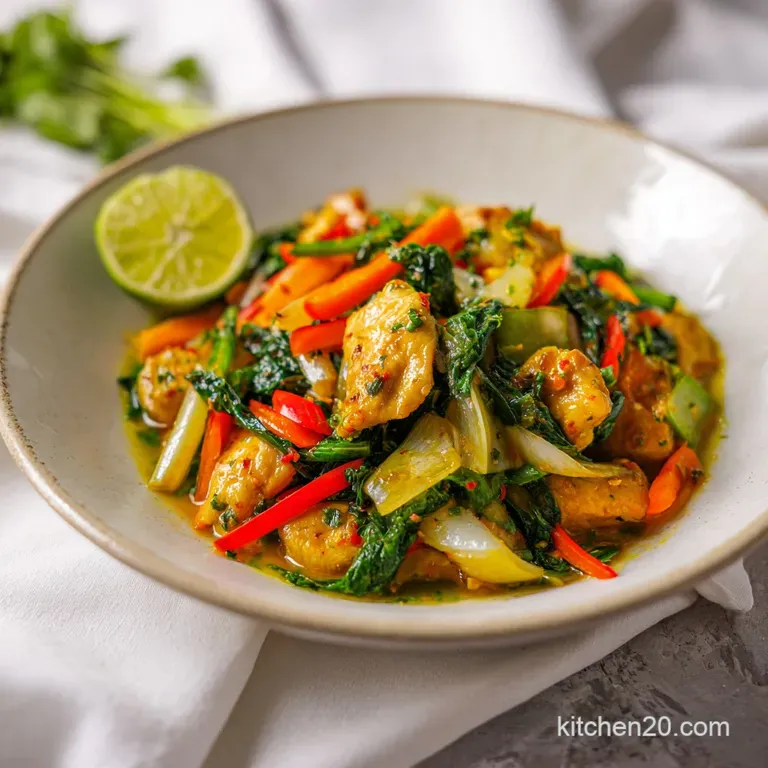
- Marinate the chicken. In a medium bowl, toss the 1.5 lbs of chicken strips with 1 tbsp cornstarch, 1 tbsp soy sauce, and 1 tsp sesame oil. Note: This "velveting" process makes the chicken incredibly tender.
- Wait 15 minutes. Let the chicken sit at room temperature. This allows the cornstarch to form a light slurry that binds to the meat fibers.
- Sear the protein. Heat 1 tbsp avocado oil in your wok over high heat until it is shimmering and nearly smoking. Add the chicken in a single layer and cook for 2-3 minutes until golden and just barely opaque. Remove it from the pan immediately to prevent toughening.
- Bloom the paste. In the same pan (don't wash it!), add 3 tbsp green curry paste. Stir fry for 1 minute until the aroma fills the room and the paste darkens slightly.
- Add the aromatics. Toss in 3 minced garlic cloves, 1 inch of grated ginger, and the white parts of the green onions. Stir fry for 30 seconds until the garlic is fragrant but not browned.
- Sauté the vegetables. Add the red bell pepper and snap peas. Stir fry for 2-3 minutes until they are bright in color and tender crisp.
- Build the sauce. Whisk the 0.5 cup light coconut milk, 0.5 cup bone broth, 1 tbsp fish sauce, and 1 tsp honey together. Pour it into the wok and scrape the bottom to release any browned bits.
- Combine and simmer. Return the chicken to the wok. Toss everything together and simmer for 1-2 minutes until the sauce thickens enough to coat the back of a spoon.
- Finish with herbs. Remove from the heat. Fold in the 2 cups of Thai basil and the green onion tops. Serve immediately while the basil is still vibrant.
Fixing Common Cooking Mistakes
Even the best cooks run into trouble sometimes. Thai cooking is all about temperature control, and most mistakes happen when the pan isn't hot enough or the ingredients are added too quickly. If your sauce looks "broken" or oily, don't panic.
It often just needs a vigorous stir and a splash of broth to come back together.
Why Your Chicken Is Soggy
If your chicken isn't getting that golden sear, you likely overcrowded the pan. When too much cold meat hits the pan at once, the temperature drops, and the chicken starts to boil in its own juices. Work in two batches if your pan is small. Make sure the oil is truly shimmering before the first piece of meat touches the surface. If you want to see how this sear differs from a saucier style, check out this Spicy Tiger Stir Fry Chicken for a different texture profile.
| Problem | Root Cause | Solution |
|---|---|---|
| Sauce is too thin | Excess moisture from veggies or not enough simmering. | Simmer for 2 extra minutes or add a tiny cornstarch slurry. |
| Bitter aftertaste | Burnt garlic or overcooked curry paste. | Add an extra teaspoon of honey to balance the bitterness. |
| Chicken is chewy | Sliced against the grain or overcooked. | Ensure 1/4 inch slices and remove once "just" cooked. |
Common Mistakes Checklist
- ✓ Always pat the chicken dry before adding the marinade to help the cornstarch stick.
- ✓ Prep all your veggies before you turn on the stove; the process moves very fast.
- ✓ Use a high smoke point oil like avocado or grapeseed; olive oil will burn and taste bitter.
- ✓ Don't skip the "blooming" of the curry paste; it is the difference between okay and legendary.
- ✓ Taste the sauce before adding the chicken back in; you might want more lime or honey.
Scaling the Recipe Up or Down
If you are cooking for a crowd, doubling this recipe is relatively straightforward, but you have to be careful with the liquid. When doubling, only use 1.5x the amount of fish sauce and honey initially, then taste. Spices and salts don't always scale linearly and can quickly become overwhelming.
You will definitely need to sear the chicken in 3 or 4 batches to maintain that over high heat sear.
For a solo meal, halving the recipe is easy. Since 1.5 lbs of chicken is quite a bit, you can use 0.75 lbs and keep the rest of the ingredients the same if you like a very "saucy" dish.
When reducing, keep an eye on the simmer time; smaller volumes of liquid evaporate much faster, so you might only need 30 seconds of simmering before the sauce is perfectly thickened.
Debunking Common Kitchen Beliefs
One big myth is that you must use full fat coconut milk for a "real" Thai curry. While full fat is traditional, the combination of light coconut milk and a high-quality bone broth actually provides a cleaner flavor profile that allows the lemongrass and ginger to shine.
In hot climates, lighter versions of these dishes are actually quite common because they are less heavy on the stomach.
Another misconception is that "Thai Chicken" has to be face meltingly spicy. In reality, the heat should be a background note that enhances the other flavors. If you find the green curry paste too intense, you can simply reduce the amount to 1.5 or 2 tablespoons. The goal is a balanced harmony, not a test of endurance.
Storage and Zero Waste Guidelines
Leftovers of this Thai Chicken are honestly a gift. The flavors continue to meld in the fridge, making it even better the next day. Keep it in an airtight glass container for up to 3 days. When reheating, do it gently on the stovetop with a splash of water or broth to loosen the sauce.
Avoid the microwave if possible, as it can make the chicken rubbery and the snap peas mushy.
For a zero waste approach, don't toss those cilantro stems or the ginger peel. You can throw the ginger peels and green onion ends into a freezer bag to make your own aromatic broth later.
If you have extra Thai basil that's about to wilt, whiz it up with some oil and garlic to make a "Thai pesto" that freezes beautifully in ice cube trays. You can drop those cubes into soups or stir fries later for an instant flavor boost.
The Best Side Dish Ideas
To make this a complete meal, jasmine rice is the traditional partner. Its floral aroma and slightly sticky texture are perfect for capturing every drop of the curry sauce. If you want to keep it low carb, cauliflower rice works surprisingly well here because it absorbs the coconut flavors quite effectively.
If you are looking for a side that adds a different texture, a simple cucumber salad with rice vinegar and crushed peanuts provides a cool, crunchy contrast to the warm, velvety chicken. You could also serve it alongside some crispy spring rolls for a full "takeout at home" experience.
The key is to keep the sides simple so the complex, vibrant flavors of the Thai Chicken remain the star of the show.
Very High in Sodium
1080 mg of sodium per serving (47% of daily value)
The American Heart Association recommends limiting sodium intake to no more than 2,300mg per day, with an ideal limit of 1,500mg for most adults.
Tips to Reduce Sodium
-
Choose Low-Sodium Broth-30%
Replace the 0.5 cup of low-sodium chicken bone broth with no-salt added chicken broth. This is a significant source of sodium in this recipe.
-
Opt for Low-Sodium Soy Sauce & Fish Sauce-20%
Substitute the 1 tbsp of soy sauce with low-sodium soy sauce and the 1 tbsp of fish sauce with reduced sodium fish sauce. These condiments contribute a substantial amount of sodium.
-
Boost Flavor with Herbs and Spices
Amplify the natural flavors by increasing the use of fresh ingredients like garlic, ginger, green onions, and Thai basil. Consider adding a pinch of chili flakes for extra heat.
-
Use Curry Paste Mindfully-15%
Thai green curry paste can be high in sodium. Reduce the amount of curry paste to 2 tbsp and adjust to taste. You can also look for brands specifically labeled as 'low sodium' if available.
-
Dilute Coconut Milk-5%
If the coconut milk is contributing to the overall saltiness (check the label), you can slightly dilute the 0.5 cup of light coconut milk with 2 tbsp of water. This can help buffer some of the saltiness.
Recipe FAQs
What is a Thai chicken?
It is a protein forward dish featuring chicken strips in an aromatic curry sauce. The recipe relies on velveting the meat in cornstarch, soy sauce, and sesame oil before searing it with green curry paste, coconut milk, and fresh Thai basil.
What is a pollo chicken?
Pollo is simply the Spanish word for chicken. It is not a specific breed or preparation method related to this Thai style dish.
What does soaking chicken in coconut milk do?
It adds richness and helps keep the meat moist. While this recipe uses a quick velveting technique with cornstarch and soy sauce for texture, adding the coconut milk into the sauce base later provides the creamy mouthfeel essential to Thai cuisine.
What is a Thai roast chicken called?
It is commonly known as Gai Yang. If you enjoyed mastering the high heat searing technique used for our stir fry, you can apply those same sensory doneness cues to our roast chicken recipe for equally perfect results.
How to velvet chicken for the best texture?
Toss the sliced chicken strips with cornstarch, soy sauce, and sesame oil in a bowl. Let the mixture sit at room temperature for 10-15 minutes to allow the cornstarch to form a protective slurry that keeps the meat fibers tender during the high heat sear.
How to prevent the chicken from becoming rubbery when reheating?
Reheat the leftovers gently on the stovetop instead of using a microwave. Add a small splash of chicken bone broth to the pan to loosen the sauce and maintain the integrity of the snap peas and bell peppers.
Is it true that I should use high heat oil to prevent bitterness?
Yes, using an oil with a high smoke point is essential. Avocado oil is ideal because it withstands the shimmering, high heat environment of the wok without burning and turning bitter, unlike oils with lower smoke points.
Thai Green Chicken Curry
Ingredients:
Instructions:
Nutrition Facts:
| Calories | 410 kcal |
|---|---|
| Protein | 57 g |
| Fat | 14 g |
| Carbs | 11 g |
| Fiber | 4 g |
| Sugar | 5 g |
| Sodium | 1080 mg |
