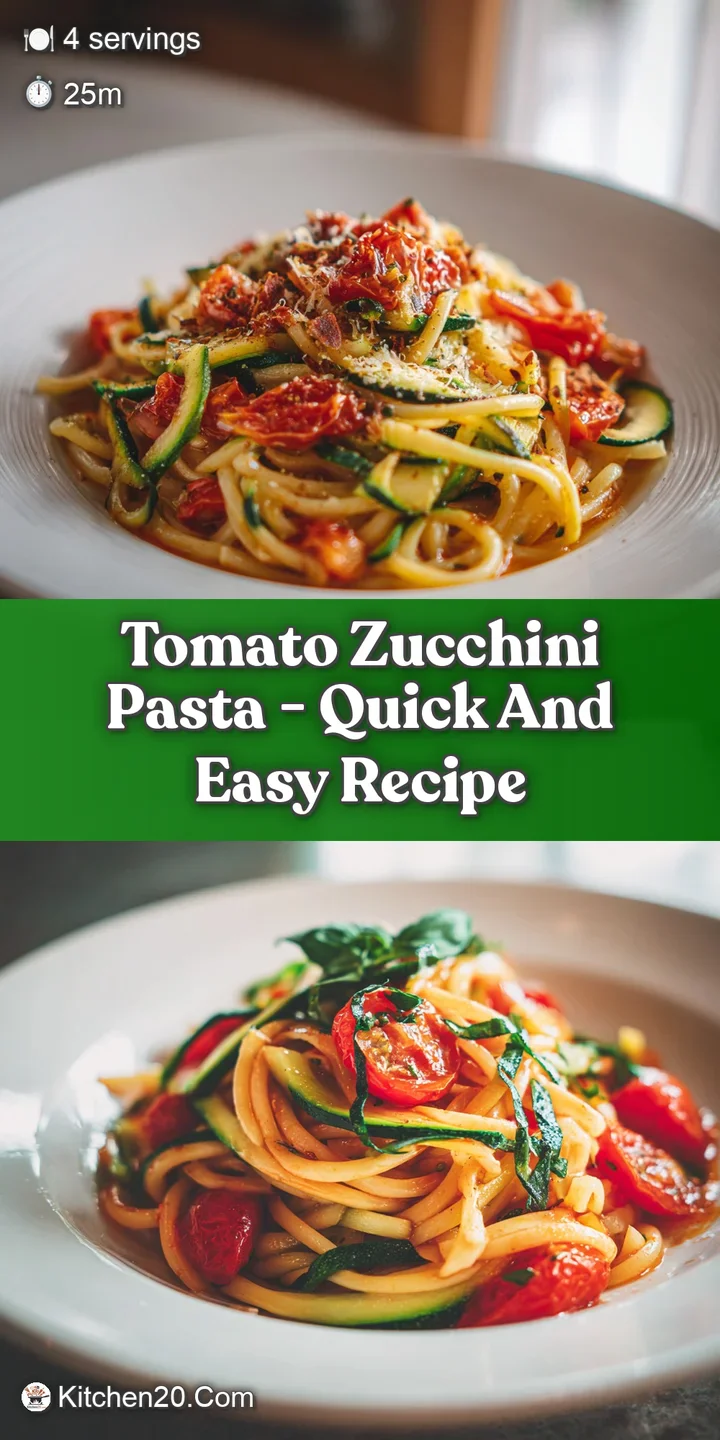
Tomato Zucchini Pasta: Quick Seasonal Meal
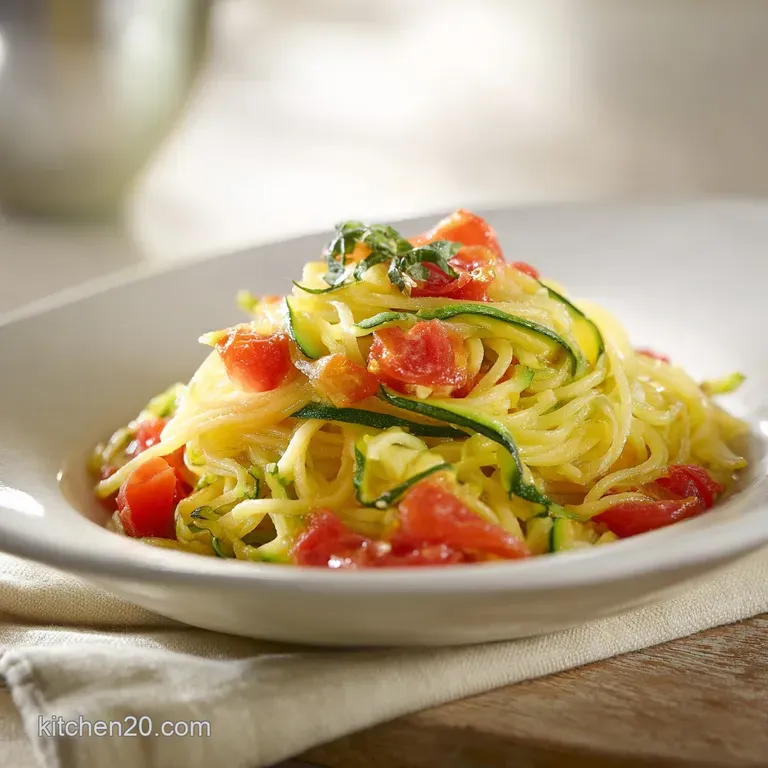
- Time: Active 10 mins, Passive 15 mins, Total 25 mins
- Flavor/Texture Hook: Blistered, sweet tomatoes paired with a zesty, garlic infused silkiness
- Perfect for: High energy weeknight dinners or a light, sophisticated summer lunch
- Discover the Secret to This Tomato Zucchini Pasta
- The Mechanics of Summer Sauté Success
- Component Analysis for Peak Flavor
- Essential Components for a Balanced Plate
- Tools for Precision Cooking and Prep
- Mastering the Step-by-Step Culinary Workflow
- Solving Common Texture and Flavor Issues
- Adapting Quantities for Different Groups
- Creative Adaptations for Every Diet
- Troubleshooting Common Issues
- Maintaining Freshness and Reducing Kitchen Waste
- Elevating the Visual Appeal of Pasta
- De Bunking Kitchen Myths
- Recipe FAQs
- 📝 Recipe Card
Discover the Secret to This Tomato Zucchini Pasta
The first time I really understood the power of this dish, it wasn't in a fancy bistro. It was 7:00 PM on a Tuesday, my kitchen was a disaster, and I had exactly two squash and a handful of cherry tomatoes looking lonely on the counter.
I threw the 12 oz Penne Rigate into the pot and started shaving 4 cloves of garlic as thin as paper. The moment those garlic slivers hit the 3 tbsp of shimmering extra virgin olive oil, the aroma didn't just fill the room - it practically revolutionized my mood.
The real magic happened when the 2 cups of cherry tomatoes hit the hot pan. You know that specific sound? That rhythmic pop and sizzle as the skins finally give way to the heat? That is the sound of flavor being born.
I watched the juices bleed out, mixing with the starchy pasta water to create a sauce that looked like liquid gold. It was a connection between simple ingredients that I hadn't expected to work so well. No heavy creams, no complicated reductions, just heat and timing.
We've all been there with soggy zucchini that tastes like a wet sponge. But when you get that sear right, where the edges are slightly charred and the center still has a snap, it changes everything.
This Tomato Zucchini Pasta is now my go to when I want something that feels like a celebration but only takes 25 minutes to pull together. Trust me, once you see how those blistered tomatoes create their own velvety glaze, you'll never go back to jarred sauce on a weeknight again.
The Mechanics of Summer Sauté Success
Understanding the "how" behind the heat is what separates a mushy bowl of noodles from a structured, balanced plate. We are using specific thermal principles to ensure every bite has a distinct texture.
- over High heat Osmosis: Searing the zucchini at a high temperature quickly evaporates surface moisture before the internal cell walls can collapse, preventing that dreaded "steamed" texture.
- Pectin Release: Heating cherry tomatoes until they burst releases natural fruit pectins, which act as a biological thickener for our light oil based sauce.
- Starch Emulsification: Adding reserved pasta water to the olive oil and tomato juices creates a stable emulsion, allowing the sauce to cling to the ridges of the Penne Rigate rather than pooling at the bottom of the bowl.
| Cooking Method | Total Time | Final Texture | Best For |
|---|---|---|---|
| over High heat Stovetop | 15 mins | Crispy zucchini, blistered tomatoes | Maximum fresh flavor and snap |
| Sheet Pan Oven Roast | 25 mins | Jammy tomatoes, caramelized squash | Hands off prep for larger batches |
| Slow Sauté | 30 mins | Soft, melting vegetables | Creating a deeply integrated, stew like sauce |
Choosing the stovetop method allows for precise control over the 2 medium zucchini, ensuring they don't turn into mush. If you're looking for a deeper, more concentrated flavor profile, you might want to try a Roasted Tomato Pasta recipe which uses lower heat over a longer period. For this quick meal, we want that aggressive stovetop sizzle to keep things bright and zesty.
Component Analysis for Peak Flavor
| Ingredient | Science Role | Pro Secret |
|---|---|---|
| Cherry Tomatoes | Acid and Pectin source | Leave them whole until they pop naturally to preserve sweetness. |
| Garlic Shavings | Aromatic base | Use a mandoline or razor to slice so thin they melt into the oil. |
| Pasta Water | Emulsifying agent | This "liquid gold" contains the starch needed to bind fat and water. |
| Sea Salt | Moisture extractor | Add to zucchini at the very last second to avoid drawing out water too early. |
Essential Components for a Balanced Plate
To get this dish right, we need to be specific about our choices. Don't just grab any pasta; the ridges matter.
- 12 oz Penne Rigate: Why this? The ridges (rigate) are designed to trap the thin, emulsified tomato sauce.
- Substitute: Fusilli or Orecchiette (similar "sauce catching" architecture).
- 2 tbsp Sea salt: Why this? Essential for seasoning the pasta water to "ocean" levels.
- Substitute: Kosher salt (use 3 tbsp as it is less dense).
- 2 medium Zucchini: Why this? Provides a fresh, green crunch that offsets the acidic tomatoes.
- Substitute: Yellow summer squash (very similar moisture content).
- 2 cups Cherry tomatoes: Why this? Higher sugar to acid ratio than large tomatoes, perfect for quick blistering.
- Substitute: Grape tomatoes (denser, may need 2 extra minutes to burst).
- 4 cloves Garlic: Why this? The backbone of the entire aromatic profile.
- Substitute: 1 tsp Garlic powder (though you'll lose the gorgeous toasted texture).
- 3 tbsp Extra virgin olive oil: Why this? The primary fat source that carries the flavor of the red pepper.
- Substitute: Avocado oil (higher smoke point, but less peppery flavor).
- 0.5 tsp Red pepper flakes: Why this? Provides a subtle back of-the throat warmth.
- Substitute: Freshly minced serrano (for a brighter, sharper heat).
- 0.5 cup Fresh basil leaves: Why this? Adds a cooling, peppery finish that ties the zucchini and tomato together.
- Substitute: Fresh parsley or mint (mint adds a surprisingly cool Mediterranean vibe).
- 0.25 cup Grated Parmesan cheese: Why this? Adds salinity and helps thicken the final sauce emulsion.
- Substitute: Pecorino Romano (funkier and saltier).
- 1 tbsp Fresh lemon juice: Why this? The final "brightener" that cuts through the olive oil.
- Substitute: White wine vinegar (a sharper, more aggressive acidity).
- 0.5 tsp Lemon zest: Why this? Contains essential oils for a powerful citrus aroma without the sourness.
- Substitute: Lime zest (adds a more tropical, sharp note).
- 0.5 tsp Freshly cracked black pepper: Why this? Pungency that complements the lemon and parmesan.
- Substitute: White pepper (milder, more floral).
Tools for Precision Cooking and Prep
You don't need a professional kitchen, but a few specific tools will make the 10 mins of prep much smoother. A large 12 inch stainless steel or cast iron skillet is non negotiable here.
You need the surface area so the 2 cups of cherry tomatoes have room to breathe; if they're crowded, they'll steam instead of searing.
Chef Tip: Freeze your Parmesan for 10 mins before grating. It creates much finer, "snow like" particles that melt instantly into the sauce.
I also recommend a microplane for the 0.5 tsp of lemon zest. It allows you to get just the yellow skin without the bitter white pith. And please, use a large pot for the 12 oz Penne Rigate. Pasta needs room to dance, or it'll release too much starch in a small space and become gummy.
Mastering the step-by-step Culinary Workflow
- Boil water. Fill a large pot with water and add the 2 tbsp sea salt. Note: It should taste like the sea.
- Cook pasta. Drop the 12 oz Penne Rigate into the boiling water. Cook 8-10 mins until al dente with a firm bite.
- Prep vegetables. While the pasta cooks, slice the 2 medium zucchini into 1/4 inch half moons and shave the 4 cloves garlic.
- Sizzle aromatics. In a large skillet, heat the 3 tbsp olive oil over medium high. Add the shaved garlic and 0.5 tsp red pepper flakes. Cook 1 min until the garlic is golden and fragrant.
- Sear zucchini. Increase heat to high. Add the zucchini in a single layer. Cook 3-4 mins until the edges are browned and crisp.
- Burst tomatoes. Toss in the 2 cups cherry tomatoes. Cook 5 mins, shaking the pan occasionally, until the skins shatter and juices run.
- Save water. Before draining the pasta, scoop out 1 cup of the starchy cooking water.
- Combine ingredients. Add the drained penne to the skillet with the vegetables. Pour in 1/2 cup of the pasta water and the 0.25 cup Parmesan.
- Emulsify sauce. Toss everything vigorously over medium heat for 2 mins until a glossy, thin sauce coats every noodle.
- Final season. Remove from heat. Stir in the 1 tbsp lemon juice, 0.5 tsp lemon zest, torn basil leaves, and 0.5 tsp black pepper.
Solving Common Texture and Flavor Issues
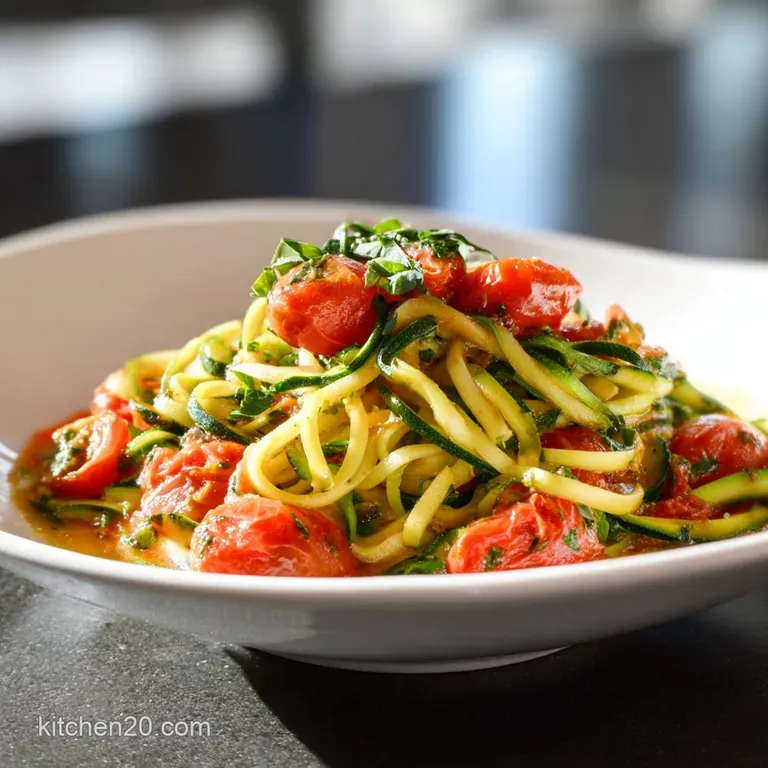
Why Your Zucchini Is Soggy
The most common mistake is overcrowding the pan or cooking on too low a heat. When the pan isn't hot enough, the squash releases its internal water slowly, causing it to stew in its own juices. You want a over high heat "shock" to the exterior to keep the internal structure intact.
What if the Sauce Is Too Dry?
If your pasta looks dull or sticky instead of shimmering, you haven't used enough pasta water. The starch in that water is what creates the bridge between the oil and the tomato juice. Add another splash of the reserved water and give it a hard toss; the mechanical action helps the emulsion form.
| Problem | Root Cause | Solution |
|---|---|---|
| Bland Taste | Lack of salt in pasta water | Add a pinch of sea salt and extra lemon juice at the end. |
| Burnt Garlic | Pan too hot during the first step | Remove garlic early or add tomatoes immediately to lower pan temp. |
| Watery Sauce | Too much water, not enough cheese/tossing | Increase heat and toss vigorously to evaporate excess and emulsify. |
Common Mistakes Checklist
- ✓ Pat the zucchini slices dry with a paper towel before they hit the pan.
- ✓ Don't drain the pasta until the vegetables are nearly finished.
- ✓ Never rinse your pasta; you need that surface starch for the sauce to stick.
- ✓ Add the basil at the very end so it doesn't turn black from the residual heat.
- ✓ Use fresh lemon, not the bottled stuff - the oils in the zest are vital.
Adapting Quantities for Different Groups
If you're cooking for a crowd or just for yourself, the math changes slightly to maintain the integrity of the sauce.
Scaling Down (½ batch for 2 people): Use a standard 10 inch skillet. You can still use a whole clove of garlic (we love garlic here). Reduce the pasta water addition to 1/4 cup initially.
The cooking times remain roughly the same, but keep a closer eye on the garlic as it will brown faster in a smaller pan.
Scaling Up (2x batch for 8 people): Do not try to fit 4 zucchini and 4 cups of tomatoes in one skillet. You will end up with a boiled mess. Work in two separate pans or cook the vegetables in batches and combine them in a massive bowl with the pasta at the end.
For spices, only go to 1.5x the red pepper flakes unless you want serious heat.
This recipe is quite forgiving, much like the process for a Sunny Mediterranean Pasta Salad recipe, where the balance of acid and oil is key. If you are doubling the recipe, ensure you have a large enough vessel to toss the pasta aggressively, as that movement is crucial for the sauce.
Creative Adaptations for Every Diet
Troubleshooting Common Issues
| Issue | Solution |
|---|---|
| Make Creamy Tomato Zucchini Pasta | If you want a more indulgent texture, stir in 2 tbsp of heavy cream or a dollop of mascarpone during the final tossing stage. The fats will bind with the tomato acid to create a zesty pink sauce that |
| Make Tomato Zucchini Pasta with Chicken | Slice 1 lb of chicken breast into thin strips. Sear the chicken in the olive oil first until golden, then remove it from the pan. Proceed with the garlic and vegetables, and toss the chicken back in d |
| Make this gluten-free | Absolutely. Use a high-quality brown rice or chickpea penne. Just be aware that gluten-free pasta water is often cloudier and starchier, so you might need slightly less of it to achieve a thick sauce. |
Maintaining Freshness and Reducing Kitchen Waste
Storage: This pasta keeps surprisingly well in the fridge for up to 3 days. Store it in an airtight glass container. The flavors actually deepen overnight, though the zucchini will lose some of its crispness.
Reheating: Avoid the microwave if possible, as it can make the pasta rubbery. Instead, splash a tablespoon of water into a skillet, add the leftovers, and heat over medium, tossing constantly until the sauce loosens up and becomes glossy again.
- Zucchini Ends
- Don't toss the stem ends; finely dice them and throw them into a freezer bag for your next vegetable stock.
- Basil Stems
- The stems carry massive flavor. Finely mince the tender top parts of the stems and sauté them right along with the garlic.
- Tomato Liquid
- If you have leftover juice in the tomato container, pour it into the pan! It's pure flavor.
Elevating the Visual Appeal of Pasta
The way you present this Tomato Zucchini Pasta can change the entire dining experience. Here is how to play with three different levels of plating:
Level 1: The Family Bowl (Simple) Toss everything together and pour it into a wide, shallow bowl. Top with a generous, messy handful of torn basil and the remaining Parmesan. It looks rustic, inviting, and connected to the idea of a shared home meal.
Level 2: The Polished Plate (Polished) Use a meat fork or pasta tong to twirl a tall "nest" of penne in the center of a white plate. Carefully tuck the zucchini half moons and blistered tomatoes into the ridges of the pasta so they are visible.
Use a microplane to dust a fine "snow" of Parmesan over the top and add a singular, beautiful basil sprig.
Level 3: The Restaurant Standard (Restaurant) Start with the nest technique, but before serving, drizzle a tiny bit of high-quality finishing oil (like a lemon infused EVOO) around the perimeter. Place three perfectly intact blistered tomatoes at the base of the pasta nest.
Finish with the lemon zest and a few cracks of high-quality black pepper, ensuring the plate rim is perfectly clean.
| Plating Tweak | Effect | Best For |
|---|---|---|
| Microplane Zest | Adds "aromatic lift" immediately upon serving | Date nights |
| Pre warmed Bowls | Keeps the emulsified sauce from breaking | Cold winter evenings |
| Torn vs. Cut Basil | Prevents bruising and keeps the herb bright green | High end presentation |
Whether you're serving this as a quick solo meal or as part of a larger spread, the key is the shimmer. That glossy coating on the Penne Rigate is the sign of a job well done. If you're looking for another quick pasta fix that uses a similar emulsification technique, you might enjoy learning how to cook recipe styles that focus on one skillet efficiency.
De Bunking Kitchen Myths
One of the biggest misconceptions in Italian American cooking is that you need a long simmered sauce to get depth of flavor. While a Homemade Spaghetti Sauce recipe is beautiful for a Sunday afternoon, it's not the only way to achieve "umami." In this dish, the depth comes from the Maillard reaction on the zucchini and the over high heat concentration of sugars in the cherry tomatoes.
Another myth is that adding oil to your pasta water prevents sticking. In reality, it just makes the pasta slippery, which prevents our beautiful tomato and zucchini sauce from clinging to the noodles.
The only thing that prevents sticking is a large pot of water and an occasional stir during the first 2 minutes of boiling.
Finally, don't believe that "fresh pasta is always better." For a dish like this, dried Penne Rigate is actually superior because its structure is sturdier and the ridges are more pronounced, allowing it to hold up against the over high heat sauté of the vegetables.
Fresh pasta would likely turn to mush during the final tossing phase. Keep it simple, keep it fast, and keep that pasta water!
Recipe FAQs
Do tomatoes and zucchini go together in pasta?
Yes, they create an excellent balance. The natural acidity and sweetness of blistered tomatoes cut through the relatively neutral flavor of the zucchini.
What is the famous pasta dish featuring zucchini?
Pasta alla Nerano is the most famous classic. This Neapolitan dish traditionally uses fried zucchini, basil, and Provolone del Monaco cheese for a rich, smooth sauce.
How do you keep zucchini from getting soggy in pasta?
Sear the zucchini quickly over high heat first. This intense heat evaporates surface moisture immediately, creating caramelized edges while keeping the interior firm.
What ingredients pair well with zucchini and tomatoes in pasta?
Garlic, fresh basil, lemon zest, and Parmesan cheese are perfect partners. These additions provide the necessary aromatic foundation and necessary acidity to lift the fresh vegetables.
Should I salt the zucchini before cooking?
No, salt the zucchini only after it has browned. Salting early draws out water, which will cause the zucchini to steam instead of searing properly, leading to mushy results.
Can I use dry pasta instead of fresh for this dish?
Yes, dry pasta is actually preferable for this style. Dried penne or rigatoni has ridges that effectively hold the thin, oil-based sauce, unlike many fresh varieties.
Is it possible to make this creamy without adding heavy cream?
Yes, use starchy pasta water and Parmesan cheese. Reserve about a cup of the cloudy cooking water and vigorously toss it with the oil and cheese; this creates a natural, emulsified sauce.
Tomato Zucchini Pasta In 25 Min
Ingredients:
Instructions:
Nutrition Facts:
| Calories | 468 kcal |
|---|---|
| Protein | 15.3 g |
| Fat | 13.7 g |
| Carbs | 71.2 g |
| Fiber | 5.1 g |
| Sugar | 6.2 g |
| Sodium | 610 mg |
