Baked Mac and Cheese: the Proper Creamy Casserole Recipe
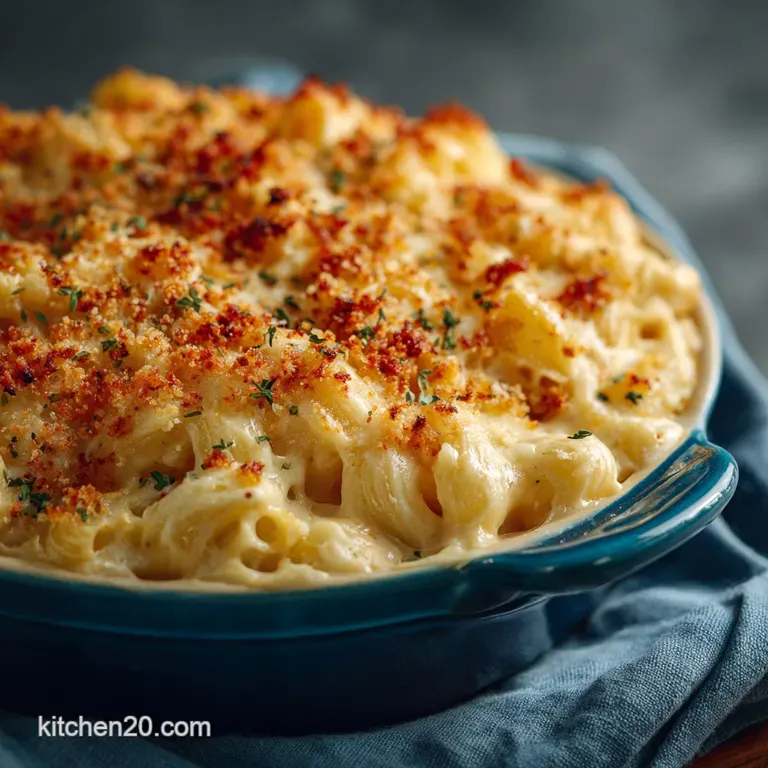
- The Secret to Silky Sauce: Why Most Baked Mac and Cheese Fails
- Mastering the Comfort Classic: An Expert Take on Baked Macaroni
- Sourcing the Supreme Ingredients for Your Cheesy Bake
- The Step and by-Step Tutorial for Perfect Baked Mac and Cheese
- Building the Béchamel Base: A Visual Guide
- Optimizing Your Bake: FAQs and Troubleshooting
- Make and Ahead and Storage Strategies for Creamy Leftovers
- Recipe FAQs
- 📝 Recipe Card
The Secret to Silky Sauce: Why Most Baked Mac and Cheese Fails
Right, let’s talk turkey or rather, let’s talk cheese sauce. How many times have you made a batch of baked mac and cheese only to have it come out of the oven looking sad, split, and oily?
Maybe the sauce was silky smooth when you poured it into the casserole dish, but after 30 minutes in the heat, it had separated into a grainy mess with a puddle of grease sitting sadly on top. Been there. Done that. (My first attempt looked like cheesy scrambled eggs.)
The big secret? It’s not the cheese, although that’s definitely part of the equation. It’s the structure . Baked mac and cheese isn't just about combining ingredients; it’s about building a stable foundation that can withstand serious heat.
You need a béchamel base that buttery, floury roux and milk magic strong enough to hold onto all that delicious dairy fat when the oven tries to tear it apart. Most people rush the roux or add the cheese to boiling milk, and that, my friends, is the culinary death of a creamy mac.
We are going to treat our sauce like a delicate masterpiece, and the payoff is a velvet and smooth interior that stays perfect, even as it cools. Trust me, once you nail the proper roux ratio, you will never look back.
Mastering the Comfort Classic: An Expert Take on Baked Macaroni
I used to think the key to an easy mac & cheese recipe was skipping steps. Wrong. The key to a truly successful baked mac and cheese recipe easy enough for a weeknight is simply understanding the chemistry. We are making food science sexy, basically.
We need the right amount of starch (flour) to encapsulate the fat (butter and milk solids) so that when the cheese melts and releases its own fat, the whole thing remains emulsified.
Understanding the Roux Ratio for a Stable Béchamel
The roux is just butter and flour cooked together. It’s brilliant. Our recipe uses a 1:1 ratio by weight (or 6 Tbsp butter to 6 Tbsp flour), which gives us a medium roux, perfect for thickening the four cups of milk we’re adding.
Cook it long enough about three minutes until it smells nutty, like popcorn. If you don't cook it long enough, your sauce will taste like raw flour. Ew. If you cook it too long (until it’s dark brown), you lose thickening power, and you’re making Gumbo, not mac and cheese.
We are aiming for a pale, sandy and coloured paste.
The Essential Role of Aged Cheese in Flavor Depth
Look, if you’re using mild cheddar and that’s it, your easy mac & cheese recipe is going to taste... flat. Aged cheeses like mature sharp Cheddar and, crucially, Gruyère have complex flavour compounds. They add depth, and the natural saltiness helps bring everything to life.
The Gruyère, in particular, adds this amazing, nutty complexity that screams "sophisticated comfort food." I also sneak in a good melting cheese (Monterey Jack is my favourite) to ensure the texture stays luscious and stringy.
Elevating the Topping: Achieving a Perfect Crunchy Crown
We’ve all had baked mac and cheese with a topping that just... dissolves. No crunch. No texture contrast. Boring! The solution is Panko breadcrumbs. They are lighter, flakier, and absorb less moisture than traditional breadcrumbs.
We toss them in melted butter and a hit of smoked paprika (the best addition for a bit of warmth and colour) before sprinkling them on top. This crust stays crisp, crunchy, and absolutely essential against the velvety interior.
Sourcing the Supreme Ingredients for Your Cheesy Bake
Honestly, don’t even bother with low and fat anything here. If you want that gorgeous, smooth sauce that tastes like a hug, you need whole milk, real butter, and good, fatty cheese. I know, I know, but this is a treat. It’s comfort food. Treat it right.
Cheese Grading: Selecting the Best Melters (Cheddar vs. Gruyère)
| Cheese Type | Flavor Profile | Melting Characteristic |
|---|---|---|
| Sharp Cheddar | Tangy, rich, classic | Good, but can separate if overheated. |
| Gruyère | Nutty, earthy, salty | Excellent, smooth, and adds stretch. |
| Monterey Jack | Mild, buttery | Superb, creamy melt (our texture insurance). |
Pasta Shapes That Hold the Sauce Best
You can’t use spaghetti. That’s just sad. We need something with nooks and crannies to trap the glorious cheese sauce. Elbow macaroni is the classic, obviously, but Cavatappi (the corkscrew shape) or even small shells are incredible because they scoop up the maximum amount of sauce.
The goal is to maximize sauce retention, right?
The Unsung Hero: Seasoning and Flavor Boosters (Mustard, Nutmeg)
I once made the mistake of leaving out mustard powder because I thought my mac and cheese would taste like a hot dog stand. Wrong! Dry mustard powder doesn't add a mustard flavour; it’s a brilliant binder that enhances the savouriness of the cheese.
Likewise, a tiny pinch of fresh nutmeg (we're talking microplane grated, not the stuff that's been sitting in the jar since 2012) adds warmth and complexity to any cream sauce. Try it. You’ll be shocked.
Grate Expectations: Why Pre and Shredded Cheese is the Enemy
This is where I get seriously opinionated. If you use pre and shredded cheese, you are inviting disaster. Why? Because manufacturers coat those shreds in cellulose or potato starch to prevent them from clumping in the bag. Those anti and caking agents also prevent them from melting properly!
They can turn your luxurious baked mac and cheese into a gritty, powdery mess. Buy the block. Spend the 10 minutes grating. Your family will thank you.
Related Recipes Worth Trying
- Pioneer Woman Mac and Cheese: The Creamiest, Baked Casserole Recipe — Master the definitive Pioneer Woman Mac and Cheese recipe. This Creamy Baked Mac N Cheese uses evaporated milk for a velvet sauce, making it the perfect...
- Tinis Viral TikTok Mac and Cheese: Ultra Silky Baked Mac — Tinis Viral TikTok Mac and Cheese is the Queen of Cream! Achieve the ultra silky texture using cream cheese and evaporated milk. The best homemade mac and...
- Crispy Oven Baked Sweet Potato Fries Ultimate Recipe for Extra Crunch — Achieve perfect Crispy Oven Baked Sweet Potato Fries using our chippyshop secret cornstarch method Guarantee extra crispy oven baked sweet potato fries...
The Step and by-Step Tutorial for Perfect Baked Mac and Cheese
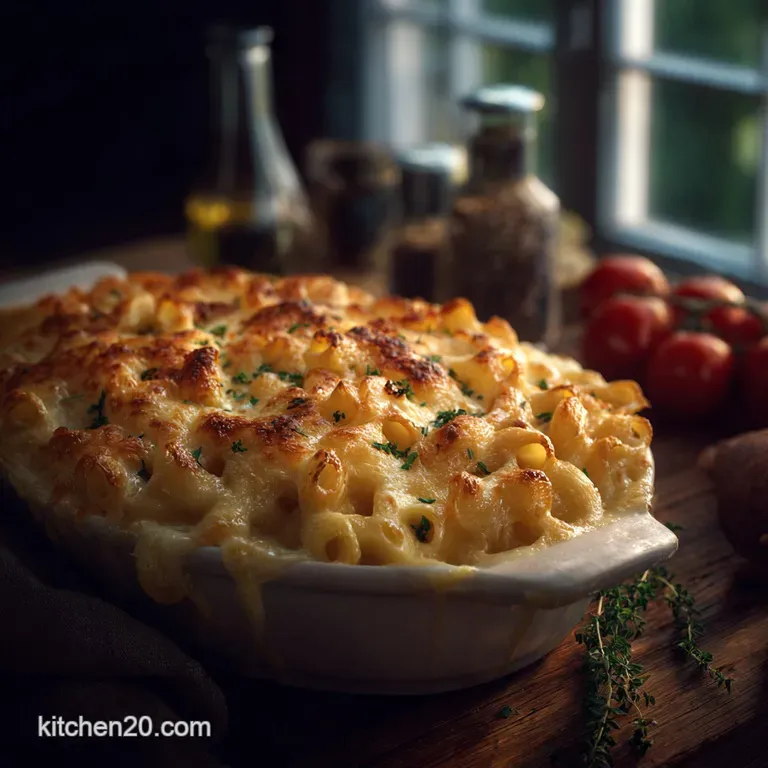
Let's crack on with the good stuff. Remember, control your heat, and grate your cheese!
Building the Béchamel Base: A Visual Guide
This is the hardest part, but only because it requires patience. Don’t walk away from the stove during this process.
Preparing the Pasta to Al Dente Perfection
Get that pasta water boiling and salt it until it tastes like the sea. Seriously. When you add the macaroni, cook it for exactly two minutes less than the package directions. If the package says 8- 10 minutes, pull it at 6. It should be really firm. Drain it immediately .
Do not rinse it. That starch clinging to the pasta is going to help the sauce bind later on.
Achieving the Velvety Sauce Consistency
Melt your butter over medium heat. Whisk in the flour and cook, stirring constantly, for 2- 3 minutes. This is our roux, and it needs to cook off the raw flour taste. Next, whisk in the slightly warmed milk start slow, adding just a splash, whipping until smooth before adding more.
This ensures no lumps. Bring the sauce to a gentle simmer and let it cook for about five minutes until it’s thick enough to coat the back of a wooden spoon.
Crucial Warning: The most common mistake is adding the cheese while the sauce is still boiling or simmering. You must remove the saucepan from the heat source completely before adding any cheese. High heat equals split sauce.
Combining the Elements: Mixing and Transferring to the Dish
Once the pan is off the heat, whisk in your seasoning (salt, pepper, mustard, nutmeg). Now, add your grated cheese blend in three batches. Stir gently with a spoon (not a whisk) until the cheese is totally melted and incorporated, then add the next batch.
Once all the cheese is in, the sauce should be unbelievably creamy and smooth. Now, pour in your undercooked pasta and stir gently until every piece is coated. Transfer that luscious mixture straight into your greased casserole dish.
Monitoring the Oven: The Final Baking Checklist
Sprinkle that buttery Panko topping over the top. We bake the mac and cheese covered loosely with foil for the first 20 minutes. Why? Because the sauce needs time to stabilize and the pasta needs time to finish cooking without the top burning.
After 20 minutes, remove the foil and bake for another 10– 15 minutes until the topping is deep gold and the edges are aggressively bubbling. When you pull it out, let it rest for five minutes. That resting period is mandatory for maximum creaminess.
Optimizing Your Bake: FAQs and Troubleshooting
Q: My sauce is grainy! Help! A: You added the cheese while the heat was too high, or you used pre and shredded cheese. Next time, turn the heat off, add the cheese slowly, and use freshly grated blocks.
Q: Why did my mac and cheese dry out? A: Two reasons: either you cooked the béchamel too long before adding the cheese, making it too thick, or you overbaked it. If the sauce looks a little loose when you put it in the pan, that’s good!
It needs that extra moisture for the pasta to absorb in the oven.
Make and Ahead and Storage Strategies for Creamy Leftovers
Baked mac and cheese is notorious for turning into a block of cement the next day. But we can mitigate that!
Preventing a Greasy Mac: Temperature Control Secrets
The main culprit for greasiness is adding the cheese at high heat, which causes the fat to separate. But if your baked mac and cheese is sitting on the counter and still feels greasy, it means the fat content in your cheese was extremely high, or the initial roux wasn't robust enough.
Next time, try adding a tablespoon of evaporated milk or a splash of white wine (seriously!) to the béchamel; the enzymes and emulsifiers help bind everything even tighter.
Freezing, Storing, and Reheating Instructions
You can assemble the mac and cheese entirely, including the Panko topping, but do not bake it . Cover it tightly and refrigerate for up to 2 days. When you’re ready to bake, let it sit on the counter for 30 minutes while the oven preheats, then follow the instructions.
For freezing, assemble the mac and cheese (without the topping) in a freezer and safe dish. Cool completely. Cover with foil and freeze. Thaw overnight in the fridge, top with the Panko just before baking, and bake as directed (you might need an extra 10- 15 minutes if starting from cold).
Reheat leftovers by adding a splash of milk and microwaving gently, stirring often.
Serving Suggestions: Ideal Companions to Classic Baked Mac
This is a rich dish, so you need a counterpoint. I always serve it with something sharp and green.
- A simple side salad dressed with a very aggressive lemon vinaigrette. The acidity cuts right through the richness.
- Braised collard greens with a touch of apple cider vinegar.
- A side of smoky, slow and cooked pulled pork or barbecue brisket. (Come on, you knew I was going to suggest that.)
Gourmet Variations: Smoked Paprika and Bacon Additions
If you want to go full and tilt gourmet, here are some ideas:
- Bacon Boost: Crisp up 6 slices of bacon, crumble them, and stir half into the sauce before baking, reserving the rest for the top.
- Truffle Indulgence: Replace the nutmeg with a teaspoon of good quality white truffle oil stirred into the sauce after the cheese is melted (never cook truffle oil). That will blow your mind.
- Heat Seeker: Add a teaspoon of Sriracha or your favourite hot sauce, along with a pinch of cayenne pepper, to the béchamel before the cheese goes in. It adds a subtle warmth that is incredibly addictive.
Recipe FAQs
My mac and cheese always comes out dry and rubbery after baking. What’s the secret to keeping it creamy?
The key is starting with a slightly loose, saucy mixture the pasta continues to absorb moisture in the oven, so you need plenty of liquid at the start. Also, ensure you cover the dish loosely with foil for the first 20 minutes of baking to lock in the steam and give the cheese sauce a bit of protection.
Why did my lovely cheesy sauce suddenly split and go all grainy, like a bad pot of soup?
That dreadful result is usually down to overheating the cheese; high direct heat causes cheese proteins to seize up and the fat to separate. Always integrate your grated cheese blend into the béchamel off the heat in small batches, stirring gently until melted, which keeps the sauce stable and silky smooth.
Can I prepare this proper cheesy Baked Mac and Cheese ahead of time, and is freezing a good option?
You can assemble the entire dish (macaroni, sauce, but without the Panko topping) up to 24 hours in advance and store it covered in the fridge; allow it to come nearly to room temperature before baking.
Freezing is risky, as the dairy sauce can split and become grainy upon thawing and reheating, so it’s best to enjoy this magnificent dish fresh!
I’m not a fan of Gruyère; are there any good substitutions for the nutty cheese blend?
Absolutely; if you want a similar depth of flavour, a good combination of sharp Parmesan and Emmentaler works a treat, or simply use Monterey Jack or Provolone for a softer, milder melt that keeps the sauce very smooth.
How should I store and reheat leftover Baked Mac and Cheese without it becoming a solid brick?
Store leftovers in an airtight container in the fridge for up to four days. To reheat without drying it out, splash a tablespoon of milk over your serving portion, cover loosely with foil, and warm gently in a medium oven or microwave until piping hot the added milk restores lost moisture.
Ultimate Creamy Baked Mac And Cheese
Ingredients:
Instructions:
Nutrition Facts:
| Calories | 598 kcal |
|---|---|
| Protein | 26.0 g |
| Fat | 39.0 g |
| Carbs | 37.0 g |
