Back to School Recipes: Yogurt-Leavened Muffins
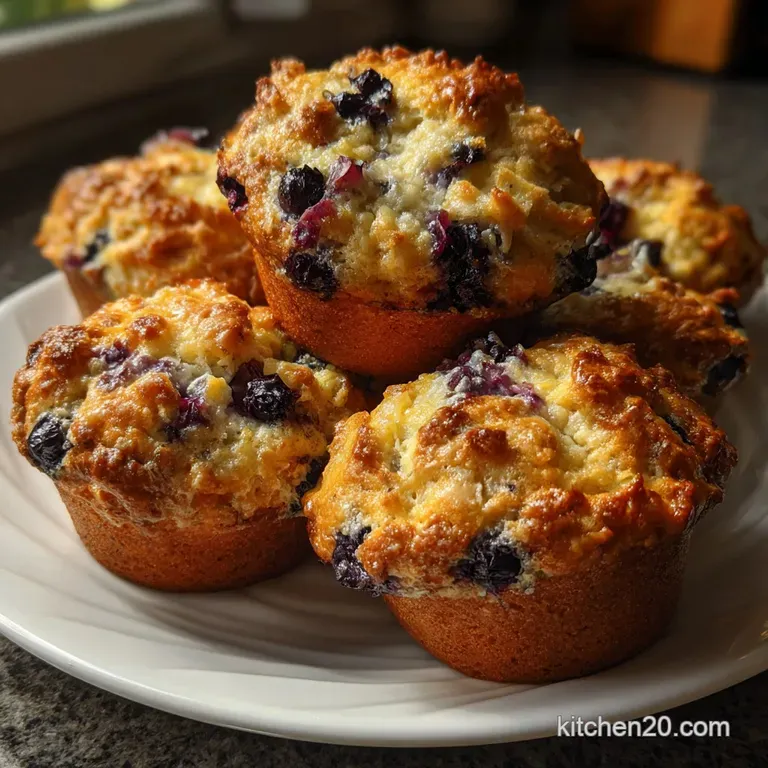
- Effort/Time: 35 minutes total (15 min prep).
- Flavor Hook: Jammy blueberry bursts balanced by the tang of probiotic yogurt.
- Perfect for: High-protein lunchbox additions and make-ahead breakfast rotations.
- Maximizing Nutrient Density for High-Energy Back to School Recipes
- The Technical Specs for Batch Prepping Your School Recipes
- The Chemistry of Whole Grains and Probiotic Bases
- Precision Tools for Consistent Crumb and Uniform Rise
- A Masterclass in Emulsification and Structural Integrity
- Troubleshooting Texture and Preventing the Dreaded Blue Bleed
- Flavor Architecture and Adaptations for Every Lunchbox
- Maintaining Freshness and the Thermodynamics of Reheating
- Optimizing Nutrient Absorption and Flavor Pairings
- Recipe FAQs
- 📝 Recipe Card
There is nothing more demoralizing than spending a Sunday afternoon meal prepping only to pull a tray of dense, leaden "bricks" from the oven that your kids refuse to touch. I’ve seen it happen dozens of times: the whole wheat flour absorbs too much moisture, the leavening agent fails to fight through the heavy bran, and the result is a dry, mahogany colored puck that ends up in the trash.
It’s a literal waste of expensive organic ingredients and, more importantly, your precious time during the most chaotic season of the year when finding solid Back to School Recipes is crucial.
I remember one particularly frantic Monday where I tried to "healthify" a standard recipe by swapping white flour for whole wheat without adjusting the hydration or acidity. I ended up with muffins so tough we joked they could be used as doorstops, and I had to resort to sugary cereal just to get everyone out the door.
That failure forced me to stop guessing and start looking at the actual physics of baking.
The breakthrough came when I understood the science of the Acid Base Reaction. By pairing the lactic acid in Chobani Plain Greek Yogurt with baking soda, we create an immediate surge of carbon dioxide that aerates the dense white whole wheat flour.
This creates a velvety texture and a structural "lift" that defies the usual heaviness of whole grains. The result isn't just a "healthy" version of a muffin; it’s a superior baked good that delivers a shattering blueberry finish and a moist, springy crumb a truly reliable addition to your arsenal of Back to School Recipes.
Maximizing Nutrient Density for High Energy Back to School Recipes
The secret to why these Back to School Recipes consistently outperform standard bakery muffins lies in the Hygroscopic Moisture Retention of the liquid sweeteners.
Unlike granulated sugar, which can lead to a sandy texture in whole grain bakes, the Honey Gardens Raw Honey or maple syrup acts as a humectant. It literally pulls moisture from the air and traps it within the crumb, ensuring these stay succulent for days rather than staling by noon.
Another critical mechanism is the Starch Gelatinization & Fruit Suspension protocol. We coat the fresh blueberries in a single tablespoon of King Arthur White Whole Wheat Flour before folding them into the batter.
This creates a gritty surface tension that allows the berries to "cling" to the batter's structure instead of sinking to the bottom. It ensures every bite contains a balanced ratio of fruit and cake, preventing the dreaded "soggy bottom" syndrome common in high moisture fruit muffins, making this one of the most robust Back to School Recipes out there.
- Maillard Reaction Optimization: The combination of honey and Greek yogurt promotes faster browning at lower temperatures, creating a complex, toasted flavor profile.
- Protein-to-Carb Ratio: Incorporating Greek yogurt increases the protein density to 4.8g per serving, providing a sustained glucose release for better focus in class.
- Fat Emulsification: Primal Kitchen Avocado Oil provides a neutral flavor and high smoke point, ensuring the fats remain stable during the 350°F (175°C) bake.
The Technical Specs for Batch Prepping Your School Recipes
Understanding the thermodynamics of your oven is the first step toward consistent Back to School Recipes. These muffins require a calibrated environment to ensure the Leavening CO2 expands the batter before the crust sets.
This recipe is designed for a standard 12 cup tin, yielding 12 servings that provide 159 kcal each. The 20 minute bake time is the "sweet spot" where the internal temperature reaches 200°F (93°C), indicating the starches have fully set.
| Metric | Value | Technical Note |
|---|---|---|
| Yield | 12 Muffins | Optimized for a standard 12 cup non-stick tin |
| Prep Time | 15 minutes | Includes mise en place and berry coating |
| Cook Time | 20 minutes | Targeted for protein denaturation and starch set |
| Total Time | 35 minutes | From raw ingredients to resting phase |
| Serving Size | 1 Muffin (approx. 75g) | Balanced for 2.1g fiber and 4.8g protein |
The Chemistry of Whole Grains and Probiotic Bases
Building successful Back to School Recipes requires selecting elements that serve both a nutritional and a structural purpose. We use King Arthur White Whole Wheat Flour because it contains the bran and germ of the wheat kernel but comes from a paler variety of wheat.
This gives you the fiber of traditional whole wheat with a much milder flavor and softer texture that won't trigger "picky eater" alarms.
Ingredient Chemistry Breakdown
| Ingredient | Chemical/Physical Role (Science) | The Pro Secret (Why This Matters) |
|---|---|---|
| Greek Yogurt | Lactic acid catalyst for leavening | Softens gluten strands for a velvety, cake like crumb |
| Baking Soda | Alkaline base reacting with yogurt acid | Creates immediate vertical lift in dense whole grain batters |
| Avocado Oil | Lipophilic moisture barrier | Prevents staling by coating starch molecules to repel air |
| Fine Sea Salt | Ionic flavor enhancer and gluten strengthener | Tightens protein networks while suppressing bitterness in bran |
The Official Ingredient List:1.5 cups (190g) King Arthur White Whole Wheat Flour: Why this? Provides 14% protein for structure while maintaining a soft, approachable texture.1.5 tsp (6g) Rumford Baking Powder: Why
this? Provides secondary lift once heat hits the oven (double acting). 0.5 tsp (3g) Arm & Hammer Baking Soda: Why this? Neutralizes the yogurt's acid to create air pockets.0.5 tsp (3g) Diamond Crystal Fine Sea Salt1 tsp
(2g) McCormick Ground Cinnamon 1 cup (245g) Fage Total 2% Plain Greek Yogurt0.5 cup (120ml) Madhava Organic Maple Syrup or Honey1 Large Egg, room temperature: Why this? Lecithin in the yolk emulsifies the water and oil.
0.25 cup (60ml) Primal Kitchen Avocado Oil1 tsp (5ml) Nielsen Massey Pure Vanilla Extract1.5 cups (150g) Fresh Blueberries (Driscoll's or local) 1 tbsp (8g) Extra flour (for coating berries)
Precision Tools for Consistent Crumb and Uniform Rise
To master these Back to School Recipes, you need equipment that ensures even heat distribution. I highly recommend a USA Pan 12 Cup Non-Stick Muffin Tin. Its fluted surface allows for better airflow around each muffin, which helps the edges set without burning. If you're interested in other batch cooking essentials, the prep methods here are quite similar to those used in my Healthy Banana Recipes, where texture and moisture balance are everything.
- Digital Kitchen Scale: Essential for measuring the 190g of flour. Measuring by volume (cups) can vary by 20%, leading to dry muffins.
- Large Stainless Steel Mixing Bowl: Provides enough surface area for the "Gentle Fold" technique.
- Silicone Spatula: Necessary to scrape the viscous Greek yogurt from the measuring cup and to fold berries without crushing them.
- Wire Cooling Rack: Prevents "sweating" in the tin, which would turn the bottoms soggy after baking.
A Masterclass in Emulsification and Structural Integrity
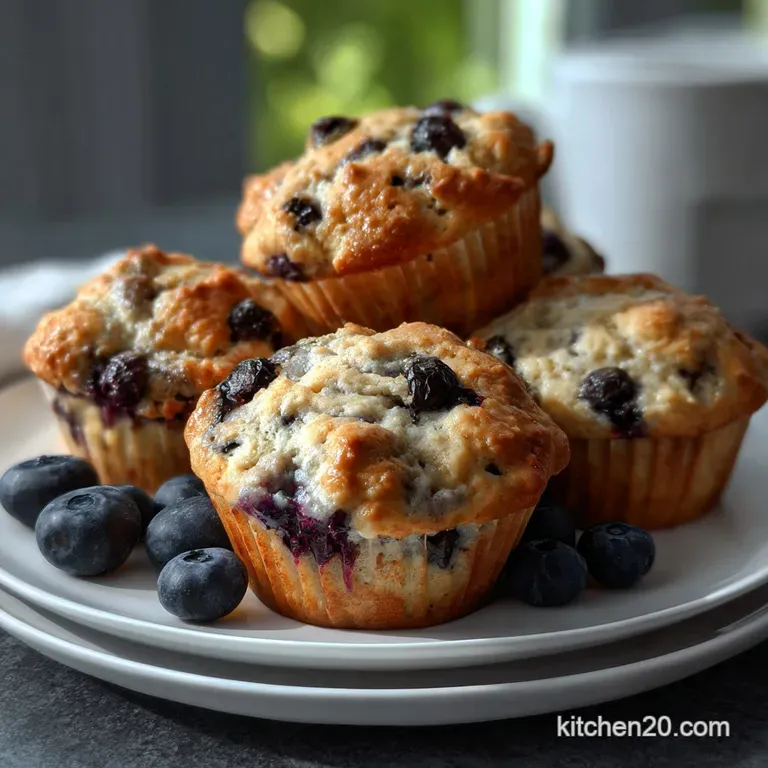
- Preheat the oven to 350°F (175°C) and grease the USA Pan Muffin Tin. Note: Ensuring the oven is at full temp prevents the muffins from "slumping" before the leavening activates.
- Whisk the 190g flour, baking powder, baking soda, salt, and cinnamon in a bowl until the mixture is uniform and pale brown.
- Toss the 150g blueberries with 1 tbsp flour in a small bowl until each berry is ghostly white and fully coated. Note: This prevents the berries from sinking to the bottom of the tin.
- Combine the 245g Greek yogurt, 120ml maple syrup, egg, 60ml avocado oil, and vanilla in a separate bowl.
- Whisk the wet ingredients vigorously until the oil is fully emulsified and no streaks remain.
- Pour the wet mixture into the dry ingredients.
- Fold gently using a silicone spatula until just combined and no dry flour streaks are visible. Note: Over mixing develops gluten, which will make the muffins tough instead of tender.
- Fold in the coated blueberries with two or three turns until evenly distributed throughout the thick batter.
- Scoop the batter into the 12 muffin cups until each is about 3/4 full.
- Bake for 20 minutes until the tops spring back when pressed and a toothpick comes out with only a few moist crumbs.
- Cool in the pan for 5 minutes until the structure firms up, then transfer to a wire rack.
Troubleshooting Texture and Preventing the Dreaded Blue Bleed
If your Back to School Recipes aren't turning out exactly like the photos, the issue usually boils down to Gluten Overdevelopment or Temperature Fluctuations.
When you over work the batter, the proteins in the wheat link together like a mesh, trapping the air so tightly that the muffin becomes rubbery. This is a common pitfall when trying to hurry through "School Recipes" on a busy morning.
Why Your Muffins Are Dense or Blue
The "Blue Bleed" happens when frozen berries are used without proper handling, or when fresh berries are crushed during the folding process. The juice dyes the batter a grayish purple, which is safe to eat but visually unappealing.
This is why the "Gentle Fold" mentioned in the steps is so critical you want the berries to remain intact until they hit the heat of the oven and burst into jammy pockets.
| Problem | Root Cause | The Fix | Pro Protocol |
|---|---|---|---|
| Dense/Tough Crumb | Excessive gluten development | Mix until just combined | Stop mixing the second dry flour disappears |
| Sunken Centers | Under baking or old leavening | Check leavening dates; bake longer | Use a thermometer; internal temp should be 200°F |
| Soggy Bottoms | Berries sank or cooled in pan | Flour coat the berries | Transfer to a wire rack immediately after 5 mins |
Flavor Architecture and Adaptations for Every Lunchbox
The beauty of these Back to School Recipes is their versatility. While blueberries are the classic choice, you can easily swap the fruit or add textures to suit different preferences. If you want a savory twist for a quick dinner side, omit the cinnamon and vanilla, reduce the sweetener to 2 tablespoons, and add 1/2 cup of sharp cheddar cheese. This adaptation is great for pairing with hearty dishes, similar to the flavor profiles found in my Vegetable Lasagna Recipe.
Variations and Substitutions Table
| Original Ingredient | Substitute | Why It Works |
|---|---|---|
| Blueberries (1.5 cups) | Chopped Strawberries | Similar moisture content; slightly more acidic profile |
| Avocado Oil (0.25 cup) | Melted Unsalted Butter | Adds a rich, nutty flavor but can make the muffin slightly denser |
| Maple Syrup (0.5 cup) | Agave Nectar | Neutral sweetness; highly soluble in the yogurt base |
| White Whole Wheat | All-Purpose Flour | Results in a lighter, fluffier texture with less fiber |
Chef's Tip: For an extra crunch that kids love, top each muffin with a sprinkle of crushed pepitas. It adds a nutty finish and pairs brilliantly with the cinnamon, much like the textures explored in my Pumpkin Seed Recipes.
Maintaining Freshness and the Thermodynamics of Reheating
Yes, these muffins freeze beautifully for up to 3 months when individually wrapped in plastic wrap and stored in an airtight Ziploc bag. Because of the high moisture content from the Greek yogurt and maple syrup, they won't dry out in the freezer.
When you're ready to eat, simply thaw on the counter or microwave for 20 30 seconds.
⚗️ The Scaling Lab: Physics of Doubling the Batch
- Flavor Saturation
- Scale spices (cinnamon/vanilla) to 1.5x, not 2x. Concentrated flavors can become overwhelming in large volumes.
- Leavening Precision
- Scale baking soda and powder exactly. Too much can cause a metallic, "soapy" aftertaste and a structural collapse.
- Thermal Mass
- A double batch of cold yogurt and eggs will significantly drop the temperature of your mixing bowl. Ensure all wet ingredients are at room temperature to maintain the 350°F (175°C) baking efficiency.
- Pan Crowding
- If putting two tins in the oven at once, rotate them halfway through. The tin on the bottom rack will block heat from the top, leading to uneven browning.
Zero Waste Philosophy: Don't discard those slightly overripe blueberries! Transform: Mash them into a quick jam to swirl into the batter. Science: The concentrated sugars in overripe fruit provide a deeper caramelization (Maillard reaction) than fresh berries.
Also, save your Greek yogurt tubs! Transform: They are the perfect size for transporting a single muffin in a school lunchbox without it getting crushed.
Optimizing Nutrient Absorption and Flavor Pairings
To make these reliable Back to School Recipes a complete meal, serve them with a source of healthy fats or additional protein. A smear of almond butter on a warm muffin doesn't just taste great the fats help the body absorb the fat-soluble vitamins (like Vitamin E) found in the whole wheat flour.
- For Breakfast: Pair with a hard boiled egg or a side of extra Greek yogurt for a 20g+ protein start to the day.
- For Lunch: Pack alongside apple slices and carrot sticks. The acidity in the muffin balances the sweetness of the fruit.
- For After School: Serve warm with a cold glass of milk (or oat milk). The contrast between the warm, jammy berries and the cold dairy is a sensory win.
- Myth
- You must use refined white flour for a soft muffin.
- Truth
- Greek yogurt acts as a natural "tenderizer" for whole wheat, breaking down tough proteins to create a soft crumb.
- Myth
- Frozen blueberries are just as good as fresh.
- Truth
- Frozen berries contain more "free water" which can lead to soggy pockets. If using frozen, do not thaw them; fold them in directly from the freezer.
These muffins aren't just a recipe; they are a strategic tool for managing the "Back to School" chaos. By leaning into the science of hydration and acidity, you're ensuring that every morning starts with a win with these superior Back to School Recipes. Let's crack on and get a batch in the oven!

Recipe FAQs
Can I substitute almond milk for Greek yogurt?
No. You must maintain the acid source for leavening. Almond milk lacks the lactic acid necessary to activate the baking soda effectively. The acid is crucial for creating the carbon dioxide required to lift the dense whole wheat batter, yielding a flat result otherwise.
What is the ideal internal temperature for doneness?
93°C (200°F) ensures starch gelatinization is complete. This temperature confirms that the proteins have set around the air pockets, locking in the structure created by the leavening agents.
- Use an instant read thermometer
- Avoid opening the oven before 18 minutes
- Verify toothpick crumbs are moist, not wet
Is it better to use baking soda or baking powder here?
Baking soda pairs better due to the yogurt's acidity. Baking soda is a pure base that reacts immediately with the yogurt's lactic acid, creating rapid CO2 for lift. The baking powder provides a secondary lift when heat is applied, ensuring maximum volume in a dense batter.
Myth: Adding vanilla extract makes the muffins taste like cake.
Myth: Adding vanilla extract makes the muffins taste like cake. Reality: Vanilla contains vanillin, a key aromatic compound that enhances the perception of sweetness and rounds out the tang of the yogurt. If you enjoy balancing strong flavors, see how the same principles apply when balancing savory notes in our Blackstone Chicken Recipes Lemon Herb Griddle Magic.
Myth: You must use fresh blueberries only for the best results.
Myth: You must use fresh blueberries only for the best results. Reality: Frozen berries can be used directly from the freezer if they are coated in flour first to prevent bleeding and sinking. Coating the fruit prevents juice migration into the batter before the structure sets.
Should I use white whole wheat flour or standard whole wheat?
White whole wheat flour yields a significantly softer crumb. Standard whole wheat contains a harsher bran that cuts gluten strands and absorbs more moisture, often resulting in dryness.
White whole wheat is milled from a softer berry, providing the same fiber but a far superior texture for these quick breads.
What is the purpose of coating the blueberries in extra flour?
The flour coating creates surface tension to suspend the fruit. This thin, starchy layer prevents the dense berries from sinking to the bottom during baking, ensuring even distribution. If you master this suspension technique here, you'll find the skill translates perfectly to keeping fruit suspended in batters for recipes like our LemonHerb Chicken Salad Easy Bariatric Recipes Win.
Whole Grain Yogurt Muffins
Ingredients:
Instructions:
Nutrition Facts:
| Calories | 159 kcal |
|---|---|
| Protein | 4.8 g |
| Fat | 5.4 g |
| Carbs | 23.4 g |
| Fiber | 2.1 g |
| Sugar | 11.0 g |
| Sodium | 140 mg |
