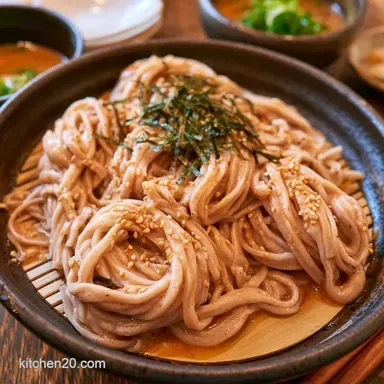
Chilled Soba Noodles with Dipping Sauce

- Time: 10 min active + 10 min cooking + 60 min chilling
- Flavor & Texture: Nutty, cool, and slippery
- Perfect for: Hot summer lunches or a light dinner
Refreshing Chilled Soba Noodles
Enjoying chilled soba noodles, specifically the variety known as Zaru Soba, is a quintessential Japanese summer tradition. Traditionally presented on a bamboo mat (zaru) to let excess water drain, these were a staple street food during the humid afternoons of the Edo period.
The appeal lies in the pairing of chilled buckwheat noodles with a savory, umami-packed dipping sauce.
This recipe emphasizes a refined, low-sugar approach. You'll experience the robust, earthy essence of buckwheat without the excessive sweetness common in store-bought alternatives. While the preparation is quick, the cooling period is essential to achieve that signature refreshing snap.
The result is a meal that feels airy yet satisfying. A foundation of soy and dashi provides a deep saltiness, complemented by the zesty kick of green onions and wasabi, which balances the natural nuttiness of the noodles.
The Texture Trick
- The Starch Shock: Rinsing noodles in ice water stops the cooking process instantly. It also washes away the surface starch, which prevents the noodles from sticking together in a gummy mass.
- Cold Integration: Chilling the sauce separately allows the honey and vinegar to meld. This creates a smooth, balanced dip that doesn't overpower the delicate buckwheat flavor.
| Method | Time | Texture | Best For |
|---|---|---|---|
| store-bought Tsuyu | 2 mins | Salty, consistent | Weeknight rush |
| Homemade Sauce | 15 mins | Balanced, fresh | Weekend lunch |
The Ingredient List
The key is the buckwheat. Soba noodles are made from buckwheat, which has a much earthier, grainier taste than wheat pasta. For the sauce, dashi is the backbone, providing that essential ocean-like umami.
- 1 cup dashi stock Why this? Essential for the savory, authentic base
- 1/2 cup soy sauce Why this? Provides salt and deep color
- 2 tbsp honey Why this? Adds a mellow sweetness
- 1 tbsp apple cider vinegar Why this? Cuts the salt with brightness
- 12 oz dried soba noodles Why this? Nutty, gluten-rich base
- 8 cups water Why this? Plenty of room to prevent sticking
- 2 stalks green onion Why this? Fresh, sharp contrast
- 1 sheet nori Why this? Adds a salty, toasted sea note
- 1 tsp wasabi paste Why this? Heat that clears the sinuses
- 1 tsp toasted sesame seeds Why this? Tiny pops of nuttiness
Recipe Specs
- Yield: 4 servings
- Prep time: 10 minutes
- Cook time: 10 minutes
- Total time: 1 hour 20 mins
Necessary Tools
- Small saucepan (for the sauce)
- Large pot (for the noodles)
- Colander
- Large bowl (for the ice bath)
- Individual dipping bowls
Bringing It Together

To get this right, you need to manage your flow. Start with the sauce so it has time to get ice cold while you handle the noodles.
The Timeline:
- Prep Sauce: Simmer and chill (60 mins)
- Cook Noodles: Boil and shock (15 mins)
- Finish: Plate and garnish (5 mins)
Simmering the Sauce
Combine 1 cup dashi stock, 1/2 cup soy sauce, 2 tbsp honey, and 1 tbsp apple cider vinegar in a small saucepan. Bring the sauce mixture to a gentle simmer over medium heat for 2-3 minutes until the honey dissolves and the flavors integrate.
Remove from heat and place the sauce in the refrigerator to cool completely.
Boiling the Noodles
Fill a large pot with 8 cups of water and bring to a rolling boil. Gently fan 12 oz dried soba noodles into the boiling water to prevent sticking. Stir occasionally and cook 4-6 minutes until tender but retaining a slight snap.
Shocking the Starch
Immediately drain the noodles into a colander and plunge them into a bowl of ice water. Rub the noodles gently with your hands under the cold water to wash away excess surface starch. This removes the slime and keeps the strands separate.
Plating the Dish
Divide the chilled noodles into four neat bundles on a platter or bamboo tray. Pour the chilled sauce into four small individual dipping bowls. Garnish each bowl with a small mound of wasabi paste, thinly sliced green onions, julienned nori strips, and toasted sesame seeds.
Avoiding Kitchen Disasters
The biggest risk here is the texture. Soba can go from "perfect snap" to "mushy" in about 60 seconds. If your noodles feel too soft, you likely overcooked them. Pull them off the heat 30 seconds before the box says they're done, as they keep cooking for a moment during the drain.
Another common issue is clumping. This happens if you don't rub the noodles enough during the ice bath. Be vigorous but gentle, like you're scrubbing something delicate.
Stopping your Chilled Soba Noodles from clumping depends entirely on that cold rinse. If the sauce feels bland, it's usually a lack of salt or acidity. A tiny splash of extra soy sauce or a drop more vinegar usually fixes it.
| Problem | Root Cause | Solution |
|---|---|---|
| Mushy noodles | Overcooked | Pull from heat 30s early |
| Clumping | Excess surface starch | Rub harder during ice bath |
| Bland sauce | Low salt or acid | Add splash of soy or vinegar |
Storage and Freshness
Preserving Chilled Soba Noodles can be challenging because they don't stay fresh for long. The dipping sauce is the most durable part; store it in a sealed glass container in the refrigerator for up to 7 days.
For the best quality, eat the noodles immediately. If you need to store them, place the cooked, rinsed noodles in a container with a moist paper towel for up to 24 hours. Avoid microwaving them to prevent ruining the texture. Instead, just rinse them under cold water again to refresh them before serving.
Serving Suggestions
This is a light meal, so I like pairing it with something protein heavy. Crispy tofu or a side of gyoza works well. If you want a more complete meal, serve it with a side of edamame or a simple cucumber salad.
Customizing Your Bowl
You can easily turn this into a Chilled Soba Noodles salad by tossing the noodles in the sauce rather than dipping them. Add shredded carrots, snap peas, and sliced cabbage for more crunch.
For a creamier vibe, you can swap the soy dip for a peanut sauce recipe to get a, rich coating that pairs great with the buckwheat. If you need a gluten-free version, look for 100% buckwheat noodles, but be careful, as they lack the wheat binder and can break more easily during boiling. For this gluten-free version, also use products labelled gluten-free for all soy sauces, the broth or stock.
Critical in Sodium
2700 mg of sodium per serving (117% of daily value)
The American Heart Association recommends a daily sodium limit of no more than 2,300 mg for most adults.
Tips to Reduce Sodium
-
Swap the Soy Sauce
Replace the standard soy sauce with low-sodium soy sauce or coconut aminos to drastically reduce the salt content.
-
Adjust the Dashi Stock
Use a low-sodium dashi base or make your own stock from kombu and bonito flakes without adding salt.
-
Enhance with Aromatics
Increase the flavor depth by adding freshly grated ginger or minced garlic, which adds punch without adding sodium.
-
Moderate Nori and Wasabi
Use a smaller portion of nori and check the wasabi paste label for no-salt-added options.
Recipe FAQs
How to tell if soba is cooked?
Taste for a tender bite that still retains a slight snap. Follow the package instructions, which typically require 4-6 minutes of boiling.
What is the origin of soba noodles?
They originate from Japan. These buckwheat noodles are a traditional staple of Japanese cuisine.
Can I reheat cold soba?
No, do not microwave them. Simply rinse the noodles under cold water to refresh the texture before serving. When reheating cooked leftovers, check with a food thermometer that the centre reaches 165°F (74°C); the appliance temperature and time alone do not confirm this.
Are these noodles Chinese?
No, they are Japanese. While other cultures use buckwheat, this chilled preparation is specific to Japan.
Is it possible to make the sauce in advance?
Yes, you can. Store the mixture in a sealed glass jar in the refrigerator for up to 7 days.
Why should I rinse the noodles in ice water?
To wash away excess surface starch. Rubbing them gently under cold water ensures the noodles do not stick together.
Do these noodles need to be refrigerated?
Only if not served immediately. Keep cooked, rinsed noodles in a container with a damp paper towel for up to 24 hours.
Chilled Soba Noodles with Dashi Sauce