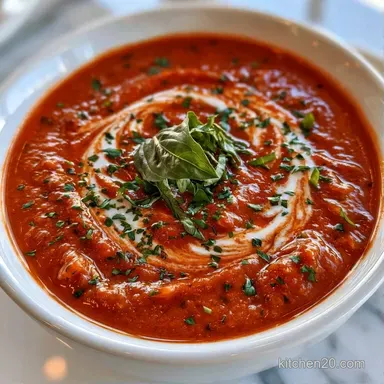
Cream of Tomato Soup with Sautéed Carrots
- Time: 10 minutes prep + 15 minutes on the stove
- Taste Profile: Velvety, vibrant, and savory
- Perfect for: A drizzly evening or a fast lunch paired with a grilled cheese
Everything begins with the aroma of onions and carrots sizzling in olive oil. I once believed that excessive heavy cream was the secret to a professional result, but the secret is actually in the foundation.
The carrots are often ignored, yet they are essential here, offering a natural sweetness that mellows the intensity of the tomatoes.
I have spent plenty of time refining the ratio of acidity to creaminess. Simply heating canned tomatoes often results in something resembling pasta sauce. This Cream of Tomato Soup stands apart because we develop the flavor in stages.
The result is a luxurious, mahogany hued bowl of warmth. It's a dish that slots easily into a packed day while tasting as though it's been bubbling for half the afternoon.
Cream of Tomato Soup
This approach emphasizes both speed and taste. By pairing crushed tomatoes with fresh aromatics, we keep the prep time under 10 minutes, elevating a childhood favorite for a more mature palate.
Here is how the choice of cooking method affects the dish's character:
| Method | Time | Texture | Best For |
|---|---|---|---|
| Stovetop | 25 mins | Smooth and glossy | Quick weeknight meals |
| Oven Roast | 60 mins | Deep and charred | Weekend gatherings |
We will address how to control the thickness in the techniques section below.
Key Techniques Explained
Instead of a lab report, here is what's actually happening in your pot.
Natural Sweetness: Sautéing carrots releases sugars that neutralize the tomato acid. This removes the need for added white sugar.
Mechanical Blending: Using an immersion blender breaks down the solids into a silky consistency. It binds the fat from the cream to the water in the broth.
If you're looking for something a bit heartier, you might enjoy a roasted tomato soup which uses a different heat application for a smokier taste.
What You'll Need
| Ingredient | Role | Alternative |
|---|---|---|
| Yellow Onion | Savory base | Shallots |
| Carrots | Natural sweetness | Parsnips |
| Crushed Tomatoes | Body and tartness | Tomato Purée |
| Vegetable Broth | Liquid and salinity | Chicken Broth |
Here is the complete list of ingredients.
- 1 tbsp olive oil
- 1 medium (150g) yellow onion, diced
- 2 medium (120g) carrots, finely diced Why this? Counteracts acidity without extra sugar
- 3 cloves (15g) garlic, minced
- 28 oz (794g) crushed tomatoes
- 2 cups (480ml) low sodium vegetable broth
- 1 tsp (5g) dried oregano
- 1/2 tsp (3g) salt
- 1/4 tsp (1g) black pepper
- 1/8 tsp (0.5g) cayenne pepper Why this? Gives it a slight heat at the end
- 1/2 cup (120ml) light cream or full fat coconut milk
- 1/4 cup (15g) fresh basil leaves, chiffonade
- 1 tsp (5ml) lemon juice Why this? Lifts the heavier notes
I tend to use a few different creamy components. Feel free to switch these based on what you have in your refrigerator.
| Original Ingredient | Substitute | Why It Works |
|---|---|---|
| Light Cream (1/2 cup) | Coconut Milk (Full fat) | Similar fat levels. Note: Adds a subtle coconut flavor |
| Vegetable Broth | Chicken Broth | More robust savoriness. Note: Not suitable for vegetarians |
| Fresh Basil | Dried Basil (1 tsp) | Similar herbal character. Note: Less aromatic than fresh |
Equipment Needed
Basic tools are all you need for this recipe. A large pot or a Dutch oven works best since they distribute heat evenly.
An immersion blender is the star here, allowing you to blend directly in the pot and reduce the amount of cleanup. A traditional countertop blender is a viable alternative, but you'll have to process the liquid in small batches.
Be careful when blending hot liquids in a closed container to avoid any pressure related accidents.
The Cooking Process
Time to start cooking. Follow these instructions for the best results.
1. Sautéing the Aromatics
Warm the olive oil in your pot using a medium setting. Add the chopped onion and carrots. Sauté for 5–7 minutes until the onions are translucent and carrots soften. Mix in the minced garlic for 60 seconds until it smells fragrant.
2. Simmering the Base
Add the vegetable broth and crushed tomatoes. Stir in the salt, black pepper, cayenne pepper, and dried oregano. Bring to a light simmer, then lower the heat. Let it cook gently for 10 minutes.
3. Blending and Finishing
Take the pot off the stove. Blend the soup with an immersion blender until completely smooth. Stir in the lemon juice and light cream (or coconut milk). Fold in the fresh basil leaves right before serving.
Chef's Note: For a richer taste, stir in a teaspoon of tomato paste while sautéing. Let it caramelize for 2 minutes before pouring in the broth.
If you need a larger quantity, my Soup for 8 Servings recipe is perfect for gatherings.
Key Techniques Explained
Wait, I already covered the basics, so let's talk about precision. For this Cream of Tomato Soup to work, you need a few specific checkpoints.
First, your carrots must be finely diced. If the chunks are too big, you'll end up with a grainy texture even after blending. Second, don't let the garlic brown. If it turns dark brown, it becomes bitter and ruins the sweetness of the carrots. Third, the simmer is key.
Ten minutes isn't a lot, but it's enough to let the oregano infuse into the broth.
According to USDA FoodData, tomatoes are rich in lycopene, which is actually more bioavailable when the tomatoes are processed and heated, as we do here.
What Can Go Wrong (and How to Fix It)
Even the easiest recipes can go sideways. Most of the time, it's just a matter of adjusting the balance.
The Soup is Too Acidic
Sometimes tomatoes are just too tart. If the soup tastes sharp, don't reach for sugar. A tiny pinch of baking soda can neutralize the pH level. Alternatively, stir in an extra tablespoon of cream or Greek yogurt.
The Texture is Too Thin
If you want a thicker consistency, you can simmer the soup for an extra 5-10 minutes before blending. This evaporates more water and concentrates the solids. You can also blend in a small piece of potato or a tablespoon of cashew butter.
The Dairy Curdled
This usually happens if you boil the soup after adding the cream. The heat breaks the emulsion. To fix this, you can try blending it again on low speed, but the best way is to always stir the dairy in after you've removed the pot from the heat.
| Problem | Root Cause | Solution |
|---|---|---|
| Too Tart | High tomato acidity | Add pinch of baking soda |
| Runny Soup | Too much broth | Simmer longer before blending |
| Curdled Cream | Overheating dairy | Stir in after removing from heat |
| Bland Taste | Lack of salt/acid | Add a squeeze of lemon juice |
Freezing and Reheating Guide
While this Cream of Tomato Soup keeps well, there is a specific tip for the dairy.
In the Fridge: Store in an airtight glass container for 3 to 4 days. The taste often enhances on day two as the herbs blend together.
In the Freezer: I suggest freezing the soup before you stir in the cream. Since dairy can separate or turn grainy during the freeze thaw process, freeze only the blended tomato base for up to 3 months. After thawing and heating, stir in your fresh basil and cream.
Reheating Instructions: Warm the soup on the stove over medium low heat. If using a microwave, stir every 2 minutes to prevent hot spots. Should the soup thicken too much while refrigerated, stir in a bit of broth or water to thin it out.
Creative Twists and Swaps
Depending on the occasion, you might want to change the vibe. Here is a quick guide for adjustments.
| Goal | What to change |
|---|---|
| More Heat | Add 1/4 tsp red pepper flakes |
| Vegan | Use coconut milk and veg broth |
| Extra Rich | Use heavy cream instead of light |
If you prefer a chunkier, dip style consistency, you might enjoy a homemade salsa as a side for your grilled cheese.
For a different cultural twist, you could try a classic borscht which uses beets for a similar earthy depth.
How to Serve and Enjoy
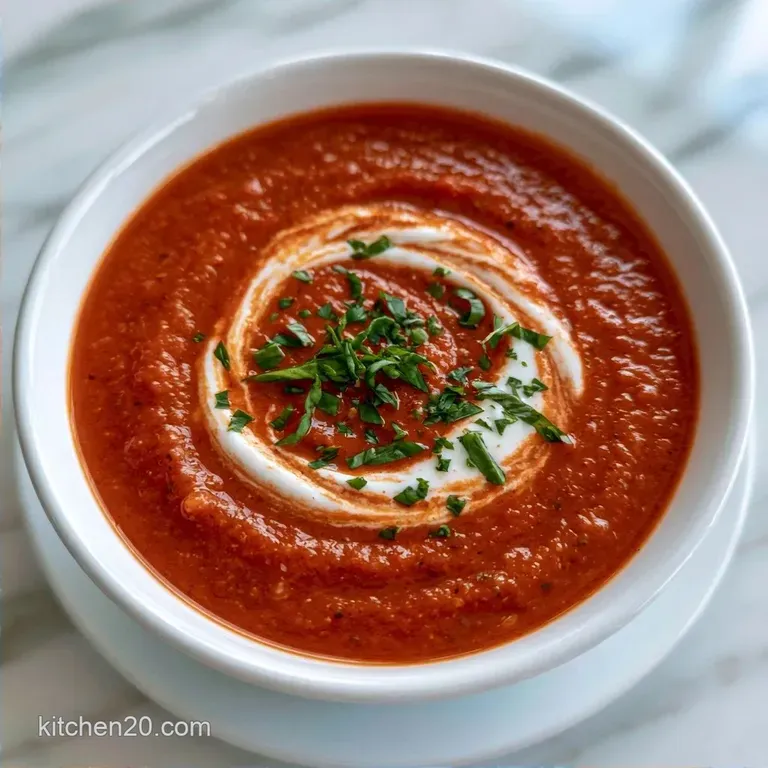
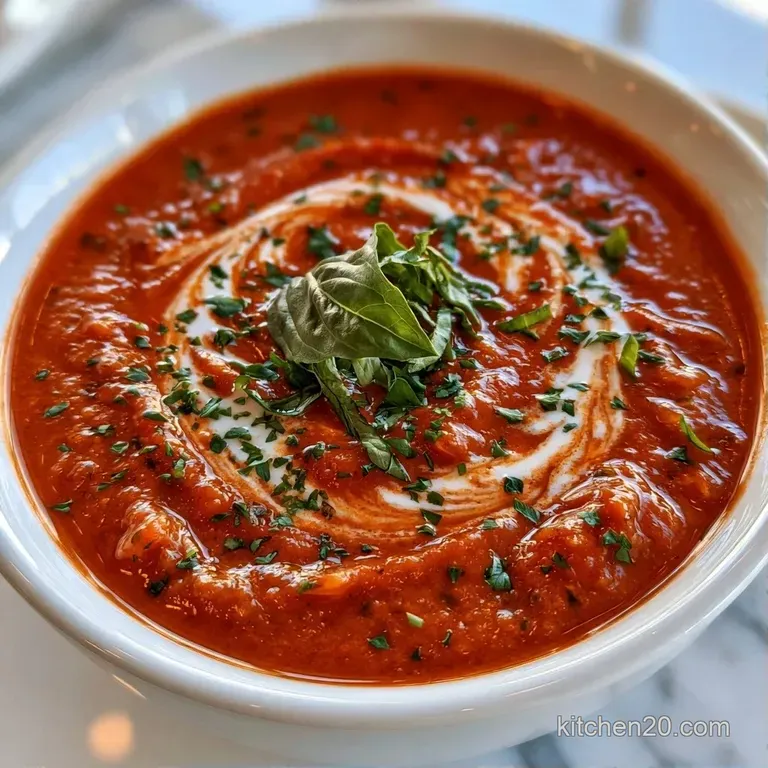
This is all about the presentation. I love serving this in a wide bowl with a swirl of cream on top and a few fresh basil leaves.
The most classic pairing is a sourdough grilled cheese. For something different, try a toasted ciabatta with pesto and mozzarella. If you're feeling fancy, croutons made from day old baguette toasted in garlic butter are a must.
Since this recipe is occasion ready, you can make it a few hours ahead of time. Just keep it in the pot on the lowest setting, or reheat it slowly. Just remember to fold in the fresh basil at the very last second so it stays green and doesn't turn brown from the heat.
Enjoy your Cream of Tomato Soup. It's a simple, connected way to bring a bit of warmth to your table.
High in Sodium
845 mg 845 mg of sodium per serving (37% 37% of daily value)
The American Heart Association recommends that most adults limit their sodium intake to 2,300 mg per day to reduce the risk of cardiovascular disease.
Tips to Reduce Sodium
-
Swap the Broth-30%
Replace the low-sodium vegetable broth with water or a homemade salt free vegetable stock to eliminate a major source of sodium.
-
Eliminate Added Salt-25%
Remove the 1/2 tsp of salt entirely. The other ingredients provide enough baseline sodium to maintain flavor.
-
Choose 'No Salt Added' Tomatoes-20%
Use 'No Salt Added' crushed tomatoes instead of standard canned versions to avoid hidden sodium.
-
Boost with Acidity
Increase the lemon juice or add a teaspoon of balsamic vinegar to enhance the flavor profile without needing extra salt.
Recipe FAQs
What distinguishes cream of tomato soup from regular tomato soup?
The addition of a creamy element. While basic tomato soup is a pureed broth, this version blends in light cream or coconut milk for a velvety texture and richer mouthfeel.
How do I prepare this soup?
Sauté onion and carrots in olive oil for 5 7 minutes. Add garlic, then stir in crushed tomatoes, broth, and spices; simmer for 10 minutes before blending and stirring in cream, lemon juice, and basil.
Does tomato soup provide significant potassium?
Yes, it is a good source. Tomatoes are naturally rich in potassium, which supports heart health and muscle function.
Which soup is best for diabetics?
Vegetable based soups without added sweeteners. This recipe is an excellent choice because it uses carrots for natural sweetness. If you enjoy this blend of vegetables, see how we balance flavors in our homemade loaded potato soup.
Can I use fresh tomatoes instead of crushed?
Yes, but you'll need to peel them. Blanch and peel fresh tomatoes, then simmer them longer to break down the structure before blending for the same consistency.
Are specific ingredients required for this recipe?
A mix of fresh aromatics and pantry staples. You'll need olive oil, onion, carrots, garlic, crushed tomatoes, vegetable broth, oregano, salt, pepper, cayenne, light cream or coconut milk, fresh basil, and lemon juice.
Is it true that you must add sweetness to fix the acidity?
This one's false: Sautéed carrots provide a natural sweetness that balances the tomato acidity perfectly.
Could a thickener be necessary for the right consistency?
No, this is a common misconception. The blended carrots and crushed tomatoes create a naturally thick, rich body without any additional agents.
Cream Of Tomato Soup