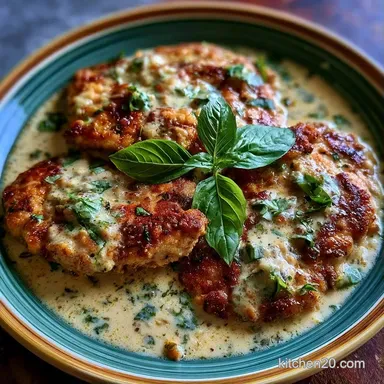
Creamy Parmesan Basil Chicken: Pan-Seared
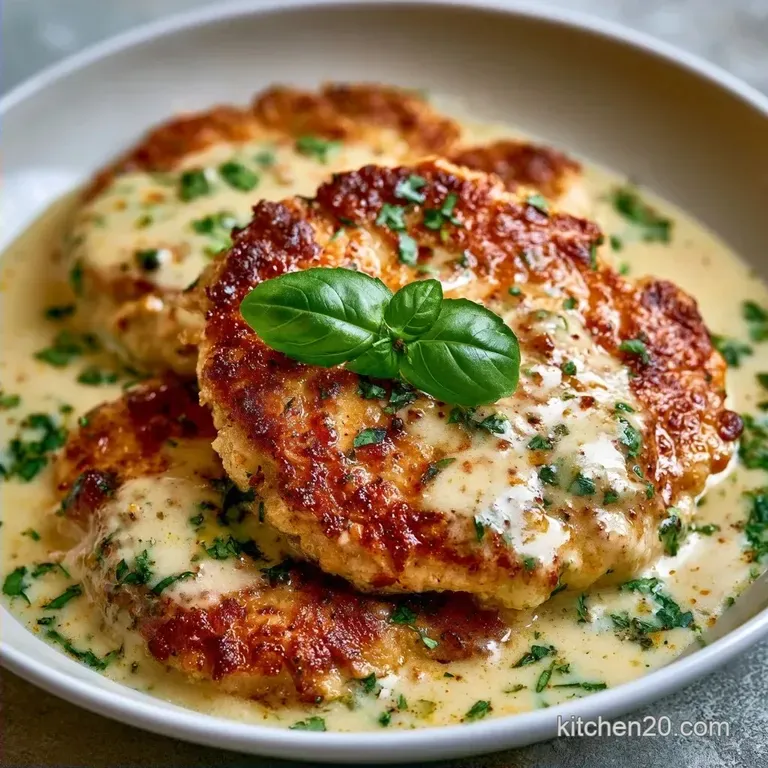
- Time: 15 min active + 25 min cook
- Flavor/Texture Hook: Golden brown crust with a rich, cheesy sauce
- Perfect for: Weeknight dinner that feels fancy
That sound of butter foaming in a hot skillet is where the magic starts. I remember the first time I tried using dried basil for a cream sauce. It tasted like old hay and did nothing for the dish.
Fresh basil is the only way to go here because it cuts right through the fat of the heavy cream with a peppery, bright punch.
This Parmesan Basil Chicken doesn't require any fancy techniques. We're just using a few high-quality ingredients and a bit of patience with the heat. You'll get a meal that tastes like a bistro dish but takes less than an hour from start to finish.
The goal is a deep golden crust on the chicken and a glossy sauce. If you follow the timing, you'll avoid the common pitfall of the sauce breaking or the chicken drying out.
How to Make Parmesan Basil Chicken
The trick to this recipe is the order of operations. We sear the meat first to get those browned bits, then use the broth to lift all that flavor back into the sauce. It's a simple process, but the results are huge.
I've found that using chicken cutlets instead of whole breasts is a total win. They cook evenly and fast, meaning you don't end up with a burnt outside and a raw middle. Right then, let's get into how this actually comes together.
Why This Version Works
- The Pan Fond: Those brown bits left after searing the chicken provide a silky base for the sauce.
- Cheese Timing: Adding the Parmesan at the very end on low heat prevents the sauce from separating.
- Acid Balance: A splash of lemon juice at the finish wakes up the heavy cream and cheese.
| Method | Time | Texture | Best For |
|---|---|---|---|
| Skillet (This) | 40 min | Crispy/Creamy | Fresh dinner |
| Oven Baked | 50 min | Soft/Tender | Large groups |
| Slow Cooker | 6 hrs | Shredded | Meal prep |
What Each Ingredient Does
| Ingredient | What It Does | Best Swap |
|---|---|---|
| Fresh Basil | Adds peppery brightness | Fresh Spinach (milder) |
| Parmesan | Provides salty, nutty depth | Pecorino Romano (saltier) |
| Heavy Cream | Creates the body of the sauce | Half and half (lighter) |
| Nutmeg | Adds a subtle, warm undertone | Pinch of Cinnamon |
The Right Gear
You don't need a professional kitchen for this. A 12 inch stainless steel or cast iron skillet is your best friend here. Non stick is okay, but you won't get as much of a crust on the chicken, and the "fond" (those brown bits) won't develop as well.
A good whisk is also helpful for the sauce. It helps the Parmesan melt in smoothly without clumps. For the basil, a sharp knife is a must. If you use a dull blade, you'll bruise the leaves and they'll turn black instead of staying green.
Necessary Ingredients
- 1.5 lbs boneless skinless chicken breasts, sliced into cutlets Why this? Even thickness ensures equal cooking
- 1/2 tsp salt
- 1/4 tsp black pepper
- 2 tbsp olive oil
- 2 tbsp unsalted butter Why this? Adds richness and helps browning
- 3 cloves garlic, minced
- 1/2 cup chicken broth
- 1 cup heavy cream
- 3/4 cup freshly grated Parmesan cheese Why this? Pre shredded has starch that prevents melting
- 1/4 tsp nutmeg
- 1/4 cup fresh basil leaves, chiffonade
- 1 tbsp fresh lemon juice
Step-by-step Instructions
Phase 1: Achieving the Golden Sear
- Pat the chicken cutlets dry with paper towels and season both sides with salt and pepper. Note: Dry meat sears better
- Heat olive oil and butter in a 12 inch skillet over medium high heat until the butter foams and begins to brown.
- Add chicken in a single layer; sear for 5-7 minutes per side until a deep golden brown crust forms and internal temperature reaches 165°F (74°C).
- Remove chicken to a plate and tent loosely with foil.
Phase 2: Deglazing and Building the Base
- Reduce heat to medium. Add minced garlic to the pan fats and sauté for 1 minute until fragrant.
- Pour in the chicken broth and use a whisk to scrape the browned bits off the bottom of the pan.
- Simmer and reduce liquid by half (about 3 minutes).
Phase 3: Emulsifying the Sauce and Finishing
- Stir in heavy cream and nutmeg. Simmer for 3-5 minutes until the sauce thickens enough to coat the back of a spoon.
- Turn heat to low and slowly whisk in the grated Parmesan cheese until melted and glossy.
- Stir in the fresh basil and lemon juice.
- Return the chicken and any accumulated juices to the pan to coat in sauce and serve.
Avoiding Kitchen Disasters
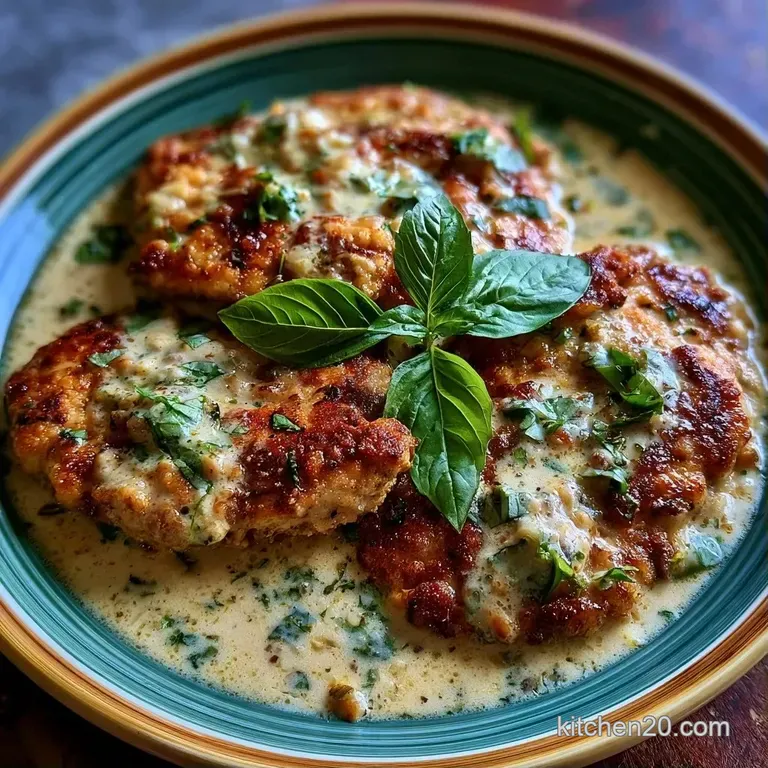
If your sauce looks like it's splitting, it's usually because the heat is too high. Cheese and cream can break if they boil too hard. If this happens, take it off the heat and whisk in a teaspoon of cold water or broth to bring it back together.
Another common issue is the chicken drying out. This happens if you leave the meat in the pan while the sauce reduces. Trust me, move the chicken to a plate. It stays warm under foil, and you can add it back at the very last second.
Why Your Sauce Split
The sauce breaks when the fat separates from the liquid, often due to excessive heat during the cheese melting phase.
| Problem | Root Cause | Solution |
|---|---|---|
| Grainy Sauce | Heat too high | Remove from heat and whisk fast |
| Thin Sauce | Not reduced enough | Simmer cream 2 more mins |
| Bitter Basil | Overcooked | Stir in basil at the very end |
Creative Twists and Swaps
If you want to change the vibe of this Parmesan Basil Chicken, you can play with the base. For a heartier meal, this pairs well with my cheese sauce recipe served over steamed broccoli.
If you're feeling fancy, try adding a pinch of red pepper flakes with the garlic for a little heat. You could also swap the chicken breasts for thighs; just increase the sear time to about 8 minutes per side to render the fat.
Decision Shortcut: If you want it lower carb → serve over zoodles or roasted cauliflower. If you want it more tangy → add an extra teaspoon of lemon juice. If you want it more filling → toss it with a quick ravioli sauce and pasta.
| Original | Shortcut | Impact | Savings |
|---|---|---|---|
| Fresh Basil | Dried Basil | Muted flavor, no color | $2.00 |
| Fresh Parmesan | Canned Powder | Gritty texture, saltier | $3.00 |
| Fresh Garlic | Garlic Powder | Lacks pungent aroma | $0.50 |
Adjusting the Portion Size
Scaling this recipe is pretty straightforward, but don't just double everything blindly.
Scaling Down (Half Batch): Use a smaller 8 inch skillet. Reduce the broth and cream by half, but keep the garlic at 2 cloves. The cooking time for the chicken stays the same, but the sauce will reduce faster.
Scaling Up (Double Batch): Work in batches for the chicken. If you crowd the pan, the meat will steam instead of sear, and you'll lose that golden crust. Only increase salt and nutmeg by 1.5x, as these can become overpowering. Liquids can be doubled fully.
Common Kitchen Myths
Searing meat does not "seal in juices." This is a common misconception. Moisture loss happens regardless of the sear. The browning is purely for flavor and texture, creating a savory crust that makes the dish taste better.
Another myth is that you must use heavy cream for a thick sauce. While it's the easiest way, you can use half and half and a small cornstarch slurry. However, you lose that specific rich mouthfeel that makes this dish a winner.
Storage Guidelines
Store any leftovers in an airtight container in the fridge for up to 3 days. The sauce will thicken significantly in the cold.
When reheating, do it slowly on the stove over low heat. Add a splash of milk or broth to loosen the sauce back up. I don't recommend freezing this dish because the cream sauce often separates and becomes grainy once thawed.
Zero Waste Tip: Don't throw away the basil stems. Chop them finely and toss them into a homemade pesto or simmer them in your next pot of chicken broth for extra flavor.
Serving Suggestions
Depending on who you're feeding, you can change how this looks on the plate.
Plating Levels
| Level | Layout | Detail |
|---|---|---|
| Simple | Bowl | Chicken centered, sauce poured over top |
| Polished | Plate | Sliced chicken on a bed of sauce, 1 fresh leaf |
| Restaurant | Slate | Puree base, precision sauce drizzle, micro basil |
For a complete meal, I suggest serving this with a side of roasted asparagus or a light arugula salad. The acidity of a vinaigrette cuts through the richness of the Parmesan Basil Chicken and balances the whole plate.
Recipe FAQs
What can be used as an alternative for fresh basil?
No, avoid substitutes if possible. Fresh basil provides a bright, aromatic finish that dried alternatives cannot replicate. If you have extra fresh leaves, they are perfect for a creamy pesto sauce.
What are some good ways to use fresh basil when cooking?
Chop leaves into a chiffonade and stir them in at the very end. This preserves the vibrant green color and prevents the herb from wilting or turning bitter during the simmering process.
How to prevent the chicken from sticking to the pan?
Pat the chicken cutlets dry with paper towels. Removing surface moisture ensures a deep golden brown crust and prevents the meat from sticking to the skillet.
How to tell when the chicken is fully cooked?
Use a meat thermometer to check for an internal temperature of 165°F (74°C). Searing for 5-7 minutes per side over medium high heat usually achieves this result.
Is it true that I should add the Parmesan cheese while the sauce is boiling?
No, this is a common misconception. Turn the heat to low before whisking in the Parmesan to keep the sauce glossy and prevent the cheese from clumping.
How to reheat the leftovers without the sauce separating?
Reheat slowly on the stove over low heat. Add a splash of chicken broth to loosen the sauce back to its original consistency.
Can I freeze this chicken dish for later?
No, I do not recommend freezing this dish. The cream sauce typically separates and becomes grainy once thawed.
Creamy Parmesan Basil Chicken