The Definitive Fresca Bright Zesty Pico De Gallo
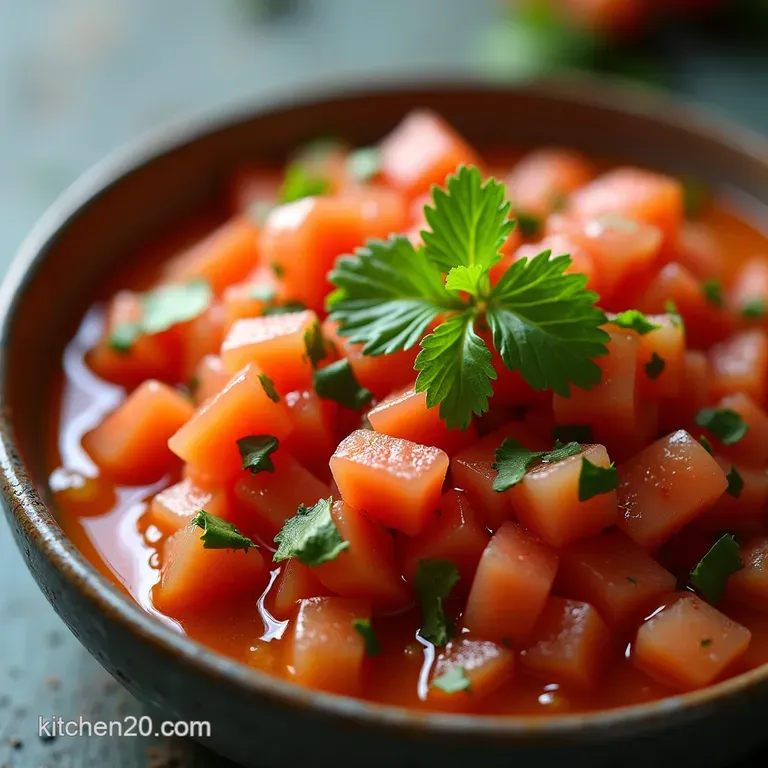
- Unlocking the Sunshine: Why This Pico de Gallo Recipe Reigns Supreme
- The 'Rooster's Beak' Explained: A Celebration of Freshness
- The Building Blocks: Sourcing Superior Components for Your Salsa
- Essential Hardware: Tools Needed to Master the Chop
- Executing the Perfect Dice: A Step-by-Step Manual
- The Crucial Mingling Phase: Allowing Flavours to Marry
- Elevating Your Salsa: Pro-Level Customisations and Tweaks
- Making Ahead: Optimal Storage for Peak Freshness
- Recipe FAQs
- 📝 Recipe Card
Unlocking the Sunshine: Why This Pico de Gallo Recipe Reigns Supreme
There is a certain magic that happens when humble, raw ingredients are treated with respect and allowed to shine. Few dishes exemplify this principle better than the glorious, vibrant Pico de Gallo .
Forget those tired, heavily processed jarred options; the very essence of authentic Mexican cuisine lies in this fresh salsa. This Pico de Gallo recipe is designed not just to replicate that flavour but to elevate it, transforming simple tomatoes, onions, and peppers into something truly essential for your table.
It's the ultimate declaration of freshness, easy enough for a weeknight, yet impressive enough for any fiesta.
The 'Rooster's Beak' Explained: A Celebration of Freshness
The charming name, Pico de Gallo , translates directly to "Rooster’s Beak." While the exact origin is debated, the consensus points to the vibrant colours mirroring the plumage of a proud rooster, or perhaps the small, sharp bites one takes when eating it.
This preparation is distinct because it is an uncooked salsa a Salsa Fresca . It relies entirely on the quality and freshness of its components, demanding a clean, zesty, and assertive profile.
Why Ditch the Jarred Stuff Forever
Commercially prepared salsas, while convenient, often rely on vinegar, preservatives, and cooked down ingredients to achieve shelf stability. This process dulls the bright notes essential to a truly great salsa fresca recipe .
Our approach demands ingredients chopped immediately before serving, ensuring that the acidity of the lime and the crispness of the onion are at their absolute peak. This difference is palpable: jarred salsa is simply a shadow of the real thing.
The Essential Flavour Profile of Authentic Salsa Fresca
The beauty of this fresh salsa recipe is its balance. You are seeking a complex interaction where the sweetness of ripe tomatoes meets the pungent bite of raw white onion.
The heat from the jalapeño should be a warm glow, not an overpowering blast, and everything must be unified by a sharp, mouth watering hit of pure lime juice, punctuated by herbaceous coriander. It’s a symphony in miniature.
The Building Blocks: Sourcing Superior Components for Your Salsa
Success with this vibrant Pico de Gallo hinges entirely on the quality of your raw materials. Since there is nowhere for subpar ingredients to hide, prioritizing freshness is your first and most crucial step.
Think locally sourced where possible, and always choose produce that feels firm and vibrant.
Essential Hardware: Tools Needed to Master the Chop
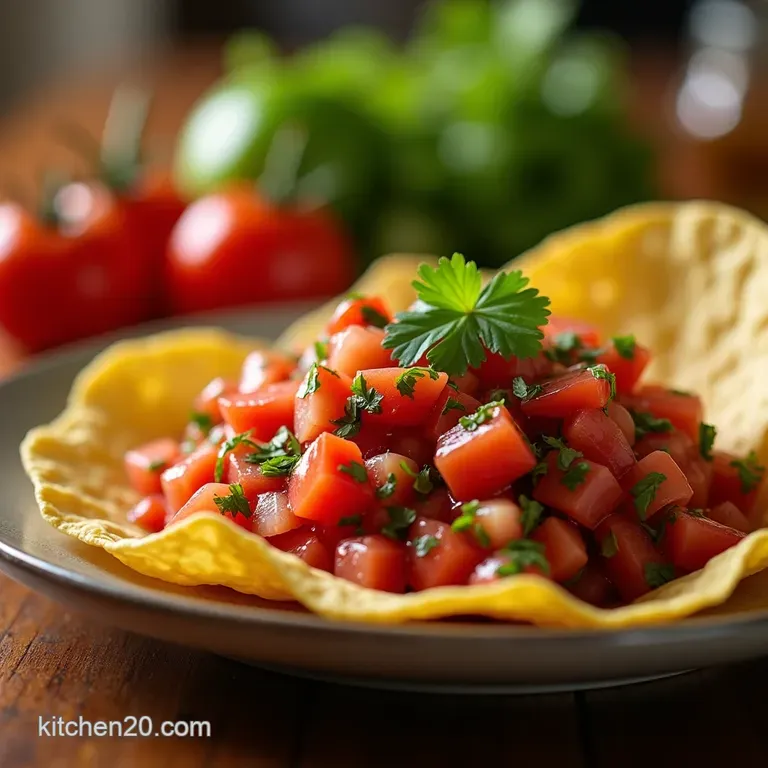
While this is an Easy Pico de Gallo project, the execution the chopping is everything. Your tools must be up to the task to ensure a uniform texture that allows all the flavours to blend harmoniously without turning the salsa into mush.
Selecting the Perfect Produce: Tomatoes, Onions, and Heat Levels
For the tomatoes, we lean towards Roma or plum varieties. These have fewer seeds and less watery pulp than beefsteak tomatoes, which is key to preventing a soggy outcome. When selecting your white onion, look for one that feels heavy for its size.
For the heat, one medium jalapeño is the standard starting point; if you prefer a milder experience, be diligent about removing the white interior ribs and seeds, as this is where most of the heat resides.
The Citrus Quotient: Maximising Lime Juice Impact
There is no substitute for fresh lime juice here. Bottled juice carries stale, sometimes bitter notes that fundamentally compromise the zesty character defining good Pico de Gallo ingredients . You’ll need a minimum of two tablespoons to properly dress the mixture.
Precision Equipment for Perfect Pico de Gallo Texture
A very sharp chef's knife is your greatest asset. A dull blade crushes cell walls, releasing excess moisture and turning your beautiful dice into an unappetizing pulp. Paired with a large, stable cutting board, you gain the control necessary for uniformity.
Executing the Perfect Dice: A step-by-step Manual
The preparation begins with the tomatoes. Slice the Romas in half lengthwise. The next step, which separates good salsa from great, is to gently use a small spoon to scoop out and discard the watery seed chambers. We want only the dense, flavorful flesh.
Dice this flesh into small, uniform pieces aiming for roughly 1/4 inch cubes. Next, take your white onion and dice it to a similar small dimension. Mince your prepared jalapeño finely, and chop the coriander until it is light and fluffy.
All these components tomato, onion, jalapeño, and coriander are gently combined in your mixing bowl.
The Crucial Mingling Phase: Allowing Flavours to Marry
Once all the solid components are together, it’s time for the dressing. Pour in the freshly squeezed lime juice, followed by the sea salt and a simple pinch of black pepper. This is where many home cooks rush the process, but patience here ensures your Pico de Gallo transcends its humble beginnings.
Knife Skills Spotlight: Achieving Uniformity in Every Cut
Remember, uniformity ensures that every scoop taken from the bowl delivers a balanced taste of tomato, onion, and heat. While slight variations are natural, strive for that consistent 1/4 inch dimension across the board.
This precision contributes significantly to the overall eating experience, whether you are using this as a Pico de Gallo side dish or a topping.
Introducing the Heat: When and How to Incorporate Chilies
The jalapeño should be added early with the other vegetables. This allows the oils and capsaicin compounds to begin infusing the lime juice and the other ingredients immediately upon mixing, leading to a more integrated heat rather than a sharp, isolated punch.
The Gentle Toss: Avoiding a Watery Outcome
Use a spatula or spoon, not vigorous stirring, to combine the ingredients. The goal is to coat everything evenly with the lime juice and seasoning, not to agitate the tomatoes so much that they release all their internal liquid prematurely.
Elevating Your Salsa: Pro-Level Customisations and Tweaks
While the base recipe is iconic, feel free to explore subtle enhancements. A small grating of fresh garlic (no more than half a clove for the whole batch) can add depth, provided you are using truly fresh garlic.
Some enthusiasts also advocate for adding a tiny pinch of cumin powder for a subtle earthiness, though this moves slightly away from the purest Salsa Fresca style.
Making Ahead: Optimal Storage for Peak Freshness
While this salsa is best served immediately, life doesn't always allow for perfect timing. If you must prepare it in advance, know that the quality will degrade slightly. Store your finished Pico de Gallo in an airtight container in the refrigerator for no more than 12 hours.
Crucially, avoid making it more than a day ahead, as the texture will inevitably soften and weep.
Flavour Boosters: Secrets Beyond the Standard Recipe
For a richer mouthfeel, especially if your tomatoes aren't perfectly ripe, consider stirring in half a finely diced, ripe avocado just before serving. This adds a buttery texture that works wonderfully when spooning the salsa over sturdy fare like Pico de Gallo for tacos .
Troubleshooting Common Pico de Gallo Pitfalls (Too Salty? Too Wet?)
If you’ve over salted the mix, the quickest fix is adding more fresh tomato and lime juice to dilute the concentration. If the salsa is too wet (usually due to using watery tomatoes), the resting phase will usually absorb some excess moisture, but next time, be ruthless with the seeding process.
You can also gently drain off a tablespoon or two of liquid before serving.
Serving Suggestions: Beyond the Tortilla Chip
Of course, nothing beats dipping Pico de Gallo chips into a fresh bowl. However, consider using this bright salsa as a condiment on scrambled eggs, drizzled over grilled chicken breast, or even alongside robust cheeses.
It's designed to cut through richness and provide a burst of clean flavour wherever it lands.
Recipe FAQs
Why does my Pico de Gallo taste watery? I feel like I'm eating tomato soup!
Ah, the dreaded watery salsa! This usually happens for two reasons: either you haven't properly removed the watery seeds and pulp from the tomatoes, or you didn't let it rest long enough for the salt to draw out the moisture properly.
Make sure you scoop out that interior pulp thoroughly, and always give it that crucial 15-minute rest time before serving.
Can I make this Pico de Gallo ahead of time, or does it have to be made last minute?
You absolutely should make it at least 15 minutes ahead of time, as the resting period is vital for flavour melding. However, don't push it too far past two or three hours if you want that peak freshness.
If storing longer, keep it tightly sealed in the fridge, but be aware that the lime juice can start to slightly break down the tomatoes after about 24 hours.
I’m not a fan of spicy food; how can I make the Pico de Gallo milder?
That's no problem at all; you are in charge of the heat! The spice in the jalapeño lives mostly in the white ribs and seeds, so make sure you remove those entirely before mincing. If you're still worried, use only half a pepper to start, or substitute it with a milder bell pepper for crunch and colour instead.
What's the best way to stop the raw onion from tasting too harsh in the salsa?
That sharp "bite" from the raw onion can sometimes overwhelm the fresh flavour of the tomato. A simple trick is to dice your white onion as instructed, then pop it into a small bowl of ice-cold water for about five minutes before draining it completely.
This process mellows the harshness right out without losing the crunch.
If I can’t find Roma tomatoes, what is the best substitute for this recipe?
Roma or plum tomatoes are preferred because they have thicker walls and fewer seeds, which keeps the salsa from getting too sloppy. If Romas aren't available, look for vine ripened tomatoes that feel firm to the touch; just be extra diligent about seeding them thoroughly, as softer tomatoes hold more liquid.
Easy Fresh Pico De Gallo
Ingredients:
Instructions:
Nutrition Facts:
| Calories | 798 kcal |
|---|---|
| Protein | 12.7 g |
| Fat | 3.0 g |
| Carbs | 81.5 g |
| Fiber | 21.2 g |
| Sodium | 20036 mg |
