The Ultimate Goldencrusted Summer Peach Cobbler
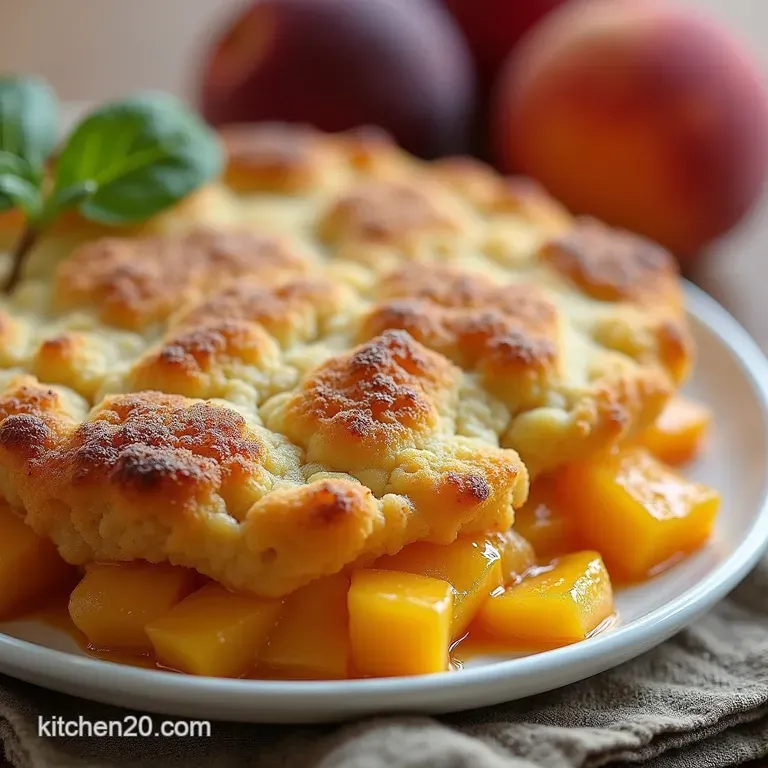
- Why This Recipe Reinvents the Classic British-Borrowed Peach Cobbler
- The Anatomy of Perfection: Sweetness Meets Scone-Like Texture
- Sourcing Superior Produce: Choosing Your Peaches Wisely
- The Pantry Staples Required for This Stellar Peach Cobbler
- Mastering the Peach Filling: Simmering to Succulent Perfection
- Crafting the Light, Golden Biscuit Crown: Step-by-Step
- Serving Suggestions: Elevating Your Dessert Experience
- Storage Secrets for Maintaining That Freshly Baked Flavor
- Recipe FAQs
- 📝 Recipe Card
Why This Recipe Reinvents the Classic British Borrowed Peach Cobbler
When we talk about Peach Cobbler Recipe , we often conjure images of thick, heavy, sometimes overly sweet desserts. However, this rendition takes inspiration from its historical roots a delightful marriage between American ingenuity and the structure of British baked goods to create something truly exceptional.
We are moving past the heavy, sometimes soggy crusts that plague lesser bakes. This version focuses intensely on achieving a fruit filling that is vibrant, perfectly sweetened with a counterbalancing tang, and topped with a biscuit crust that rivals the flakiness of the best Peach Scones .
It's a testament to the fact that simplicity, when executed correctly, leads to the most profound culinary satisfaction. This Homemade Peach Cobbler is designed to be light, summery, and deeply comforting without ever feeling dense.
The Anatomy of Perfection: Sweetness Meets Scone Like Texture
Achieving that perfect textural interplay between the soft fruit and the crisp topping is the secret weapon of this dessert. We aim for a filling that has surrendered its juices beautifully into a nectar, rather than a watery sludge, and a topping that offers textural contrast with every spoonful.
The success lies not just in the ingredients, but in the precise way they are handled and combined, ensuring that every bite of this Easy Peach Cobbler is memorable.
Defining Our 'Cracking' Approach to Cobbler Topping
The topping here is decidedly biscuit based rather than cake like. We are utilizing the cold cut method, akin to making shortcrust pastry or, indeed, excellent scones. The key is incorporating very cold butter into the dry ingredients flour, sugar, baking powder, and salt just until pea-sized crumbs form.
When these small pockets of cold fat hit the hot oven environment, they create steam rapidly, puffing up the surrounding dough and yielding a light, airy, and wonderfully golden crown. This technique ensures you get that satisfying 'cracking' texture on top of your Peach Cobbler .
The Essential Role of Tang in Balancing Ripe Peaches
Ripe peaches are inherently sweet, which means that without a balancing agent, the final product can taste flat or cloying. This is where the freshly squeezed lemon juice comes into play. It doesn't just prevent the peaches from browning; critically, it elevates their natural flavour profile.
That essential tablespoon of acid acts as a palate cleanser, cutting through the richness of the butter in the topping and ensuring that the final product is bright, juicy, and addictive.
This attention to balance is what separates an adequate fruit bake from a truly stellar Peach Cobbler Recipe .
Setting Expectations: A Truly Bubbling Baked Delight
One of the most visually and sensorially satisfying aspects of a great cobbler is the moment it emerges from the oven: the fruit filling must be actively, vigorously bubbling up between the biscuit mounds.
This indicates two things: the starches (flour or cornstarch) in the filling have thickened the juices to a beautiful nectar consistency, and the internal temperature is high enough to cook the dough through.
When serving this Quick Peach Cobbler , ensure you allow that brief rest period so the juices can settle slightly before diving in.
Sourcing Superior Produce: Choosing Your Peaches Wisely
For the absolute best result in a Peach Cobbler with Fresh Peaches , you need fruit that is ripe in flavour but firm in structure. Overly soft, bruised fruit will break down too quickly into mush during the simmer phase.
Look for peaches that give slightly when gently pressed near the stem, but which don't yield instantly. Slicing them uniformly about half an inch thick ensures even cooking time, preventing some slices from dissolving while others remain hard.
The Pantry Staples Required for This Stellar Peach Cobbler
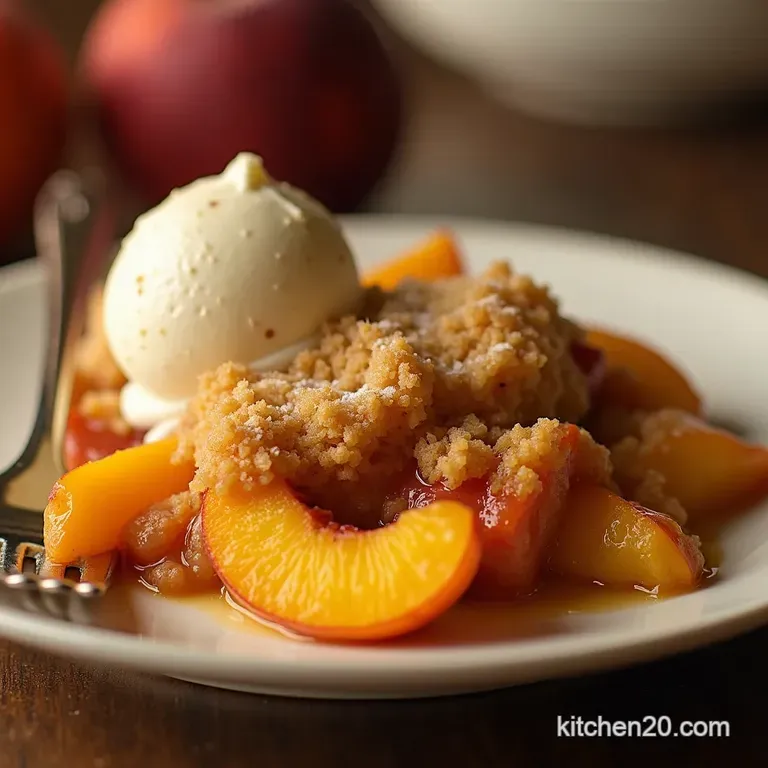
The beauty of this dessert lies in its reliance on foundational Peach Cobbler Ingredients . We need simple structures: flour, sugar, butter, milk, and leavening agents.
The spices are minimal but impactful: cinnamon provides warmth, while nutmeg offers a subtle, aromatic complexity that ties the sweet fruit and the buttery topping together perfectly.
Measuring the flour by lightly spooning it into the cup and leveling it off, rather than scooping directly, is crucial for achieving the correct dough consistency.
Dealing with Frozen or Tinned Peaches: A Smart Substitution Guide
While fresh is always preferred, seasonality doesn't always cooperate. When using Peach Cobbler with Frozen Peaches , there is no need to thaw them first. Add them directly into the filling mixture, but be aware that frozen fruit releases more liquid.
To compensate, increase the thickening agent (flour or cornstarch) in the filling by one extra teaspoon. Tinned peaches are best avoided unless they are packed in light syrup; drain them well and reduce the added granulated sugar in the filling by a quarter cup.
Spice Ratios: Unlocking the Secret Nectar Blend
The spice profile here is deliberately restrained to let the peach shine. One teaspoon of ground cinnamon paired with just a whisper of a quarter teaspoon of nutmeg is our sweet spot. This is a warm, inviting spice blend, not a heavy autumnal one.
The vanilla extract, added to the fruit mixture, serves as a flavour enhancer, making the overall taste richer and deeper, akin to the complexity you might find in high end pastry.
Essential Equipment for Assembling Your Bake
You don't need specialized gadgets for this bake. A standard 9x13 inch baking dish provides ample surface area for the fruit to cook evenly and allows the biscuit tops to achieve that desirable golden crust separation.
The most important tools are the ones used for the topping: a pastry blender or two table knives are ideal for cutting the cold butter into the flour mixture without melting it with your warm hands.
Related Recipes Worth Trying
- The Ultimate Rustic Fresh Peach Cobbler Recipe Comfort Dessert — Ditch the canned stuff This easy peach cobbler recipe uses fresh fruit under a tender buttery biscuit topping Perfect summer dessert inspiration
- The Best Diabetic SugarFree Peach Cobbler Recipe — Craving comfort without the sugar crash This Diabetic SugarFree Peach Cobbler is rich tender and just like Grandma used to make Get the foolproof recipe now
- The Ultimate Summer Sipper Fresh Peach Lemonade — Whip up this Homemade Peach Lemonade using fresh fruit for a dazzling summer refresher Its dangerously easy and miles better than the storebought stuff
Mastering the Peach Filling: Simmering to Succulent Perfection
The process of creating the filling is more of a gentle marriage than a boil. Once you have tossed your prepared peach slices with the sugar, thickener, spices, and lemon juice, you transfer them directly to the baking dish.
The "simmering" effect happens in the oven as the natural moisture from the peaches combines with the sugar to create a syrup, which is then thickened by the flour or cornstarch. This ensures the fruit softens beautifully while the sauce thickens beneath the crust.
Crafting the Light, Golden Biscuit Crown: step-by-step
The dough for the topping should look decidedly unattractive before it hits the oven shaggy, slightly lumpy, and uneven. This is a virtue, not a flaw. We want pockets of dry flour that hydrate during baking, creating layers, rather than a smooth, homogenous dough which leads to dense results.
Techniques for Achieving Maximum Juiciness Without Wateriness
The trick to maximizing juiciness while avoiding soupiness lies entirely in the thickening agent. By using a small amount of flour (or cornstarch) directly with the fruit, we create a slurry that rapidly thickens as the fruit releases its juices under high heat.
This prevents the nectar from simply running out onto the bottom of the pan, ensuring that the juices cling beautifully to the baked fruit.
The Crucial Pre-Bake Rest Period
While this isn't a yeast bread, allowing the assembled cobbler to sit at room temperature for about ten minutes while the oven comes up to full temperature (or if you're multitasking) is beneficial.
This short rest allows the baking powder to begin its work slightly before the intense heat sets the structure, contributing to a lighter rise in the biscuits.
Optimal Oven Temperatures for Uniform Browning
We employ a relatively high initial temperature— 400° F ( 200° C) for two key reasons. First, it shocks the cold butter in the topping into rapid steam production, ensuring a high rise.
Second, it sets the edges of the fruit filling quickly, encouraging that beautiful bubbling action right away. The bake time of 35 to 40 minutes is calibrated for this temperature, resulting in perfectly cooked fruit and golden brown biscuits.
Serving Suggestions: Elevating Your Dessert Experience
This Peach Cobbler is undeniably wonderful on its own, served warm, but true connoisseurs know the finishing touches matter. A cold counterpoint is essential. While vanilla bean ice cream is the ubiquitous and brilliant pairing, consider the textural difference provided by an alternative.
Storage Secrets for Maintaining That Freshly Baked Flavor
While nothing truly beats a cobbler fresh from the oven, leftovers store remarkably well. Cover the cooled dish tightly with foil or plastic wrap and refrigerate for up to three days. The structure remains relatively intact, though the biscuit topping will soften slightly upon cooling.
Clotted Cream vs. Vanilla Bean: The Great Topping Debate
For a truly decadent, British inspired experience, dollops of thick clotted cream provide a rich, slightly tangy contrast that melts luxuriously into the warm fruit. If you prefer a milder, sweeter addition, high-quality vanilla bean ice cream remains the gold standard.
If you are looking to diversify your dessert repertoire beyond this classic, you might find yourself inspired to try Peach Scones next!
Reheating Tips to Revive the Crispness
To recapture some of that fresh baked magic, avoid the microwave, which steams the topping. Instead, place individual servings (or the entire dish) in a 350° F ( 175° C) oven for about 10 to 15 minutes until the filling is hot and bubbling again.
This dry heat gently re-crisps the exterior of the biscuit.
Creative Flavor Twists for Year Round Enjoyment
While summer peaches define the season, this preparation method is versatile. Try substituting half the peaches with crisp apples or firm pears during the colder months. For an intriguing twist on this Peach Cobbler Recipe , incorporate a dash of cardamom or a teaspoon of finely grated orange zest into the filling mixture for a brighter, more complex citrus note.
Recipe FAQs
Can I make this Peach Cobbler ahead of time, or should I just freeze it?
For the best results, it’s best enjoyed the day it’s made when the topping is crisp. You can prep the fruit filling the day before and keep it covered in the fridge. If you have leftovers, store the entire Peach Cobbler tightly covered in the refrigerator for up to 3 days; it’s still smashing cold, too!
My topping always ends up soggy on the bottom how do I get that beautiful golden crust?
That’s a classic cobbler conundrum! The key is ensuring your baking dish and oven are hot before you add the fruit, and crucially, your butter and milk for the topping must be ice cold. Cold ingredients create steam pockets, lifting the dough and preventing sogginess.
Also, try not to let the biscuit dough sink too deeply into the fruit when assembling.
What if I don't have fresh peaches? Can I use tinned or frozen ones for this Peach Cobbler?
Absolutely, necessity is the mother of invention! Frozen peaches work brilliantly; just toss them in straight from the freezer no need to thaw. If using tinned peaches, be sure to drain them well, and you might want to slightly reduce the added sugar, as they are often pre-sweetened.
You might need an extra teaspoon of the flour thickener as well.
My biscuits are usually tough how do I ensure they stay light and fluffy like scones?
The secret to a tender biscuit topping is very minimal handling; think of it like making the world’s simplest scone dough. Mix the dry ingredients well, then quickly cut in the cold butter until the pieces are small, and only mix in the milk until it just comes together into a shaggy mass.
Don’t knead or overmix, or you’ll activate too much gluten!
Can I use a different fruit instead of peaches in this recipe?
Definitely! This recipe is brilliant for almost any firm fruit. Try swapping the peaches for a mix of plums and blackberries, or use firm cherries if you can find them. If you use softer fruits like berries, reduce the initial cooking time slightly, as they release less liquid than peaches.
Golden Peach Cobbler
Ingredients:
Instructions:
Nutrition Facts:
| Calories | 970 kcal |
|---|---|
| Protein | 12.8 g |
| Fat | 29.8 g |
| Carbs | 112.2 g |
| Fiber | 13.0 g |
| Sodium | 6975 mg |
