Chicken Noodle Soup: Hearty Homemade Comfort Cure

- The Proper Comfort Cure: Why Homemade Chicken Noodle Soup Always Wins
- Decoding the Depth: The Science of a Restorative Broth
- Essential Pantry Staples for Your Hearty Chicken Noodle Soup
- Step-by-Step: Building the Ultimate Chicken Noodle Soup (From Scratch)
- Chef's Secrets and Common Errors to Avoid
- Future-Proofing Your Comfort: Storing and Freezing Chicken Noodle Soup
- Proper Pairings: What to Serve Alongside Your Bowl
- Recipe FAQs
- 📝 Recipe Card
The Proper Comfort Cure: Why Homemade Chicken Noodle Soup Always Wins
Can you smell that? That warm, savory cloud of thyme and sweet carrots, steaming gently as it fills every corner of your kitchen? That aroma is instant, deep, restorative comfort, something the store-bought stuff just can't touch.
When it’s cold outside or you’re feeling a bit under the weather, nothing beats this feeling.
This recipe is truly a lifesaver; it’s one of those easy soup recipes that tastes like you simmered it all day but actually comes together in about an hour. It’s cheap, incredibly nourishing, and uses basic pantry staples, meaning you can pull off this epic homemade chicken noodle soup even when you haven't done a proper grocery run.
Trust me, I’ve made all the mistakes overcooked noodles, watery broth, dry poultry. But now I know the non-negotiable tricks to achieving that perfect, gold standard bowl. Let's crack on and make a batch of the best Homemade Chicken Noodle Soup you’ve ever had.
Decoding the Depth: The Science of a Restorative Broth
Moving Beyond Canned: The Broth Backbone
The secret to a truly restorative soup isn't just the ingredients; it’s how you treat them. We are building flavor in layers, which means starting with a low-sodium stock allows you to control the final seasoning.
Never, ever rely on salty, pre-seasoned stock; it prevents you from tasting the subtle sweetness of the carrots and the savory depth of the thyme.
What Makes This Version the 'Proper Cure'?
This Chicken Noodle Soup recipe works because we treat the broth like gold and the chicken like a delicate flower. The method prioritizes clarity and moisture. We are meticulously gentle with the simmering process, which keeps the broth beautiful and prevents the chicken from becoming rubbery.
Understanding the Mirepoix Foundation
A proper mirepoix (the French term for the mix of diced onions, carrots, and celery) is absolutely fundamental. By gently sweating these vegetables in olive oil for a full 8 to 10 minutes, we are coaxing out their natural sugars and aromatic compounds before the liquid even goes in.
This step builds the entire base flavor profile, offering a deep sweetness that distinguishes a homemade soup from a quick, throw-it-all-in attempt.
The Magic of Poaching: Keeping the Chicken Tender
The biggest mistake I used to make was trying to boil the chicken to death! High heat instantly makes the protein seize up and turn tough. We use a low and slow poaching method just barely below a simmer.
This allows the heat to gently cook the meat to 165°F (74°C), ensuring those boneless chicken thighs stay incredibly moist and pull apart effortlessly.
Acid Balance: Why the Fresh Lemon is Essential
Why does your soup taste flat, even when salted properly? It’s missing acid! That final tablespoon of fresh lemon juice added right at the end is non-negotiable. It cuts through the richness, brightens all the savory notes, and provides a necessary zing that wakes up the whole bowl.
Gelatin and Mouthfeel: Achieving that Golden Hue
If you use chicken thighs or bone-in parts (though we specify boneless for ease), you naturally get more collagen release. This collagen turns into gelatin as it simmers, giving the broth that rich, luxurious "mouthfeel" and a gorgeous, deep golden color.
It's the difference between drinking flavored water and truly savoring a broth.
Essential Pantry Staples for Your Hearty Chicken Noodle Soup
This recipe thrives on simplicity. You don't need exotic spices; you need high-quality staples treated right. Here’s what you need and what you can swap out if your pantry is looking sparse.
Sourcing the Best Aromatics (Onion, Carrot, Celery)
Don’t use pre-cut vegetables here; they lose flavor fast. Freshly diced onions, carrots, and celery are mandatory. Cut them medium sized so they hold up to the simmering without disintegrating completely.
Selecting the Right Noodle Shape for Soups
We are using medium egg noodles because they are traditional and soak up flavor perfectly. Avoid the super thin vermicelli unless you're aiming for a super fast cooking time, and definitely steer clear of large pasta like penne or rotini they just don’t belong here. If you’re into other noodle dishes, sometimes I swap these out for small pieces of tortellini, which reminds me of my Chicken Tortellini Soup The Quick OnePot Recipe Ready in 40 Minutes .
Mastering Substitutions: Herbs and Stock Alternatives
| Ingredient | Primary Choice | Viable Substitute | Notes on Swap |
|---|---|---|---|
| Chicken Thighs | Boneless, Skinless Thighs | Boneless Chicken Breasts | Use breast but POACH FOR LESS TIME (18- 20 mins) to prevent dry texture. |
| Chicken Stock | Low-Sodium Stock/Broth | Water + Bouillon Paste | Use good quality bouillon paste (Better Than Bouillon is excellent) for enhanced depth. |
| Medium Egg Noodles | Standard Egg Noodles | Orzo or Small Ditalini Pasta | Cook pasta until al dente; these shapes are sturdier. |
| Fresh Thyme | Fresh Thyme Sprigs | 1/2 tsp Dried Thyme | Use less dried herb, as the flavor is much more concentrated. |
| Fresh Parsley | Italian Flat Leaf Parsley | Fresh Dill or Chives | Dill works well if you like a more herbal, slightly grassy finish. |
step-by-step: Building the Ultimate Chicken Noodle Soup (From Scratch)
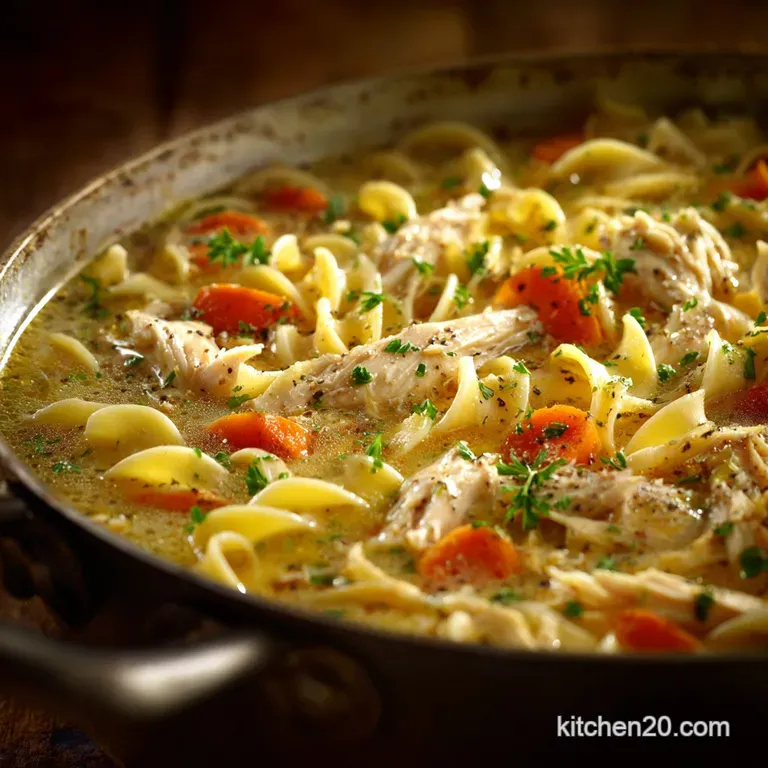
Phase 1: Gently Sweating the Mirepoix Base
- Heat 2 tablespoons of olive oil in your large stockpot over medium heat. Add your diced onion, carrot, and celery.
- Sauté patiently. You need a solid 8 to 10 minutes here, stirring often. The vegetables should soften and look glassy, but absolutely no browning allowed.
- Toss in your minced garlic and cook for just 60 seconds until you get that lovely nutty aroma. Any longer and it burns, which tastes nasty.
Phase 2: Low and Slow Poaching for Max Flavor Extraction
- Pour in your 8 cups of low-sodium chicken stock. Add the bay leaves and thyme sprigs. Bring the liquid to a very gentle simmer.
- Place the raw chicken thighs into the simmering liquid. Reduce the heat immediately to the lowest setting that maintains a light, tiny bubble break on the surface.
- Poach for 25– 30 minutes. Use tongs to remove the chicken when it hits 165°F (74°C) internally. Set it aside to cool slightly, then shred it coarsely.
- Remove all the bay leaves and thyme sprigs. Crucially: If you want a perfectly clear broth, strain the liquid through a fine mesh sieve into a clean pot now. I know it’s an extra step, but wow, it makes a difference.
Phase 3: The Noodle Timing Challenge
- In a separate pot, cook your 6 ounces of egg noodles according to package directions until they are perfectly al dente. Do NOT overcook them.
- Drain the noodles immediately and rinse them briefly with warm water. This removes surface starch, stopping the residual cooking and ensuring your final soup isn’t cloudy or thick.
- Return the refined broth to the stockpot over medium heat. Add the shredded chicken and the cooked, drained noodles. Simmer for 2– 3 minutes, just to ensure everything is piping hot.
The Crucial Final Seasoning and Brightening
- Remove the pot from the heat. Stir in the fresh lemon juice and half of the chopped fresh parsley.
- Taste it again. This is when you make the final salt adjustments. It might need more than you think, especially if you used low-sodium stock.
- Ladle into bowls and sprinkle each serving with the remaining vibrant parsley.
Chef's Secrets and Common Errors to Avoid
How to Fix a Cloudy Broth
A cloudy broth happens when the liquid boils too vigorously, which emulsifies the fat and proteins. Solution: Maintain a gentle simmer and skim any foam that rises to the surface during the poaching phase.
If it’s already cloudy, you can slowly drip an egg white mixed with cold water into the simmering soup it attracts and traps impurities, which you then skim off.
Preventing Mushy Noodles Post Cook
The only way to guarantee firm noodles is to cook them separately. If you cook them directly in the soup, they continue to absorb liquid even after the pot is off the heat, leading to gelatinous, swollen sadness the next day.
Cook separately, drain, and only add them to the portion of soup you plan to eat immediately.
Maximizing Fresh Herb Impact (Parsley Finish)
Never boil delicate herbs like parsley. Heat diminishes their bright, grassy flavor. We simmer the hardy thyme and bay leaves, but the vibrant parsley must be added right at the end, just before serving, or used as a garnish. This maximizes freshness.
Chef's Note: If you want a depth of flavor that rivals true bone broth, use the back parts of the chicken carcasses or wings along with the thighs during the poaching phase, removing them before shredding the meat. This drastically increases the gelatin content.
Future Proofing Your Comfort: Storing and Freezing Chicken Noodle Soup
Best Practices for Refrigeration
The soup will keep beautifully in an airtight container in the fridge for upg to 4 days. Warning: If you cooked the noodles directly in the pot, the leftovers will be very thick and the noodles will be mushy.
If you followed my advice and cooked the noodles separately, your leftovers will be nearly as good as the first day!
The Trick to Freezing Soup Without Ruining Texture
Chicken Noodle Soup freezes incredibly well IF you leave the noodles out. I always freeze the plain broth and shredded chicken mixture in freezer safe bags or containers. This prevents the starch from leaching out and ruining the texture when thawed.
Reheating Guidance for Optimal Freshness
Thaw frozen broth in the fridge overnight. Reheat gently on the stovetop over medium low heat until simmering. If you froze it without noodles, cook a fresh batch while the soup reheats, and combine them right before serving. This keeps everything tasting vibrant and fresh.
Proper Pairings: What to Serve Alongside Your Bowl
Honestly, this Homemade Chicken Noodle Soup is hearty enough to be a meal all by itself. It’s a proper comfort cure.
However, if you're serving it for a larger gathering or need something to dunk, you can't go wrong with classic companions. A big, thick slice of crusty bread with lashings of good butter is perfect for sopping up that golden broth. If you’re trying to keep things light, a simple green salad with a tart vinaigrette provides a nice contrast. If you're looking for a different kind of chicken comfort, sometimes I make a batch of Lazy Keto Meals: 20 Minute Creamy Garlic Chicken Skillet Recipe for the family instead!
Recipe FAQs
Can I freeze leftover Chicken Noodle Soup?
Yes, but freezing the soup base separately from the noodles is highly recommended. Noodles absorb liquid and become mushy or disintegrate entirely when thawed and reheated. Freeze the broth, chicken, and vegetables for up to three months, then cook a fresh batch of noodles right before serving.
Why did my egg noodles turn mushy after the soup rested?
Noodles are starch based and will continue to soak up liquid even once the soup is removed from the heat. To prevent this issue, cook the noodles separately (al dente) and add them to individual bowls just before serving.
If you must store leftovers with the noodles already added, anticipate they will swell significantly overnight.
How can I deepen the flavor of the broth without using store-bought stock?
To truly build a rich, golden broth from scratch, roast your mirepoix vegetables (carrots, celery, onions) slightly before adding water or simmering. This caramelization develops layers of savory depth and umami that a simple boil cannot achieve.
Additionally, make sure to simmer the broth with the chicken bones for at least two hours to extract all the gelatin and marrow.
Can I substitute the egg noodles for gluten-free pasta?
Absolutely; gluten-free pastas, rice noodles, or even spiralized root vegetables (zoodles) work well as substitutions. Be aware that gluten-free starches often cook much faster and may absorb more liquid than traditional wheat pasta. Monitor them closely and add them toward the very end of the cooking process.
Why is my soup cloudy instead of clear and golden?
Cloudiness usually results from boiling the soup too vigorously, which emulsifies the fats and breaks down the smaller vegetable particles into the broth. To maintain clarity, ensure the broth stays at a very gentle simmer and avoid stirring it excessively once the water is added.
Skimming the gray foam (impurities) off the top early in the process also helps.
What is the best cut of chicken to use for maximum flavor?
Bone-in, skin-on chicken pieces, such as split breasts, thighs, or a whole small chicken carcass, provide the richest flavor foundation because of the fat and gelatin. Poaching these pieces slowly and letting them cool in the broth yields incredibly moist chicken and a depth of flavor that boneless meat cannot match.
How long can I safely store the soup in the refrigerator?
Homemade chicken noodle soup can be safely stored in an airtight container in the refrigerator for 3 to 4 days. Always ensure the soup is allowed to cool relatively quickly before refrigerating; do not leave it sitting at room temperature for longer than two hours.
Reheat the soup thoroughly, ensuring it reaches a boiling temperature before serving again.
Hearty Homemade Chicken Noodle Soup Cure
Ingredients:
Instructions:
Nutrition Facts:
| Calories | 90 kcal |
|---|---|
| Protein | 4.2 g |
| Fat | 4.5 g |
| Carbs | 8.4 g |
