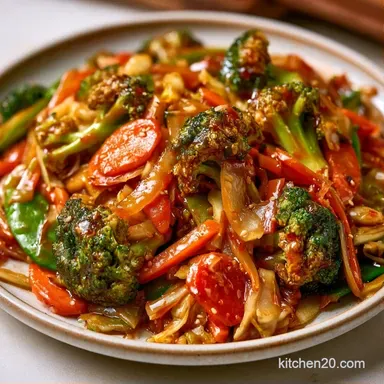
Japanese Vegetable Stir Fry in 25 Minutes

- Time: 15 min active + 10 min cooking
- Flavor & Texture: Savory, sweet, and crisp
- Perfect for: Weeknight dinner
Japanese Vegetable Stir Fry
Yasai Itame is the heart of Japanese home cooking. It isn't a fancy restaurant dish, but a practical way to use up whatever vegetables are in the crisper drawer. For families in Japan, it's the ultimate comfort side that brings a bright, salty crunch to the table.
This recipe focuses on that balance. You get the deep saltiness of soy and the aromatic punch of ginger, but the vegetables stay vibrant. It's a fast, high-heat process that turns humble cabbage and carrots into something that feels intentional.
Since it relies on speed, you'll want everything chopped and ready before you turn on the heat. Once the oil shimmers, things move fast. It's a great way to get your greens in without them feeling like a chore.
Quick Prep Specs
| Method | Time | Texture | Best For |
|---|---|---|---|
| Quick Chop | 15 min | High crunch | Weeknight meals |
| Traditional Julienne | 30 min | Uniform bite | Dinner parties |
The difference here is mostly about how you cut your carrots and cabbage. Rougher, quicker chops give you more textural variety, while thin strips cook more evenly.
Ingredients and Smart Swaps
This dish is built on a blend of hearty and leafy greens. I enjoy using cabbage since it's an affordable way to add significant volume to the meal.
- 150g broccoli florets, bite-sized Why this? Provides structure and captures the sauce
- 130g carrots, thinly sliced into rounds Why this? Adds a touch of sweetness and vibrant color
- 150g snap peas, trimmed Why this? Brings a fresh, crisp snap to every bite
- 150g cabbage, shredded Why this? Cost-effective bulk and satisfying texture
- 110g yellow onion, sliced Why this? Forms a rich, savory foundation
- 30ml neutral oil Why this? Can handle high heat for an effective sear
- 60ml reduced-sodium soy sauce Why this? The primary source of salt and umami
- 30ml honey Why this? Counteracts the salt with a floral sweetness
- 15ml toasted sesame oil Why this? Imparts a fragrant, nutty aroma
- 15g fresh ginger, minced Why this? Zesty heat that cuts through the richness
- 9g garlic, minced Why this? Essential for pungent, aromatic depth
- 5g cornstarch Why this? Helps thicken the sauce into a glossy glaze
To keep costs down, feel free to use frozen broccoli florets instead of fresh. Just ensure they are fully thawed and patted dry before cooking.
| Original Ingredient | Substitute | Why It Works |
|---|---|---|
| Honey (30ml) | Maple Syrup (30ml) | Similar thickness and sweetness. Note: Offers a slightly earthier flavor |
| Soy Sauce (60ml) | Tamari (labelled gluten-free) (60ml) | Maintains the same salty profile. Note: Necessary for gluten-free diets |
| Cornstarch (5g) | Arrowroot (5g) | Comparable thickening properties. Note: Creates a slightly clearer glaze |
The Right Tools
You don't need a professional wok burner for this. A large non-stick skillet or a cast-iron pan works great because they hold heat well. A whisk or a small fork is helpful for getting the cornstarch fully dissolved in the sauce so you don't get clumps.
Cooking step by step
Mixing the Sauce
Prepare all vegetables and whisk the reduced-sodium soy sauce, honey, toasted sesame oil, and cornstarch in a small bowl until the cornstarch is fully dissolved.

Searing the Hard Veg
Heat 1 tablespoon of neutral oil in a large non-stick skillet or wok over medium-high heat until shimmering. Add the carrots and broccoli, tossing constantly for 3 minutes until edges are slightly charred but interiors remain crisp. Remove them from the pan and set them aside on a plate.

Flash-Cooking the Aromatics
Add the remaining 1 tablespoon of neutral oil to the same pan. Toss in the sliced onions and cook for 2 minutes until translucent. Stir in the minced garlic and ginger for 30 seconds until fragrant.
The Final Glaze
Return the seared carrots and broccoli to the pan and add the snap peas and cabbage. Stir-fry the medley for another 2 minutes. Pour the prepared sauce over the vegetables and toss rapidly for 60 seconds until the sauce thickens into a glossy, glossy amber coating.
Chef's Note: If the pan looks dry when you add the cabbage, add a teaspoon of water. The steam helps the cabbage wilt just enough without losing its bite.

Troubleshooting Guide
The most common issue is the vegetables releasing water and steaming instead of searing. This usually happens if the pan isn't hot enough or if you crowd the surface.
Preventing Soggy Vegetables
If your vegetables are swimming in liquid, your heat is too low. Make sure the oil is shimmering before anything hits the pan. If you're doubling the recipe, cook the vegetables in two batches.
Fixing a Thin Sauce
If the sauce is too watery after 60 seconds, your cornstarch might not have been fully integrated. Mix a pinch more cornstarch with a teaspoon of water in a separate cup and stir it in.
Stopping Burnt Garlic
Garlic burns quickly at high heat. By adding it after the onions have already softened, you protect the garlic from scorching.
| Problem | Fix |
|---|---|
| Soggy vegetables | Increase heat and cook in smaller batches |
| Watery sauce | Add a small cornstarch slurry |
| Bitter burnt garlic | Add garlic later in the process |
Dietary Adaptations
You can easily turn this into a full meal by adding protein. For a Japanese Tofu Vegetable Stir Fry, press 200g of extra-firm tofu, cube it, and sear it before the carrots.
If you prefer meat, a Japanese Chicken Vegetable Stir Fry works well with sliced breast or thigh. Sear the chicken first until it reaches 165°F (74°C), then remove it and follow the veg steps.
For those who want carbs, you can make Japanese vegetable stir fry Noodles. Boil soba or udon noodles separately, then toss them in during the final 60 seconds with the sauce. I also like trying a different glaze, such as a Savory Mulberry Sauce, for a fruitier, tangy twist.
Storage and Reheating
Store any remaining portions in an airtight glass jar in the refrigerator for up to 4 days. While the vegetables may soften over time, the flavors actually deepen after a day.
Avoid using the microwave to reheat this Japanese vegetable stir fry, as steaming them this way makes the vegetables mushy. Instead, warm a teaspoon of oil in a pan over medium heat. Stir-fry for 3-4 minutes until the sauce sizzles.
Don't discard leftover cabbage stems or carrot peels. Keep them in a freezer bag to serve as a base for homemade vegetable stock.
Serving Ideas

This dish is great on its own, but it's better with a base. I usually serve it over a bowl of steamed jasmine rice or a side of Hibachi Fried Rice.
To finish it off, I like a sprinkle of toasted sesame seeds or some sliced scallions for a bit of fresh bite.
The Trick Behind the Texture
The result comes down to two simple mechanical tricks.
- Sequential Searing: Cooking denser vegetables like carrots and broccoli first prevents them from being raw while the cabbage overcooks.
- Cornstarch Emulsion: The cornstarch binds the sesame oil and soy into a thick glaze that clings to the veg instead of pooling at the bottom.
The Wok Myth
A common belief is that you need a commercial-grade wok to get a restaurant sear. In reality, any pan that can handle medium-high heat works. The real trick is simply not overcrowding the pan, which keeps the temperature high enough to char the edges of the vegetables.
High in Sodium
898 mg of sodium per serving (39% of daily value)
American Heart Association recommendation: no more than 2,300 mg of sodium per day
Tips to Reduce Sodium
-
Swap Soy Sauce
Replace the reduced-sodium soy sauce with coconut aminos, which provides a similar savory flavor with significantly less sodium.
-
Add Citrus Acidity
Squeeze in fresh lemon or lime juice to brighten the dish; acidity can mimic the perception of saltiness, allowing you to use less sauce.
-
Dilute the Glaze
Mix the soy sauce with a small amount of water or unsalted vegetable broth to reduce the sodium concentration while maintaining the volume of the sauce.
-
Amplify Aromatics
Increase the amount of fresh minced ginger and garlic to create a bolder flavor profile that reduces the reliance on salt for taste.
-
Enhance with Spices
Incorporate red pepper flakes, black pepper, or toasted sesame seeds to add complexity and heat without adding any sodium.
Frequently Asked Questions
Which ingredients make the stir fry sauce?
The sauce is a mixture of reduced-sodium soy sauce, honey, toasted sesame oil, and cornstarch.
Tip: Whisk the cornstarch fully into the liquid before cooking to prevent clumps from forming in the pan.
Does this stir fry pair well with rice?
Yes, serving this over a bed of steamed rice is a traditional and satisfying combination.
Tip: Cool cooked rice quickly and refrigerate within 1 hour, then reheat it only once to an internal temperature of 165°F (74°C).
Can I add chicken to the vegetables?
Yes, you can include chicken by searing the meat first and then combining it with the vegetable medley.
Tip: Cook the meat in the same pan first to build flavor before starting the vegetable sequence.
How to prepare this meal efficiently?
Chop all vegetables and whisk the sauce components together in a small bowl before turning on the heat.
Tip: Use a large non-stick skillet or wok to ensure the vegetables have enough room to sear.
Why do the vegetables release water and steam?
This usually happens if the pan is not hot enough or if the surface is too crowded during cooking.
Tip: Sear the carrots and broccoli first and remove them from the pan before adding the other vegetables.
Is Yasai Itame the correct term for this dish?
Yes, Yasai Itame is the Japanese name for this style of sautéed vegetable stir fry.
Tip: Keep the cooking time brief to ensure the vegetables remain vibrant and crisp.
Japanese Vegetable Stir Fry