Quick Wonton Soup with Fortified Broth
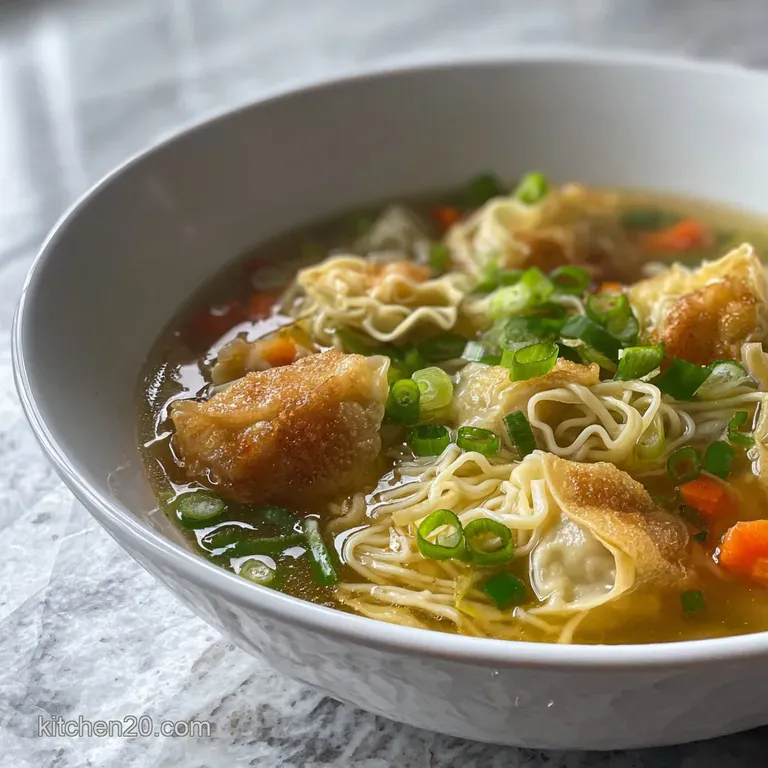
- Time: Active 20 minutes, Passive 15 minutes, Total 35 minutes
- Flavor/Texture Hook: Silky smooth skins with a savory, springy umami center
- Perfect for: Quick weeknight dinners or a light, comforting lunch
- Mastering a Silky and Savory Wonton Soup
- The Culinary Logic Behind Every Silky Spoonful
- Essential Data Points for Your Kitchen Success
- Smart Ingredients for a Deep Umami Profile
- Tools Required for Seamless Dumpling Folding
- Step-By-Step Guide to Perfect Soup Assembly
- Common Hiccups and Fast Kitchen Fixes
- Personalizing Your Bowl with Easy Variations
- Myths About Dumpling Soups
- Keeping Your Leftovers Fresh and Flavorful
- Plating Ideas for a Restaurant Quality Look
- HIGH in Sodium
- Recipe FAQs
- 📝 Recipe Card
Mastering a Silky and Savory Wonton Soup
The smell of ginger hitting a hot pot of chicken stock is my version of a kitchen reset button. I remember the first time I tried making this; I spent two hours trying to fold perfect little "nurses' caps" only for them to explode in the water like tiny flour based grenades.
It was a mess, but the broth tasted so good I didn't even care. Since then, I’ve realized that the "secret" isn't in fancy folding it’s in how you treat the filling and how you "cheat" the broth to make it taste like it simmered for a day.
We're going for that velvety texture where the wonton practically slips off the spoon. It's about getting the ratio of pork to shrimp just right so you get both richness and a clean, snappy bite. If you've ever felt intimidated by making dumplings from scratch, don't be.
Think of it like a quick coding project: once you have the logic of the filling down, the rest is just assembly and execution. Trust me, once you taste a homemade version, the takeout stuff will always feel a bit flat.
This recipe is built for speed without sacrificing the soul of the dish. We aren't boiling a whole chicken for six hours. Instead, we’re using a few budget friendly aromatics to transform store-bought stock into something that feels expensive.
It’s practical, it’s fast, and it works every single time I’m craving a warm hug in a bowl. Let's get into the mechanics of why this specific method produces such a consistent result.
The Culinary Logic Behind Every Silky Spoonful
Building a great soup is all about layers of flavor and controlled textures. Here is why this specific method hits the mark:
- Myosin Development: When we mix the pork and minced shrimp vigorously with the salt and soy sauce, we develop myosin, a protein that creates a springy, bouncy texture instead of a crumbly one.
- Aromatic Infusion: Smashed ginger and garlic releases essential oils into the broth much faster than finely mincing them, giving you a clean, clear soup that isn't gritty.
- Starch Suspension: A tiny bit of cornstarch in the filling acts as a moisture trap, preventing the meat from tightening up and squeezing out its juices during the boil.
- The "Double Pot" Strategy: Boiling wontons in a separate pot of water prevents the starch from the wrappers from clouding your beautiful, fortified broth.
| Preparation Method | Total Time | Texture Outcome | Best For |
|---|---|---|---|
| Traditional Stovetop | 35 minutes | Silky skins, clear broth | Maximum flavor and authenticity |
| Steamed Wontons | 30 minutes | Chewier, firm texture | Serving as an appetizer with dipping sauce |
| Slow Cooker Broth | 4 hours | Deeply complex base | Weekend prep where you want zero active cooking |
Choosing the stovetop method ensures the wontons cook evenly while the skins maintain that delicate, "glassy" appearance. If you love a citrusy twist on broth, you might also enjoy a Classic Greek Avgolemono Soup recipe. It uses a different thickening technique but shares that same soul warming quality we're looking for here.
Essential Data Points for Your Kitchen Success
Understanding the "why" behind your components helps you adjust on the fly. This component analysis breaks down the heavy hitters in your bowl.
| Ingredient | Science Role | Pro Secret |
|---|---|---|
| 0.5 lb Ground Pork | Provides fat and structure | Use 80/20 lean to fat ratio to ensure the filling doesn't go dry. |
| 1 tsp Cornstarch | Binds internal moisture | This prevents the "meatball" from shrinking away from the wrapper. |
| 3 Slices Ginger | Volatile oil extraction | Smash with the side of a knife to break the cell walls for a faster infusion. |
| 1 tbsp Fish Sauce | Enhances "umami" profile | It adds a fermented saltiness that mimics a long simmered bone broth. |
Using the right fat ratio in your pork is non negotiable for a juicy result. When we combine it with the minced shrimp, we're creating a protein matrix that is far superior to using just one or the other. This is similar to the flavor balancing found in a Classic Chicken Noodle Soup recipe, where the quality of the base defines the whole experience.
Smart Ingredients for a Deep Umami Profile
You don't need a huge budget for this wonton soup recipe, but you do need these specific elements to make it sing.
- 0.5 lb ground pork (80/20 lean to fat): Why this? Provides the essential richness and "mouthfeel" for a satisfying dumpling center.
- Substitute: Ground turkey (add 1 tsp extra sesame oil for fat).
- 0.5 lb raw shrimp, peeled and minced: Why this? Adds a distinct snap and sweetness that lightens the pork filling.
- Substitute: Finely chopped shiitake mushrooms for an earthier vibe.
- 1 pack wonton wrappers (approx. 30-40): Why this? Specifically designed to be thin enough for that signature silky texture.
- Substitute: Thinly rolled dumpling skins (though they will be slightly thicker).
- 1 tbsp light soy sauce: Why this? Adds salinity and fermented depth without darkening the filling too much.
- Substitute: Tamari for a gluten-free alternative.
- 1 tbsp Shaoxing wine: Why this? A traditional Chinese cooking wine that cuts through the fat of the pork.
- Substitute: Dry sherry or a splash of white wine.
- 1 tsp toasted sesame oil: Why this? Provides that quintessential nutty aroma that defines the dish.
- Substitute: Perilla oil.
- 1 tsp fresh ginger, grated: Why this? Cuts the "heaviness" of the meat with sharp, bright notes.
- Substitute: 1/4 tsp ground ginger in a pinch.
- 1 tsp cornstarch: Why this? Acts as the "glue" that keeps the filling juicy and cohesive.
- Substitute: Arrowroot powder.
- 1/4 tsp white pepper: Why this? Offers a floral, earthy heat that doesn't overwhelm like black pepper.
- Substitute: Fine ground black pepper.
- 6 cups low sodium chicken stock: Why this? The blank canvas for our aromatics to build upon.
- Substitute: Vegetable broth (add extra soy sauce for depth).
- 3 slices fresh ginger (smashed): Why this? Seasons the broth without making it cloudy.
- 2 cloves garlic (smashed): Why this? Adds a subtle, savory backbone to the chicken stock.
- 2 stalks green onions (cut into 2 inch pieces): Why this? Infuses the broth with a mild, sweet onion flavor.
- 1 tbsp fish sauce: Why this? The "secret weapon" for instant depth in a quick soup.
- 0.5 tsp granulated sugar: Why this? Balances the salt and acidity for a rounded flavor.
- 2 heads baby bok choy (quartered): Why this? Adds a much needed crunch and fresh green color.
- 2 tbsp sliced scallions: Why this? A fresh, sharp garnish to finish the bowl.
Tools Required for Seamless Dumpling Folding
You don't need a professional kitchen, but these basics make this homemade wonton soup much easier to manage:
- Large Mixing Bowl: You need space to "whip" the filling to develop that springy texture.
- Chef’s Knife: A sharp blade is essential for mincing the shrimp into a paste like consistency.
- Large Stockpot: For building the fortified broth.
- Second Medium Pot: For boiling the wontons separately (crucial for a clear soup).
- Microplane: Perfect for getting that ginger into a fine paste.
- Spider Strainer or Slotted Spoon: To gently lift the delicate wontons without tearing the skins.
Chef's Tip: Freeze your pork for 10 minutes before you start. It makes the fat firmer and the meat easier to mix without it becoming a greasy mess from the heat of your hands.
step-by-step Guide to Perfect Soup Assembly
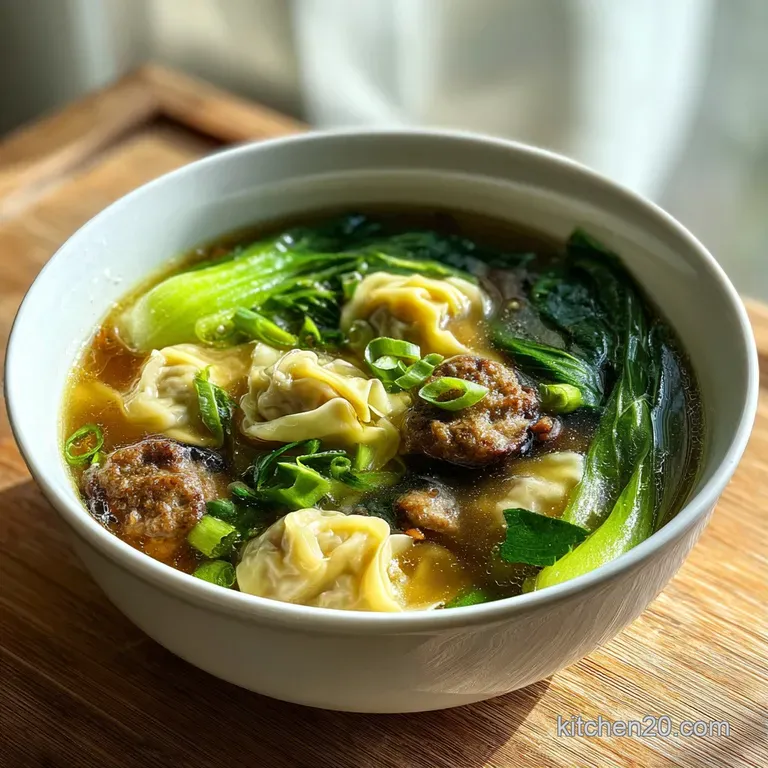
Follow these steps for a result that looks and tastes like it came from a high end noodle shop.
- Mince the shrimp. Chop the 0.5 lb raw shrimp until it forms a coarse paste. Note: This helps it bind perfectly with the pork.
- Combine the filling. In a bowl, mix the pork, shrimp, light soy sauce, Shaoxing wine, sesame oil, grated ginger, cornstarch, and white pepper.
- Develop the texture. Stir the filling vigorously in one direction for 2-3 minutes until it looks sticky and pale.
- Fold the wontons. Place 1 teaspoon of filling in the center of a wrapper, moisten the edges with water, and seal into your desired shape. Note: Ensure no air bubbles are trapped inside.
- Fortify the broth. Combine 6 cups chicken stock, smashed ginger, garlic, green onion pieces, fish sauce, and sugar in your stockpot.
- Simmer the aromatics. Bring to a boil, then lower to a simmer for 15 minutes until the broth is fragrant and golden.
- Prep the greens. Add the quartered baby bok choy to the broth for the last 2 minutes of simmering until the stems are tender crisp.
- Boil the wontons. In a separate pot of boiling water, drop the wontons in batches.
- Track the doneness. Boil for 3-4 minutes until they float to the surface and the skins are translucent.
- Assemble the bowl. Place the cooked wontons in a bowl, ladle the hot broth and bok choy over them, and garnish with sliced scallions.
Common Hiccups and Fast Kitchen Fixes
Even with an easy wonton soup recipe, things can go sideways. Here’s how to handle the most common issues.
Preventing Wonton Skins from Tearing
This usually happens because of "water logging" or rough handling. If your skins feel mushy or fall apart, it’s often because the water was boiling too violently. A rolling boil will toss the delicate wontons against each other, causing the seals to break.
Fixing a Muddled Filling Texture
If your filling feels crumbly like a burger instead of springy like a dumpling, you likely skipped the "vigorous stirring" phase. The mechanical action of stirring in one direction aligns the proteins. If it’s already cooked, there isn't much to do, but for the next batch, give it a good 2 minute workout.
| Problem | Root Cause | Solution |
|---|---|---|
| Exploding Wontons | Trapped air inside the wrapper | Press firmly around the filling to expel air before sealing. |
| Bland Broth | Insufficient aromatic infusion | Add an extra teaspoon of soy sauce or a pinch more ginger. |
| Tough Pork Center | Overcooking or lack of fat | Pull wontons as soon as they float; ensure you use 80/20 pork. |
Common Mistakes Checklist
- ✓ Keep the unused wonton wrappers covered with a damp paper towel to prevent drying and cracking.
- ✓ Don't overfill 1 level teaspoon is plenty; too much filling prevents a proper seal.
- ✓ Always use a separate pot for boiling the wontons to keep your main broth crystal clear.
- ✓ Taste your broth after fortifying but before serving; different stocks vary in saltiness.
- ✓ Squeeze the air out of the wonton like you're "burping" a plastic bag to prevent them from bursting.
Personalizing Your Bowl with Easy Variations
This recipe is a great base, but the beauty of a quick wonton soup is how easily it adapts to your pantry.
Adjusting for Different Batch Sizes
- Scaling Down (½ batch): Use a smaller pot to maintain broth depth. Use half an egg to bind the filling if you find it too loose without the full recipe's volume.
- Scaling Up (2x-4x): Increase the aromatics (ginger/garlic) by only 1.5x to avoid an overpowering "soapy" ginger taste. Work in small batches when boiling the wontons so they don't stick together.
- Baking Note: While this is a soup, if you were to use the filling for "wonton cups" in an oven, lower the temp to 350°F and bake for 15 minutes.
Budget and Shortcut Alternatives
If you are in a rush or trying to save a few dollars, these swaps keep the spirit of the dish alive without the extra labor.
| Premium Element | Budget/Fast Shortcut | Flavor Impact |
|---|---|---|
| Hand minced Shrimp | Frozen pre cooked shrimp (finely minced) | Slightly less "snap" but still adds great flavor. |
| Shaoxing Wine | Dry Sherry | Very similar profile; often cheaper in Western grocery stores. |
| Fresh Baby Bok Choy | Chopped Spinach or Cabbage | Loses the specific crunch but adds the necessary "green" element. |
If you find yourself with leftover wrappers and want to pivot to a different flavor profile, you can actually use the same folding technique for a fusion version of a Cheesy Taco Soup recipe by filling them with spiced beef and dipping them in the broth.
Myths About Dumpling Soups
There is a lot of "kitchen lore" surrounding this dish that can actually make it harder to cook. Let's clear some of that up.
- Myth: You must use warm water to seal wontons. Cold water works perfectly fine. The starch on the wrapper turns into a natural glue the second it hits moisture, regardless of temperature.
- Myth: Wontons are done as soon as they float. Not quite. While floating is a good sign, they usually need another 30-60 seconds to ensure the pork center is fully cooked through.
- Myth: Authentic wontons never contain shrimp. Actually, many traditional Cantonese recipes celebrate the "surf and turf" combo because it provides a superior texture compared to pork alone.
Keeping Your Leftovers Fresh and Flavorful
Storage is the one area where you have to be careful, as wontons are notorious for soaking up liquid and turning into a giant noodle blob.
Storage Guidelines: Store the broth and the cooked wontons in separate containers. The wontons will last in the fridge for 2 days, while the broth is good for 4. When reheating, bring the broth to a simmer first, then drop the wontons in just long enough to warm through.
Freezing: This is the best way to handle leftovers! Freeze the unopened wontons on a parchment lined tray until solid, then transfer to a freezer bag. They will keep for 3 months. You can boil them directly from frozen just add 2 minutes to the cook time.
Zero Waste Tip: Don't throw away those ginger peels or the white ends of the green onions! Toss them into a freezer bag. When you have enough scraps, boil them with some water to create a "scrap stock" that works as a perfect base for your next wonton soup ingredients list.
Plating Ideas for a Restaurant Quality Look
Presentation is everything when you're serving a "simple" soup. To make this look like it came from a professional kitchen, focus on the contrast of colors. Start by placing the bright green bok choy on one side of a deep bowl.
Nestle 5 or 6 wontons on the other side, making sure the "tails" of the wrappers are visible they look like silk ribbons in the broth.
Ladle the clear, golden broth over the top until the wontons are half submerged. Finish with a heavy sprinkle of freshly sliced scallions and a tiny drizzle of extra sesame oil right before serving. The oil will create little shimmering "pearls" on the surface that catch the light.
If you want a bit of heat, a teaspoon of chili oil with dregs (like Lao Gan Ma) provides a gorgeous red contrast against the green and gold. It’s a fast, creative way to turn a budget meal into a "masterclass" experience.
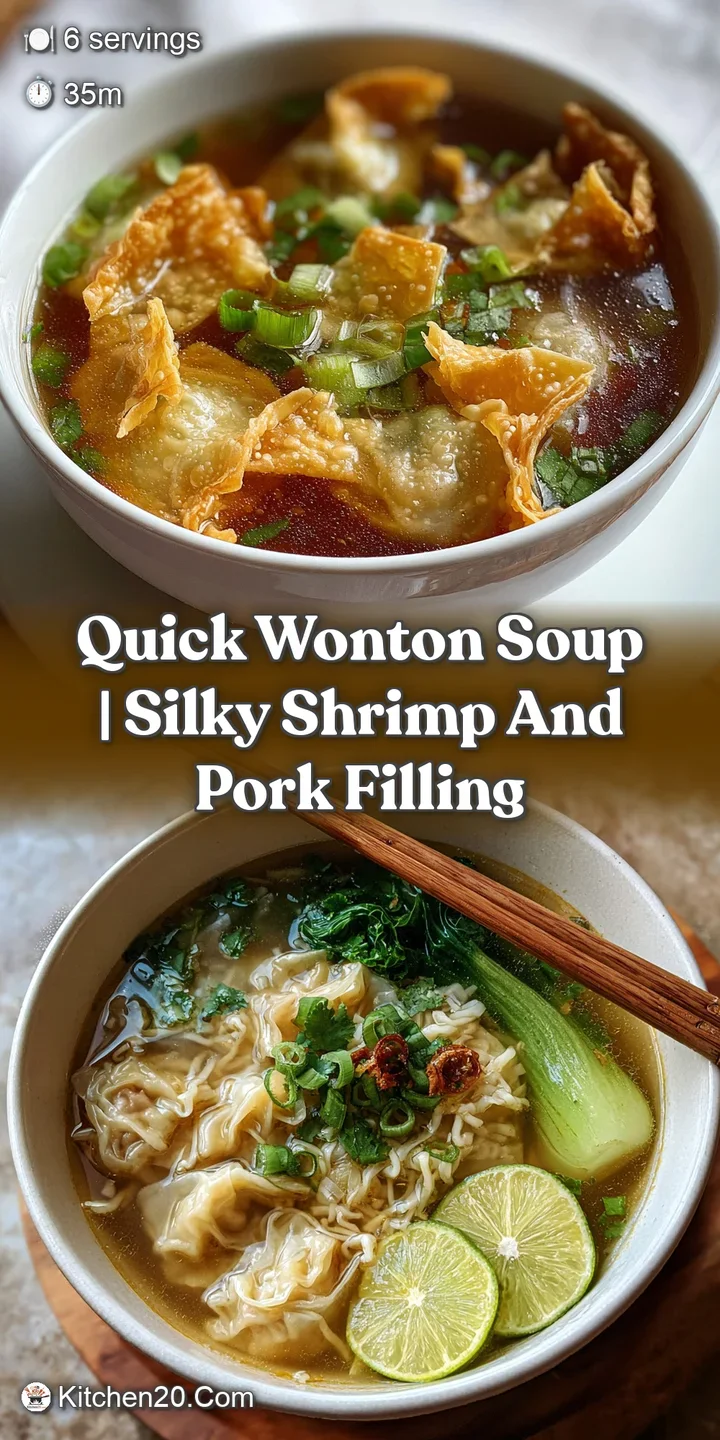
HIGH in Sodium
845 mg mg of sodium per serving (37% % of daily value)
The American Heart Association recommends limiting sodium intake to about 2,300mg per day for overall cardiovascular health.
Sodium Reduction Tips for Your Wonton Soup
-
Broth Swap-30%
Replace the low-sodium chicken stock with a homemade, no-salt added chicken broth or vegetable broth. This offers the most significant reduction in sodium content.
-
Soy Sauce Control-20%
Even light soy sauce contributes sodium. Reduce the amount of soy sauce by half or substitute with a low-sodium soy sauce alternative like tamari or coconut aminos.
-
Fish Sauce Dilution-20%
Fish sauce is a concentrated source of sodium. Start with half a tablespoon and add more to taste, or consider a lower sodium fish sauce alternative if available. Alternatively, replace with a splash of rice vinegar or lemon juice for acidity.
-
Wonton Wrapper Choice-15%
Check the sodium content of different brands of wonton wrappers and choose the one with the lowest sodium per serving. Making your own wonton wrappers also provides complete control over the sodium content.
-
Meat Selection-10%
While ground pork isn't extremely high in sodium on its own, be mindful of added sodium if you purchase pre-seasoned ground pork. Opt for plain ground pork and season it yourself.
-
Flavor Boost
Enhance the flavor of your soup and wontons with fresh herbs and spices like more ginger, garlic, scallions, and white pepper. These additions can help compensate for the reduction in sodium without compromising taste.
Recipe FAQs
What is wonton soup made of?
It primarily consists of delicate wonton dumplings filled with seasoned ground pork and shrimp, served in a clear, savory chicken broth. The broth is fortified with aromatics like smashed ginger and green onion for deep flavor. For a richer base, try mastering the technique used in The Proper Brew recipe.
Is wonton soup healthy?
Generally, yes, it can be quite healthy if prepared lightly. The broth is low in fat, and the wontons provide lean protein. Avoid excessive amounts of oil or very rich, creamy additions typical of some fusion soups.
What is the difference between egg drop soup and wonton soup?
Egg drop soup contains ribbons of cooked egg, while wonton soup features meat filled dumplings. Egg drop soup relies solely on the egg for texture, whereas wonton soup's primary solids are the complexly flavored parcels.
What does Chinese wonton soup taste like?
It tastes savory, clean, and deeply umami with a slight hint of nutty sesame and sharp ginger. The broth is light and smooth, contrasting nicely with the springy, juicy texture of the pork and shrimp filling inside the silky wrapper.
How to prevent wonton wrappers from tearing during boiling?
Boil the wontons in a separate pot of water, not directly in your main soup broth. This prevents starch residue from the wrappers from making the broth cloudy and keeps the water from boiling too violently around the delicate parcels.
Is it true that the filling should be extremely well mixed to be good?
Yes, achieving a sticky, springy texture requires aggressive mixing of the filling. You must stir vigorously in one direction to develop myosin, which binds the protein structure.
Can I use vegetable broth instead of chicken broth?
Yes, but you must compensate for the missing savory depth. Use high-quality vegetable stock and incorporate an umami booster like a teaspoon of fish sauce or mushroom powder to achieve a comparable richness.
Quick Fortified Wonton Soup
Ingredients:
Instructions:
Nutrition Facts:
| Calories | 228 kcal |
|---|---|
| Protein | 16.8 g |
| Fat | 8.2 g |
| Carbs | 21.4 g |
| Fiber | 1.4 g |
| Sugar | 1.1 g |
| Sodium | 845 mg |
