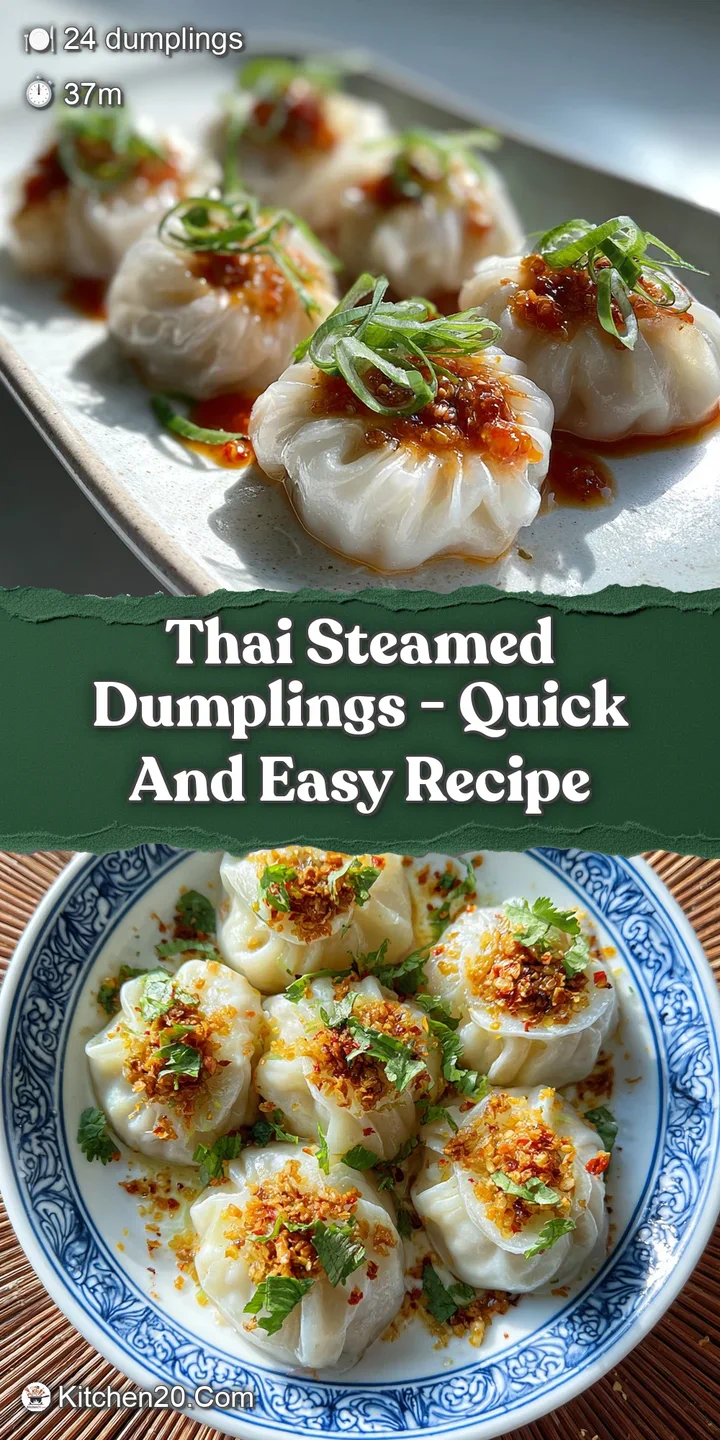
Thai Steamed Dumplings: Bouncy, Savory Filling
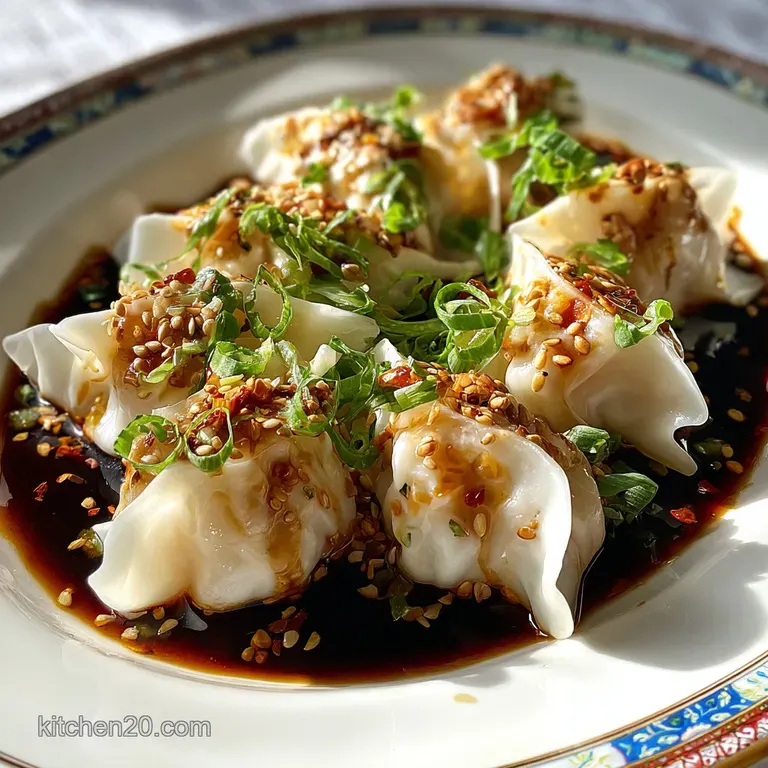
- Time: Active 25 minutes, Passive 12 minutes, Total 37 minutes
- Flavor/Texture Hook: Bouncy, savory filling with a silky, translucent wrapper
- Perfect for: Impressive appetizers or a fast fusion weeknight dinner
- Texture Science for Better Dumpling Bites
- Component Analysis and Selection Secret
- Gathering Essential Aromatics and Protein
- Necessary Tools for Effortless Success
- Step-by-Step Guide to Filling and Folding
- Solving Common Texture and Moisture Problems
- Creative Flavor Variations and Ingredient Swaps
- Storage Tips for Maximum Dumpling Freshness
- Final Touches for Stunning Professional Presentation
- HIGH in Sodium
- Recipe FAQs
- 📝 Recipe Card
Texture Science for Better Dumpling Bites
The Physics of the Springy Bite: Developing a protein emulsion through vigorous mixing aligns the myosin filaments in the pork and shrimp, creating a structured, "bouncy" lattice rather than a loose crumble.
Adding tapioca starch acts as a moisture stabilizer, preventing the juices from leaking out and leaving the meat dry.
- Fat Equilibrium: The 80/20 pork ratio ensures the filling stays succulent under over high heat steam.
- Starch Gelatinization: Tapioca starch clears up during steaming, providing that signature translucent sheen.
- Aromatic Infusion: Crushing the "Thai Trinity" (garlic, cilantro root, pepper) releases essential oils that fat soluble pork absorbs instantly.
- Osmotic Balance: Sugar isn't just for sweetness; it balances the salt from the oyster sauce to prevent protein tightening.
| Method | Time | Texture | Best For |
|---|---|---|---|
| Traditional Bamboo Steamer | 12 minutes | Silky and delicate | Authentic presentation |
| Metal Steamer Insert | 10 minutes | Firm and consistent | Fast weeknight meals |
| Microwave (Covered) | 4 minutes | Slightly chewy edges | Absolute emergencies |
Choosing the right method depends on your gear, but the bamboo steamer truly is the gold standard for moisture control. If you're looking for other fast ways to enjoy these flavors, you might also like the Thai Chicken Lettuce Wraps recipe which uses a similar aromatic base but skips the folding.
Component Analysis and Selection Secret
| Ingredient | Science Role | Pro Secret |
|---|---|---|
| 300g Ground Pork | Structural base and fat carrier | Use "80/20" blend; lean meat creates a rubbery, dry dumpling. |
| 150g Raw Shrimp | Adds "snap" and sweetness | Hand mince instead of pulsing to keep distinct, juicy chunks. |
| 2 tbsp Tapioca Starch | Moisture binder and thickener | Don't swap for cornstarch; tapioca provides the superior "clear" look. |
| 3 Cilantro Roots | Earthy, pungent flavor anchor | If unavailable, use the bottom 2 inches of the stems. |
Gathering Essential Aromatics and Protein
For the filling, you'll need 300g ground pork (80/20 blend) Why this? Fat provides the essential velvety mouthfeel. and 150g raw shrimp, peeled, deveined, and minced. You can substitute the shrimp with more pork, but you'll lose that classic "snap."
The flavor base consists of 3 large cilantro roots, finely chopped (sub: cilantro stems), 4 large garlic cloves, and 1 tsp white peppercorns. For the seasoning, grab 1.5 tbsp oyster sauce (sub: hoisin for a sweeter profile), 1 tbsp light soy sauce, 2 tsp granulated sugar, and 1 tsp sesame oil Why this? Adds an unmistakable nutty aroma..
To bind it all together, use 2 tbsp tapioca starch. You'll also need 24 yellow wonton wrappers. For the garnish and dip, have 3 tbsp fried garlic in oil, 2 tbsp sweet black soy sauce (sub: balsamic glaze and honey), 1 tbsp Thai thin soy sauce, and 1 tbsp distilled white vinegar.
Necessary Tools for Effortless Success
You don't need a professional kitchen, but a few specific items make this easy. A mortar and pestle is non negotiable for the "Thai Trinity" to get that paste consistency. A large mixing bowl is essential for the meat emulsion.
For steaming, a bamboo steamer is ideal, but a metal steamer basket works if you line it with parchment paper or cabbage leaves. If you're in a pinch and don't have a steamer at all, you can use a large skillet with a lid, placing the dumplings on a heat proof plate propped up by a few balls of aluminum foil.
Chef's Tip: Freeze your wonton wrappers for 10 minutes before separating them. The slight chill prevents them from tearing or sticking to your fingers as you fold.
step-by-step Guide to Filling and Folding
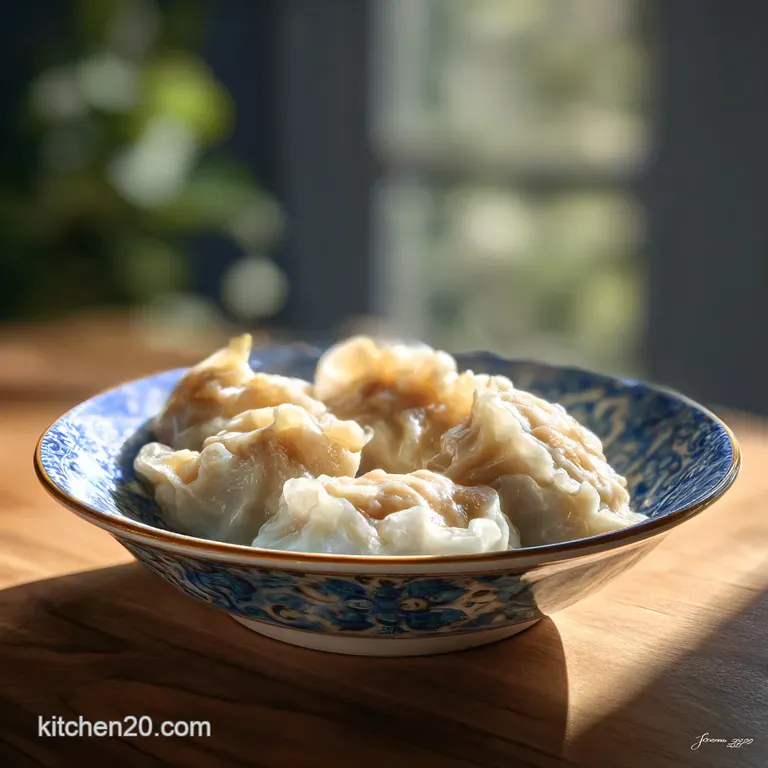
The Savory Filling Core
Begin by pounding the cilantro roots, garlic, and white peppercorns in a mortar and pestle until a smooth, fragrant paste forms. This is the heartbeat of the dish.
Wrappers and Garnish Elements
Trim the corners off your square wonton wrappers to create circles. This prevents the "ears" of the dumpling from becoming tough and chewy during steaming.
Tangy Dipping Sauce Prep
Whisk together the sweet black soy sauce, Thai thin soy sauce, and distilled white vinegar. Set this aside to allow the flavors to meld while you prep the meat.
Aromatic Base Construction
Combine the ground pork and minced shrimp in a large bowl. Add the "Thai Trinity" paste you pounded earlier.
Mixing for Springy Texture
Add the oyster sauce, light soy sauce, sugar, sesame oil, and tapioca starch. Now, the secret: stir vigorously in one direction for 5 minutes, or lift the mass of meat and "slap" it back into the bowl 20 times until it becomes a sticky, cohesive paste.
No Stress Assembly Methods
Place about 1 tablespoon of filling in the center of a wrapper. Wet the edges slightly, then gather the sides up around the meat, leaving the top open like a little crown.
The Gentle Steam Process
Line your steamer with perforated parchment. Arrange the dumplings so they aren't touching. Steam over boiling water for 12 minutes until the wrappers look translucent and the meat feels firm.
This method is much faster than traditional braising. If you enjoy the process of crafting these bites, you should definitely try the Chang Thai Noodles recipe next time; it’s a great way to use up any leftover cilantro roots or garlic.
| Feature | Fresh Filling | Pre Mixed Shortcut |
|---|---|---|
| Flavor Depth | High aromatic punch | Muted spice profile |
| Texture | Distinct shrimp "snap" | Uniformly soft |
| Prep Time | 25 minutes | 5 minutes |
Solving Common Texture and Moisture Problems
One of the biggest heartbreaks is opening that lid only to find a mess. Usually, it's a moisture issue.
Sticking to the Steamer
If your dumplings are tearing when you try to lift them, the surface wasn't properly prepped. You must use parchment paper with holes or, even better, a bed of Napa cabbage leaves. This adds flavor and prevents a sticky disaster.
Dry or Hard Wrappers
This happens when the steam isn't consistent or the wrappers were exposed to air for too long before cooking. Always keep a damp towel over your wrapper stack while you're assembling.
| Problem | Root Cause | Solution |
|---|---|---|
| Dumplings are crumbly | Lack of protein binding | Mix longer in one direction to develop myosin. |
| Tops are dry/crunchy | Under steaming or air exposure | Ensure a tight lid and high steam volume. |
| Filling is bland | Weak "Trinity" paste | Use whole peppercorns and fresh cilantro roots only. |
Common Mistakes Checklist
- ✓ Never use extra lean pork; the 80/20 ratio is vital for moisture.
- ✓ Don't overcrowd the steamer; leave at least half an inch between dumplings.
- ✓ Trim the wonton corners; excess dough turns gummy and thick.
- ✓ Use white peppercorns instead of black for that specific floral heat.
- ✓ Ensure the water is at a rolling boil before placing the steamer on top.
Creative Flavor Variations and Ingredient Swaps
If you want to move away from the traditional pork and shrimp, there are plenty of ways to pivot.
- For a lighter bite: Swap the pork for ground chicken or turkey. Note: Add an extra teaspoon of sesame oil to compensate for the lower fat content.
- For a spicy kick: Fold in a teaspoon of finely minced bird's eye chili into the filling paste.
- For the mushroom lovers: Replace the shrimp with finely chopped shiitake mushrooms for an earthy depth.
Seafood Only Version
You can use all shrimp or a mix of shrimp and crab meat. Since seafood cooks faster, reduce the steaming time to 8 minutes to prevent the filling from becoming rubbery.
Vegetarian Substitution Ideas
Use a mix of firm tofu (pressed and crumbled) and finely chopped mushrooms. Increase the tapioca starch to 3 tablespoons to help the looser vegetable proteins hold their shape.
If you enjoy experimenting with these flavor profiles, our Spicy Thai Chicken recipe offers a similar balance of sweet and savory that works perfectly for meal prep.
Storage Tips for Maximum Dumpling Freshness
These are best eaten immediately, but they do store surprisingly well.
Fridge Storage: Keep cooked dumplings in an airtight container for up to 3 days. To reheat, steam them for 3 minutes. Avoid the microwave if possible, as it toughens the wrappers.
Freezing Guidelines: You can freeze these raw! Place the assembled dumplings on a tray in the freezer for 1 hour until hard, then transfer to a freezer bag. They stay fresh for 2 months. Cook directly from frozen, adding 4 minutes to the steaming time.
Zero Waste Tip: Don't throw away those trimmed wonton wrapper corners. Deep fry them for 30 seconds until they shatter, then toss them in cinnamon sugar for a quick snack, or salt them to use as salad croutons.
Final Touches for Stunning Professional Presentation
Presentation is half the battle with Kanom Jeeb. The classic look involves a generous crown of fried garlic. Don't just use the garlic bits; drizzle a little of the garlic infused oil over the dumplings right after they come out of the steamer.
It keeps them shiny and prevents them from sticking to each other on the serving plate.
Serve them in the bamboo basket if you have one it holds the heat and looks incredible. If you're using a platter, arrange them in a tight circle with a small bowl of the dipping sauce in the center.
A few sprigs of fresh cilantro or thinly sliced red chilies on top provide a color contrast that makes the yellow wrappers pop.
- If you want a "shatter" crunch, add extra fried garlic at the very last second.
- If you want a "velvety" finish, brush with sesame oil immediately after steaming.
- If you want a "street food" vibe, serve them on a bed of shredded cabbage.
HIGH in Sodium
965 mg mg of sodium per serving (42% of daily value)
The American Heart Association recommends limiting sodium intake to no more than 2,300mg per day for most adults. Aiming for 1,500mg per day is even better for heart health.
Tips to Reduce Sodium in Your Wontons:
-
Reduce or Eliminate Soy Sauce-25%
Light soy sauce and Thai thin soy sauce are significant contributors to the sodium content. Try reducing the amount by half or substituting with a low-sodium soy sauce alternative, tamari, or coconut aminos. This will significantly reduce the sodium in the recipe.
-
Lower Oyster Sauce-20%
Oyster sauce is another high sodium ingredient. Reduce the amount of oyster sauce by half and supplement with a homemade glaze (see description below), or use a low-sodium mushroom based sauce as a substitute for some of the flavor.
-
Choose Lower Sodium Pork-15%
Ground pork can sometimes be processed with added salt. Check the label and opt for fresh, unprocessed ground pork with no added sodium. You can also use lean ground chicken or turkey.
-
Skip Black Soy Sauce-10%
Sweet black soy sauce contributes to the overall sodium and sugar content. Consider omitting it entirely or using a small amount of molasses for color and sweetness instead.
-
Boost Flavor with Herbs & Spices
Enhance the flavor profile of your wontons with fresh herbs like more cilantro, ginger, garlic, or a pinch of red pepper flakes. These additions can help compensate for the reduction in sodium without sacrificing taste.
Recipe FAQs
Where does kanom jeeb come from?
Kanom Jeeb originates in Thailand. It is the Thai adaptation of the Chinese shumai (or siu mai), though the Thai version usually incorporates local aromatics like cilantro root and white pepper, differentiating the flavor profile.
Is kanom jeeb steamed or fried?
Kanom Jeeb is traditionally steamed. Steaming yields the silky, translucent wrapper and helps keep the bouncy protein filling moist. Frying changes the texture entirely, making it crispy rather than delicate.
Can I freeze kanom jeeb?
Yes, freezing them raw is highly effective. Flash freeze the assembled dumplings on a tray until solid, then transfer them to an airtight bag for storage up to two months; add about 4 minutes to the standard steaming time when cooking from frozen.
Can kanom jeeb be made vegetarian?
Yes, a hearty vegetarian version is achievable. Substitute the pork and shrimp with a mix of firm tofu (well pressed and crumbled) and finely chopped shiitake mushrooms, increasing the tapioca starch slightly to aid binding.
What is the secret to achieving the classic bouncy texture in the filling?
Vigorous, single direction mixing is the critical step. You must stir the meat vigorously until it forms a cohesive, sticky paste; this develops the myosin protein lattice, which gives that signature spring. If you enjoyed mastering the emulsion technique here, see how the same principle works when creating a stable sauce in our Recipe Spaghetti Squash.
My wrappers are tearing when I fold them; what did I do wrong?
No, you likely didn't chill the wrappers enough or kept them exposed. Try placing the stack of wrappers in the freezer for 10 minutes before separating them; the slight chill keeps them less pliable and prone to tearing while you work.
How do I ensure the filling cooks completely without drying out the shrimp?
Use the 80/20 pork ratio and maintain high, consistent steam. The fat in the pork carries flavor and moisture, protecting the delicate shrimp; steam for 12 minutes in a tight environment, similar to how you manage internal temperature when developing flavor in our & Zesty Green recipe.
Thai Steamed Dumplings Recipe
Ingredients:
Instructions:
Nutrition Facts:
| Calories | 352 calories |
|---|---|
| Protein | 16.8 g |
| Fat | 17.1 g |
| Carbs | 28.4 g |
| Fiber | 1.2 g |
| Sugar | 4.1 g |
| Sodium | 965 mg |
